

US Pounds Iran as Tehran Unleashes Biggest Assault on American Bases Since July
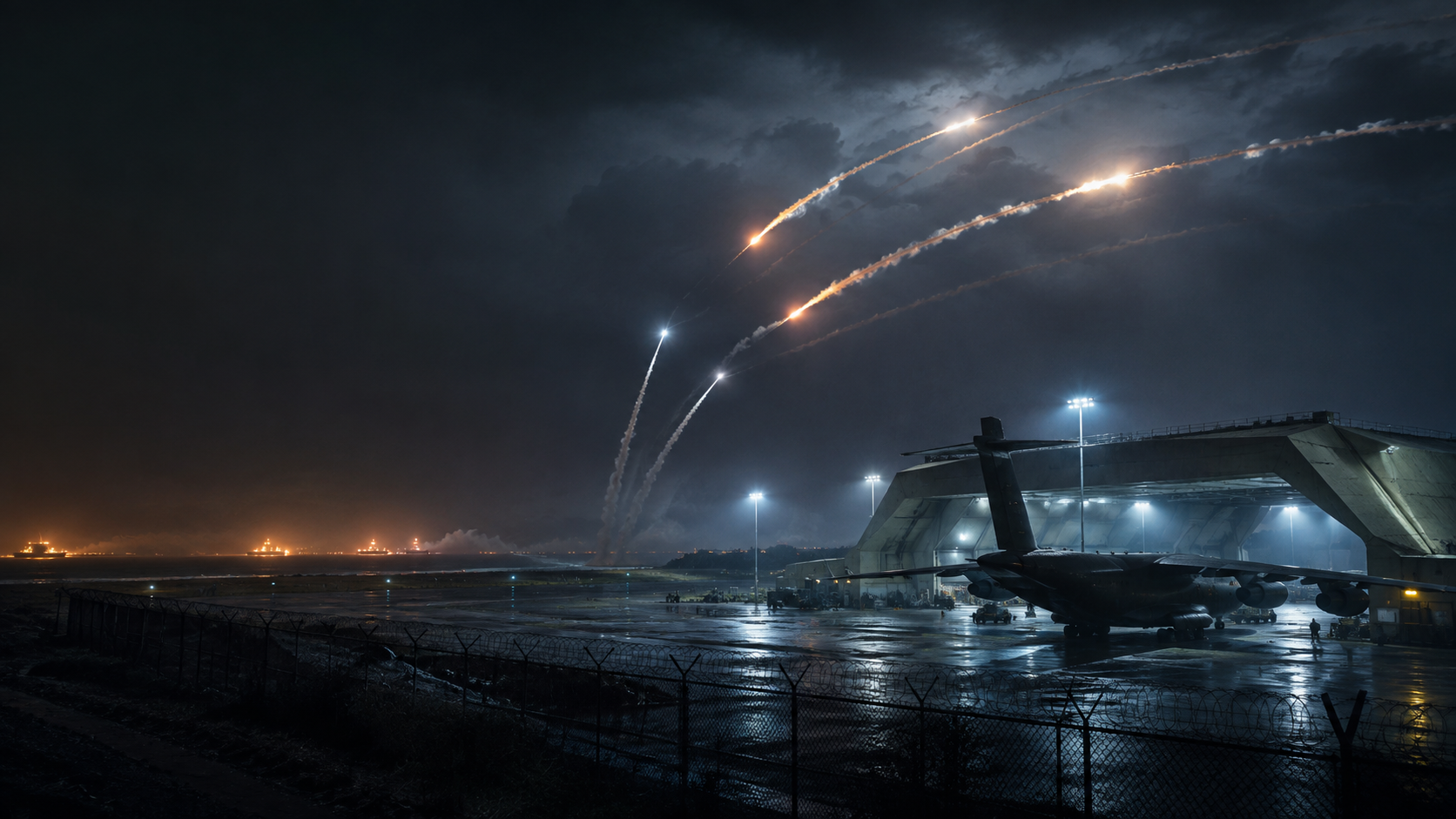
US Strikes Iran, Tehran Hits American Bases and Hormuz Crisis Erupts Again
The Night the US-Iran War Exploded Back Into Life
The United States and Iran have shattered weeks of relative restraint with their biggest exchange of fire since July, raising the prospect that the war is moving back towards sustained regional combat. American forces struck Iranian military infrastructure along the country's southern coast before Tehran retaliated with missiles and drones aimed at US military positions across the Middle East.
What makes this escalation particularly dangerous is its geography. Iran is no longer treating the battlefield as a confrontation confined to Iranian territory or the Strait of Hormuz: its armed forces say American military facilities in Jordan, Kuwait, Bahrain, Iraq and the United Arab Emirates have been targeted, exposing countries hosting US forces to the consequences of renewed fighting.
America Launches a New Wave of Strikes
US Central Command confirmed that American forces carried out a fresh wave of attacks against Iranian military targets on September 1. The operation struck Islamic Revolutionary Guard Corps air-defence sites, radar systems, maritime assets and facilities, mine-laying capabilities and communications sites.
CENTCOM said the strikes followed attempted IRGC attacks against commercial shipping in the Strait of Hormuz and against American service members. More than 50,000 US personnel are operating across the Middle East, giving Washington an enormous regional military footprint to defend if Iran continues targeting bases outside Iran itself.
That distinction matters. Washington can strike Iran from a position of overwhelming conventional military strength, but its regional presence also gives Tehran a dispersed network of potential targets stretching across several sovereign states.
The result is an uncomfortable strategic equation. Every major American attack can reduce Iranian military capacity while simultaneously giving Iran an incentive to widen the number of countries exposed to retaliation.
Iran Fires Back Across the Region
Iran's response came quickly. The IRGC said it launched missile and drone attacks against Ali Al Salem Air Base in Kuwait, claiming that command facilities and drone infrastructure had been struck. Tehran described the operation as retaliation for the latest American attacks on Iranian territory.
Iran's regular army separately said it launched attack drones towards Al Dhafra and Al Minhad airbases in the United Arab Emirates and Sheikh Isa Air Base in Bahrain. Those are Iranian military claims and the extent of any damage has not been independently established.
Jordan provides some of the clearest independent evidence of the scale of the retaliation. The Jordanian Armed Forces said 13 ballistic missiles originating from Iranian territory entered Jordanian airspace during the attack. Ten were intercepted and destroyed, while three fell in remote areas; Jordan reported no deaths or injuries.
The IRGC also claimed to have targeted American drone facilities at Prince Hassan Air Base in Jordan, including hangars containing RQ-4 and MQ-9 aircraft. Tehran claimed American personnel and aircraft were lost, but initial US assessments reported no American casualties from the wider Iranian attacks.
That gap between Iranian battlefield claims and independently confirmed damage remains important. The scale of Tehran's launch is clear. The scale of the destruction Tehran says it inflicted is not.
Host Countries Are Being Dragged Deeper Into the War
Iran's strategy creates a problem that extends far beyond Washington and Tehran. Bahrain, Jordan, Kuwait, Iraq and the UAE are sovereign countries whose territory hosts American military facilities, meaning Iranian attempts to hit US forces can simultaneously become attacks affecting those states.
Jordan has already condemned Iranian attacks on Bahrain and Kuwait as violations of their sovereignty and a dangerous regional escalation. Its own armed forces remain on heightened readiness following the ballistic-missile attack.
Bahrain is particularly significant because it hosts the headquarters of the US Navy's Fifth Fleet, while Qatar hosts one of America's most important regional air installations. The more Tehran treats those bases as legitimate retaliatory targets, the harder it becomes to keep Gulf states politically or militarily insulated from the conflict.
This may be one of Iran's most consequential strategic choices. Tehran cannot match America's conventional striking power, but it can increase the political cost of American military operations by forcing Washington's regional partners to absorb greater security risks.
That strategy is dangerous for Iran as well. Attacks that kill civilians or cause substantial damage inside a Gulf state could transform governments that would prefer containment into more active participants against Tehran.
The Strait of Hormuz Is Again at the Centre of Everything
Behind the missiles and airstrikes sits the same strategic prize that has repeatedly driven this conflict: the Strait of Hormuz.
CENTCOM explicitly linked its latest strikes to Iranian threats against commercial shipping in the strait. The IRGC responded by declaring that American attacks would only tighten Iran's determination to maintain pressure over the waterway.
The Trump administration has increasingly presented control of Hormuz as evidence that its military strategy is working. The White House said on August 28 that nearly 1,500 commercial vessels had passed through under American protection carrying about 750 million barrels of crude, while claiming Iranian oil exports had been reduced to zero since Washington resumed its blockade in July.
Iran rejects the idea that Washington controls the waterway. Tehran instead wants its ability to disrupt or regulate passage through Hormuz to provide economic and strategic leverage against a much stronger military opponent.
That contest explains why seemingly isolated attacks on coastal radar, mines, drones or ships can have consequences far beyond the battlefield. Hormuz connects military escalation directly to shipping insurance, tanker traffic, energy supply and ultimately fuel prices across the global economy.
Renewed US strikes have already pushed oil prices back towards levels not seen since July while global markets reacted nervously to the prospect of another sustained phase of fighting.
Iran Says an American Strike Hit a Wedding
One of the most politically explosive allegations concerns an attack in Sirik in southern Iran.
Iran says an American strike hit a home where a wedding celebration was taking place, killing four people including a four-year-old child and injuring dozens. CENTCOM said it was aware of the reports and maintained that the American military does not deliberately target civilians. The exact circumstances of the incident have not been independently established.
Iran has used the alleged strike as part of the justification for its latest retaliation. The IRGC explicitly linked its attack in Kuwait to the Sirik incident, while Iran's army cited the wedding allegation when announcing strikes towards bases in Bahrain and the UAE.
For Washington, civilian-casualty allegations create both a military and political problem. Even when strikes are directed towards legitimate military infrastructure, civilian deaths can strengthen Tehran's domestic justification for retaliation and make diplomatic containment considerably harder.
The Relative Calm Since July Has Broken
The importance of the latest exchange lies partly in what came before it.
The United States and Iran had avoided exchanges on this scale for weeks after the intense fighting of July. That did not amount to peace, but it created a form of unstable restraint in which neither side was continuously operating at the intensity seen earlier in the war.
That restraint has now been punctured.
Washington's latest operation was not a symbolic strike against a single installation. It targeted several categories of Iranian military capability associated with air defence, maritime warfare, mine-laying and communications.
Iran's response was similarly broad. Rather than limiting retaliation to a single American position, Tehran announced attacks across a network of bases spanning several countries.
This looks less like an isolated exchange of warnings and more like both sides demonstrating what the next phase of the war could look like.
Trump Believes America Holds the Stronger Position
President Donald Trump has argued that the strategic balance increasingly favours the United States, particularly around Hormuz.
Trump said on Tuesday that he preferred America's current position because Washington had achieved what he described as almost total control of the strait while Iran's economy was collapsing. The White House has separately argued that American forces are successfully keeping commercial energy traffic moving while denying Tehran access to its own oil revenue.
Militarily, the United States unquestionably possesses far greater conventional striking power. Months of attacks have damaged Iranian command structures, air defences, maritime assets and other infrastructure.
But the latest Iranian response demonstrates the limitation of measuring success solely by destroyed targets. Tehran still retains missiles, drones and enough regional reach to threaten American positions and force several neighbouring states onto alert.
Destroying Iranian military hardware and compelling Iran to stop retaliating are not necessarily the same objective.
The Most Dangerous Part Comes Next
The immediate question is whether Washington now answers Iran's attacks on American bases with another, still larger round of strikes.
CENTCOM's language leaves little doubt that American forces remain prepared for continued operations. With more than 50,000 US service members across the region, any confirmed American deaths could create enormous pressure for a powerful response.
Iran, meanwhile, is explicitly threatening broader retaliation and portraying the removal of American military forces from the region as an objective. That moves the conflict beyond a dispute over individual strikes and towards a contest over the future American military presence in the Middle East.
The contradiction at the centre of the war therefore remains unresolved. The United States can keep demonstrating that it is capable of inflicting far greater military damage on Iran, while Iran can keep demonstrating that American superiority does not make the Gulf, regional US bases or the Strait of Hormuz immune from retaliation.
The September exchange is the clearest warning since July that the period of relative restraint may be ending. If the next American response is followed by another Iranian regional barrage, the danger is no longer simply that the US-Iran war continues. It is that more of the Middle East becomes part of its battlefield.
