

US–Europe visa bans deepen the “censorship” row over platform regulation
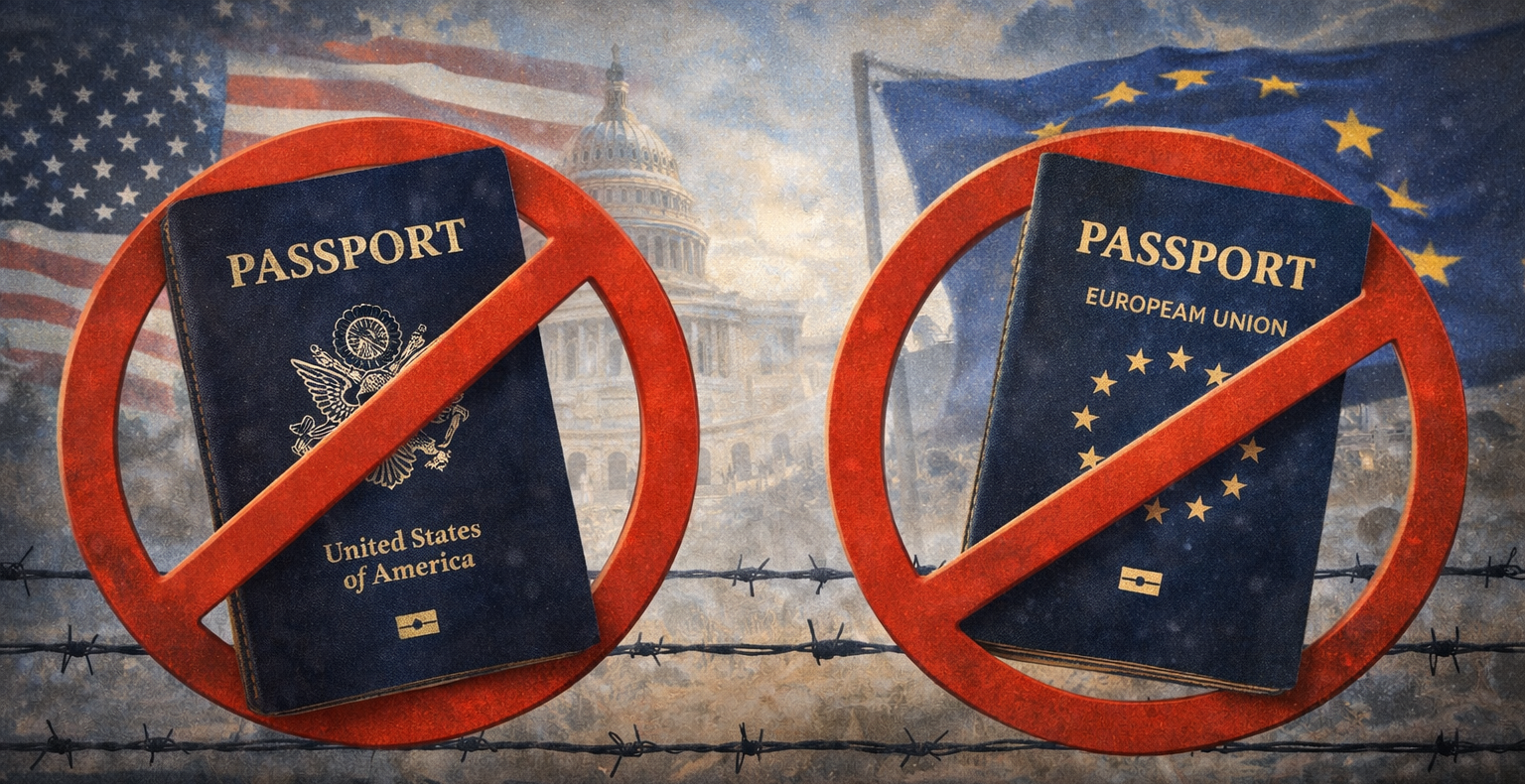
As of December 24, 2025, the United States has moved the transatlantic fight over online speech from policy memos into personal consequences. On December 23, Washington imposed visa bans on five Europeans it accused of pushing American tech platforms to suppress American viewpoints.
Europe’s response was immediate and angry. EU officials and national governments framed the move as political intimidation aimed at chilling enforcement of European digital rules, especially the Digital Services Act. The U.S. framed it as a defence of free expression against foreign pressure campaigns.
This is not just a symbolic spat. It raises the price of regulating platforms, pulls civil society groups into a US–EU sovereignty clash, and increases the odds that tech regulation becomes a trade-and-security problem, not merely a legal one.
The story turns on whether platform regulation can stay a rules debate or become a power contest where travel bans replace diplomacy.
Key Points
The U.S. imposed visa bans on five European figures tied to anti-hate and anti-disinformation work, including former EU commissioner Thierry Breton.
Washington argues European efforts amount to “extraterritorial censorship” targeting Americans and U.S. companies.
EU institutions and member states reject the censorship framing and say Europe’s digital rules are set democratically and apply within Europe.
The clash is closely linked to the EU’s Digital Services Act, which compels platforms to address illegal content and manage systemic risks.
The move targets individuals, not governments, raising fears of a chilling effect on regulators, researchers, and NGOs working on online harms.
The dispute lands amid already tense U.S.–EU friction over tech power, content moderation, and enforcement actions against major platforms.
Background
The immediate trigger is a U.S. visa policy announced earlier in 2025 that allows Washington to restrict entry for foreign nationals it deems responsible for censorship of protected speech. Under that policy, the State Department announced visa bans on five Europeans on December 23.
Those named are:
Thierry Breton, former European commissioner involved in digital policy and a prominent advocate of the EU’s tougher approach to platform accountability.
Imran Ahmed, chief executive of the Centre for Countering Digital Hate.
Josephine Ballon and Anna-Lena von Hodenberg, leaders of HateAid, a German non-profit that supports targets of unlawful digital hate and harassment.
Clare Melford, co-founder of the Global Disinformation Index.
The broader fight is about who sets the rules for online speech when platforms operate across borders. The EU’s Digital Services Act (DSA), adopted in 2022, is Europe’s flagship framework for online intermediaries. It requires, among other things, transparency about content moderation and advertising systems and stronger processes to tackle illegal content and address systemic risks.
In recent months, the DSA has become a political symbol as much as a regulatory tool. U.S. officials and some American political groups increasingly describe European digital enforcement as censorship. EU leaders insist the core principle is simple: what is illegal offline should be illegal online, and companies that profit from European markets must follow European law.
Analysis
Political and Geopolitical Dimensions
The visa bans turn a regulatory disagreement into a diplomatic escalation because they reframe the issue as a sovereignty clash. From Washington’s vantage point, European pressure on U.S. platforms is treated as foreign interference in American speech. From Brussels’ vantage point, U.S. retaliation is treated as an attempt to bully Europe out of enforcing its own laws.
What makes this combustible is the mismatch in governing philosophies. The U.S. model puts a heavier emphasis on speech protections and is wary of state-backed content rules. The European model is more willing to regulate speech-adjacent harms—hate, harassment, incitement, and certain categories of harmful disinformation—through law and enforcement. Both sides describe themselves as defending democracy, but they define the threat differently.
Two near-term scenarios look plausible.
First, containment through quiet diplomacy. Washington could keep the measures narrowly targeted and avoid broad secondary consequences. Europe could respond rhetorically while doubling down on due-process framing: audits, transparent enforcement steps, and court-reviewed penalties.
Second, escalation by linkage. Europe could treat the visa bans as part of a pattern of coercion and look for leverage elsewhere—trade irritants, procurement, security cooperation, or more aggressive tech enforcement. That path would turn content policy into a recurring crisis that contaminates unrelated negotiations.
Economic and Market Impact
The market implication is not “visa bans move stock prices tomorrow.” It is that they raise long-run compliance risk and increase the likelihood of regulatory fragmentation.
For big platforms, the fear is a world where the EU demands robust moderation systems and transparency disclosures while the U.S. political environment treats those same actions as ideological suppression. That tension encourages defensive corporate behaviour: legal hardening, slower product rollouts, and region-specific features. In the worst case, platforms may choose geo-fencing or reduced service offerings rather than face perpetual cross-border political penalties.
For smaller firms, including ad-tech and content moderation vendors, the danger is collateral damage. If NGOs and researchers become political targets, partnerships that help platforms detect coordinated harassment, extremist content, or disinformation may become harder to sustain, pushing more risk into the platforms’ own opaque internal systems.
Technological and Security Implications
The security dimension is often missed because “censorship” debates sound cultural, not operational. But disinformation and online hate campaigns are frequently linked to cross-border influence operations, harassment networks, and fast-moving crisis misinformation during elections, conflicts, and disasters.
If the consequence of working on these problems is personal sanction—being barred from entry, publicly branded as an adversary, or drawn into high-level political conflict—then the talent pool willing to do the work shrinks. That matters in practical terms: fewer credible audits, weaker independent research, and less shared understanding of platform threats.
A third scenario follows from that logic: enforcement becomes less evidence-driven. Regulators may rely more on internal platform reporting. Platforms may disclose less to outside experts for fear that cooperation itself becomes politically weaponised. That is a recipe for lower trust on both sides of the Atlantic.
Social and Cultural Fallout
There is a deeper cultural story beneath the legal one: “free speech” has become a proxy battlefield for identity and power in Western politics. The same rule—say, a requirement to remove illegal hate content—can be described as basic public safety or ideological repression depending on the audience.
Visa bans intensify that culture war by personalising it. Instead of debating standards, it becomes a question of punishing people. That shifts incentives for politicians and media actors: outrage becomes easier than process, and spectacle becomes easier than legislative detail.
The risk is that public trust erodes in both directions. Americans who already suspect European regulation will see the bans as overdue pushback. Europeans who already suspect American tech power will see the bans as proof that Washington shields platforms and treats regulation as an attack.
What Most Coverage Misses
The underappreciated mechanism here is that immigration tools are being used as a substitute for a formal dispute process. Visa bans are fast, unilateral, and personal. They avoid the slower, more accountable pathways of treaty arbitration, trade cases, or court challenges.
That matters because it changes the cost structure of regulation. If the penalty for enforcing or advocating for enforcement is not a legal defeat but personal restriction, the “price” is paid by individuals rather than institutions. That can chill legitimate policy work without ever proving the underlying claims in court.
It also creates a precedent other states can copy. If liberal democracies normalise travel restrictions as a response to speech governance disputes, it becomes harder to argue against the same tactic when used by less democratic governments to punish journalists, researchers, or dissidents.
Why This Matters
In the short term, the most affected groups are regulators, civil society organisations, and policy researchers working at the intersection of online harms and platform governance. The signal is that this work is no longer merely technocratic; it carries geopolitical risk.
In the medium term, major platforms face a rising probability of policy whiplash. They may be forced to choose between compliance postures that satisfy Europe and postures that satisfy American political expectations—without a stable global compromise.
In the long term, the biggest stake is whether democracies can agree on a shared baseline for digital governance: transparent rules, enforceable due process, and clear distinctions between illegal content, harmful-but-legal content, and political opinion.
Events to watch next are any formal EU response outlining countermeasures, any further U.S. designations under the 2025 visa policy, and any major DSA enforcement steps that touch the biggest platforms operating in Europe.
Real-World Impact
A UK-based researcher who studies coordinated harassment networks is invited to brief an American university and meet platform safety teams. The trip is cancelled after legal counsel warns that public work on “disinformation” could attract political scrutiny, shrinking cross-border collaboration.
A German non-profit helping victims of online hate works with local prosecutors to document threats. After the visa bans, the group’s international funding conversations become harder, with donors worried that association with “censorship” claims could create reputational or legal risk.
A mid-sized U.S. platform operating in Europe considers scaling back in the EU. Compliance costs were already rising. The new fear is becoming a political football in Washington for doing what European law demands, so leadership explores geo-restrictions and reduced features.
A small exporter in Ohio relies on social ads and influencer marketing in Europe. If platforms respond to regulatory conflict by limiting targeting tools or increasing verification friction, customer acquisition costs rise and smaller businesses pay first.
What’s Next?
The immediate question is whether this stays limited to five names or becomes a template for a broader campaign against European digital enforcement. The EU has signalled it sees the move as unjustified and is prepared to defend its autonomy.
A sustainable off-ramp would look like this: both sides reaffirm that laws apply territorially, disputes are handled through courts and formal channels, and platforms can comply with European obligations without being accused of attacking American speech. That requires political restraint on one side and legal clarity on the other.
If restraint fails, the fork in the road is stark. Either the transatlantic relationship absorbs a noisy but bounded dispute, or digital policy becomes a standing flashpoint that bleeds into trade, security cooperation, and the basic operation of global platforms.
The signs that matter will be concrete: whether Washington expands the list, whether Brussels outlines retaliatory steps, and whether major platforms change product, compliance, or market-access strategies in response.
