

Japan prepares to restart the Kashiwazaki-Kariwa nuclear plant, the world’s biggest
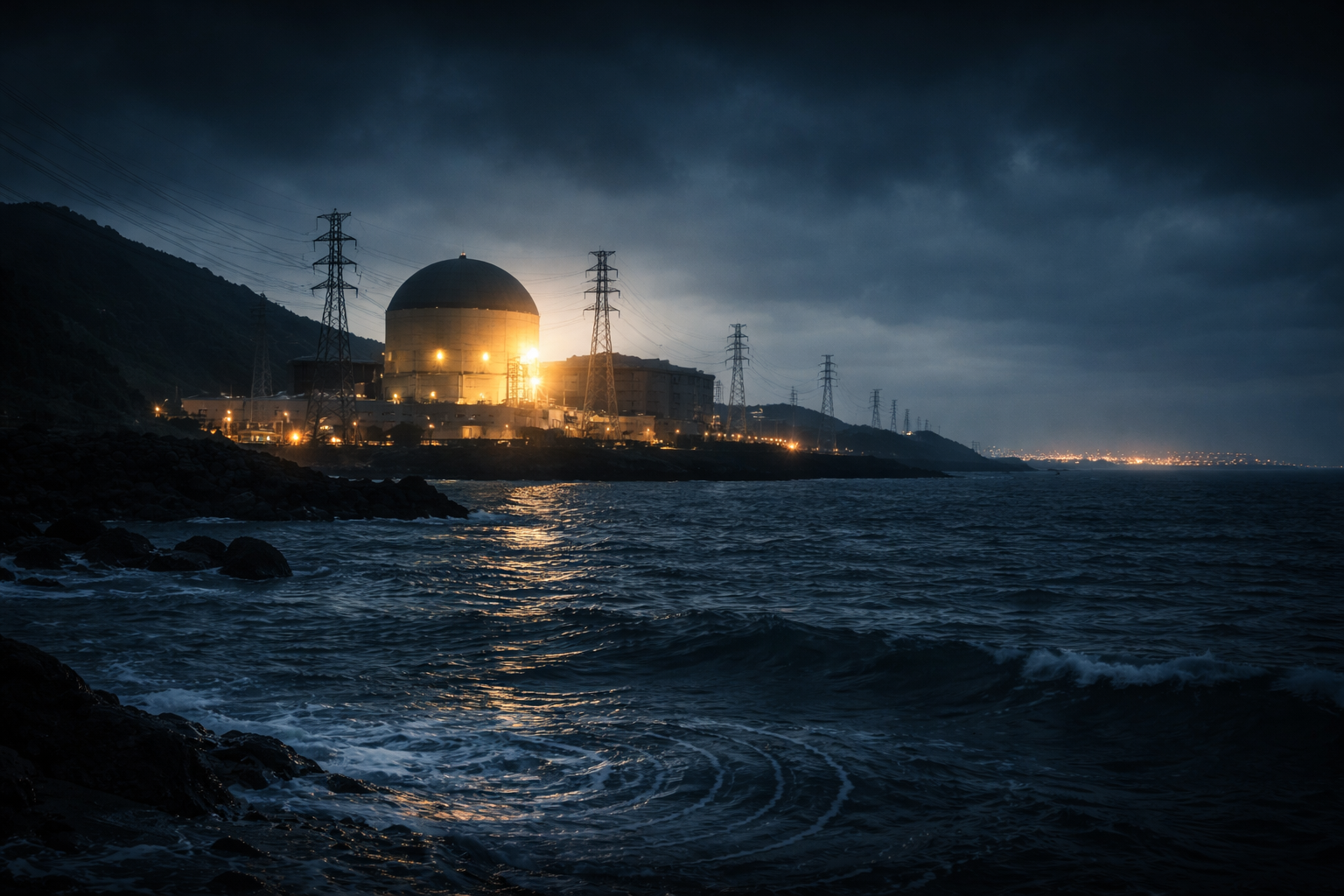
As of December 22, 2025, Japan is moving toward restarting the Kashiwazaki-Kariwa nuclear power plant on the Sea of Japan coast in Niigata Prefecture—widely described as the world’s largest nuclear generating site by capacity.
If it happens on the current timetable, it will be more than a routine switch-on. It would be Tokyo Electric Power’s first nuclear restart since Fukushima, and it would mark Japan’s most consequential step yet in pushing nuclear back toward the centre of its energy strategy.
The tension is simple and sharp: a restart promises cheaper, steadier power and lower fuel imports, but it also reopens the country’s deepest post-2011 arguments about trust, safety, and who carries the risk when something goes wrong.
This piece explains what has changed now, what still has to happen before any electricity flows, and why Kashiwazaki-Kariwa matters far beyond Niigata. It also lays out the realistic paths from here, including the scenarios that would delay or derail a restart even after political sign-off.
The story turns on whether Japan can turn technical readiness into public consent.
Key Points
Japan is nearing a restart of the Kashiwazaki-Kariwa nuclear power plant in Niigata, a major milestone in the country’s nuclear revival after 2011.
The next hurdle is local political consent, with the prefectural assembly playing a decisive role in whether the restart can proceed on the current schedule.
The operator, Tokyo Electric Power, has spent years upgrading safety systems and rebuilding compliance after past security and governance failures.
Only a portion of Japan’s operable reactors have returned to service since Fukushima, so adding a large new source of baseload power would materially change regional supply.
A restart would likely reduce Japan’s reliance on imported fossil fuels and improve energy price stability, but it also risks reigniting public opposition and legal challenges.
What happens here will influence how Japan funds future restarts, upgrades aging plants, and meets fast-rising electricity demand tied to industry and data centres.
Background: The Kashiwazaki-Kariwa nuclear plant restart
Kashiwazaki-Kariwa is a seven-reactor complex built to supply a large share of power for eastern Japan. It has been offline since the post-Fukushima shutdown, becoming a symbol of a country that once leaned heavily on nuclear power, then pulled back hard.
After 2011, Japan rewrote its nuclear rules. Operators had to prove plants could withstand severe earthquakes and tsunamis, keep reactors cooled during extended blackouts, and manage hydrogen and pressure risks that contributed to the Fukushima explosions. The bar rose again with tighter anti-terrorism and site-security requirements.
Kashiwazaki-Kariwa’s path has been especially complicated because it is owned by the same company linked to Fukushima’s failure chain. Even when engineering work progressed, trust did not automatically follow. Local consent became the real gatekeeper: regulators can clear the technical case, but communities still hold political power over whether a restart is socially and politically viable.
In the last year, momentum has returned. National policy has moved toward “maximum use” of nuclear power as part of decarbonization and energy security, and local deliberations in Niigata have shifted from “never” to “under what conditions.” The current push focuses on restarting the plant’s newest, highest-output units first, rather than treating all seven reactors as equally likely to return.
Analysis
Political and Geopolitical Dimensions
This restart is local politics with national consequences. Niigata’s leadership has tied consent to conditions that reach beyond the plant fence line—public explanations, evacuation readiness in heavy-snow conditions, and clearer national responsibility for emergency response and compensation frameworks. That matters because it reframes the debate: not “is the reactor safe in a narrow technical sense,” but “is the state prepared for the full chain of consequences.”
Nationally, Japan’s strategic logic is shifting. Energy is now treated as a security asset, not just an economic input. A large nuclear restart reduces exposure to global fuel shocks and shipping disruption, and it bolsters a power system facing new demand from electrification and data centres. But Japan is also operating in a region where security fears are rising, which makes anything with the word “nuclear” politically charged—even when it is strictly about electricity.
A restart at Kashiwazaki-Kariwa would also signal to other prefectures that the centre of gravity has moved. If Niigata—home to one of the most politically sensitive nuclear sites—can say yes, the pressure increases on other jurisdictions to follow, especially where utilities argue that regional competitiveness depends on stable, lower-cost electricity.
Economic and Market Impact
The near-term economics are straightforward. Nuclear plants have high fixed costs but low fuel costs, so once running, they can push down the need for expensive imported gas and coal at the margin, particularly during peak demand seasons.
For Japan, that has three knock-on effects:
First, it reduces the country’s fuel-import bill and softens household and industrial exposure to price spikes. Second, it improves energy resilience for the Tokyo-area grid by adding a large, steady source of supply in the east. Third, it strengthens the investment case for electrification-heavy industries that want predictable power prices and a lower-carbon footprint.
The harder economic truth sits underneath: restarts are expensive. The post-2011 safety regime has made “restart” look more like “rebuild.” The government is now exploring ways to lower financing barriers and spread costs, because without cheaper capital, many projects simply do not pencil out—especially as reactors age and utilities face the prospect of costly lifetime extensions or decommissioning.
Technological and Security Implications
Technically, a modern restart is a systems test of extremes: worst-case tsunami assumptions, multi-day power loss, equipment redundancy, and emergency operations that must still work when normal infrastructure fails.
But the Kashiwazaki-Kariwa story is also about security culture. The plant’s progress was once halted by failures in physical protection and access control—exactly the kind of human-and-process weakness that hardware upgrades do not automatically fix. Regulators can verify equipment, but rebuilding a compliance culture is slower and harder to prove.
If the restart proceeds, it will likely happen in phases. That means weeks of inspections, tests, and ramp-up before stable output. The gap between “political approval” and “meaningful electricity delivered” is where schedules often slip, because the operator has to demonstrate readiness under scrutiny at every step.
Social and Cultural Fallout
Public acceptance is not a single yes/no moment. It is a layered question about evacuation credibility, institutional trust, and moral memory.
In Niigata, the decisive issue is not abstract climate policy. It is whether families believe evacuation plans work in real weather, on real roads, with real traffic, and whether they trust the operator to tell the truth early in a crisis rather than late.
There is also the national cultural memory of 2011: trauma, displacement, and the long tail of clean-up and compensation. Kashiwazaki-Kariwa revives that memory because it is linked to the same corporate identity. Even if engineering standards are stronger today, social permission still depends on something harder to measure: belief that the operator and the state will behave differently under pressure.
What Most Coverage Misses
The overlooked constraint is not the reactor vessel. It is the off-site system.
A nuclear restart is only as credible as the evacuation network, emergency communications, and the chain of authority between the operator, the prefecture, and the national government. In other words, the “safety case” is partly civic infrastructure, not just plant design. That is why Niigata’s conditions emphasise national responsibility, snow-resilient evacuation routes, and coordination that does not collapse when private actors are overwhelmed.
The second blind spot is timing realism. A headline date can mask a long commissioning curve. Even after a restart, output can be intermittent early on, and public trust can be lost quickly if minor incidents or compliance missteps appear in the first months. The first year after a restart is often when the narrative hardens—either “this can be done safely” or “nothing has changed.”
Why This Matters
In the short term, the biggest winners are electricity consumers in eastern Japan—households and power-hungry manufacturers—if additional supply helps stabilise prices and reduce fossil generation during tight periods.
In the medium term, the restart matters for three national priorities: energy security, decarbonization, and industrial competitiveness. Japan is trying to expand clean electricity fast enough to support electrification and new digital infrastructure without becoming more dependent on imported fuels.
Next events to watch are concrete. The critical near-term marker is Niigata’s final political sign-off. After that, attention shifts to the regulator’s pre-operation checks, the operator’s commissioning milestones, and the first sustained run at meaningful output—because that is where confidence will either build or fracture.
Real-World Impact
A small manufacturer outside Tokyo faces a choice: sign a long electricity contract now at a premium, or wait in hopes that additional baseload supply eases prices next year. A restart changes what “reasonable” looks like for budgeting.
A hospital administrator in a dense Tokyo suburb cares less about ideology and more about outage risk. If grid tightness falls, it is easier to plan staffing, backup generation, and cooling during summer heat.
A logistics manager in Niigata has a different calculus. A restart could bring jobs and investment, but it also raises questions about evacuation routes, traffic choke points, and whether emergency drills match reality in winter.
A data-centre developer looking at eastern Japan weighs power availability, carbon intensity, and political risk. A successful restart could make the region more attractive. A messy restart could do the opposite.
What’s Next?
Japan is approaching a fork in the road where the technical case for nuclear is no longer the only question. The bigger test is governance: can the operator demonstrate discipline, can the state demonstrate preparedness, and can local leaders defend consent without losing legitimacy?
There are a few plausible paths from here. One is a smooth approval followed by a phased restart that builds confidence through boring competence. Another is approval paired with schedule slips as inspections and commissioning take longer than expected. A third is political blowback—local or national—that forces delay even after preparations are complete. A fourth is a narrow restart strategy that focuses only on the newest units while older reactors remain offline or are earmarked for retirement.
The signs that will matter most are not rhetorical. Watch the specificity of evacuation commitments, the transparency of milestone reporting, and the early operational record once testing begins. If those three hold, the nuclear revival gains momentum. If they wobble, Kashiwazaki-Kariwa becomes a warning rather than a turning point.
