Why is Temu facing another EU enforcement action after receiving a €200 million fine earlier in 2026?
Temu Faces Fresh EU Scrutiny After An Earlier €200 Million Fine.
The European Commission has opened a new chapter in its confrontation with Temu, saying the shopping platform’s safeguards against illegal products are inadequate.
Its preliminary findings, announced on 17 November 2026, concern whether Temu takes effective action to reduce the availability of illegal goods. The company disputes those findings.
The distinction from the earlier case matters. Temu has already been fined for failing to assess the risks properly. Brussels is now challenging whether the measures used to control those risks actually work.
For shoppers, that moves the argument beyond compliance paperwork and towards a practical question: what prevents an unsafe product from appearing among the bargains?
What Is The EU Accusing Temu Of?
The Commission identifies three alleged weaknesses: inadequate product-compliance checks, weak moderation and ineffective sanctions.
These concern different stages of running an online marketplace. Product checks help establish whether an item meets the relevant requirements. Moderation determines how suspicious or unlawful listings are identified and handled. Sanctions concern the consequences for breaking the platform’s rules.
Taken together, the allegations question whether Temu’s controls provide an effective barrier against illegal goods.
The findings remain preliminary. They are the regulator’s assessment at this stage, rather than a final decision establishing the new breach.
Why Was Temu Already Fined?
On 28 May 2026, the Commission imposed a €200 million fine over shortcomings in Temu’s assessment of the risks associated with illegal products.
Its criticism was that Temu had relied too heavily on general information about online shopping, rather than evidence specific to its own marketplace.
That difference is consequential. Knowing that unsafe goods exist across e-commerce does not establish how often customers encounter them on a particular service, which categories create the greatest danger or whether the platform’s design makes those products more visible.
The earlier decision also questioned whether Temu had adequately examined how recommendations and influencer promotion could amplify the problem.
The two cases therefore address connected responsibilities: understanding the risks created by a marketplace and taking effective steps to reduce them. An improved assessment can help identify where controls are needed, but it cannot demonstrate by itself that those controls succeed.
What Kinds Of Products Raised Concerns?
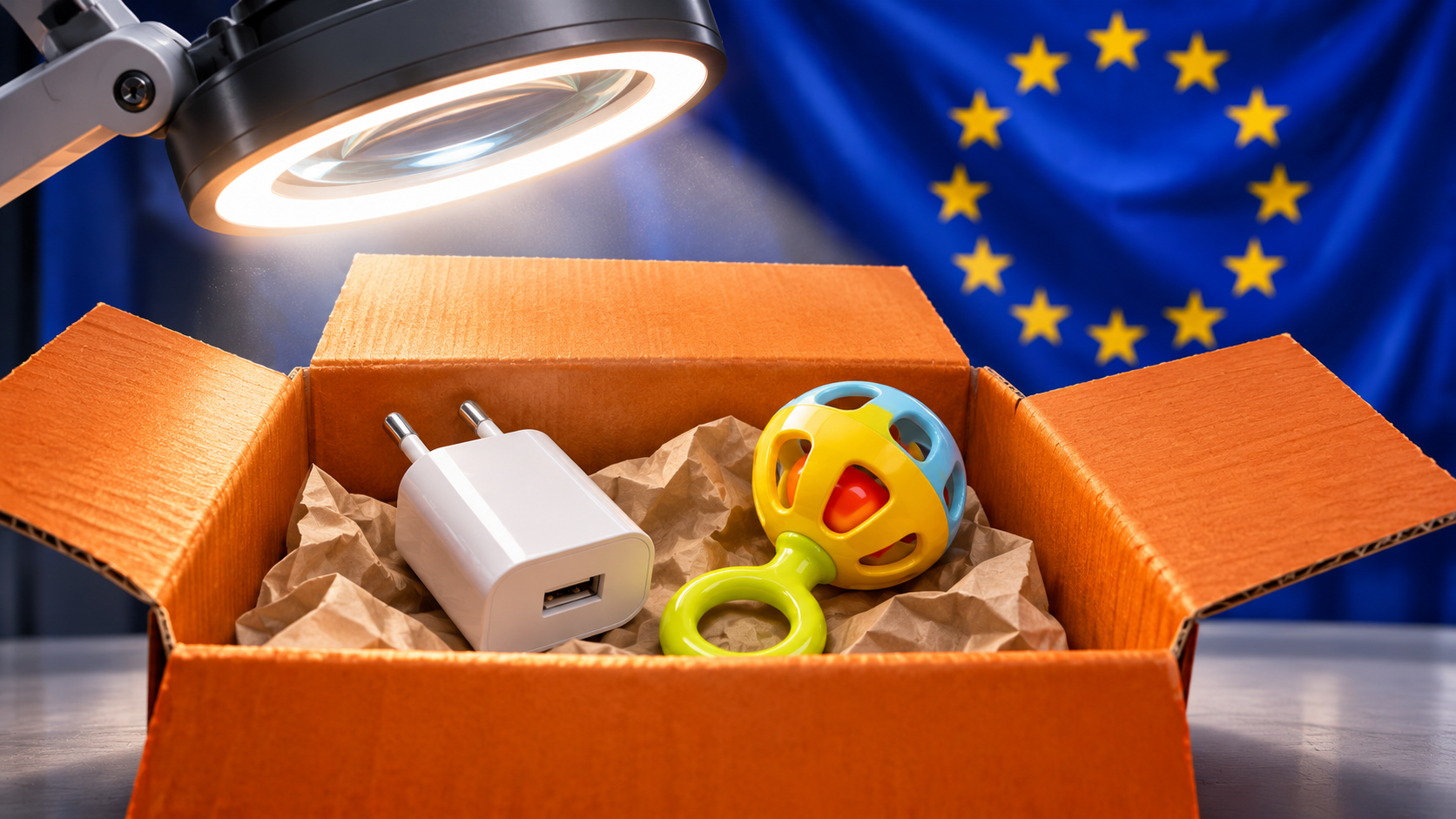
The Commission’s earlier investigation included a mystery-shopping exercise involving chargers and baby toys.
It said a very high proportion of the selected chargers failed basic safety tests. Among the baby toys tested, it identified chemical levels above legal limits and detachable components presenting suffocation hazards.
These examples explain why the dispute has implications beyond misleading listings or disappointing purchases. The concerns include products used around electricity and items intended for very young children.
However, the scope of that evidence matters. Findings from selected products do not establish that every item on Temu is unsafe. Nor should results from those tests be converted into a percentage covering its entire catalogue.
The relevant question is how the marketplace responds to evidence of risk across the products and sellers it hosts.
Didn’t Brussels Accept Temu’s Action Plan?
Yes. On 26 October, the Commission accepted a plan addressing the earlier risk-assessment breach.
That can sound inconsistent with a fresh enforcement announcement only weeks later. But accepting a plan to improve risk assessment does not resolve every question about practical safeguards.
The agreed measures include analysing risks specific to Temu, examining weaknesses in moderation and assessing how recommendation systems or deliberate manipulation could spread illegal listings.
There is also an important qualification to the approval. The European Board for Digital Services considered the proposed changes only partially adequate and said the plan needed more detail. The Commission clarified requirements and said it would supervise implementation closely.
Temu was given four months to implement the plan, with an independent audit to follow.
Approval therefore established a route towards correcting the earlier breach. It was not a declaration that every aspect of Temu’s product-safety systems had passed scrutiny.
Why Does The Digital Services Act Apply?
The Digital Services Act regulates online intermediaries, including marketplaces. Its obligations vary according to a service’s role, scale and impact.
For the largest platforms, the framework requires attention to risks arising from how the service operates. Identifying those risks must be followed by measures to reduce them.
Marketplace rules also include seller transparency and mechanisms for reporting illegal goods. The Commission describes requirements to verify and display sellers’ contact details and make reasonable efforts to conduct random product checks or use traceability technologies.
That makes the platform’s own systems relevant. The regulatory question extends beyond the conduct of an individual trader to how the marketplace checks, distributes and responds to listings.
The DSA should also be distinguished from the Digital Markets Act, which addresses competition and gatekeeper power. The dispute over changes to Google Search in Europe illustrates that separate regulatory argument.
What Does Temu Say?
Temu says it disagrees with the preliminary findings, makes significant efforts to reduce illegal-product risks and will respond to the Commission.
Its spokesperson also expressed confidence that the remaining concerns could be resolved amicably.
The company’s response matters because the adequacy of its measures is precisely what remains contested. The existence of unsafe listings alone does not explain which safeguards were operating, how effectively they performed or whether the regulator’s assessment captures their full impact.
Could Temu Face Another Fine?
If the new findings are confirmed, the Commission could impose a further penalty of up to 6% of annual worldwide turnover.
That is a possible maximum, not an announced fine. Temu retains the opportunity to defend its position before a final decision.
For consumers, the most useful outcome would be measurable improvement: stronger checks, fewer illegal listings reaching customers and effective consequences when sellers break the rules. Those are different achievements from publishing a more detailed compliance document.
The next significant development will be Temu’s substantive response and the Commission’s assessment of it. That exchange should reveal whether the disagreement concerns missing safeguards, ineffective implementation or competing interpretations of what the existing controls achieve.
Sources
European Commission — Preliminary Findings Against Temu, 17 November 2026 — The new allegations concerning product checks, moderation and sanctions.
European Commission — €200 Million Fine Against Temu — The earlier risk-assessment breach and product-testing findings.
European Commission — Acceptance Of Temu’s Corrective Measures — The October action plan, qualifications and audit requirements.
European Commission — The Digital Services Act — Marketplace responsibilities and the distinction between the DSA and DMA.
Reuters — EU Charges Temu Over Illegal Product Sales — Temu’s response and the potential further penalty.
Next Reads
EU Fines X €120 Million Under New Digital Services Rules – Or a Warning Shot at Elon Musk’s Free-Speech Gamble? — Another dispute over enforcement of the DSA.
Why the EU’s WhatsApp Move Has Nothing to Do With Messages — and Everything to Do With Power — How platform designation changes regulatory responsibilities.
Google Says EU Rules Are Forcing the Biggest Reduction in Search Quality in Its 29-Year History — The separate battle over competition rules and platform design.
