The Joe Biden “Clone” Theory Is Going Viral Again — And It Says Something Dark About Modern Politics
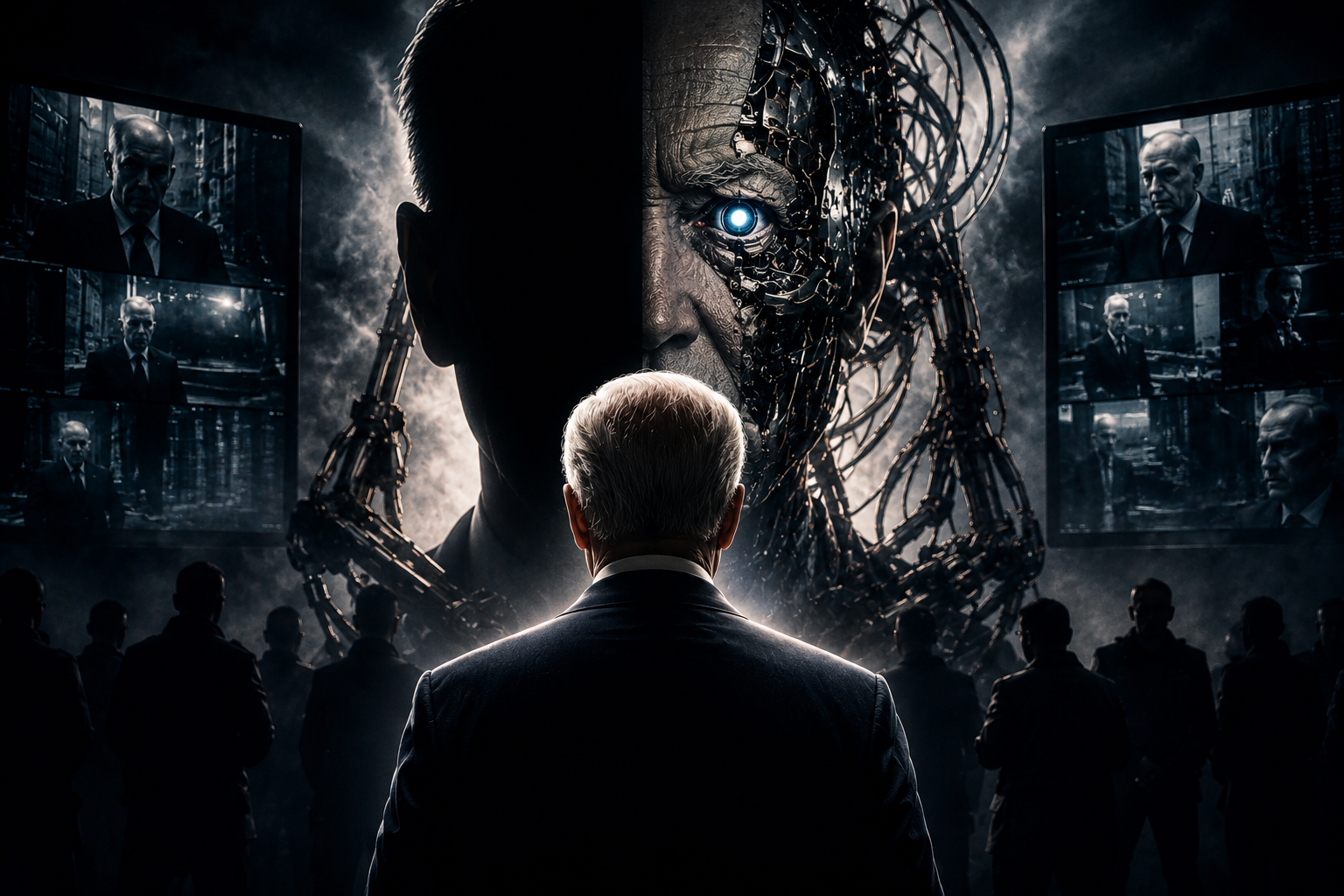
Why Rumours That Joe Biden Is A “Robot” Are Exploding Across The Internet Again
The Theory Sounds Ridiculous — But Millions Keep Seeing It
The core conspiracy theory claims that former President Joe Biden was secretly replaced by a clone, robot, actor, or body double. Different versions claim he died years ago, was executed, or is being controlled remotely by hidden forces. The details constantly change, but the underlying idea stays the same: the person appearing publicly is supposedly “not the real Biden.”
The theory has spread repeatedly across social media, conspiracy forums, short-form video apps, and political meme accounts. In recent months, it has surged again after viral clips claimed Biden’s face looked “artificial,” his movements appeared “mechanical,” or public appearances showed supposed “glitches.” Some posts even falsely claimed newly released government files “confirmed” replacement theories, despite no verified evidence supporting that claim.
Part of the reason the theory survives is because it constantly reinvents itself. One week it is a “robot” theory. The next it becomes a “clone” theory. Then it mutates into claims about masks, deepfakes, CGI, body doubles, or secret military operations. The flexibility keeps it alive because believers can always adapt the narrative to whatever new video or rumour appears online.
Biden’s Public Decline Created The Perfect Environment
The conspiracy theories did not emerge in a vacuum. They grew inside a political climate where millions of Americans already questioned Biden’s health, mental sharpness, physical stamina, or ability to govern effectively.
Over the last several years, public appearances featuring verbal stumbles, freezes, confused moments, awkward movements, or visible aging became constant online discussion points. Critics framed these moments as evidence of serious cognitive decline, while supporters argued clips were selectively edited or exaggerated. Either way, the perception gap created fertile ground for conspiracy culture.
Once people begin believing that “something feels wrong,” conspiracy communities rush in to provide a dramatic explanation. Instead of accepting aging, stress, editing distortions, or ordinary human decline, some users leap toward hidden-plot narratives because those explanations feel emotionally bigger, more cinematic, and more satisfying.
That psychological jump is extremely common in conspiracy culture. Experts studying online misinformation repeatedly note that humans naturally search for patterns, hidden meaning, and intentional causes during periods of uncertainty or distrust.
Social Media Algorithms Reward The Most Extreme Claims
The modern internet does not reward balance. It rewards emotional intensity.
A calm video explaining that Biden is simply an elderly politician will never outperform a dramatic clip claiming the President was secretly replaced by a robotic double. The second claim triggers outrage, curiosity, disbelief, fear, and endless comments. Algorithms interpret that engagement as success.
That creates a feedback loop where increasingly extreme claims receive increasingly massive distribution. Once one viral clip performs well, hundreds of copycat creators produce similar content. Eventually users encounter the same theory repeatedly across multiple platforms, which psychologically makes the idea feel more credible through repetition alone.
The rise of AI-generated imagery and low-quality synthetic content has made the situation worse. Experts increasingly warn that “AI slop” — huge volumes of cheaply produced synthetic media — is flooding social platforms with misleading visuals designed purely to farm engagement.
This matters because conspiracy theories no longer rely on detailed evidence. They rely on visual suggestion. A blurry freeze-frame, distorted facial angle, compression artifact, or edited clip becomes “proof” once enough people share it with certainty.
Donald Trump And Conspiracy Culture Changed The Rules
The modern political environment also helped normalize conspiracy thinking at scale. During and after the 2020 election cycle, online political discourse became saturated with claims about secret plots, hidden actors, election manipulation, deep states, and shadow control systems.
Even bizarre theories increasingly entered mainstream political conversation. Donald Trump himself has reposted or amplified fringe conspiracy material in the past, including content linked to false claims surrounding Biden.
Once conspiracy culture becomes politically normalized, theories that would once remain buried in obscure internet forums suddenly gain visibility among millions of ordinary users. The barrier between fringe internet communities and mainstream political discourse becomes weaker every year.
That shift matters because conspiracy theories spread fastest when they align with existing emotional beliefs. People who already distrust institutions, governments, media organizations, or political elites are far more likely to accept dramatic hidden explanations over ordinary ones.
The Theory Is False — But The Distrust Is Real
There is no verified evidence that Joe Biden was replaced, cloned, secretly executed, or transformed into a robot. Claims surrounding “mask malfunctions,” “body doubles,” or hidden replacement operations remain unsupported conspiracy theories with no credible proof.
But dismissing the entire phenomenon as simply “crazy internet behaviour” misses the deeper issue. The real story is how many people are now psychologically prepared to believe almost anything about political leaders.
That reflects collapsing institutional trust, hyper-polarized politics, AI-generated misinformation, social media addiction, and a digital culture built around outrage and suspicion. Modern conspiracy theories spread because they emotionally satisfy audiences who already feel disconnected from official narratives.
The Biden robot rumours are therefore less important as a literal theory and more important as a warning sign. They reveal a society where millions increasingly struggle to separate edited performance from reality, speculation from evidence, and entertainment from truth.
The Internet Is Moving Into Dangerous Territory
The real long-term danger is not whether people believe Biden is a robot. It is that future misinformation campaigns will become far more convincing than today’s crude conspiracy memes.
Deepfake technology is improving rapidly. AI-generated voices, faces, and synthetic video are becoming harder to detect. Political misinformation is increasingly visual, emotional, and algorithmically amplified. In that environment, even absurd theories can achieve enormous reach before fact-checking ever catches up.
That creates a future where conspiracy culture may no longer depend on obviously ridiculous claims. It may eventually operate through highly realistic synthetic media capable of deceiving millions in real time.
The Biden “robot” rumours therefore sit at the intersection of several powerful forces at once: aging political leadership, collapsing public trust, algorithm-driven outrage, AI-generated content, and a digital ecosystem financially rewarded for chaos.
The theory itself may be false. But the conditions allowing it to spread are very real.
