

Turkey detains 357 Islamic State suspects after Yalova clash exposes a New Year threat window
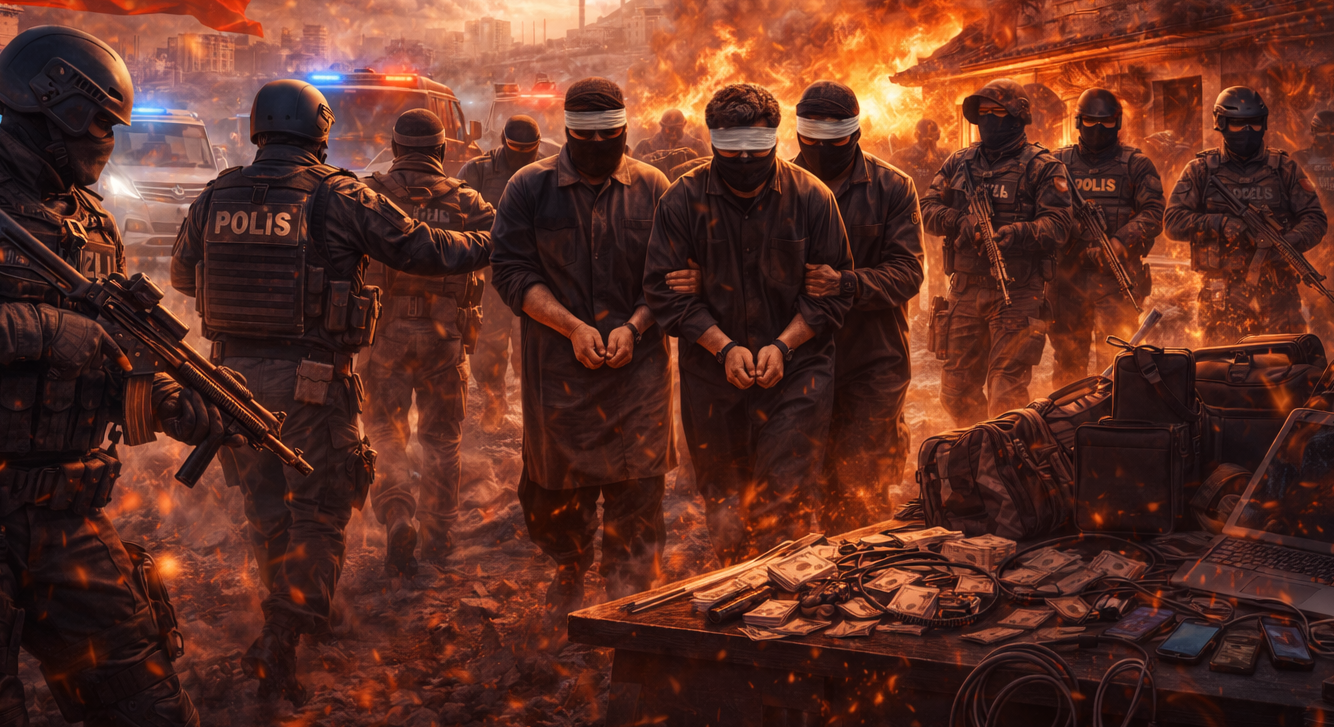
As of December 30, 2025, Turkey detains 357 Islamic State suspects in a nationwide sweep that follows a deadly gun battle in Yalova a day earlier. The timing is not incidental. It lands in the narrow stretch when crowded public spaces, holiday travel, and heightened emotion can turn a small cell into a national crisis.
The immediate trigger was an hours-long standoff at a house in Yalova, south of Istanbul, that ended with deaths on both sides. The broader driver is the fear of coordinated attacks around Christmas and New Year, when even a single incident can cause outsized public shock and political aftershocks.
This piece explains what is confirmed about the raids, what the Yalova clash reveals about the threat picture, and how Turkey’s security posture is likely to shift as the calendar flips. It also looks at the less visible part of the story: money, logistics, and digital coordination.
The story turns on whether Turkey can disrupt Islamic State networks at scale without pushing the threat into smaller, harder-to-detect forms.
Key Points
Turkey detains 357 Islamic State suspects in simultaneous operations across 21 provinces, as authorities tighten security around the holiday period.
The crackdown follows a deadly clash in Yalova on December 29, where three police officers and six suspected Islamic State militants were killed in an operation at a suspected hideout.
Investigators carried out major raids in Istanbul and other provinces, seizing digital materials and documents that could help map networks beyond the gunmen at the centre of the standoff.
Authorities have linked recent actions to intelligence about potential attacks around Christmas and New Year’s celebrations, raising the stakes for near-term prevention.
The case highlights a shift in focus from isolated raids to broader network disruption, including suspected financing and facilitation routes connected to Syria.
The next signals to watch are legal outcomes for detainees, follow-on operations in early January, and the security posture around large gatherings on December 31 and January 1.
Background
Turkey’s latest operation spans 21 provinces and includes large-scale searches and detentions in major cities, including Istanbul and Ankara. The headline figure, 357, signals breadth. It suggests a net cast wide enough to catch not only suspected operational planners but also facilitators who provide housing, transport, money movement, and communications.
The operation comes directly after the Yalova clash on December 29. The police targeted a residence believed to serve as a hideout. The confrontation lasted for hours and ended with three police officers and six suspected militants dead. Several security personnel were wounded, and civilians inside the property were removed alive.
In the days leading up to this, Turkish authorities carried out other actions tied to alleged plots timed to the holiday season. That context matters because it frames the raids less as a routine counterterror cycle and more as a preventive surge aimed at a specific risk window.
Turkey has lived through Islamic State violence before. The group’s most notorious recent strike inside the country remains the 2017 New Year nightclub attack in Istanbul, a case that still shapes official instincts about late-December threat spikes. Since the mid-2010s, Turkey’s security approach has hardened, combining domestic raids with an outward focus on cross-border dynamics tied to Syria.
Political and Geopolitical Dimensions
The Turkish government has a clear incentive to demonstrate control going into the New Year. A high-visibility attack would be read as a failure of the state, even if the operational chain began outside Turkey. That pressure favours broad preventative sweeps, fast operational tempo, and public messaging that frames the state as acting early rather than reacting late.
There is also a regional layer. Syria remains the central geographic reference point for Islamic State logistics, recruitment narratives, and facilitation routes. Even when an attack plot is domestically rooted, investigators tend to look for connective tissue to networks across the border: money transfers, couriers, online handlers, and travel patterns.
Two near-term scenarios are plausible. In one, the detentions lead to quick legal outcomes that allow security agencies to claim disruption and move into quieter intelligence work. In the other, the raids trigger a rolling series of follow-on operations as digital evidence and seized documents widen the map of suspects. The second scenario becomes more likely if investigators find clear network links, shared devices, or repeat contacts across provinces.
Technological and Security Implications
The Yalova clash is the visible edge of the threat: armed militants in a fixed location. The more durable challenge sits behind it: how cells stay connected while avoiding detection. When authorities seize phones, storage devices, and documents, they are often looking for the mundane details that make attacks possible—addresses, transport plans, fundraising channels, and trusted intermediaries.
A key operational tension is speed versus precision. Rapid detentions can reduce immediate risk around crowded dates, but they can also fragment networks in ways that complicate long-term mapping. If suspects believe the net is widening, they may switch devices, abandon known meeting points, and reduce communications, making plots harder to trace but not necessarily preventing them.
A realistic range of next steps runs from intensified surveillance around transport hubs and major events to tighter checks on suspected financing routes to targeted raids based on what investigators pull from seized data. The scenario that becomes most likely will depend on whether the evidence suggests a small number of active plots or a broader support ecosystem.
Social and Cultural Fallout
Counterterror operations do not land evenly across society. A large sweep timed to a holiday threat narrative can heighten public anxiety, especially in major cities where everyday life depends on crowded places—metros, ferries, shopping streets, stadiums, and nightlife districts.
There is also the risk of social spillover. When officials link threats to cross-border networks, ordinary people can conflate security concerns with migration debates or minority communities. This can escalate the situation in a manner that benefits some actors politically and harms others socially.
Public trust will hinge on perceived proportionality. People may accept the operations as necessary if the state communicates clearly about the prevented actions and the courts process cases transparently. If cases collapse quickly or detentions appear indiscriminate, the same actions can fuel cynicism and conspiracy thinking.
Economic and Market Impact
The immediate economic hit is usually not measured in GDP. It is measured in behaviour. A credible threat narrative can thin footfall in shopping areas, shorten evenings out, and increase cancellations for domestic tourism around New Year.
Security surges also carry direct costs. More patrols, more overtime, more operational deployments, and greater strain on courts and detention facilities are real budget pressures, even if they do not show up neatly in public headlines.
The longer-term economic risk is reputational. Turkey’s tourism brand depends on a sense of normality in its cities and coastal destinations. Even a disrupted plot can become a headline abroad. The best-case outcome for markets and tourism is a quiet New Year with visible security and no incidents, followed by a quick fade in international attention.
What Most Coverage Misses
The headline number, 357, makes the story feel like a simple crackdown. But the more revealing detail is what investigators sought and seized: digital materials and documents. That points to an effort to dismantle connective tissue, not just detain suspects.
In other words, the target is not only gunmen. It is the enabling layer—money collection, housing, courier routes, device sharing, and online coordination. That layer is less dramatic than an eight-hour siege, but it is what turns ideology into capability.
If authorities can turn seized data into a durable network picture, the story becomes less about this week’s arrests and more about whether Turkey is shifting from reactive disruption to sustained prevention. If they cannot, large sweeps risk becoming a recurring ritual tied to the calendar, rather than a strategy that shrinks the threat over time.
Why This Matters: Turkey detains 357 Islamic State suspects
The people most affected in the short term are those living in or travelling through large urban centres, especially Istanbul and Ankara, where crowds and movements are hard to secure without changing daily life. Even when no incident occurs, the behavioural impact of fear also affects businesses that rely on evening trade, such as restaurants, hotels, and venues.
In the near term, the critical dates are December 31, 2025, and January 1, 2026, when public celebrations and travel peak. A heightened security posture can reduce risk, but it can also create friction, delays, and visible tension in public spaces.
Over the longer term, the stakes are about capability. If the raids find reliable funding or support links to Syria, Turkey might step up actions against those connections and work more closely with regional security partners that share similar interests. If evidence instead suggests mostly domestic recruitment and self-directed plotting, the policy focus may shift toward local surveillance, online monitoring, and community-level prevention.
Key things to look for next are court rulings on detainees in early January, any new operations related to digital evidence that was taken, and whether officials say the disrupted plots are part of larger groups or just individual cases.
Real-World Impact
A restaurant manager in central Istanbul plans for a strong New Year week, then sees bookings soften as people choose smaller gatherings at home. The lost revenue is immediate, even if the city remains calm.
A logistics supervisor near the Sea of Marmara watches security checks tighten around transport routes. Delivery schedules become less predictable, and overtime rises to keep supply commitments.
A nurse in Ankara finishes a late shift and finds transport hubs more heavily policed. The extra security is reassuring, but the constant alerts and rumours raise stress and fatigue.
A small hotel owner in a coastal town fields calls from guests asking if it is safe to travel. The owner cannot control the narrative, only the cancellation policy.
The Road Ahead
Turkey’s immediate objective is straightforward: get through the New Year period without an attack while proving that security services can move fast when intelligence suggests a threat spike.
The harder task starts after the calendar turns. It is one thing to detain large numbers of suspects. It is another to convert that sweep into durable disruption: prosecutions that hold, networks that fracture, and financing routes that dry up.
The clearest sign of which way this breaks will be what follows the raids. If investigators announce additional operations driven by seized devices and documented links, it will suggest a widening network picture. If the story fades into silence, the question will be whether the net caught a real operational structure—or mostly shadows at the edge of one.
