Bulgaria Approves Arrest Warrants for Two Germans Accused of Starlink Antenna Arson
The Fire Near Sofia
Starlink Fire Investigation Reaches European Warrant Stage in Bulgaria
Prosecutors allege a brief visit to Bulgaria ended in an antenna fire, while defence lawyers dispute the identification evidence.
A Bulgarian court has authorised European Arrest Warrants for two German nationals accused of deliberately setting fire to antennas used to communicate with the Starlink satellite network near Sofia.
The Sofia City Court approved the prosecution’s request on 19 October 2026. The accused have left Bulgaria. The ruling allows the case to move towards their arrest and surrender from another European Union country, subject to the applicable judicial process.
The decision is not final. Neither man has been convicted, and their appointed lawyers have challenged the evidence linking them to the fire.
The Alleged Visit and Fire
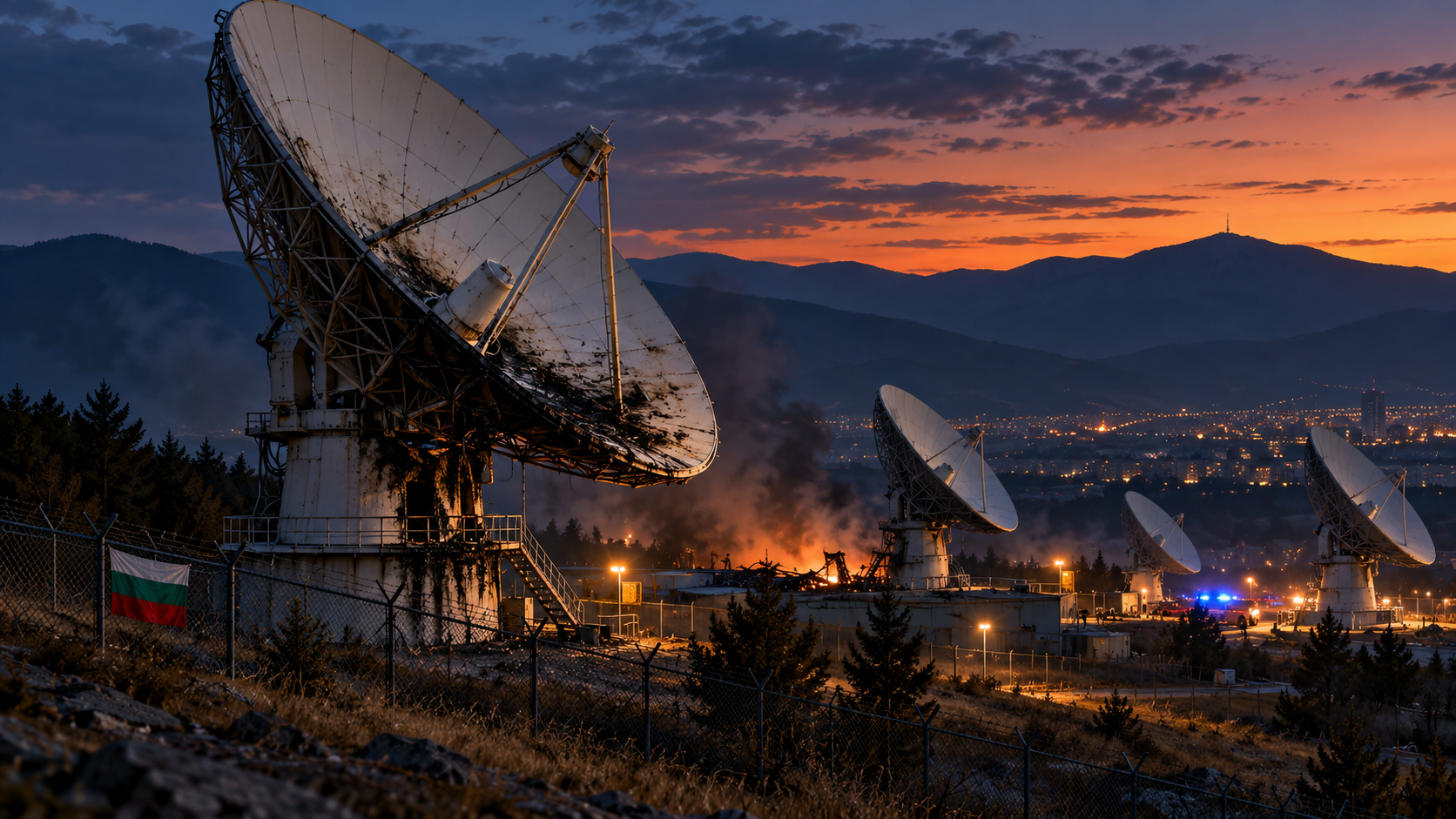
The prosecution’s case concerns a fire on 9 October at the Plana Teleport facility near the Bulgarian capital.
Prosecutors say the two accused entered Bulgaria through the Kalotina border crossing with Serbia, presenting their visit as tourism, and left the country the same day. They allegedly travelled in a vehicle with German registration plates.
The men were charged in their absence on 14 October. The allegation is deliberate arson, rather than an accidental equipment fire.
The brief stay forms part of the prosecution’s account of their movements. Establishing that someone crossed a border, however, does not by itself establish that they committed a crime. Investigators must connect the travel evidence to events at the facility.
What Was Damaged
The account presented by prosecutors identifies eight affected antennas: three destroyed completely, two partially burned and three others affected by the fire.
That differs from the first prominent public account. On 12 October, opposition politician Ivaylo Mirchev said two masked men had set fire to 11 of 17 antennas at a site near Sofia.
The figures should not be merged. The earlier political statement and the later prosecution account describe different damage totals. The available information does not resolve the discrepancy, so eight affected antennas is the figure attributed here to the prosecution’s case.
Nor does a count of damaged antennas establish the scale of any interruption to communications. No verified outage measurement has been established for this article.
The Evidence and the Defence
The material described in court includes photographs, records of the vehicle’s movements, witness testimony and a technical examination of the antennas. Prosecutors also allege that the perpetrators wore masks and gloves.
The defence disputes whether the photographs establish that the accused were the people at the scene. That challenge concerns identification, a central question in any prosecution involving masked perpetrators.
The court accepted that the evidence available at this stage supported authorising the warrants. A warrant hearing does not settle the eventual trial. The prosecution must still prove its allegations through the criminal process, where the defence can challenge the reliability and interpretation of the evidence.
What a European Arrest Warrant Does
A European Arrest Warrant is a judicial mechanism through which one EU country requests the arrest and surrender of a person located in another member state.
It can be used for prosecution or to enforce a custodial sentence. Here, the purpose is to bring the accused before the Bulgarian authorities to face the allegations.
Authorising a warrant does not mean that a person has already been found or returned. If an arrest takes place in another EU country, the relevant judicial authorities there must deal with the surrender request under the applicable rules.
The geographical distinction matters. An EU warrant operates through cooperation between member states. It should not be described as an automatic worldwide arrest order.
Why the Infrastructure Matters
Starlink is SpaceX’s satellite internet system. Its services support civilian communications and are also used by Ukraine’s military, giving the protection of associated infrastructure wider security significance.
The Bulgarian investigation therefore raises questions about the physical security of communications equipment alongside the criminal allegations against the two accused.
Interior Minister Ivan Demerdzhiev has said additional protective measures were being taken around similar facilities. That response addresses an immediate concern: preventing further damage while investigators work to establish responsibility.
Across Europe, the protection of critical infrastructure against hostile activity has become a prominent security issue. But the broader concern cannot supply missing evidence in an individual case. This ruling does not establish a Russian connection, a foreign intelligence sponsor or a coordinated campaign.
For the Bulgarian prosecution, the immediate task is concrete: locate the two accused and pursue the judicial steps needed to bring them before a court. The disputed identification evidence will remain central to what follows.
