

China’s Supercomputer Claim Is Not Just About Speed — It Is About Power
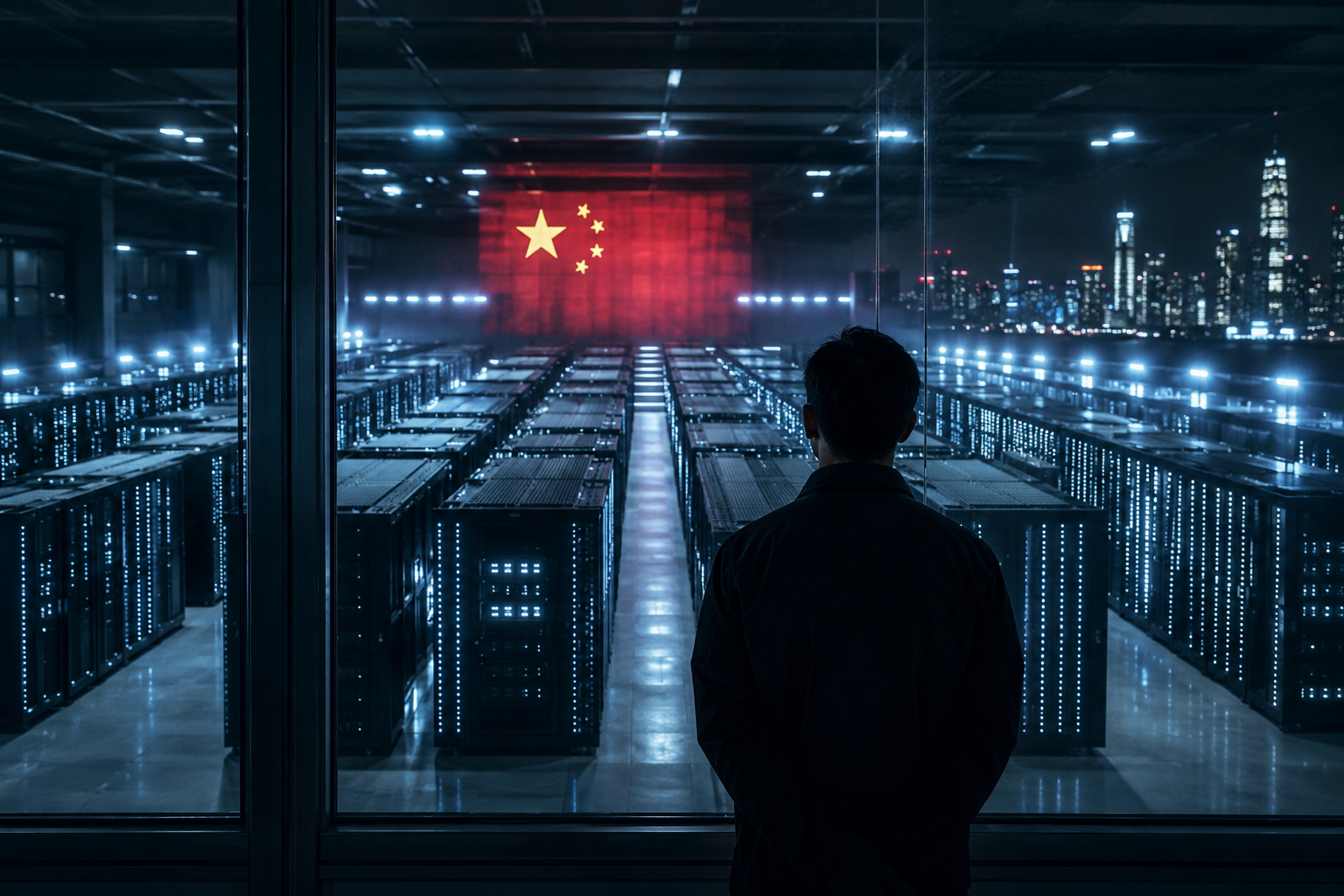
China’s New Supercomputer Claim Could Redraw The Global Technology Race
Why China’s Fastest Supercomputer Claim Is Bigger Than AI Hype
China Has Reentered The Supercomputer SpotlightChina has returned to the top of the global supercomputer rankings with LineShine, a system installed at the National Supercomputing Centre in Shenzhen. The latest TOP500 list places LineShine at number one, displacing the U.S. system El Capitan on the High Performance Linpack benchmark, the long-running test used to rank traditional supercomputing power.
For a general audience, that means China has not simply announced a powerful machine. It has placed a domestically built system at the top of one of the most visible scoreboards in advanced computing. That matters because supercomputers are not ordinary computers made larger. They are national-scale instruments used to simulate physics, model weather, test materials, study drugs, support energy research, and run calculations too large for conventional systems.
The immediate temptation is to treat this as a simple “China beats America” story. That is too crude. The more important point is that China has chosen to step back into a public ranking system after years of greater secrecy around its highest-end machines, and it has done so with a system presented as built around domestically designed chips.
What This Supercomputer Can Actually Do
A machine like LineShine is designed for high-performance scientific computing. In plain English, that means it can split huge mathematical problems into millions of smaller tasks, process them at extreme speed, and recombine the results into useful answers. That is the kind of power used for climate simulation, molecular modelling, aerospace design, fluid dynamics, materials research, nuclear science, and large industrial optimisation.
This does not mean it is a magic machine that can answer any question or instantly create artificial general intelligence. The TOP500 ranking is based on the HPL benchmark, which measures performance on a specific kind of dense numerical calculation. That benchmark is important, but it is not the same as measuring how good a system is at training frontier AI models, running consumer chatbots, or replacing GPU-heavy AI data centres.
That distinction matters. LineShine reportedly ranked lower on a benchmark more closely aligned with AI workloads, and analysts have noted that the system does not appear to contain the advanced AI chips that dominate much of today’s machine-learning infrastructure.
So the cleanest interpretation is this: LineShine appears to be a major traditional supercomputing achievement, a powerful signal of Chinese domestic engineering, and a strategic benchmark victory. It is not, by itself, proof that China has overtaken the United States in frontier AI.
The Real Claim Is Self-Reliance
The deeper story is not just speed. It is self-reliance under pressure. The United States has spent years tightening export controls around advanced chips and semiconductor technology, aiming to slow China’s access to the hardware needed for cutting-edge AI and high-performance computing. China’s response has been to push harder on domestic alternatives, from chips and interconnects to large-scale computing infrastructure.
That is why LineShine’s domestic-chip claim carries so much weight. If a country can build elite computing systems without relying on foreign-controlled components, it becomes harder to contain through export rules alone. It may still face serious constraints in efficiency, chip quality, manufacturing scale, software ecosystems, and access to the most advanced fabrication tools. But the political message is clear: China wants the world to see that pressure has not stopped it.
This is where the story connects to the broader AI race. China’s nationwide AI strategy has never only been about building the flashiest chatbot. It is about embedding computation into industry, defence, science, surveillance, logistics, and national planning. That wider pattern is explored in China’s Massive AI Mobilization Is Redrawing The Global Tech Map, where the central issue is not one product, but the state-level conversion of AI into infrastructure.
A supercomputer is part of that same logic. It is not just a machine. It is a national asset.
Why This Does Not Mean China Has Won The AI Race
The important caution is that supercomputing and AI are overlapping but not identical races. Traditional supercomputers are built for precision-heavy scientific workloads. Modern frontier AI systems are typically built around massive GPU clusters, specialist accelerators, enormous datasets, and software pipelines designed for training and inference at scale.
That is why a number-one TOP500 result should not be confused with total AI dominance. A country can lead one benchmark while lagging in another capability. It can have impressive domestic hardware but still face bottlenecks in power efficiency, memory bandwidth, advanced lithography, developer tooling, and access to the very latest AI accelerators.
The strongest reading is more subtle and more dangerous. China may not need to “win” every technical category to change the balance of power. If it can build enough domestic computing capacity to support national research, industrial AI, military modelling, and scientific simulation, then export controls become less decisive over time.
That is the hidden pressure behind the announcement. The West does not only have to ask whether China has the fastest public supercomputer today. It has to ask whether China is building an alternative computing stack that becomes harder to choke, harder to measure, and harder to outpace.
What This Means For Ordinary People
For most people, supercomputers feel remote. They sit in national labs, consume huge amounts of power, and solve problems that rarely appear in everyday life. But their effects are not remote. They shape the medicines that get tested, the materials used in aircraft and batteries, the weather models used by governments, the energy systems planned by engineers, and the defence simulations relied upon by states.
If China can expand its domestic supercomputing base, it strengthens its ability to compete in precisely those areas. Better simulation can accelerate drug discovery. Better modelling can support advanced manufacturing. Better scientific computing can help with climate, energy, materials, and aerospace research. Better national computing infrastructure can also support military and intelligence applications.
For the general public, the immediate implication is not that a Chinese machine will suddenly change your phone, job, or home tomorrow. The implication is that the infrastructure behind future technology is becoming more nationalised, more strategic, and more contested. Computing power is no longer just a commercial advantage. It is becoming a form of geopolitical insurance.
That is why the line between science, business, and national security keeps blurring. The same kind of computational power that can model a new medicine can also model weapons, logistics, cyber operations, and industrial systems. The machine itself is neutral. The strategic environment around it is not.
The Benchmark Is Only The Visible Part
The public ranking is the part everyone can see. The more important question is what remains outside public view. Some private AI systems may be more powerful for specific AI workloads but are not submitted to TOP500. Large technology companies often do not put their most important systems into public rankings, and national programmes may reveal only what they want rivals to see.
That makes the supercomputer race strangely theatrical. A public benchmark can be technically real and strategically selective at the same time. It can show genuine capability while also serving as a message: we are still here, we are still advancing, and we can still build at scale.
This is why the claim should be taken seriously without being swallowed whole. LineShine’s ranking is meaningful. It shows real capability on a recognised benchmark. But it does not answer every question about AI, chip manufacturing, energy efficiency, private compute clusters, classified systems, or long-term technological dominance.
The future will not be decided by one list. It will be decided by who can manufacture the chips, power the data centres, train the models, secure the supply chains, recruit the talent, and turn computation into usable economic and military advantage.
The Bigger Pattern Is A Computing Cold War
The LineShine announcement fits a wider pattern: computation is becoming one of the central arenas of global power. The race is not only about faster machines. It is about whether the United States, China, and their allies can control the foundations of artificial intelligence, scientific discovery, cyber capability, and industrial automation.
That makes this story bigger than a benchmark victory. It is a reminder that the AI age depends on physical infrastructure: chips, power, cooling, networks, storage, fabs, export rules, and national strategy. The cloud may feel invisible to ordinary users, but behind it sits hardware, and behind the hardware sits politics.
This is also why the overlap between quantum computing and AI matters. The next phase of computation may involve multiple architectures working together: classical supercomputers, AI accelerators, quantum processors, neuromorphic systems, and specialist chips built for narrow but powerful tasks. That future is explored in What Happens When Quantum Computing And AI Finally Collide?, because the next computing race will not be won by one machine type alone.
LineShine is therefore best understood as a signal flare. It tells the world that China wants visible proof of technological resilience. It tells Washington that restrictions are causing adaptation, not surrender. And it tells everyone else that the next great power struggle may be fought less through speeches and more through machines most citizens will never see.
The fastest computer on a public list is not automatically the most powerful force in the world. But when a state uses that machine to prove it can build, compete, and endure pressure, the benchmark stops being a scoreboard. It becomes a warning.
