

Elon Musk Claims OpenAI Was His Idea — And Accuses Its Leaders Of Betrayal In Explosive Court Testimony
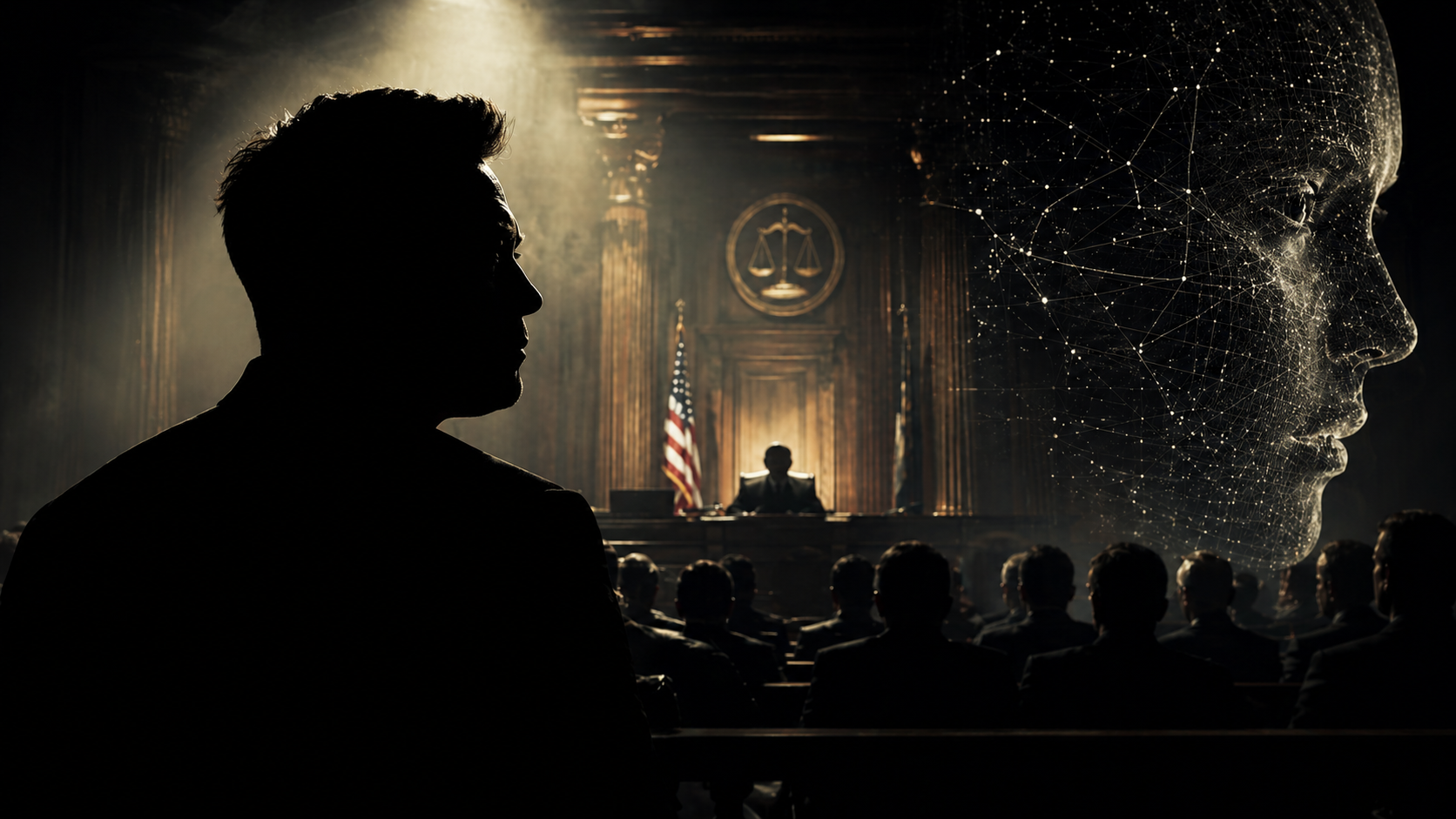
Elon Musk Vs OpenAI: The Testimony That Could Redefine AI’s Origin Story
Inside The Courtroom Where Elon Musk Said OpenAI Was “His" Idea—And Why It Could Reshape AI Power
Elon Musk didn’t just testify. He reframed the entire story.
In a high-stakes courtroom battle, Musk told a jury that OpenAI — now one of the most powerful companies in artificial intelligence — was not just something he had helped build. It was his idea. His vision. His project.
And, in his view, it was taken from him.
That claim is more than personal. It cuts directly into one of the most important questions in modern technology: Who owns the direction of AI—and who decides what it becomes?
What Musk Actually Said — And Why It Matters
During testimony, Musk described OpenAI as something he conceived and helped bring into existence, including shaping its mission, recruiting key figures, and providing early funding.
He positioned himself not as a passive co-founder but as a central architect—someone who believed AI needed to be developed safely, openly, and for the benefit of humanity.
His argument is blunt:
OpenAI was created as a nonprofit
Its purpose was to act as a counterweight to Big Tech dominance
Its mission was to ensure AI remained aligned with public good
And, according to Musk, that mission was abandoned.
He accused OpenAI’s leadership of transforming the organization into a profit-driven entity—effectively turning what he described as a charitable effort into a commercial powerhouse.
At one point, he framed the shift in stark terms, warning that allowing such a transformation would undermine trust in charitable ventures entirely.
That’s not just rhetoric. It’s the legal core of his case.
The Counterargument: This Isn’t About Principle — It’s About Power
OpenAI’s defense is just as sharp—and far less charitable toward Musk.
Their position is that:
No binding promise required OpenAI to remain purely non-profit
The shift to a hybrid or for-profit structure was necessary to compete
Musk’s lawsuit is driven by competitive motives, not principles.
Specifically, they argue that Musk’s own AI company, xAI, sits directly in competition and that this lawsuit emerged only after OpenAI’s explosive success.
In other words:
This is not about the past.
It’s about who controls the future.
The Real Story Most People Are Missing
The headline is simple: Musk says OpenAI was his idea.
But that’s not the real story.
The real story is that AI has moved from philosophy to infrastructure — and nobody agrees on who should control it.
Originally, OpenAI’s framing was clear:
Open research
Broad benefit
Safety-first development
Today, the reality is different:
Massive capital requirements
Strategic partnerships (notably with Microsoft)
Closed or partially closed systems
Competitive pressure from global rivals
That shift wasn’t random. It was structural.
Building cutting-edge AI models now costs billions. Staying competitive requires scale, infrastructure, and speed — all things that nonprofit structures struggle to sustain.
So the transformation Musk criticizes may not be betrayal.
It may be inevitable.
Why This Trial Could Redefine AI Governance
This case is not just about damages—although those are enormous, potentially reaching into the hundreds of billions.
It’s about precedent.
If Musk wins, it could establish the following:
Founders’ original intent can legally constrain future corporate direction
Nonprofit missions cannot be reinterpreted for commercial gain
AI organisations could face stricter structural accountability
If OpenAI wins, the opposite becomes true:
Mission statements become flexible
Profit structures become normalised
AI development fully integrates into traditional corporate competition
That outcome would confirm what many already suspect:
AI is no longer a philosophical project.
It’s an industry.
The Ego Narrative — And Why It’s Too Simple
It’s tempting to reduce this to personality:
Musk vs Altman
Visionary vs operator
Founder vs successor
And yes, there is ego here. There always is at this level.
But that framing misses the deeper tension.
Musk’s worldview has consistently emphasized the following:
Existential risk from AI
The need for control and safety
Long-term survival over short-term profit
That belief shaped his involvement in OpenAI from the beginning.
Meanwhile, OpenAI’s trajectory reflects a different reality:
AI as a competitive race
Speed and scale as survival factors
Commercialisation as the price of relevance
These are not just personal differences.
They are fundamentally incompatible models of the future.
What This Means For The Future Of AI
This trial lands at a moment when AI is no longer emerging — ’s dominant.
Companies are investing tens of billions into infrastructure.
Governments are scrambling to regulate.
Entire industries are breshaping themselvesin real time.
And now, a courtroom is being asked to answer a question that technology itself hasn’t resolved:
Should AI be controlled like a public good or owned like a private asset?
Musk’s claim that OpenAI was “his idea” is not just about credit.
It’s about ownership of direction.
Because in AI, direction is everything.
The Bottom Line
This isn’t just a dispute over history.
It’s a fight over legitimacy.
Musk argues OpenAI has drifted from its original purpose—and this drift is worth challenging in court.
OpenAI is arguing that evolution was necessary—and that survival in AI requires becoming something bigger, faster, and more commercially driven.
Both arguments contain truth.
But only one will shape what comes next.
And that outcome won’t just decide who was right about the past.
It will quietly define how the most powerful technology on Earth is built from here.
