Elon Musk Just Won the Future of Missile Defense — And Most People Haven’t Realized What That Means Yet
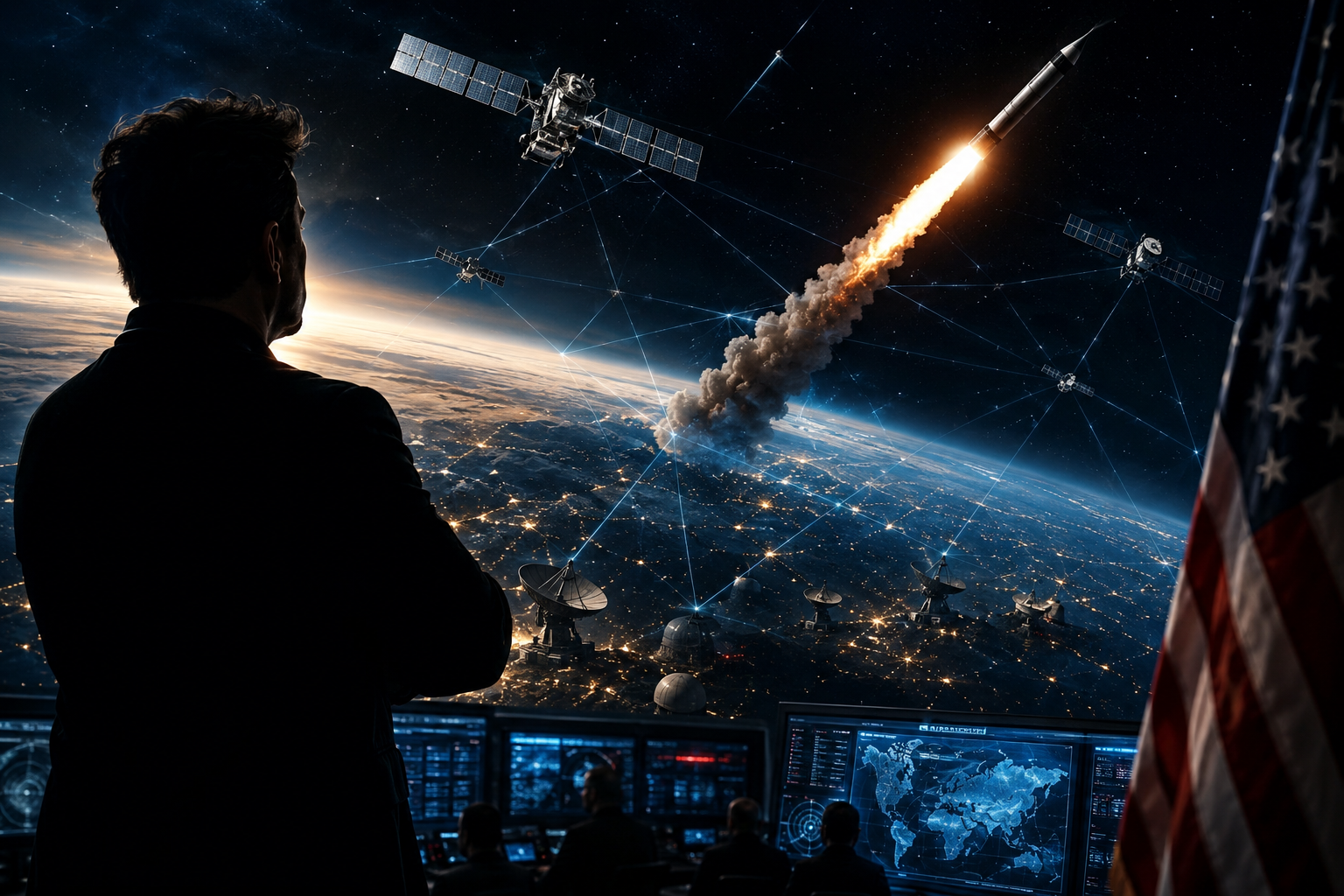
SpaceX’s $4.16 Billion Space Force Deal Signals a New Era of AI-Powered Warfare
SpaceX Is Becoming A Core Part Of America’s Defense Infrastructure
The U.S. Space Force has awarded SpaceX a contract worth approximately $4.16 billion to develop a satellite-based system designed to detect and track airborne threats. The program, known as Space-Based Advanced Moving Target Indicator (SB-AMTI), is intended to combine space-based sensors, communications systems and ground processing into a unified military capability.
At first glance, this sounds like another defense procurement story. In reality, it represents something much larger. The United States is increasingly moving critical military capabilities into space, and SpaceX is becoming one of the companies most trusted to build the infrastructure that makes it possible.
This contract follows another major Space Force award announced just days earlier. That deal, worth $2.29 billion, tasked SpaceX with building a global military data network capable of moving information between sensors, satellites and weapons systems in near real time.
Taken together, the message is clear: SpaceX is no longer simply launching satellites. It is increasingly becoming part of the architecture that connects, tracks and protects American military assets worldwide.
The Real Story Is Data, Not Rockets
Many people still associate SpaceX with Falcon rockets and Starship launches. Those remain important, but the bigger strategic asset may be data.
Modern warfare increasingly depends on information superiority. Detecting a threat first, identifying it correctly and sharing that information instantly can determine the outcome of a conflict before a shot is fired.
The new SB-AMTI system is designed to improve tracking of airborne threats using orbital sensors. Combined with SpaceX's separate military communications network, the result is a growing ecosystem that can move information rapidly between detection systems and decision-makers.
This is where artificial intelligence becomes especially important. Vast networks of satellites generate enormous quantities of data. Human operators alone cannot efficiently process everything. AI systems increasingly help identify patterns, prioritize threats and deliver actionable intelligence faster than traditional methods.
The future battlefield may be defined less by who has the most weapons and more by who has the best information network.
Golden Dome Is Bigger Than Most People Realize
The contract is also tied to the wider Golden Dome initiative, one of the most ambitious defense programs currently under development in the United States.
Golden Dome aims to expand America's ability to detect, track and potentially counter missile threats using a combination of ground systems, sensors and space-based assets. The tracking layer is considered one of the most important components because interception is impossible without accurate detection.
For decades, military planners have discussed the strategic advantages of space-based missile detection. What makes the current moment different is that commercial launch costs have fallen dramatically while satellite manufacturing has become faster and more scalable.
That shift has transformed ideas that once seemed futuristic into programs that governments are now actively funding. SpaceX sits at the center of that transformation because it combines launch capability, satellite production and communications infrastructure under one organization.
The result is a company with influence extending far beyond the commercial space industry.
Elon Musk’s Position Continues To Strengthen
Supporters of Elon Musk often focus on Tesla, social media or Starship. Yet some of his most strategically important achievements may be happening far from public attention.
The Space Force awards reinforce SpaceX's growing role in national security. Multiple billion-dollar contracts in a single week suggest the company is becoming increasingly embedded in America's long-term defense planning.
This is particularly significant because national security contracts tend to create long-term relationships. Governments rarely build critical defense systems around partners they do not trust to deliver.
The contracts also strengthen SpaceX's competitive position against rivals in the aerospace and defense sector. Few companies can simultaneously provide launch services, satellite networks, communications infrastructure and advanced orbital capabilities at comparable scale.
That combination creates a strategic advantage that is difficult to replicate.
Why The Rest Of The World Is Watching
The implications extend beyond the United States.
Military powers across the world are increasingly investing in space-based capabilities. Satellites are becoming essential for communications, navigation, intelligence gathering and missile warning systems.
As more nations develop advanced missiles, hypersonic weapons and long-range strike capabilities, the importance of detection networks continues to increase. The side that can see threats first gains a substantial advantage.
That reality helps explain why governments are investing heavily in orbital infrastructure. It also explains why contracts involving threat detection satellites attract so much attention among defense planners.
Space is no longer simply a scientific frontier. It is becoming a strategic domain that directly influences national security.
The Bigger Shift Has Already Started
The most important takeaway from this story is not the dollar amount.
It is the direction of travel.
The combination of satellites, artificial intelligence, secure communications and military integration points toward a future where defense systems operate as interconnected networks rather than isolated platforms.
Missile warning satellites communicate with data networks. Data networks connect to command systems. AI tools help process information. Decisions are made faster. Responses become more coordinated.
The latest Space Force contract shows that future arriving much sooner than many expected.
What appears to be another government award is actually evidence of a much larger transformation taking place above our heads. SpaceX is becoming a central player in that transformation, and Elon Musk's influence on the future of technology may increasingly be measured not just by electric cars or rockets, but by the invisible infrastructure shaping the next generation of national defense.
