Europe Declares War on Addictive App Design, With TikTok First in the Firing Line
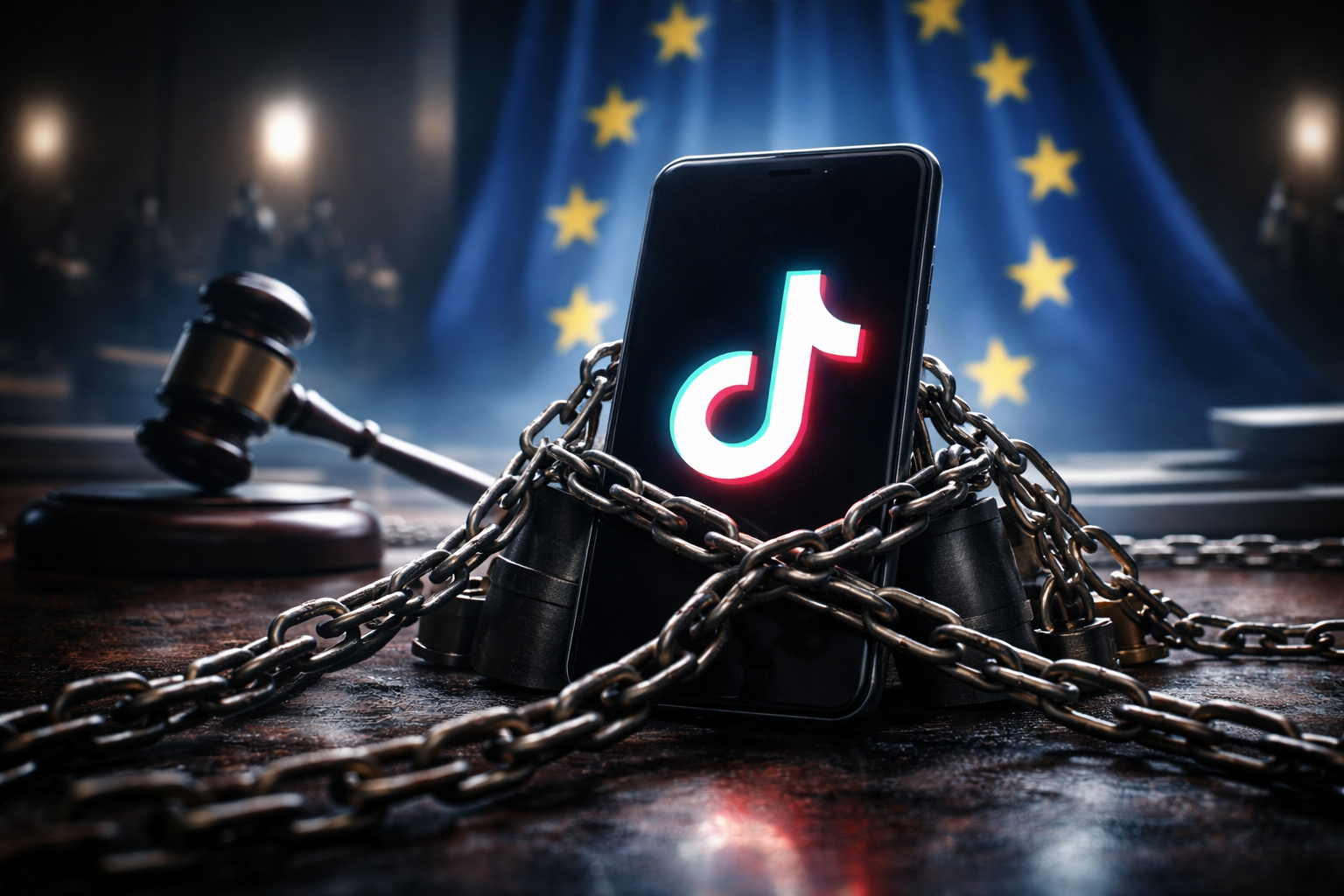
EU regulators charged TikTok under the DSA for its “addictive” design. The case could force product changes and major fines.
EU Regulators Charge TikTok Over “Addictive Design” Under the Digital Services Act
EU tech regulators have formally charged TikTok with breaches of the bloc’s online-content rulebook, the Digital Services Act (DSA), escalating a long-running probe into an active enforcement track. The European Commission’s preliminary findings target what it describes as “addictive” product design features that can drive compulsive use, with particular concern for minors and other vulnerable users.
This is not a fight about one viral video. It is a fight about whether engagement-first design choices—autoplay, infinite scroll, push notifications, and algorithmic feeds—can be treated as a systemic risk that platforms must measure, mitigate, and redesign. TikTok is expected to contest the claims, but the legal direction is now clear: Europe is attempting to regulate attention itself.
One crucial aspect that needs immediate attention is that the DSA not only penalizes misconduct after harm but also requires platforms to demonstrate, both on paper and in product behavior, that they have recognized and mitigated systemic risks resulting from their own design.
The story turns on whether TikTok can persuade regulators that its risk controls are credible, measurable, and effective at scale.
Key Points
EU regulators issued formal charges alleging TikTok failed to adequately assess and mitigate systemic risks tied to app design that can promote compulsive use.
The preliminary findings focus on features such as infinite scroll, autoplay, push notifications, and the recommender system that personalizes content feeds.
The Commission has indicated that the remedies could involve changes in product design, rather than just policy updates, which could significantly impact TikTok's experience in the EU.
If the Commission ultimately confirms a breach, potential penalties can reach up to 6% of global annual turnover under the DSA framework.
TikTok has an opportunity to respond before any final decision; the case now moves into a procedural phase where evidence, measurements, and mitigations will be scrutinized.
The outcome could set a template for how regulators treat “addictive design” across the wider social platform sector.
Background
The Digital Services Act is the EU’s core law for regulating online intermediaries and “very large online platforms,” imposing obligations that scale with reach and potential harm. For the largest services, the DSA is built around the idea of systemic risk: platforms must identify risks stemming from how the service functions and is used, then implement mitigations and demonstrate that those mitigations work.
In TikTok’s case, the Commission’s inquiry has centered on whether the platform’s design and recommendation dynamics create predictable harms—especially for young users—and whether TikTok’s existing tools meaningfully reduce those risks. That includes how easy it is to use screen-time controls, how robust parental settings are, and whether the product defaults steer users toward extended sessions.
The Commission’s new step—formal charges via preliminary findings—moves the situation from a “we are looking into this” posture to a “we believe the law may have been breached” posture. That shift matters because it tightens timelines, raises reputational and legal risk, and increases the probability that concrete remedies get written into a final decision.
Analysis
The Legal Core: Europe Is Treating Design as a Safety Obligation
The Commission’s argument is structurally simple: certain design features can predictably push users into longer, more habitual usage patterns, and TikTok allegedly did not do enough to assess and mitigate that risk. Under the DSA’s risk-based approach, the question is not whether TikTok offers any safety tools, but whether the platform can show that the tools meaningfully reduce the systemic risk created by the service’s design and operation.
Two plausible scenarios follow:
Scenario A: TikTok convinces the Commission its mitigations are effective.
Signposts: TikTok publishes stronger measurement claims, expands default friction (like enforced breaks), and demonstrates higher adoption and efficacy of controls.Scenario B: The Commission concludes mitigations are inadequate and orders changes.
Signposts: a final decision references specific product defaults, usability barriers, or insufficient impact metrics; remedies include mandated design adjustments.
The Product Battlefield: Defaults, Friction, and the Algorithm’s “Session Engine”
When regulators say “addictive features,” they often mean defaults that reduce stopping points: Autoplay keeps content flowing; infinite scroll removes natural endpoints; notifications re-trigger attention; personalization rapidly learns what sustains viewing. Those elements can be adjusted, but each adjustment risks lowering engagement—especially if made the default rather than an optional setting.
This creates a direct product tension: many safety tools exist as opt-ins, buried in menus, or set behind parental configuration steps. Regulators, by contrast, tend to care most about defaults and ease of use because defaults shape population-level outcomes.
Watch for product-level signals that this is moving from law to UX:
stronger default break prompts that are harder to dismiss,
time-limit tools that are simpler to activate and harder to bypass,
parental settings that are more discoverable and less complex,
and changes that introduce “stopping cues” into the feed.
The Enforcement Reality: Remedies Can Land Faster Than Many Expect
A common misconception is that enforcement is mostly about a fine years from now. Under the DSA, the bigger operational risk is a remedies package that forces engineering work, design changes, and ongoing reporting—especially if the Commission demands evidence of effectiveness.
This is where platform strategy matters. If TikTok believes the EU is setting a precedent that will spread, it may prefer to contest aggressively. If TikTok believes it can narrow the scope with targeted changes, it may seek to settle into a compliance path that preserves core engagement while meeting the letter of the law.
Two more scenarios to track:
Scenario C: Negotiated compliance route.
Signposts: TikTok announces a bundle of safety and design changes “for Europe,” alongside commitments to publish transparency or risk metrics.Scenario: D: Hard-fought legal standoff.
Signposts: strong public rebuttals, procedural escalation, and minimal immediate product changes while the case advances.
Second-Order Effects: The EU-Only Product Fork Problem
If Europe forces meaningful design changes, TikTok faces a strategic choice: apply changes globally for simplicity and reputational cover, or run an EU-specific experience to protect engagement elsewhere. An EU-only fork can be built, but it creates operational overhead: more QA, more policy complexity, and a permanent risk of inconsistent behavior across regions.
The deeper issue is measurement. If the Commission’s theory is “design drives systemic risk,” then TikTok may need to show measurable reductions in problematic use patterns, not just the presence of tools. That pushes platforms toward instrumented safety—designing not only for engagement but also for auditable outcomes.
What Most Coverage Misses
The hinge is that this case is not mainly about content moderation—it’s about whether TikTok can prove, with credible measurement, that it has reduced systemic harms produced by its own engagement mechanics.
That changes incentives because “we added a feature” is no longer a defensible endpoint; platforms may need to demonstrate adoption, effectiveness, and impact over time, potentially under regulator-defined expectations. If the Commission frames success as a measurable reduction in compulsive-use patterns (especially among minors), then product teams are effectively being regulated by outcome, not intent.
Two signposts to watch in the next days and weeks:
Evidence language: whether the Commission’s documents emphasize measurable efficacy (impact, uptake, default behavior) rather than simply listing features.
Design specificity: whether remedies being discussed point to default settings and friction changes, not just broader “improve safety tools” commitments.
What Changes Now
The biggest immediate change is procedural gravity: TikTok is now responding to formal preliminary findings, not informal concern. That increases the likelihood of concrete remedies and raises the pressure to show rapid, credible movement—either through product changes, evidence submissions, or both.
Who is most affected:
TikTok’s EU product and engineering teams, because design changes can become legally required deliverables.
Other large platforms, because a durable theory of “addictive design as systemic risk” can be reused across services.
Advertisers and creators, because engagement changes can ripple into reach, session length, and monetization dynamics.
Short-term (next 24–72 hours / weeks):
Expect TikTok’s formal response posture to harden, alongside selective signals of willingness to improve safety features. The Commission may also clarify the types of changes it expects, even if only indirectly through enforcement language.
Long-term (months / years):
If the Commission ultimately confirms a breach, the precedent could reshape default UX patterns in Europe across major social apps—because the mechanism is now explicit: design choices that increase compulsive use can be treated as a compliance problem, not merely a PR problem.
The main consequence is that platforms may need to redesign engagement loops because the EU is attempting to regulate measurable risk outcomes, not just published policies.
Real-World Impact
A parent tries to set screen-time limits and discovers the controls are difficult to find, hard to configure, or easy to override. If regulators force simpler defaults, those controls could become more usable—and more effective.
A creator notices slightly lower average watch time in Europe after new break prompts appear. That could shift what content performs best, even if overall views remain strong.
A mid-sized app copies TikTok-style engagement mechanics to grow fast, then realizes the EU’s enforcement theory can also be applied to them once they scale.
A product team inside a large platform starts designing features with “auditability” in mind—tracking not just clicks and watch time, but safety-tool adoption and measurable reductions in risky usage patterns.
The Compliance Showdown That Will Redefine “Engagement”
TikTok’s immediate challenge is to argue that its safeguards are real, usable, and effective—while regulators argue that the product’s default mechanics still push too many users into autopilot scrolling. That trade-off is the heart of the case: friction and stopping points can protect users, but they can also blunt engagement.
If the EU makes design remedies stick, it will mark a shift in how the world’s biggest apps evolve: product defaults become regulatory terrain. Watch for the Commission’s next procedural milestones, TikTok’s response framing, and any early “EU-first” design adjustments that signal where compromise ends and confrontation begins.
If Europe succeeds, this moment may be remembered as the point when attention design stopped being just a growth strategy and became a regulated safety domain.
