

France Opens Smart-Glasses Harassment Probe — The Privacy Problem Goes Beyond A Camera
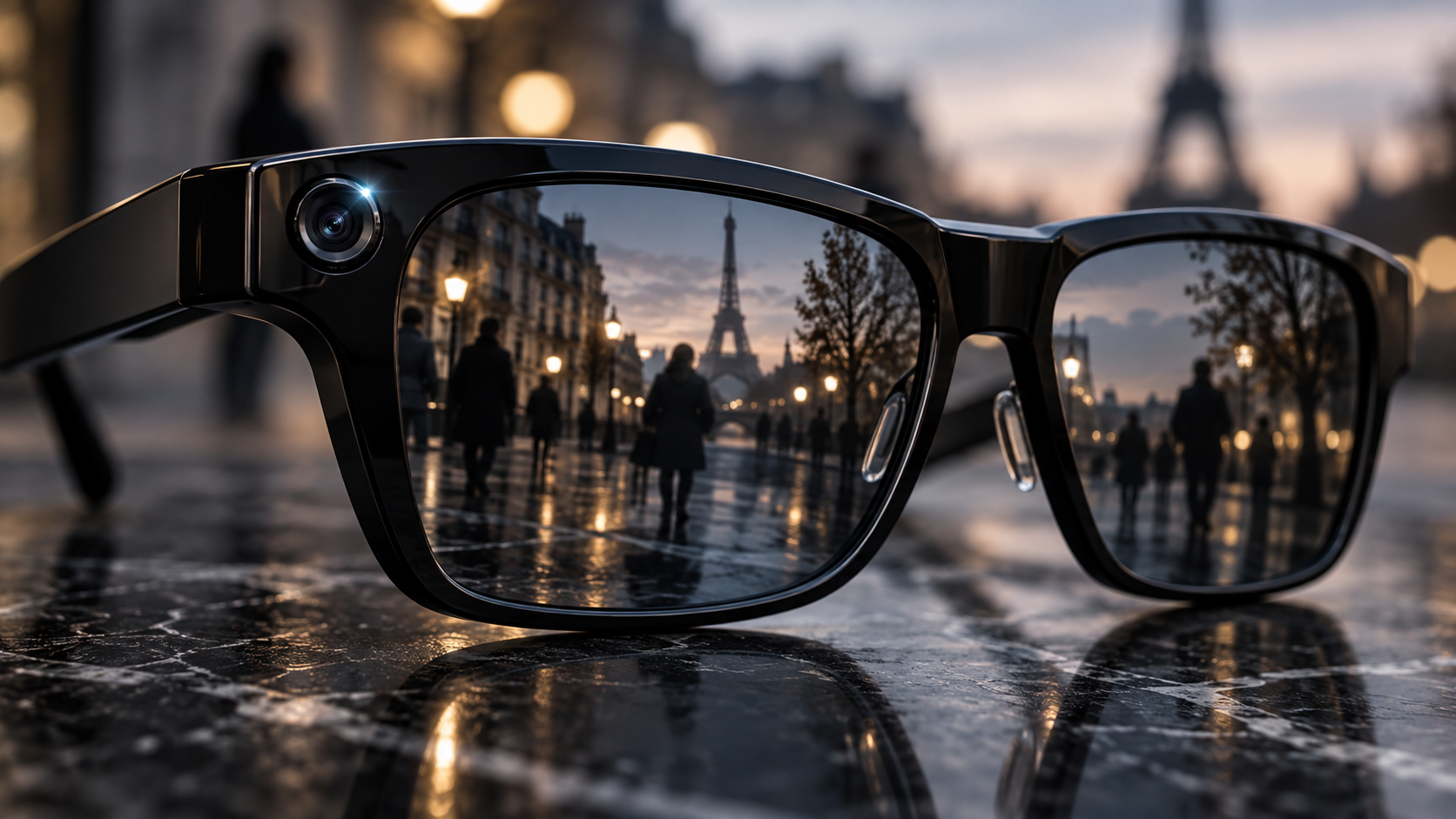
When Someone’s Glasses Become Your Unwanted Camera
A Camera Small Enough To Wear On Your Face Can Make Someone Else’s Ordinary Day Into Online Content.
Paris prosecutors have opened an investigation into suspected sexual harassment involving smart glasses, Reuters reported on 18 September 2026. The complaints concern women being filmed in the street without their consent and videos being shared online.
Prosecutors did not identify the brand used. This is an investigation, not a conviction or a finding against a manufacturer. Meta told Reuters that privacy protections were built into its glasses and would continue to be strengthened.
The case brings a practical question into focus: what protection does a bystander have when a camera is built into an object that normally signals nothing more than someone looking at them?
What A Recording Light Can Actually Tell You
Ray-Ban’s official documentation explains that its Meta glasses have an outward-facing capture light to indicate photography or video recording. It distinguishes this from the inward-facing notification light seen by the wearer. The documentation also describes capture controls and the transfer of photographs and videos to the companion app.
Those product details establish that recording indicators exist. They do not establish which device was involved in the French complaints, whether an indicator was visible in a particular encounter or whether the person being filmed understood it.
Consider a hypothetical exchange at a bus stop. Someone notices a light on another person’s glasses but has never seen that model before. They might understand that something electronic is happening without knowing whether it involves a photograph, a recording or another function. A signal can be visible without communicating enough.
Even a perfectly understood recording indicator leaves another question unanswered: where will the footage go? Knowing that a camera is operating provides no reliable account of the audience, the caption or the context in which a clip might later appear.
Recording And Publishing Are Separate Decisions
The ethical problem becomes clearer when the stages are separated. Someone captures an encounter. Someone chooses a segment. Someone adds words or commentary. Someone publishes it to an audience. Each decision can change the effect on the person shown.
A short clip can omit what happened immediately before or after it. A caption can invite viewers to interpret a neutral expression as hostility, attraction or embarrassment. These are possible mechanisms of harm, rather than claims about evidence established in the Paris investigation.
The same distinction matters for public debate. An account of alleged harassment should explain the reported conduct without replaying identifiable footage merely to attract attention. Reproduction can widen the exposure that prompted the complaint in the first place.
Smart Glasses Are Not One Uniform Product
Jisc’s January 2026 review of smart glasses in education emphasises the breadth of the category. Products differ in cameras, microphones, displays, connectivity and dependence on a paired phone. Some are designed around accessibility, including captioning and support for blind or low-vision users.
That breadth makes blanket assumptions unreliable. Wearing electronic glasses does not itself establish that someone is recording, and a rule aimed at cameras may affect a device primarily used for an accessibility function. A sensible policy needs to describe the behaviour and capability it addresses.
For an organisation designing such a policy, the questions could include whether recording is allowed in particular rooms, how visitors are informed and how an accessibility need can be accommodated. These are policy considerations, not a statement that every workplace has identical legal powers to ban a device.
The Burden Should Not Fall Entirely On Bystanders
There is a basic design test here. How much must a person know about somebody else’s technology to avoid unwanted exposure? A protection that depends on recognising every model, detecting a tiny signal and challenging a stranger will be harder to use than one that makes recording unmistakable.
Manufacturers, users and platforms have different decisions to make. Manufacturers control product design. Wearers choose when and where to record. Platforms decide how reports about uploaded material are handled. Treating one participant as the whole solution risks leaving the other stages unexamined.
Useful scrutiny would therefore ask what a safeguard prevents, how it behaves in ordinary conditions and what happens after somebody reports misuse. A list of protective features is a starting point for those questions, rather than the answer to all of them.
What Remains Unresolved In France
The reporting available for this article does not establish a defendant, a trial outcome or the brand involved. Those gaps should stay visible as the investigation develops. Neither a product’s popularity nor its technical capability proves responsibility for a particular alleged offence.
The wider issue is already understandable without guessing at the case. Recording can become easier for the wearer while becoming harder for everyone around them to recognise. The quality of the response will depend on whether it gives those other people meaningful protection.
