

Hackers Claim They Breached The FBI And Stole Employee Data — The Alleged Leak Could Be A Security Nightmare
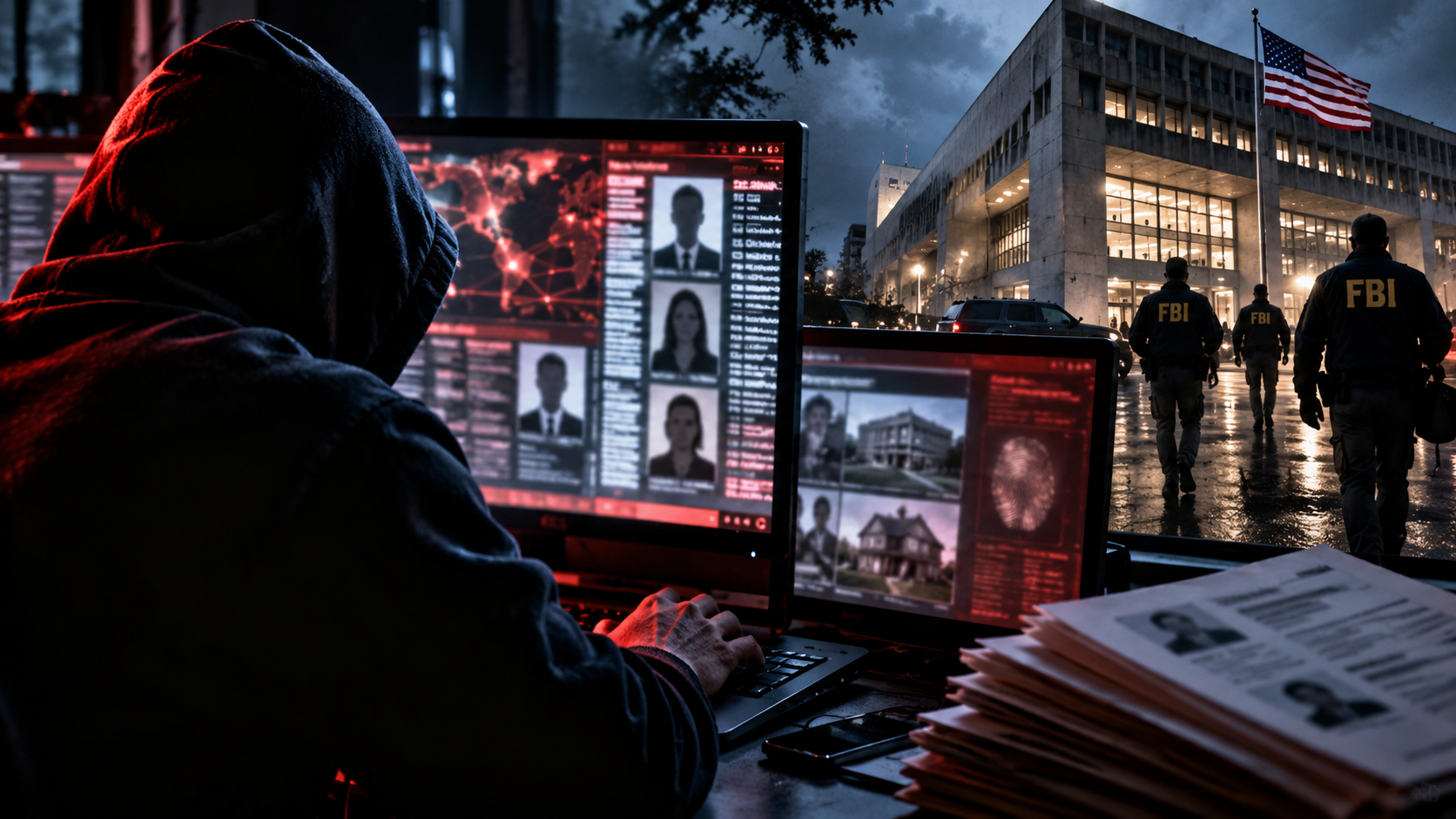
Hackers Claim Massive FBI Employee Data Breach
Hackers Say They Got Inside The FBI
The hacking group ShinyHunters has claimed that it breached systems connected to the Federal Bureau of Investigation and stole information relating to thousands of FBI employees. The group has gone considerably further than simply claiming access to one website or account, alleging that the information it obtained stretches across FBI personnel and people who applied to work for the bureau. As of September 22, the FBI had not publicly confirmed the claimed intrusion.
That distinction matters. ShinyHunters' statements are allegations made by the group itself, and several important technical claims remain independently unverified. But this is not merely an anonymous post with nothing behind it: a sample said to contain information relating to around 5,000 FBI personnel was provided for examination, and portions of that material were reportedly cross-checked against other information.
The alleged data is what transforms the story from an embarrassing cybersecurity headline into a potentially serious security problem. The sample was described as containing names, addresses, phone numbers and information about spouses, while ShinyHunters has made broader claims about the amount and scope of material it obtained. Until investigators establish exactly what happened, the safest description remains simple: the breach is claimed, parts of the alleged dataset appear credible, and its true scale is not yet publicly established.
The Personal Data Could Be More Dangerous Than A Secret Document
When people imagine hackers attacking the FBI, the instinct is to picture classified intelligence being stolen. There is currently no public evidence establishing that ShinyHunters obtained classified investigative files through this claimed breach.
But personnel information creates a different kind of threat.
An address tells an attacker where someone lives. A telephone number creates opportunities for impersonation, account recovery attacks and targeted harassment. Information about spouses and relatives can widen the attack surface beyond the employee themselves. Combined with information gathered elsewhere, even apparently ordinary personnel records can become raw material for highly personalized social engineering.
That risk is particularly acute when the people involved work in federal law enforcement. An ordinary corporate database may expose customers to fraud. A detailed dataset involving investigators, agents or applicants could theoretically help criminals identify relationships, locate individuals, construct convincing impersonation attempts or target families.
Taylor Tailored has already examined how an earlier breach involving the FBI director demonstrated the security value of targeting individuals rather than hardened institutional systems. This alleged incident pushes the same underlying problem in a different direction: personal information can become operationally valuable even when the data itself is not classified.
The Twist Is That The FBI Had Already Warned About ShinyHunters
There is an uncomfortable backdrop to the allegation.
In May, the FBI publicly identified ShinyHunters as a cybercriminal organization specializing in large-scale data breaches and extortion. Its warning described a group that steals substantial volumes of data and then pressures victims, sometimes using threatening communications and harassment against victims and family members. The FBI specifically warned that threat actors associated with ShinyHunters may exaggerate their access as part of those pressure campaigns.
That warning is particularly relevant now because it cuts both ways.
It confirms that the FBI itself considers ShinyHunters a significant cybercrime threat. At the same time, it provides an important reason not to automatically accept everything the group says about its latest alleged victim. The bureau's own guidance says threat actors can combine genuine stolen information with exaggerated claims designed to create maximum fear.
ShinyHunters has linked its latest campaign to that earlier FBI warning and has reportedly demanded that the bureau retract material concerning the group. The alleged breach therefore appears to carry a coercive dimension beyond straightforward financial extortion.
If that description proves accurate, the objective may be as much about humiliating and pressuring the FBI as monetizing stolen information.
A Claimed Zero-Day Makes The Story Even Bigger
ShinyHunters has also claimed that it obtained access through a previously unknown vulnerability involving Oracle PeopleSoft, enterprise software commonly used for functions including human resources and administration. That technical explanation has not yet been publicly confirmed by the FBI, so it should not be treated as established fact.
There is, however, important context. ShinyHunters was already linked earlier this year to exploitation targeting PeopleSoft environments. More than 100 organizations were warned about potentially vulnerable systems during that wider campaign, while Oracle subsequently acknowledged a critical PeopleSoft security vulnerability and issued mitigation guidance.
That history makes the latest allegation worth watching closely.
A weakness in widely deployed enterprise software can produce consequences far beyond a single victim. Human-resources platforms can sit close to precisely the information attackers value most: employee identities, contact information, organizational records and other sensitive administrative data.
The attacker's claim about the specific FBI intrusion remains unconfirmed. But the broader lesson is already familiar: an organization can spend enormous amounts protecting its most secret systems while remaining exposed through an ordinary enterprise application sitting elsewhere in the technology stack.
America's wider struggle with sensitive government information escaping supposedly controlled environments has repeatedly demonstrated the same uncomfortable point. Security is rarely determined only by the strongest system. It is determined by the weakest useful route into the information an attacker wants.
This Could Become A Counterintelligence Problem
The most serious potential consequence is not embarrassment for the FBI. It is what happens if genuinely detailed information about federal personnel spreads beyond the hackers who originally obtained it.
Criminal databases do not have to remain with the criminals who stole them.
Information can be traded, resold, combined with data from previous breaches or passed between groups. That creates an obvious secondary risk where information originally taken for extortion acquires value for fraudsters, organized criminal networks or potentially intelligence services.
There is no evidence at present establishing that the alleged FBI dataset has reached a foreign intelligence service. That possibility should therefore remain exactly that: a potential consequence, not a confirmed development.
But similar logic applies to other large government breaches Taylor Tailored has examined. After hundreds of thousands of French people and businesses were exposed in a major tax-data breach, one of the deeper dangers was that stolen government information could acquire value long after the original intrusion.
For FBI personnel, the sensitivity could be considerably greater.
The bureau investigates cybercriminals, organized crime, espionage, terrorism and foreign intelligence operations. Detailed personal information about the people working inside that organization may therefore have strategic value completely separate from whatever value it holds on an underground marketplace.
ShinyHunters Has A Record That Makes The Claim Difficult To Ignore
ShinyHunters is not an unknown actor suddenly seeking publicity.
The FBI's own May warning described the organization as specializing in large-scale breaches and extortion. Other recent campaigns have involved exploitation of enterprise platforms, credential theft and the theft of large volumes of organizational data.
That does not prove the FBI claim.
Cybercriminal groups have powerful incentives to exaggerate. Reputation itself becomes a weapon: the more capable a group appears, the more frightening its demands become. A claim that it breached one of the world's most recognizable law-enforcement agencies carries enormous publicity value even before anyone determines exactly how much data was obtained.
But the reported sample means the allegation cannot simply be dismissed as empty boasting either.
The central question is no longer whether ShinyHunters posted a dramatic claim. It is whether investigators can determine where the information came from, how recently it was collected, how complete it is and whether the attackers actually penetrated the systems they claim to have reached.
The FBI Now Faces An Uncomfortable Test
The coming response matters almost as much as the original attack.
If a breach occurred, investigators will need to establish the compromised systems, the entry point, the duration of access and the categories of information exposed. Employees whose personal details may have been affected would also face the practical consequences of protecting identities, accounts, family members and physical locations.
If the hackers exaggerated their access, establishing that publicly will be equally important. Silence creates an information vacuum that criminals can exploit.
There is also a wider credibility issue. The FBI is one of the institutions responsible for warning American organizations about cybercrime, disrupting criminal infrastructure and investigating some of the most sophisticated hacking operations in the world. The possibility that a group publicly identified by the bureau could subsequently penetrate systems associated with the FBI makes the incident unusually symbolic.
That does not mean an FBI breach would prove the organization incapable of defending itself. No sufficiently complex organization can eliminate every vulnerability, particularly when previously unknown software flaws are involved.
It does show why cyberattacks against major government institutions have become an increasingly important national-security problem.
The Most Important Fact Is Still Missing
The headline is extraordinary: hackers say they breached the FBI.
The evidence emerging around the alleged stolen records makes the claim serious enough to demand attention. But the decisive confirmation has not yet arrived.
There is currently a large gap between "ShinyHunters possesses apparently credible information involving FBI personnel" and "ShinyHunters breached the FBI exactly as it claims." Determining whether those two statements ultimately become the same story will require technical evidence and an official assessment.
Until then, certainty would be premature.
What is already clear is why the allegation matters. If deeply personal information belonging to investigators and applicants has escaped into criminal hands, the damage is not measured simply in gigabytes. It is measured in how many people can be identified, located, impersonated or pressured — and how long that information remains useful after the original breach disappears from the headlines.
