Nvidia’s RTX Spark Could Be The Biggest Shift In Personal Computing Since The iPhone
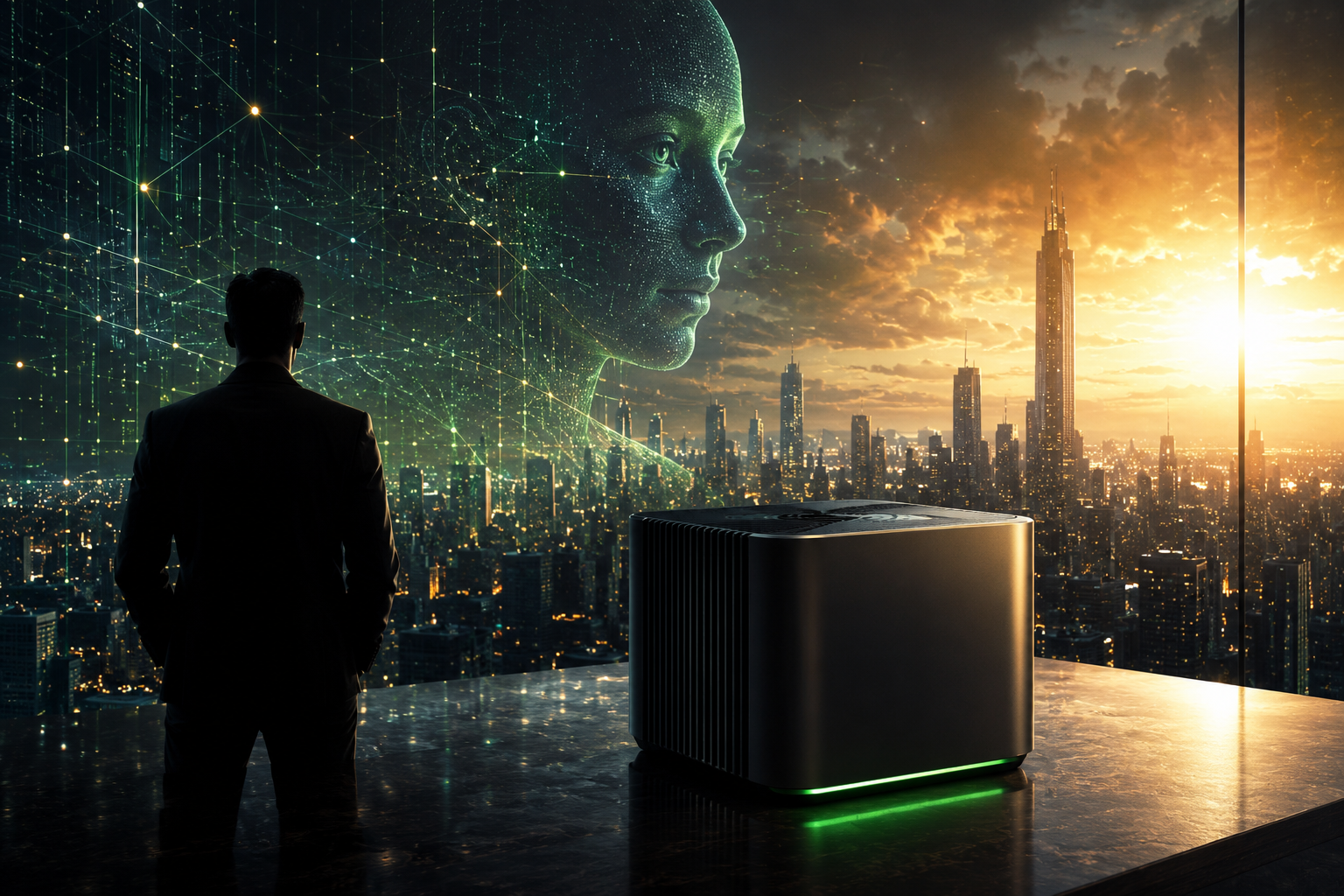
Why Nvidia’s New RTX Spark Platform Has Silicon Valley Talking About The End Of The Mouse And Keyboard
Why Nvidia’s New RTX Spark Platform Has Silicon Valley Talking About The End Of The Mouse And Keyboard
Most technology launches disappear within days. A faster processor arrives, a thinner laptop appears, and the industry moves on. Nvidia’s RTX Spark announcement feels different because it is attempting something far more ambitious than a traditional hardware upgrade.
The company is effectively arguing that the personal computer itself is about to change. Instead of acting as a tool that waits for instructions, future PCs could function more like digital teammates capable of handling complex tasks, reasoning through problems and executing actions with minimal human involvement. Nvidia is positioning RTX Spark as the foundation for that transition.
The Real Goal Is Agentic AI
The most important phrase surrounding RTX Spark is not graphics, gaming or even performance. It is “agentic AI.”
For years, artificial intelligence has largely operated as a conversational assistant. Users type questions, receive answers and repeat the process. Nvidia’s vision moves beyond that model entirely. The company believes future AI systems will be capable of setting goals, using tools, evaluating results and continuously improving outputs without requiring constant human supervision.
That changes the relationship between people and computers. The mouse-and-keyboard era was built around direct control. The agent era is built around delegation. Instead of telling a computer exactly how to perform a task, users may increasingly tell it what outcome they want and allow the machine to work through the details.
Why Nvidia Is Challenging Everyone At Once
RTX Spark is not simply a new graphics product. It combines CPU, GPU and AI acceleration into a single integrated platform.
That means Nvidia is moving directly into territory traditionally dominated by Intel, AMD, Qualcomm and Apple. Rather than supplying one component inside a computer, Nvidia is attempting to become the central platform provider for the next generation of AI-focused devices.
The significance of that move cannot be overstated. Nvidia already dominates much of the AI infrastructure market powering large-scale models and data centres. RTX Spark represents an attempt to extend that dominance from the cloud all the way to the consumer device itself.
If successful, Nvidia would control critical layers of both AI creation and AI consumption.
The Numbers Reveal The Ambition
Specifications alone do not guarantee success, but they reveal intent.
RTX Spark systems are expected to deliver up to one petaflop of AI performance while supporting up to 128GB of unified memory. Nvidia says the platform combines a Grace-based Arm CPU with a Blackwell GPU containing thousands of CUDA cores and advanced AI processing capabilities.
Those figures matter because they push capabilities previously associated with expensive workstations and data-centre hardware into laptops and compact desktop systems.
The practical result is that increasingly powerful AI models could run locally rather than relying entirely on cloud infrastructure. That brings advantages in privacy, speed, latency and long-term operating costs.
The Hidden Economic Story
The most overlooked aspect of RTX Spark may be what it says about the future of work.
For years, discussions about artificial intelligence focused on chatbots, image generators and automation tools. RTX Spark points toward a future where AI agents become persistent digital workers operating alongside human employees.
Imagine marketing assistants that continuously analyse campaigns, research agents that monitor entire industries, software assistants capable of writing and debugging code, or business analysts that generate reports while employees sleep.
The technology is not fully there yet. But Nvidia is clearly building hardware for that destination rather than today's reality.
That is why RTX Spark should be viewed as an economic story as much as a technology story. The companies that successfully deploy AI agents could gain substantial productivity advantages over competitors who fail to adapt.
The Future May Arrive Faster Than Expected
Technology revolutions rarely announce themselves clearly at the moment they begin.
The internet looked like a niche curiosity before reshaping society. Smartphones appeared to be improved mobile phones before transforming communication, commerce and culture. Cloud computing initially seemed like a technical infrastructure shift before becoming the backbone of the digital economy.
RTX Spark could ultimately follow the same pattern.
Today it looks like an impressive new chip platform. Tomorrow it could be remembered as one of the earliest foundations of a world where personal AI agents become as common as web browsers and smartphones.
Whether Nvidia succeeds remains uncertain. Consumer adoption, software support, pricing and developer enthusiasm will all matter enormously.
What is certain is that Nvidia is no longer talking about making computers faster.
It is talking about making them think, act and work.
That is a much bigger story.
