

SpaceX’s Orbital AI Plan Could Move The Internet’s Brain Into Space
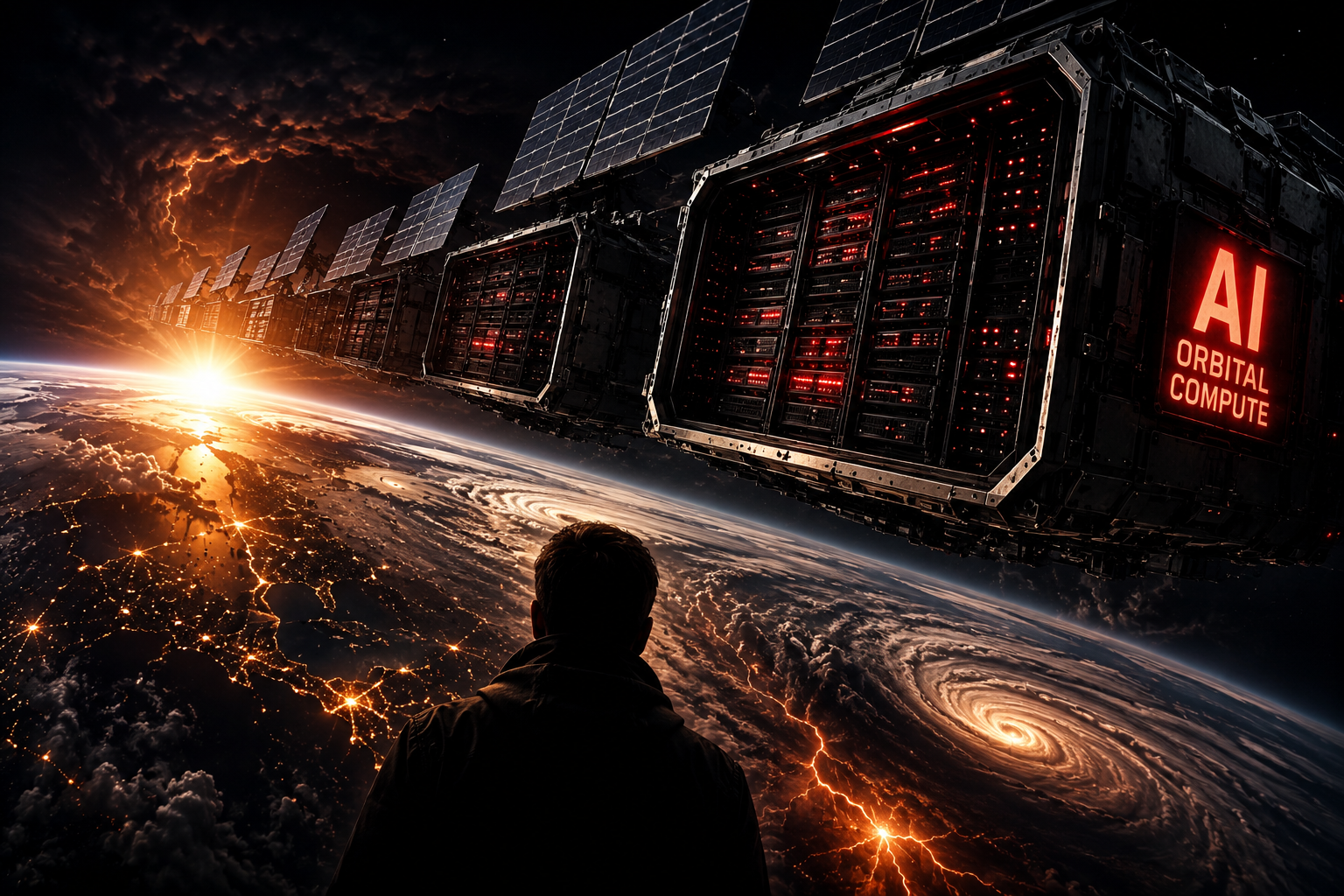
The Race To Put AI Data Centers In Orbit Has Suddenly Become Very Real
The Next Great Data Center May Not Be Built On Earth
SpaceX Is Chasing A Bigger Prize Than RocketsSpaceX’s latest orbital AI computing push sounds like science fiction until the practical reason becomes clear. Modern artificial intelligence needs brutal amounts of electricity, cooling, land, chips, and network infrastructure. The bigger AI becomes, the more the physical world starts to feel like the bottleneck.
That is why the idea of putting compute infrastructure in orbit is suddenly significant. Space has constant access to solar power in the right orbits, no local planning objection from nearby residents, and a natural cooling environment where heat can be radiated away into the cold of space. The proposal is not magic. It is an attempt to move part of the AI machine away from Earth’s most crowded constraints. Company-linked plans have described AI satellites operating as solar-powered computing nodes, with one proposed design producing around 150 kilowatts of peak power and 120 kilowatts of sustained compute power.
For the average reader, the key point is simple: AI is becoming infrastructure. It is no longer just a chatbot on a phone or a clever search box on a laptop. It is becoming something closer to electricity, roads, water, and mobile signal — a background system that shapes daily life.
Why This Matters To Normal People
Most people do not care where a data center is. They care whether their services work, whether prices rise, whether tools improve, and whether new technology actually makes life easier. Orbital AI computing matters because it could affect all four.
If space-based compute becomes viable, it could help expand the supply of AI processing power without relying entirely on giant terrestrial data centers. That matters because AI services need enormous infrastructure behind the scenes. When capacity is tight, advanced tools stay expensive, slow, limited, or locked behind premium subscriptions. When capacity expands, better AI can become cheaper, faster, and more widely available.
The most obvious personal benefit would be better digital services. More compute could mean more capable assistants, faster medical image analysis, better translation, stronger fraud detection, improved weather modeling, smarter logistics, and more personalised education tools. The average person may never say “thank goodness for orbital data centers,” but they may notice that the AI on their phone becomes faster, more useful, and less restricted.
The Hidden Problem Is Energy
AI’s biggest problem is not imagination. It is energy. Ground-based data centers consume vast power, require cooling, and increasingly run into political, environmental, and grid-capacity pressure. Communities object to new facilities. Electricity networks strain. Water use becomes controversial. The AI boom is colliding with the boring but immovable limits of infrastructure.
Orbital computing tries to change the equation. In the right orbit, solar power can be more consistent than on Earth. There are no clouds, no night in some orbital configurations, and no local electricity grid to fight over. Space-based data center research has repeatedly focused on the appeal of solar energy and radiative cooling, while also warning that communications, cost, reliability, and lifetime remain serious barriers.
This is why the story matters beyond technology circles. If AI stays trapped inside Earth’s energy politics, its growth may become slower, more expensive, and more controversial. If part of that workload can move above Earth, AI infrastructure changes from a local planning fight into a planetary network question.
The Benefits Could Be Invisible But Massive
The best technologies often disappear into the background. The average person does not think about undersea cables when watching Netflix. They do not think about cloud regions when using online banking. They do not think about satellite timing when a map app works. Orbital AI computing would likely follow the same pattern.
In daily life, the benefit would not be a dramatic new gadget. It would be smoother intelligence built into ordinary systems. A farmer could get better crop-risk forecasts. A small business could use stronger AI tools without needing expensive enterprise contracts. A doctor could access faster diagnostic support. A student could receive more responsive tutoring. A traveller could get better routing, translation, and disruption prediction.
The deeper benefit is resilience. If more computing capacity sits in orbit, some services could become less dependent on local data center shortages, regional grid issues, or physical concentration in a few crowded technology hubs. That does not mean Earth-based data centers disappear. It means the internet gains another layer.
The Catch Is That Space Is Unforgiving
The danger is overhyping the timeline. Space data centers are not simply normal server rooms with wings. Hardware in orbit faces radiation, heat management problems, launch stress, maintenance difficulty, communication limits, orbital debris, and replacement cycles. Every kilogram matters. Every failure is harder to fix.
That is why the strongest version of this story is not “SpaceX has solved AI.” It is that SpaceX is trying to industrialise a new category of infrastructure using the same logic that made Starlink possible: launch often, manufacture at scale, connect satellites into a network, and improve through iteration. Analysts and technical researchers have noted that the early viable uses may be narrower than general-purpose AI computing for everyone on Earth, especially where communication limits make it inefficient to send huge amounts of raw data up and down.
The first benefits may therefore come from specific workloads: space-native processing, satellite data analysis, delayed AI tasks, model inference, or jobs where only the result needs to be sent back. That still matters. Many revolutions begin with narrow use cases before they become ordinary infrastructure.
This Is Also A Power Story
Every major infrastructure shift creates winners and losers. Railways changed land. Electricity changed industry. The internet changed media. AI compute in orbit would change who controls the next layer of digital power.
If SpaceX can combine rockets, satellites, connectivity, solar power, and AI infrastructure, it would not just be launching machines. It would be building part of the operating system for the next economy. That is why this story should not be treated as a novelty. Whoever owns cheap, scalable AI compute owns leverage over search, defence, finance, education, healthcare, robotics, logistics, and entertainment.
There is also a public concern. A future where AI infrastructure sits above Earth raises hard questions about regulation, competition, orbital congestion, debris, surveillance, national security, and dependency on a small number of private companies. The same system that could make AI cheaper and cleaner could also concentrate power in ways the public barely notices until it is already embedded.
The Real-Life Upside Is Better Tools For Everyone
For ordinary people, the optimistic case is powerful. More AI compute could mean more useful technology at lower cost. It could reduce some pressure to build massive data centers near communities. It could improve global access to digital services. It could help support AI systems that make medicine, education, disaster response, transport, and business operations more efficient.
The most practical example is personal AI. Today, advanced AI can still feel rationed. Some tools are expensive. Some slow down at peak times. Some features are limited because running them costs money. If compute becomes more abundant, the average person could eventually get access to stronger assistants that can handle admin, learning, planning, research, coding, health navigation, financial organisation, and creative work at a much higher level.
That is the real significance. Orbital AI computing is not important because it sounds futuristic. It is important because it points toward a world where intelligence becomes cheaper, more available, and more deeply woven into daily life.
The Future May Be Built Above Us
SpaceX’s orbital AI plan is still a bet, not a finished reality. The technical barriers are serious. The economics are not guaranteed. The regulatory questions are large. The communication bottlenecks alone may decide whether space data centers become a specialised tool or a mainstream pillar of the AI economy.
But the direction is unmistakable. AI is outgrowing the screen and becoming physical infrastructure. It needs power, cooling, land, chips, networks, and political permission. Space offers a radical answer to that pressure: move part of the machine above the planet.
If it works, the average person may not see the satellites, know their names, or think about the engineering. They will simply live in a world where digital intelligence is faster, cheaper, and more capable than before. The biggest change may not be that humanity goes to space. It may be that the intelligence shaping life on Earth quietly starts running from orbit.
