

The Tech Titans Are Heading To The G7 — And That May Be The Biggest Story Of The Summit
Why The World’s Most Powerful AI Companies Are Suddenly Sitting Near Global Leaders
The Guest List That Changes The Meaning Of The Summit
The G7 was originally designed as a forum where major democratic powers could coordinate responses to economic and geopolitical challenges. Wars, trade disputes, energy shocks and financial crises have traditionally dominated the agenda.
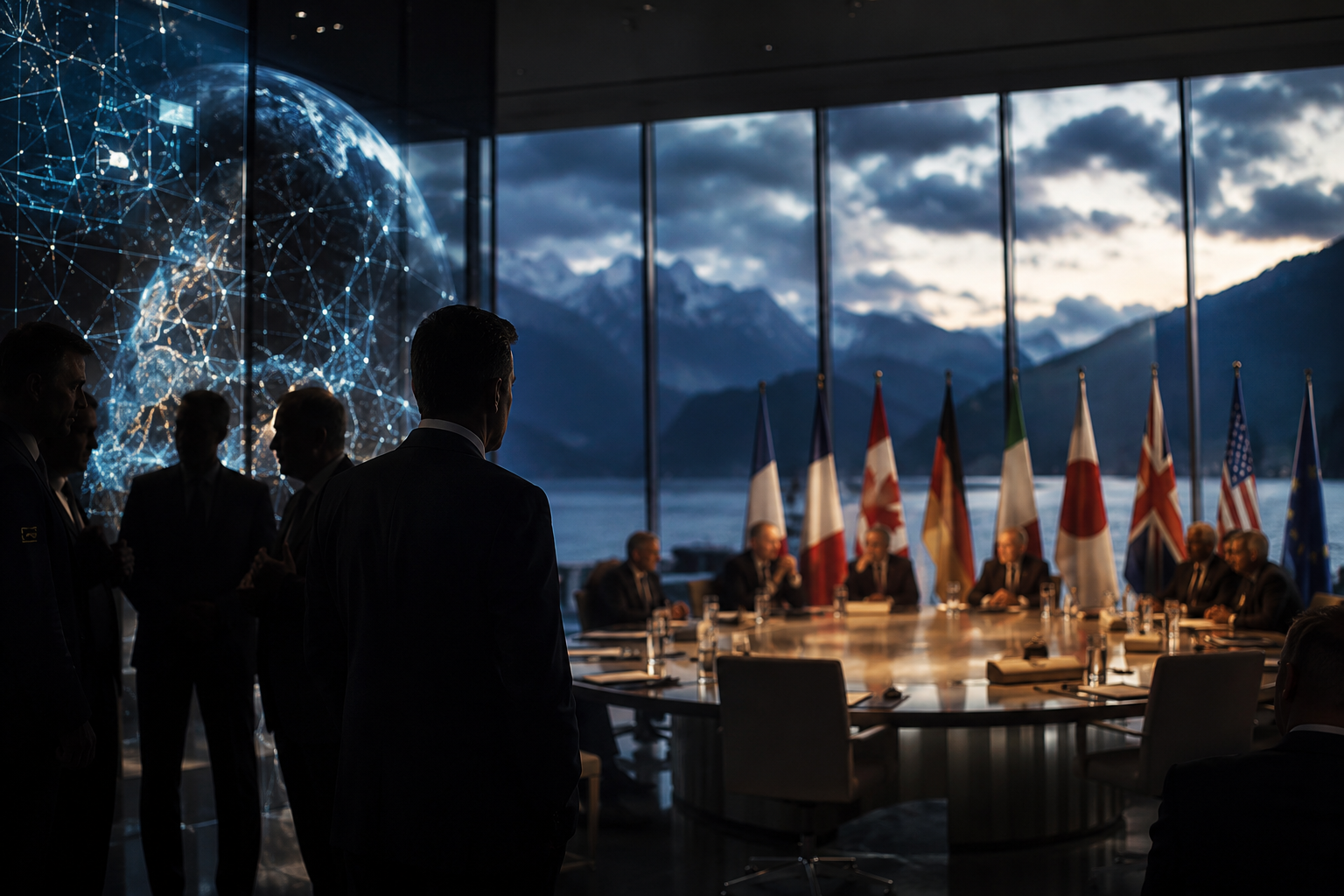
This year, however, something unusual is happening. Senior executives from leading AI companies including OpenAI, Anthropic, Google and Mistral AI are expected to attend discussions connected to the summit. French officials have indicated that artificial intelligence and online safety will be among the major issues under consideration.
On the surface, that might sound like a routine policy discussion. In reality, it signals something much larger. The world's most powerful governments increasingly view AI not simply as a technology sector but as a strategic capability that could shape economic growth, military power, information control and national competitiveness.
Artificial Intelligence Has Become A Geopolitical Asset
For decades, oil fields, industrial capacity and semiconductor manufacturing were seen as strategic assets. Increasingly, advanced AI models are entering the same category.
Governments now understand that whoever develops the most capable systems may gain advantages across multiple domains. AI has implications for defence planning, cyber operations, intelligence analysis, scientific research, healthcare innovation, manufacturing productivity and economic competitiveness.
That explains why discussions around AI are no longer confined to technology conferences. They are taking place at the highest levels of international diplomacy. The presence of AI executives at the G7 demonstrates how closely government interests and technological development have become intertwined.
The Real Competition Is Not Just About Chatbots
Public discussion often focuses on consumer-facing AI tools. Chatbots, image generators and digital assistants attract headlines because they are visible.
The deeper competition is far more significant. Nations are increasingly concerned about who controls the infrastructure, talent, data centres, semiconductor supply chains and research ecosystems required to build next-generation AI systems.
This mirrors themes explored throughout modern technology history. As discussed in Taylor Tailored's analysis of the companies building the 21st century, the organisations that dominate transformative technologies often gain influence far beyond their original industries.
AI appears to be following a similar path.
Why Governments Need The Companies
There is another reason these executives are being invited.
Governments possess regulatory authority and geopolitical influence. Technology companies possess expertise, infrastructure and increasingly some of the world's most advanced computational capabilities.
Neither side can easily solve major AI challenges alone.
This is surrounding model safety, misinformation, cybersecurity, intellectual property, energy consumption and economic disruption require cooperation between public institutions and private companies. Bringing technology leaders directly into discussions reflects the reality that many of the most important decisions about AI's future will involve both sectors.
That dynamic represents a significant shift from earlier technological revolutions, where governments often acted after innovations had already transformed society.
The Hidden Question Behind The Summit
The most important issue may not be what AI can do today.
The more significant question is whether democratic governments can establish effective frameworks before the technology becomes dramatically more powerful. AI systems continue to improve rapidly, while regulatory and political processes typically move much more slowly.
This tension sits at the heart of the debate. Innovation creates opportunity, but it also creates uncertainty. Leaders attending the summit are not simply discussing software. They are discussing future economic structures, labour markets, national security and strategic influence.
As explored in Taylor Tailored's broader coverage of artificial intelligence and the future of work, the long-term consequences may extend well beyond technology itself.
The Summit May Reveal A New Global Reality
The biggest takeaway from this story is not that a handful of technology executives have been invited to a major international gathering.
It is that their presence now feels normal.
A decade ago, it would have seemed unusual for AI company leaders to appear alongside presidents and prime ministers discussing global priorities. Today it feels inevitable. That change tells us something important about where power is moving.
The defining technologies of an age often become the defining political issues of an age. The invitation extended to AI leaders suggests that artificial intelligence is rapidly crossing that threshold. The question is no longer whether AI will influence geopolitics. The question is how much of the future geopolitical landscape will ultimately be shaped by AI.
