World War Wired: How AI Makes a Global Conflict Possible by 2030
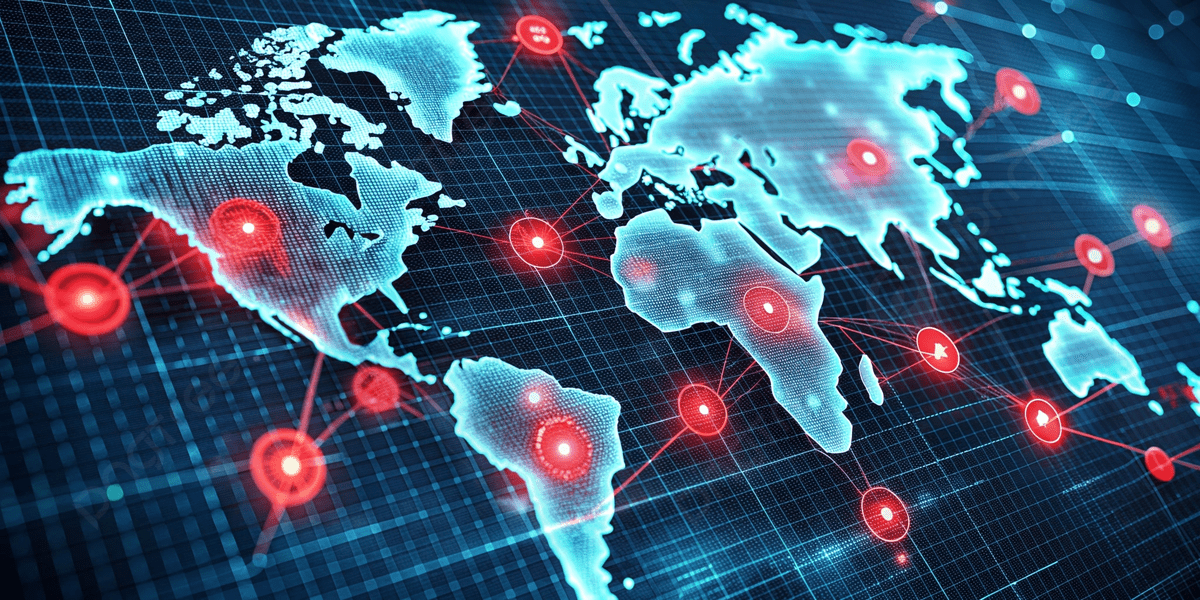
Modern war is already online. In Ukraine and Gaza, algorithms help drones find targets, sift surveillance feeds and guide strikes even when human operators lose contact. At the United Nations, diplomats now debate not just missiles and treaties, but code, data and “human control” over digital weapons.
This is the world that sets the stage for “World War Wired” – a future in which artificial intelligence, cyber tools and autonomous systems do not just support conflict, but shape whether a regional clash spirals into a global one by 2030. Great powers are racing to embed AI into everything from drones and submarines to early-warning radars and nuclear command systems, betting that speed and smarter data will deliver an edge.
The risk is not that machines suddenly “decide” to start a world war. The danger lies in how AI changes human decisions: compressing timelines, amplifying mistrust, and creating new ways for accidents, misread signals or cyber attacks to cascade across borders.
This article explores how AI-driven warfare is emerging today, how it could make a global conflict more likely by 2030, and what might still be done to keep a wired world from stumbling into a wider war.
Key Points
AI is already embedded in today’s wars, from autonomous drones to automated target selection, reshaping tactics and escalation risks.
By 2030, major powers aim to integrate AI into command systems, early-warning networks and cyber operations, compressing decision time in crises.
An AI arms race between the United States, China, Russia and others creates a classic security dilemma, with each side fearing that slowing down means falling behind.
Heavy reliance on AI-assisted war games, simulations and decision support may encourage more aggressive strategies and increase the risk of miscalculation.
Cyber attacks on critical infrastructure, fuelled by AI tools, could spill across borders and drag additional states into conflict.
Governance efforts – at the UN, in regional alliances and through industry norms – are running behind the pace of deployment, but still offer ways to reduce risk.
Background
Digital technology has been part of military power for decades. Precision-guided weapons, satellite navigation and encrypted communications helped define the “information age” wars of the late twentieth and early twenty-first centuries. But these tools, for the most part, still relied on humans to interpret data and issue orders.
Two shifts changed the picture. First, cyber operations became routine instruments of statecraft. Distributed denial-of-service attacks, data theft and sabotage of industrial systems showed that software could damage economies and infrastructure without a shot being fired. Second, armed drones moved from niche tools to central platforms in counter-terrorism campaigns and regional conflicts.
Artificial intelligence now sits on top of both trends. Modern algorithms can scan video feeds, classify vehicles, identify patterns in radar returns and propose strike options at speeds no human staff officer can match. In Ukraine, AI-enabled systems help drones lock on to targets even when jamming cuts the link to the pilot. In Gaza, automated systems have reportedly been used to generate target lists at unprecedented scale.
At the same time, governments are exploring AI for nuclear early-warning, missile-defence tracking and command-and-control networks – the sensitive wiring that connects leaders to their most destructive weapons. Analysts warn that integrating opaque algorithms into these systems could shorten reaction times, erode human judgment and introduce new failure modes into already fragile deterrence relationships.
By 2030, policy planners expect AI to be a general-purpose military technology, used by major and mid-tier powers alike. Scenario work by national governments and think-tanks shows futures in which AI accelerates both economic growth and military risk, depending on how it is governed.
Analysis
Political and Geopolitical Dimensions
The most important driver of “World War Wired” risk is strategic rivalry. The United States and China see AI as a foundation of future military power, economic strength and global influence. Both invest heavily in AI-enabled surveillance, cyber capabilities, autonomous platforms and decision-support tools. Russia, Israel, the United Kingdom and others are pursuing their own programmes, while private defence-tech firms court military contracts.
This creates a classic security dilemma. Each state claims it is adopting AI for defence, efficiency or deterrence; each fears that its rivals will gain a first-mover advantage that could threaten its forces or even its nuclear arsenal. When leaders believe that being slower means being weaker, restraint becomes harder.
AI-assisted war games reinforce this dynamic. Studies have found that when computer automation plays a larger role in crisis simulations, participants are more likely to authorise rapid escalation – including nuclear use – because the system appears to “validate” aggressive options and downplay uncertainty. In a world where national security teams rely on complex simulations to plan for war, those biases can leak into real-world doctrine.
Regional flashpoints add a further layer. In the Taiwan Strait, the South China Sea, Eastern Europe and the Middle East, militaries now operate with AI-enabled drones, cyber units and electronic warfare tools at close quarters. A misread radar track or a confusing swarm of autonomous systems could trigger a chain of escalation that political leaders struggle to understand, let alone control, in real time.rand.org+1
Economic and Market Impact
AI-driven warfare rests on global supply chains. Chips, sensors, cloud computing and undersea cables connect defence networks to commercial infrastructure. This makes economic systems both a strength and a vulnerability.
The same advanced chips that power recommendation engines and language tools also power computer vision in drones and real-time battlefield analytics. Concentration of semiconductor manufacturing in a handful of locations, notably East Asia, creates strategic pressure points: a conflict over Taiwan, for example, would simultaneously be a territorial crisis and a struggle over the hardware underpinning digital militaries.
AI also supercharges cyber operations. Tools that can scan code for vulnerabilities, generate convincing phishing messages or automate lateral movement through networks lower the barrier to large-scale digital attacks. In a crisis, states may be tempted to use such tools against an adversary’s banking system, ports, logistics software or satellite links, hoping to disable war-fighting capacity without crossing into open kinetic strikes.
But digital infrastructure is interconnected. Malware designed for one grid can spread to another. An attack on one country’s port management system can disrupt supply chains far beyond the immediate target, drawing more states into the dispute and increasing pressure for retaliation. In a wired world, economic systems and security systems are fused; shocks in one domain propagate to the other.
Social and Cultural Fallout
Beyond missiles and markets lies the information environment. AI makes it easier to generate realistic fake audio, video and text at scale. That matters in domestic politics; it matters even more in an international crisis.
Deepfake videos of troop movements, “leaked” speeches or fabricated atrocities could circulate in minutes, inflaming public opinion before governments can verify or debunk them. Social media feeds, already tuned for engagement, may promote the most emotive and polarising content, making it harder for leaders to signal restraint without being accused of weakness.
Foreign influence campaigns can exploit these tools to sow confusion inside rival societies, target diaspora communities, or erode trust in institutions. In a tense standoff, such operations might push one side’s public to demand a stronger response, narrowing the room for compromise.
At the same time, AI can help fact-check, label manipulated content and support independent media. The balance between those defensive and offensive uses will shape whether the online sphere calms crises or fans the flames.
Technological and Security Implications
The most direct pathway from AI to global conflict lies in how it changes military decision-making.
First, autonomous and semi-autonomous weapons can act faster than traditional command chains. Swarms of drones, uncrewed surface vessels or automated air-defence systems may react to perceived threats in seconds. If those systems misclassify civilian aircraft, neutral ships or routine manoeuvres as hostile, they can create deadly incidents before humans intervene. Recent wars have already seen algorithms take greater roles in target selection and engagement planning, including against dense urban environments.
Second, integrating AI into early-warning and nuclear command systems risks shrinking the time leaders have to assess ambiguous data. Faster detection of missile launches or unusual movements might sound reassuring, but it can also create pressure to “use or lose” in a crisis if advisors fear that waiting will leave forces vulnerable. Technical opacity – the difficulty of explaining why a neural network reached a given conclusion – further complicates matters.
Third, the dual-use nature of AI blurs lines between civilian and military infrastructure. Cloud providers that host consumer apps may also host training environments for military simulations. Telecommunications companies that roll out new AI-enabled services can become targets in a crisis because their networks support defence systems. That increases the risk that attacks seen as “purely military” in planning end up disabling hospitals, schools or emergency services in practice.
Taken together, these factors suggest that by 2030 the world could face a paradox: more data and automation than ever before, but less shared understanding of what is really happening in the early hours of a crisis. That is the essence of “World War Wired”.
Why This Matters
The stakes of AI-enabled conflict are not abstract. They touch people, institutions and regions in different ways.
Front-line states in Europe, the Indo-Pacific and the Middle East already live with drones overhead, cyber probes against their ministries, and foreign campaigns aimed at their voters. For them, the spread of AI-driven systems changes the daily calculus of deterrence and defence.
Major powers face a deeper strategic question: how to reap the benefits of AI for intelligence analysis, logistics and threat detection without building a hair-trigger system that drags them towards escalation. That balance will influence budget choices, alliance planning and arms control strategies over the rest of this decade.
Smaller states and non-aligned countries risk becoming testbeds or battlegrounds in others’ digital rivalries. Their infrastructure might be used as a staging ground for cyber operations; their companies might find themselves sanctioned or targeted when they sell dual-use tech to the “wrong” side.
For ordinary citizens, the risks are more diffuse but no less real: power cuts caused by malware, banking outages linked to sanctions or cyber attacks, disinformation campaigns that exploit local grievances. The world is not on a fixed path to global war, but the wiring of everyday life into military competition increases the consequences of missteps.
The next few years will bring key moments to watch: international debates on autonomous weapons, efforts to establish guardrails around AI use in nuclear command, regional crises where AI-enabled systems are tested in combat, and domestic decisions on how tightly civilian tech firms are tied to defence projects.
Real-World Impact
Consider a mid-sized European city where the power grid is managed by a network of AI-optimised control systems. In a crisis elsewhere, a state decides to disrupt a rival’s military logistics by attacking the same grid software, assuming the effects can be contained. The malware spreads further than expected, hitting this city’s hospitals, water pumps and traffic lights. Local authorities find themselves at the sharp end of a distant stand-off they barely understand.
Imagine a regional shipping company in Asia that relies on AI-assisted routing and port scheduling. During a confrontation in nearby waters, GPS spoofing and cyber interference aimed at naval forces spill over to commercial channels. Ships are delayed or misrouted; insurance premiums spike; export-dependent factories hundreds of miles inland face sudden shortages.
Picture an election in a developing democracy where AI-generated deepfakes are deployed by anonymous accounts to suggest that the government is secretly mobilising troops near a contested border. The clips go viral before they are debunked. Opposition and government hardliners both call for a show of force, and troops move closer to the frontier, raising the risk of a clash with the neighbouring state.
Or think of a military duty officer in a nuclear-armed country in 2029, sitting in a command centre flooded with AI-filtered radar tracks, satellite feeds and cyber alerts. The system flags an unusual pattern that could be a major attack or a glitch. There is less time than ever to decide what to tell political leaders, and those leaders have grown used to relying on AI systems that “usually get it right”. In such a moment, design decisions made years earlier about automation, oversight and fail-safes could decide whether the crisis stabilises or spins out of control.
Conclusion
“World War Wired” is not a prophecy of inevitable catastrophe. It is a warning about the direction of travel if AI is folded into military and political systems without care. By 2030, the same technologies that promise better medical diagnoses, smarter transport and more efficient industries could also make it easier to misread a radar track, push a button too quickly, or launch a cyber operation that spirals beyond its intended bounds.
The core tension is clear. States want AI to help them see more, decide faster and deter rivals. Yet stability in a nuclear-armed, networked world depends on shared restraint, robust communication and time for reflection. Strip away that time, and even well-intentioned leaders can find themselves boxed in by algorithms, war games and information storms.
The path ahead is not fixed. Transparency measures, hotlines for cyber incidents, limits on certain autonomous functions, and strict rules for keeping humans in meaningful control of critical decisions can all reduce risk. So can clearer separation between civilian and military digital infrastructure, and international norms on how AI should – and should not – be used in war.
The signals to watch over the rest of the decade are already visible: how often AI is used in live operations, whether governments accept constraints on its military use, how industry balances profit with responsibility, and whether publics demand guardrails. In a wired world, preventing a global conflict by 2030 will depend less on what machines can do, and more on the choices people make about where to draw the line.
