“Beautiful, Clean Coal” Explained
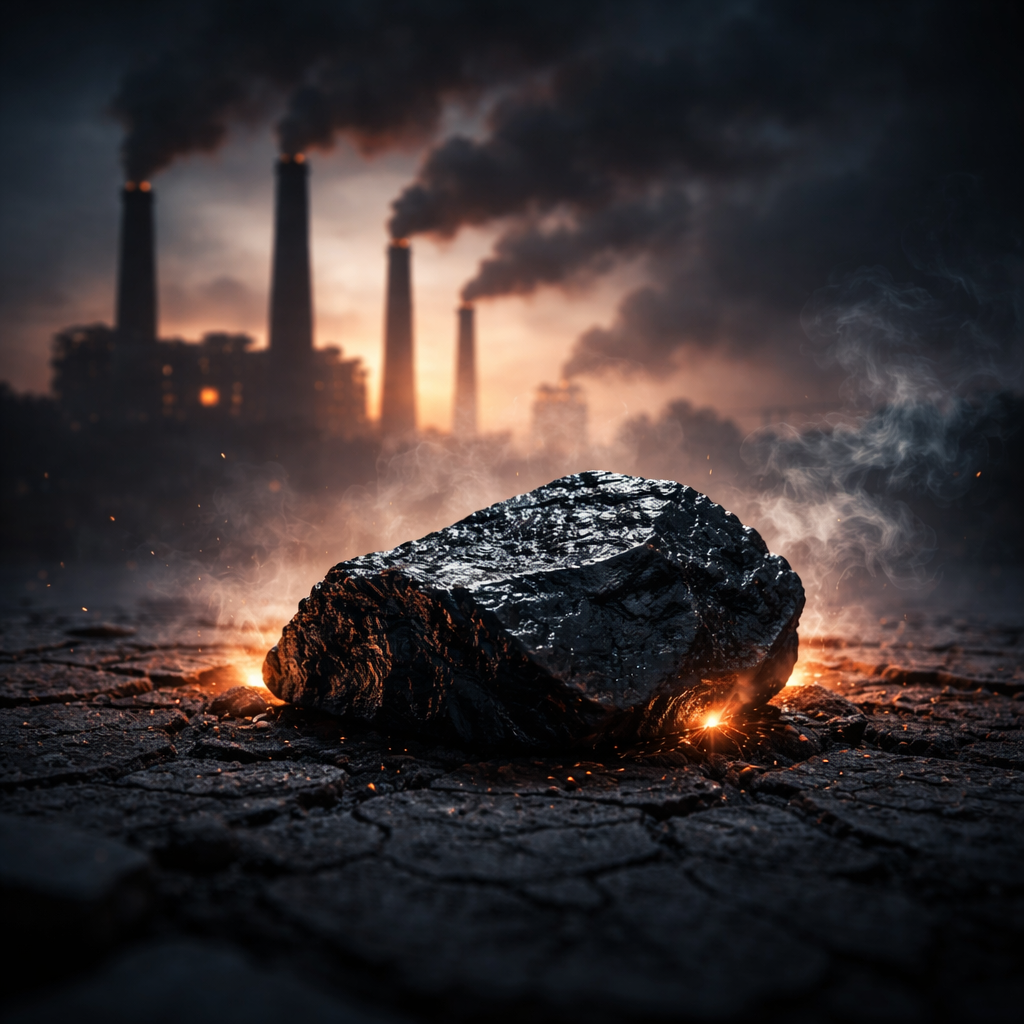
Beautiful, clean coal explained: what “clean coal” really means, which pollutants it reduces, and why it’s often misunderstood as a climate solution.
What Trump’s ‘Clean Coal’ Phrase Really Means
“Clean coal” isn’t a recognized science or energy term. In most contexts, it’s a mishearing, typo, or meme-ified rewrite of the phrase Donald Trump has repeatedly used: “beautiful, clean coal”.
“Beautiful, clean coal” is political branding for a bundle of technologies and practices that can make coal combustion less dirty on some pollutants. The tension is that “clean” can mean two very different things: cleaner local air (less soot, less smog-forming pollution) versus cleaner climate impact (less carbon dioxide). Those two goals overlap only partly, and the gap between them is where most confusion lives.
This explainer unpacks what “clean coal” can mean technically, what it cannot honestly mean, and how to evaluate any claim hiding behind the adjective.
“The story turns on whether ‘clean’ means fewer toxic air pollutants or genuinely low-carbon power.”
Key Points
“Clean Coal” is usually a misspelling or mishearing of clean coal, not a real technical term.
Trump’s “beautiful, clean coal” is a rhetorical label, not a specific engineering standard.
Historically, “clean coal” most often meant pollution controls (sulfur, nitrogen oxides, particulates, mercury), not carbon dioxide.
Coal can be made cleaner for lungs without being clean for the climate, because CO2 is the main byproduct of burning carbon-rich fuel.
The strongest interpretation of “clean coal” in climate terms relies on carbon capture and storage (CCS), which is technically plausible but costly and operationally demanding.
The most honest way to assess any “clean coal” claim is to ask: Which pollutant? Reduced how much? Measured how? At what cost and reliability?
A coal plant can look “clean” at the smokestack and still carry major impacts through mining, methane leakage, ash disposal, and water use.
The phrase endures because it compresses complexity into a moral adjective, which is persuasive but rarely precise.
What It Is
“Beautiful, clean coal” is a slogan that gestures at the idea that coal can be used with fewer environmental harms. In technical language, the umbrella term is usually clean coal technologies—a loose set of methods across the coal lifecycle, from preparing the fuel to controlling emissions at the power plant.
Most people confuse “clean coal” with one of two adjacent ideas:
Fuel cleaning: processing coal to remove some impurities before it is burned (often called washing or beneficiation).
Emissions cleaning: installing equipment at power plants to reduce pollutants after combustion (scrubbers, filters, catalytic systems).
A third idea is what turns the phrase into a climate claim:
Carbon capture and storage (CCS): separating CO2 from exhaust and storing it (or using it industrially), aiming to reduce greenhouse gas emissions.
What it is not
“Clean coal” is not a single machine you can point to, and it is not a guarantee of climate compatibility. Without specifying pollutants and performance, “clean” is a vibe, not a metric.
How It Works
If you strip away the slogan, “clean coal” is best understood as layers of intervention, each with a different target and a different limit.
The first layer is coal preparation. Some coal is processed to reduce ash and other unwanted materials. That can improve how it burns and can reduce certain downstream issues like slagging and some pollutants tied to impurities. But it does not change the core fact that burning coal oxidizes carbon into CO2.
The second layer is classic air pollution control at the plant. Coal combustion produces particulates (soot and fine particles), sulfur compounds, nitrogen oxides, trace metals like mercury, and other byproducts. Over decades, the power sector developed a toolkit:
Particulate controls like electrostatic precipitators or fabric filters to capture fly ash.
Sulfur controls like flue gas desulfurization (“scrubbers”) that chemically remove sulfur dioxide.
Nitrogen oxides controls like selective catalytic reduction that converts NOx into nitrogen and water using catalysts and a reagent.
This is the version of “clean coal” that most clean-air regulation has historically pushed: fewer toxins and smog precursors leaving the stack.
The third layer is carbon capture. CCS tries to intercept CO2—either after combustion (post-combustion capture), before combustion via gasification routes (pre-combustion capture), or through oxygen-based combustion schemes (oxy-fuel). Regardless of route, you then face the same endgame: compress the CO2, transport it, and store it securely for the long term.
As long as we remain honest, a simple analogy can be helpful: traditional pollution controls resemble the process of straining smoke for particles and reactive gases, whereas carbon capture resembles the process of separating an invisible gas present in large volumes and storing it in a permanent bottle. Both are engineering problems, but they live on very different cost and scale curves.
Numbers That Matter
The first number that matters is coal’s shrinking share of U.S. electricity generation compared with its past dominance. Coal is no longer the default fuel in many markets, which means “clean coal” competes not just with older coal, but with alternatives that avoid retrofit complexity.
A second anchor is capture rate. Modern carbon capture projects have often targeted capture rates around the “high but not total” range, and the difference between capturing “most” versus “nearly all” becomes important when the policy goal is deep decarbonization rather than incremental improvement.
A third is the energy penalty. Carbon capture systems consume energy to separate, compress, and handle CO2. In practice, this means a plant fitted with capture may need to generate more gross power to deliver the same net electricity to the grid, which affects fuel use, operating cost, and emissions that remain.
A fourth is pollution-control effectiveness. Mature technologies can remove large fractions of certain pollutants under proper operation. That’s why coal plants can look visibly “cleaner” than the coal era people picture from old industrial imagery.
A fifth is total cost of electricity. The economics are not just equipment cost; they include maintenance burden, downtime risk, and the fact that newer generation technologies can be cheaper to build or operate in many places. “Clean” becomes an economic claim as much as an environmental one.
A sixth is system reliability and uptime. A capture system that runs intermittently can produce headline numbers in a demo and disappointing numbers in year-round operation. The real-world metric is performance over time, not a best-case day.
Where It Works (and Where It Breaks)
The strongest case for “clean coal” in the narrow sense is local air quality improvement. If a grid is still running coal plants, adding or upgrading pollution controls can reduce harm to nearby communities and downwind regions. That is real, practical, and measurable.
It breaks when “clean” is used as a substitute for a climate plan. Coal’s basic chemistry makes CO2 unavoidable unless you capture it, and capturing it at scale turns coal into a high-complexity, high-maintenance pathway.
There’s also a structural break point: retrofits are harder than brochures. Older plants may not be physically or economically suited to major upgrades, and even when upgrades are technically feasible, the business case depends on policy support, financing, and long-term operational confidence.
Finally, there is a conceptual break: cleaner is not clean. A plant can reduce sulfur dioxide and particulates dramatically and still remain a major CO2 source. That distinction is why the phrase triggers skepticism among engineers and climate analysts.
Analysis
Scientific and Engineering Reality
Under the hood, traditional “clean coal” is largely about capturing specific molecules and particles before they exit the stack. That is a solved class of problems in many configurations: you can design systems that remove large fractions of particulates, sulfur dioxide, and nitrogen oxides.
Carbon capture presents a distinct challenge. CO2 is not a trace contaminant in flue gas; it is a major component by volume. Separating it requires large equipment, chemical solvents or sorbents, heat for regeneration, compression, and robust monitoring of the full chain.
For “clean coal” climate claims to hold, several things must be true at the same time: the capture system must operate reliably at high utilization, the stored CO2 must remain contained, and the net emissions reduction must remain large after you account for the energy required to run the capture system.
What would weaken the interpretation is straightforward: if capture runs only part-time, if storage integrity is uncertain, if the added energy comes from additional fossil generation, or if the plant’s lifecycle emissions remain high due to upstream methane and mining impacts.
The most common confusion is mistaking a functioning demo for a scalable default. Demos prove physics and basic chemistry. Deployment proves economics, supply chains, maintenance culture, and the reality of running complicated equipment for years.
Economic and Market Impact
The market question is not, “Can we clean coal?” It is, "Can we clean it at a cost and with reliability that beats the alternatives?"
Pollution controls for classic air pollutants have a clearer path because they have been normalized over decades. Carbon capture tends to require either a strong policy push (standards, incentives, or carbon pricing) or a special market condition where keeping a firm power plant online is valued enough to justify the extra cost.
Another economic layer is that CCS is not coal-specific. The same skill set and infrastructure can apply to industrial sources like cement, steel, and chemicals, where decarbonization is harder. That matters because a society may choose to deploy capture where it is most cost-effective, not where the political slogan is loudest.
Total cost of ownership is often where projects stumble: extra equipment means extra failure modes, extra maintenance planning, extra operational staff expertise, and more downtime risk. The cost curve is not just capital expenditure; it is years of operational reality.
Security, Privacy, and Misuse Risks
The biggest misuse risk is category fraud: using the label “clean” to blur which pollutants are actually reduced. That can mislead voters, investors, and even policymakers who are not tracking the technical details.
A second risk is measurement theater. If performance is framed around best-case capture rates rather than long-run operational metrics, the public can be sold a story that does not match reality. The guardrail is simple: require reporting on net reductions, utilization, and verified outcomes over time.
There is also a strategic angle: large CO2 transport and storage networks can become critical infrastructure. That raises questions about resilience, permitting, liability, and governance, even if it is not a “privacy” issue in the usual sense.
Social and Cultural Impact
“Beautiful, clean coal” operates culturally as reassurance. It tells people they can keep a familiar fuel, keep jobs, keep grid stability, and still claim environmental responsibility.
The danger is that reassurance can crowd out trade-offs. If the public hears “clean,” they may assume the climate problem is solved rather than merely mitigated. That can reduce urgency for other decarbonization work like grid upgrades, storage, transmission, and efficiency.
On the flip side, the phrase also galvanizes opposition because it sounds like a contradiction to many people. That polarization can make pragmatic discussions harder, even when narrower pollution-control upgrades would deliver genuine health benefits.
What Most Coverage Misses
Most coverage treats “clean coal” as a punchline or as a single technology. The reality is more subtle: “clean coal” is a moving label that shifts meaning depending on what the speaker wants to claim. Sometimes it means scrubbers and filters. Occasionally it means coal washing. Sometimes it is a code for CCS. Those are different projects with different costs and different environmental results.
Another overlooked element is the difference between clean at the stack and clean across the lifecycle. Mining disruption, coal transport, methane leakage from coal operations, and ash disposal can all matter even if stack emissions look improved. A narrow “clean” claim can be technically correct and still incomplete.
Finally, the phrase distracts from the systems question: deep decarbonization is not only about swapping fuels. It is about building grids that can handle variability, upgrading transmission, expanding storage, improving efficiency, and planning demand growth from data centers and electrification. Coal becomes a symbol in that argument, but the bottlenecks are often elsewhere.
Why This Matters
If you are trying to interpret Trump’s phrase, the practical importance is clarity: you should not accept “clean” as a self-evident property. You should demand the pollutant, the measurement, and the trade-off.
In the short term, this affects how people understand policy proposals and executive actions framed around “beautiful, clean coal.” If the language is broad, it can hide whether the focus is on reopening plants, loosening rules, adding pollution controls, or actually requiring carbon capture.
In the long term, the issue affects investment. Money and talent are finite. If “clean coal” rhetoric delays investment in alternatives that reduce emissions more cheaply, the opportunity cost can be large.
Milestones to watch are operational, not rhetorical: whether high-capture systems run reliably at high utilization, whether CO2 storage governance becomes durable, and whether the economics outperform replacement options in real procurement decisions.
Real-World Impact
A utility with aging coal plants faces a decision: retire and replace, or retrofit and extend life. “Clean coal” can mean either adding pollution controls to meet air-quality requirements or considering CCS to reduce carbon exposure.
Installing or upgrading certain controls may improve the health of a community nearby a coal plant. That is a tangible, local benefit even if the climate impact remains.
A data-center boom can intensify the “firm power” debate, because constant demand pushes grids to value steady generation. That can create a political opening for coal revival narratives, even in places where economics still favors other options.
A policymaker might treat “clean coal” as a compromise, but the compromise is only real if it is tied to enforceable performance standards rather than branding.
FAQ
What does “beautiful, clean coal” mean?
It is a slogan that frames coal as environmentally acceptable. Technically, it gestures toward pollution controls and, in the strongest interpretation, carbon capture. Without specifying pollutants and performance, it remains rhetorical rather than scientific.
Is “clean coal” a real technology?
Parts of it are real. Pollution controls that reduce particulates, sulfur dioxide, and nitrogen oxides are mature and widely used. Carbon capture is real but more complex and less widely deployed, and it changes the cost and operating profile of a plant.
Does washing coal make it “clean”?
Coal washing can remove some impurities and improve performance, but it does not remove the carbon that becomes CO2 when coal is burned. It can be “cleaner” for certain outcomes, but it does not make coal low-carbon.
Is clean coal the same as carbon capture and storage?
Not necessarily. “Clean coal” can refer to many pollution-control approaches that do not capture CO2. Carbon capture and storage is a specific technology pathway that targets greenhouse gas emissions.
Can coal ever be climate-friendly?
Only in a limited, conditional sense can coal be considered climate-friendly. Coal combustion produces CO2 by chemistry, so climate-aligned use would require very high capture rates, reliable long-run operation, and secure storage—plus attention to upstream lifecycle emissions.
Why do people argue about the phrase so much?
This is due to the ambiguity inherent in the term "clean". Some hear “clean” and think fewer local air pollutants. Others hear “clean” and assume climate neutrality. Those are different goals, and the phrase collapses them into one adjective.
How can I evaluate a “clean coal” claim quickly?
Ask three questions: Which pollutant is being reduced? What is the actual reduction in pollution over time? And what is the cost and trade-off compared with replacing the plant with other options?
Why does this matter for AI and data centers?
Rising electricity demand makes grid reliability a political priority. That can revive arguments for firm generation, including coal, even when cleaner alternatives are available. The phrase becomes a shortcut for that debate.
Outlook
“Beautiful, clean coal” survives because it offers a comforting narrative: keep a familiar fuel and claim modern responsibility. The technical reality is more conditional. Coal can be made cleaner on classic air pollutants, and CO2 can be captured in principle, but the deeper the cleaning, the more the economics and operations become the whole story.
If we see strict, enforceable performance requirements tied to carbon capture and verified storage, it could lead to a narrower version of “clean coal” that is at least measurable, even if still costly.
If we see continued reliance on broad branding with weak measurement and short-term exemptions, it could lead to more coal burn without the “clean” component that the phrase implies.
If we see accelerating electricity demand paired with slow grid expansion, it could lead to political pressure to keep legacy plants online, regardless of terminology.
What to watch next is not the slogan. It is whether any policy or project that invokes “clean coal” is willing to define “clean” in numbers, report performance over time, and accept comparisons against alternatives that may deliver deeper emissions cuts with less complexity.
