

Benefits of Dry January Ranked: What a 31-Day Break Actually Changes
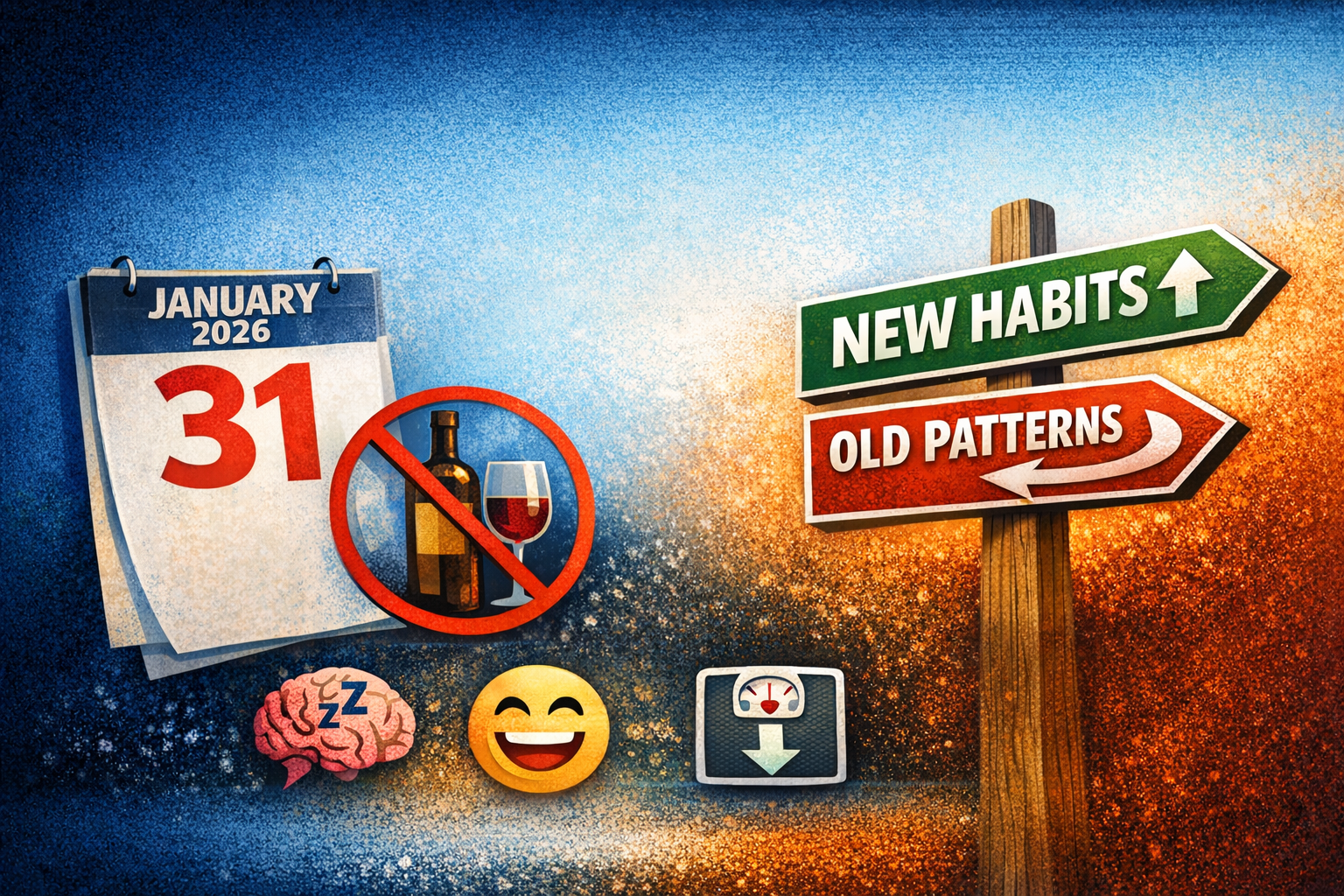
Dry January is underway again as January 2026 opens, with millions of people trying a month without alcohol. The promise is simple: hit pause for 31 days, feel better, and start the year with momentum.
The tension is that the biggest benefits are not guaranteed by abstinence alone. They depend on baseline drinking, what replaces the ritual of alcohol, and whether January becomes a reset or a temporary detour before old patterns return.
This piece ranks the most common, most evidence-backed benefits of Dry January, explains the mechanisms behind each one, and lays out the realistic forks in the road that usually follow an alcohol-free month.
Whether Dry January becomes a one-month stunt or the first clean break in a longer behavioural shift is the pivotal point of this story.
Key Points
The top benefit of Dry January is often behavioural: people tend to drink less afterward, especially if they use structure and support rather than willpower alone.
Sleep and daytime energy usually improve, but the first week can feel worse before it feels better, depending on prior habits.
Weight loss can happen, but it is highly sensitive to substitution—sugary treats and “reward meals” can erase the calorie gap fast.
A month off can improve near-term markers like blood pressure and insulin resistance in moderate-to-heavy drinkers, but effects vary by person and baseline risk.
The largest long-term health gains arrive only if January changes February: lower overall intake matters more than a perfect streak.
For people who drink heavily every day or show withdrawal symptoms without alcohol, stopping suddenly can be risky and may require medical support.
Background: Benefits of Dry January, in context
Dry January is a month-long challenge to avoid alcohol for all of January. It began in the UK, but it now shows up across workplaces, gyms, friendship groups, and social feeds well beyond Britain. It is often framed as a detox, but in practice it functions more like a behavioural experiment: remove a routine, watch what happens, then decide what to put back.
Alcohol sits in a strange category. It is legal, social, and culturally normal, yet it also affects sleep architecture, mood regulation, blood pressure, metabolism, and cancer risk in ways that stack over time. That means even short breaks can be noticeable, especially for people who were drinking most weeks.
Dry January also lands at a useful moment. Late December tends to inflate alcohol intake through parties, travel, and “just one more” social events. January is when many people are already rebuilding routines, tracking spending, and trying to regain physical rhythm. A 31-day rule has the advantage of clarity, even if it is imperfect science.
Analysis
Ranked benefits of Dry January
Rank 1 — A reset in drinking behavior that can last past January
The most meaningful outcome is not a cleaner month. It is a lower baseline afterward. A month without alcohol breaks cue-driven habits: the glass poured while cooking, the “Friday means drinks” script, and the automatic yes to a second round. It also builds something quieter but powerful: refusal confidence. When people prove they can say no for a month, it becomes easier to negotiate limits later without feeling deprived.
This benefit is strongest when Dry January has structure—daily tracking, social accountability, a plan for weekend pressure—rather than relying on motivation alone. It is also one of the few benefits that still pays out if January is not perfectly alcohol-free. Partial success can still shift patterns.
Rank 2 — Better sleep quality and more usable mornings
Alcohol can make falling asleep easier, then punish the second half of the night. It fragments sleep, increases night waking, worsens snoring for some people, and tends to leave the next day feeling flat. Removing alcohol often improves sleep continuity and morning energy within weeks.
There is a catch: the first days can feel rough. People who relied on alcohol to “switch off” may fall asleep later at first. Vivid dreams and restlessness are common during adjustment. For many, the improvement becomes obvious once sleep stabilizes and mornings stop feeling like recovery.
Rank 3 — Clearer mood, steadier anxiety, and less emotional whiplash
Alcohol is a short-term sedative with a long shadow. It can blunt stress in the moment and amplify anxiety later, especially when sleep is disrupted. A month off often reduces the cycle of late-night stimulation followed by next-day low mood. People commonly report better concentration and a calmer baseline.
This benefit is not universal. If alcohol was masking loneliness, burnout, or chronic stress, those feelings may surface more sharply at first. Dry January can still help, but it forces a more honest read on what the drink was doing psychologically.
Rank 4 — Money back, time back, and fewer “lost” days
This is the most concrete benefit and the easiest to measure. A month off removes not just the cost of alcohol but also the spending that clusters around it: taxis, late-night food, impulse purchases, next-day convenience meals, and the quiet tax of low-energy weekends. For households watching budgets, the effect can be immediate.
The second-order value is time. Dry January often returns early mornings, longer weekends, and more consistent training or hobbies. Those hours are a form of compound interest if they turn into a routine.
Rank 5 — Weight and body composition shifts, if substitution stays under control
Alcohol carries calories, but the bigger effect is what alcohol invites: extra snacks, late meals, and lowered restraint. A month off can reduce total intake, improve training consistency, and lead to weight loss in some people.
The risk is substitution. Some people replace alcohol with sugar, “treat nights”, or larger portions as a reward for abstaining. Others replace it with high-calorie alcohol-free drinks. Weight changes are real, but they are not automatic. Dry January works best when it is paired with a replacement plan that does not simply move the calorie load elsewhere.
Rank 6 — Improved blood pressure and reduced cardiovascular strain in higher-risk drinkers
In moderate-to-heavy drinkers, a month without alcohol can reduce blood pressure. That matters because blood pressure is a silent multiplier of long-term heart and stroke risk. For some people, the change is noticeable; for others it is modest. Baseline health, salt intake, sleep apnoea, and stress levels all influence the outcome.
Even when the numbers shift only slightly, the broader cardiovascular benefit can show up as better exercise tolerance and less “wired-tired” fatigue.
Rank 7 — Better short-term metabolic markers, including insulin resistance
A month off can improve insulin sensitivity in people whose drinking was pushing metabolic stress. This is one reason some participants notice fewer energy crashes and less intense cravings by the second half of the month. It can also support more stable appetite signals and easier adherence to training.
This benefit tends to cluster in people who were drinking regularly, especially those combining alcohol with late-night eating or inconsistent sleep.
Rank 8 — A nudge toward lower long-term disease risk, if habits change after January
A single month does not erase years of exposure. The meaningful health protection comes if Dry January reduces total annual drinking—fewer heavy nights, fewer weekly drinks, fewer years spent above guidelines. That is where the real risk curves bend, including for cancers where alcohol is a known contributor.
This is why the “perfect streak” narrative misses the point. The win is not purity. The win is a trajectory.
Political and Policy Dimensions
Dry January is often treated as a personal wellness trend, but it sits inside public health policy debates about alcohol harm, healthcare costs, and the limits of individual responsibility. Governments rarely want to wage culture war over drinking, yet alcohol-related harm is expensive and persistent. A mass participation event acts like a low-friction intervention: it nudges awareness without legislation.
The policy limitation is that voluntary challenges tend to attract people already open to change. Those with the highest risk are often the least likely to participate safely without support. That makes Dry January useful, but incomplete, as a public health tool.
Economic and Market Impact
A widespread January slowdown changes purchasing patterns. Bars and restaurants may see fewer alcohol sales, but they can also benefit from higher-margin alcohol-free cocktails and premium non-alcoholic options. Retailers adapt too, pushing zero-proof spirits, alcohol-free beers, and “functional” beverages positioned as mood or sleep supports.
The quieter economic effect is household budgeting. A month off can shift spending toward fitness, cooking, and experiences that do not revolve around drinking. For some people, that reallocation outlasts January and becomes a new default.
Social and Cultural Fallout
Dry January tests social scripts. It exposes how often alcohol functions as permission: to relax, to flirt, to celebrate, to admit a hard day. When someone removes alcohol, friends and colleagues sometimes react defensively, not because abstinence is a judgment, but because it threatens shared habits.
At its best, Dry January broadens the menu of social life. It makes it easier to suggest daytime plans, alcohol-free venues, or earlier meetups without feeling dull. It also clarifies relationships. Some social circles survive perfectly. Others were held together by routine drinking more than anyone wanted to admit.
Technological and Security Implications
A month off is now tracked. Apps, wearables, and sleep scores turn Dry January into a feedback loop: better sleep becomes visible, resting heart rate drops, training readiness improves, and streak mechanics make abstinence feel like a game. That can help motivation, but it also creates a new pressure: people feel monitored by their own metrics.
There is also a risk of false certainty. A good sleep score does not mean health risk vanished, and a “perfect month” does not equal a safe relationship with alcohol. Technology supports the habit; it cannot replace honest reflection.
Three scenarios for what happens next
Scenario 1 — The rebound month
Trigger: February social pressure meets “I earned it” thinking.
Who benefits: alcohol brands, nightlife venues, and people who wanted a temporary break only.
Who loses: anyone who returns to heavy patterns fast, especially if they use drinking as stress management.
First visible sign: heavy nights return immediately, with little intention-setting.
Scenario 2 — The moderation reset
Trigger: January reveals which drinks, occasions, and triggers matter most.
Who benefits: people who adopt rules like fewer drinking days, lower-strength options, or planned nights only.
Who loses: habits built on spontaneity and social momentum.
First visible sign: alcohol re-enters, but with clearer boundaries and fewer heavy episodes.
Scenario 3 — The extended break or longer-term sobriety
Trigger: Dry January uncovers health, sleep, or anxiety gains that feel too valuable to trade away.
Who benefits: people with strong improvements or those who realise alcohol is doing more harm than expected?
Who loses: social routines that depend on drinking.
First visible sign: the person keeps going beyond January, often with a new community or support structure.
What Most Coverage Misses
The overlooked factor is substitution. Dry January does not remove the need alcohol was serving; it exposes it. If alcohol was the nightly off-switch, something else has to take that role: exercise, a wind-down ritual, social connection, therapy, better sleep hygiene, or simply boredom tolerated without panic. The month is a stress test for coping systems.
The second-order effect is detection. A month off can reveal early dependence patterns: irritability, tremor, sweating, nausea, or feeling unwell after hours without alcohol. That is not a moral failure. It is a health signal. For a minority of people, Dry January is valuable because it prompts safer support, not because it is easy.
Why This Matters
In the short term, Dry January affects sleep, mood, and daily functioning—things that determine work performance, parenting patience, and training consistency. It also influences spending at a time when many households are already reviewing budgets after the holidays.
In the long term, the importance depends on what comes after January. Lower annual alcohol intake is where major health risk reduction lives. A single month can be the doorway, but only if it changes the calendar, not just the date.
Concrete events to watch next are behavioural rather than political: the first weekend in February, the stressful workweek, and the first celebration. Those are the moments when people either reinstall the old script or write a new one.
Real-World Impact
A nurse in London works rotating shifts and used wine to fall asleep on late nights. Dry January makes the first week harder, then sleep steadies. The bigger change is that she builds a non-alcohol wind-down routine that survives into February.
A sales manager in Chicago realizes the main cost was not drinks but the “after drinks” spending—late food, rideshares, and sluggish weekends. The month produces a measurable budget surplus, and he redirects it toward a gym membership he actually uses.
A small restaurant owner in Manchester fears January will hurt revenue, then discovers alcohol-free cocktails and earlier dining bring in customers who still want a “night out,” just without the hangover. The menu shifts permanently.
A software engineer in Sydney notices mood swings in the first days off alcohol and assumes Dry January is failing. By week three, anxiety drops and focus improves. The key outcome is not abstinence, but learning that alcohol was amplifying stress more than it was relieving it.
Conclusion
Dry January’s benefits are real, but they are not evenly distributed. The strongest gains come from a simple truth: abstinence is not the goal; behavior change is the dividend. Sleep improves, mornings become usable, and money stays in the account, but the largest value is often psychological—proof that alcohol is optional.
The fork in the road arrives after January. One path treats the month as a cleanse, then returns to routine. The other treats it as data: what triggers drinking, what improves without it, and what limits are worth keeping.
The clearest signs will appear early in February. If boundaries are set, social plans diversify, and alcohol re-enters with intention—or not at all—Dry January becomes more than a streak. It becomes a new baseline.
