

What species would replace humans as the dominant animal on Earth if we disappeared?
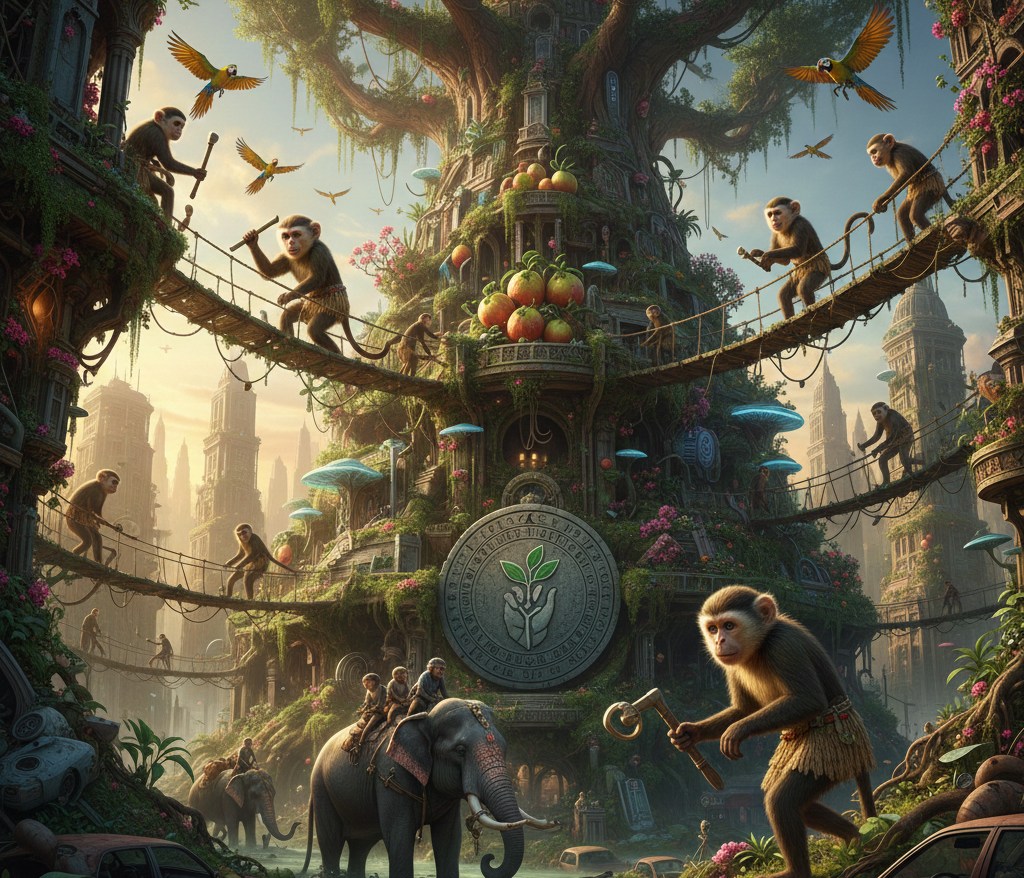
If humans were wiped out, the world would not crown a single “new human” overnight. It would lurch through a messy transition, with different winners at different timescales. In the first weeks and years, dominance would look like survival and spread. In decades, it would look like who adapts fastest to abandoned cities and farmland. In centuries and beyond, it would come down to brains, breeding speed, social learning, and the ability to shape environments.
The deeper tension is that “dominant” has two meanings. Humans dominate by engineering the planet. Most animals dominate by being everywhere, eating many things, and outcompeting rivals. If the question is “Who replaces us as a global engineer?” the honest answer is: probably nobody, at least not for a very long time. If the question is “Who becomes the most successful, widespread, influential animal?” then several species have a real shot, and the likely winner changes with time.
This piece breaks down the leading contenders, why they matter, and what a post-human Earth would probably reward.
The story turns on whether dominance means technology and control, or simple ecological success.
Key Points
In the first years after humans vanish, the most “dominant” animals would likely be fast-breeding generalists already living alongside people: rats, feral pigs, feral dogs, and some urban birds.
In the medium term, corvids (crows and ravens) and certain parrots stand out for problem-solving, social learning, and thriving in human-built landscapes.
If other great apes survive the initial shock, they have the best body plan for eventually building complex tool cultures, but they are vulnerable because many populations are already under pressure.
Marine candidates like octopuses and dolphins are intelligent, but the limits of water (no fire, different materials, slower “infrastructure”) make human-like dominance unlikely.
The most realistic “replacement” for human-style dominance is not one species, but a patchwork world where smart generalists rule cities and coasts, while large herbivores reshape vast wild regions.
Over very long timescales, evolution could produce a new line with more dexterity and longer childhood learning, but that is a centuries-to-millennia story, not a quick handover.
Background: Replacing humans as the dominant animal on Earth
Humans currently dominate because they combine three powers: extreme social coordination, cumulative culture (knowledge that stacks across generations), and tools that scale. That combination lets one species redirect rivers, move continents’ worth of soil, and alter climate. Remove humans, and those systems don’t instantly stop. They decay. But the physical leftovers remain: cities, landfills, roads, dams, farms, invasive plants, and billions of domesticated animals suddenly without caretakers.
In the first phase, the biggest driver is not intelligence. It is opportunity. Food waste, stored grain, livestock, and shelter are everywhere. The species that can exploit that fast will explode in number. That is a kind of dominance: sheer presence, pressure on ecosystems, and the ability to push other species aside.
Later, when the easy human subsidies rot away, selection changes. Survival favours flexible diets, strong social learning, and the ability to navigate novel hazards. Over time, natural habitats rebound in many places. Large predators return where they can. Forests creep back over suburbs. Rivers re-route when pumps fail. In that world, “dominance” becomes less about scavenging and more about adapting to a shifting planet still shaped by human ghosts.
Analysis
Political and Geopolitical Dimensions
In a post-human world, “geopolitics” becomes biogeography: who controls which regions, and who can spread. The strongest contenders are not tied to one climate band. They are global travellers already.
Rats are the obvious example. They ride ships, survive winters, and eat almost anything. If humans vanish suddenly, rats can surge in ports, cities, and farms, then spill into the wild. They would not rule the planet with planning. They would rule it with persistence.
Feral pigs are another geopolitical force. Pigs thrive in forests, scrubland, and farmland, and they reproduce quickly. They dig, root, and tear up landscapes. In many regions they would become an ecosystem-shaping power, pushing ground-nesting birds and small mammals hard, and changing plant communities by turning soil like a living plough.
Birds like crows, ravens, gulls, and pigeons would dominate a different map: coastlines, cities, and river corridors. Their advantage is mobility. When a region collapses, they can leave. When a new niche opens, they can arrive first.
Great apes would be regional contenders, not global ones, unless their habitats recovered dramatically. Their “territory” would hinge on forest corridors and stable food supplies, not abandoned skyscrapers.
Economic and Market Impact
Without humans, the economy turns into energy flows. The “market” is calories, shelter, and safe breeding sites. Early on, the biggest windfall is domesticated biomass: livestock, pets, and stored crops. There would be a brief boom for scavengers and predators. Then a crash as supplies dwindle and newly feral populations overshoot what the land can support.
This matters because it sorts contenders into two groups. Some species can ride the boom and survive the bust. Others spike and vanish.
Rats, crows, and feral pigs are built for boom-and-bust worlds. They breed fast, eat widely, and learn quickly. Many large carnivores are not. They need stable prey and large territories. They will recover in time, but they won’t dominate early.
A quieter “market mover” is insects. As buildings decay and waste systems fail, insect populations can surge. That ripples upward. More insects means more opportunities for insect-eating birds, reptiles, amphibians, and small mammals. In many ecosystems, the real winners after humans might not be charismatic at all. They might be the species that sit at the crossroads of this calorie rebound.
Social and Cultural Fallout
If dominance includes influence through learning, then social animals gain an edge. Crows and ravens are a serious candidate here, not because they will build civilisation next year, but because they already show the right ingredients: long memory, problem-solving, and learning from one another. In a world full of puzzles left behind by humans—containers, doors, novel foods—those traits pay.
Some parrots also fit this profile. They can manipulate objects with beaks and feet, they learn socially, and many thrive in urban and suburban habitats. Their limitation is geographic: many parrot species are climate-bound, though some adapt well and spread.
Primates are culturally powerful too. If chimpanzees, bonobos, or other apes survive and expand, they have the strongest path to complex tool traditions because they already have hands, social bonds, and long childhood learning. But they face a brutal constraint: low reproduction compared to rodents and birds, and vulnerability to habitat swings.
Then there are “near-human” collaborators that lose their human anchor. Dogs would initially do well in packs, especially near livestock and towns. Over time, many dog lineages would likely merge into broader feral populations, shaped by hunger and competition. Their dominance would be local and episodic, not planetary.
Technological and Security Implications
The strangest factor is human infrastructure as both a gift and a trap. Cities provide shelter and material. They also concentrate hazards: falls, toxins, collapsing buildings, locked-in spaces, and new predator dynamics.
Animals that can explore safely and learn quickly gain a “security advantage.” That again points to rats and corvids. They can probe, retreat, and remember. Large animals often cannot. A deer can’t climb down a broken stairwell. A boar can’t test a narrow ledge.
Could any species inherit human technology? Not in the sense of running power grids or manufacturing. But some could become specialists at exploiting the leftovers. Think of crows learning which abandoned structures reliably hold food, or rats evolving even better climbing and gnawing traits for a city-ruin world.
Marine intelligence is often raised here. Dolphins and octopuses are smart, but water makes certain kinds of technology hard. Fire is off the table. Metals are harder to refine. Long-term storage and construction work differently. That does not mean they cannot be dominant in their own realms. It means “replace humans” is the wrong comparison.
What Most Coverage Misses
Most discussions pick one clever animal and imagine a straight line to “the next civilisation.” That skips the hard part: cumulative culture is rare, and it depends on long lifespans, long childhood learning, stable social groups, and environments where teaching and imitation reliably pay off.
The second missed point is time. In the first century after humans vanish, the winners are probably not the smartest. They are the fastest to reproduce, the least picky eaters, and the most tolerant of chaos. Intelligence becomes a bigger edge later, when the easy human subsidies fade and survival becomes a constant puzzle again.
The third missed point is that human dominance is partly a one-off historical stack. Humans did not just get smart. They also got lucky with geography, fire, materials, and networks. A new dominant species would need its own stack, not a copy of ours.
Why This Matters
This thought experiment is not just a pub question. It clarifies what humans actually are in ecological terms: a species that turns information into power at scale. If humans vanish, the short-term effects would be most visible near dense settlements and intensive farmland, where the “human subsidy” is largest. Coasts, river valleys, and temperate agricultural regions would see the fastest reshuffling.
In the short term, dominance would mean which species surge and destabilise food webs. In the long term, it would mean which species reshape habitats in stable ways. That could look like feral pigs transforming forests, large herbivores expanding into rewilded plains, and adaptable birds becoming the loud, ever-present rulers of the ruins.
There are no calendar dates to watch because this is hypothetical. The real “timeline markers” are ecological ones: the collapse of domesticated animal populations, the re-establishment of large predator ranges, and the regrowth of forests through urban corridors. Those shifts would indicate which animals are moving from opportunists to true ecosystem shapers.
Real-World Impact
A port worker in a coastal city is gone, and the grain silos are left sealed. Within weeks, rats and gulls concentrate around the docks, and the local ecosystem tilts toward scavengers. Predators follow, and soon the shoreline becomes a noisy battleground of opportunists.
A small farmer in the American Midwest is gone, and the fences fail. In a few seasons, feral pigs and deer multiply in the mosaic of fields and woodland. Ground nests vanish. Streams turn muddy from rooting. The landscape starts to resemble a feral, shifting pasture-forest, driven by hooves and snouts.
A park ranger in East Africa is gone, and anti-poaching collapses at first. Some animal populations take a hit from the chaos. Later, as human pressure lifts, surviving herds expand. Predators return to old ranges. The long-term winners are the animals that can travel, breed, and adapt as territories re-form.
A commuter in a dense Asian city is gone, and the high-rises slowly decay. Over decades, green corridors form from rooftop gardens and cracked pavements. Crows, pigeons, and macaques (where present) learn the new map of safe routes and reliable foods. The city becomes a vertical habitat, dominated by animals that treat danger as a puzzle.
Conclusion
If humans disappeared, no single species would instantly become the dominant animal on Earth in the way humans are today. The closest near-term analogue is a coalition of winners: rats and crows in the ruins, feral pigs and deer in recovering farmlands, and a slow return of large predators wherever ecosystems stabilise.
The key fork is simple. If dominance means being everywhere and reshaping ecosystems through numbers and appetite, rodents and feral pigs are near the top. If dominance means building complex, accumulating cultures that change the planet on purpose, then only great apes have the right toolkit, and even they would need a long, stable runway to get there.
The signs of which way the world is breaking would be clear: whether cities turn into rat-and-crow empires while forests return elsewhere, or whether a surviving primate line expands and begins to show increasingly complex, shared tool traditions across generations.
