HIV Immune Evasion Mechanism: The “Sugar Coat” Trick That Helps HIV Hide in Plain Sight
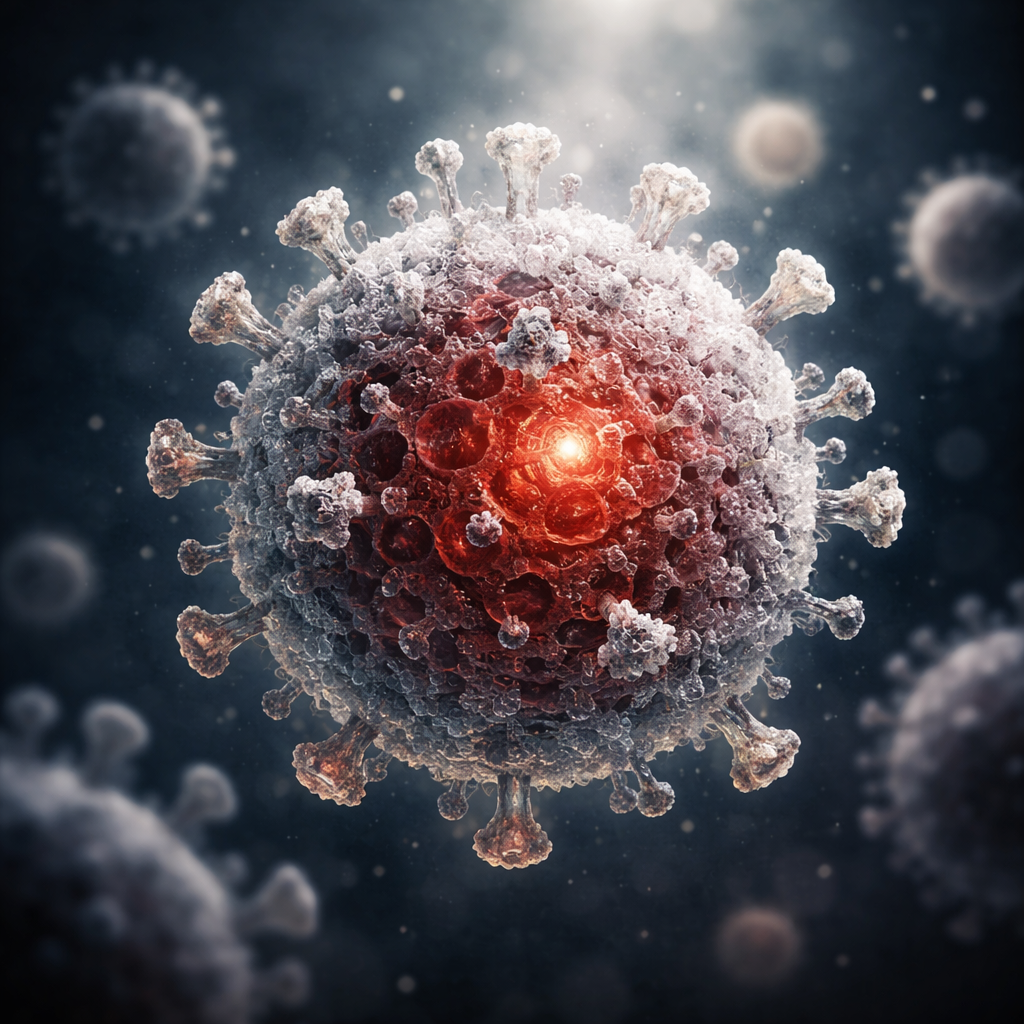
HIV immune evasion mechanism: the “sugar coat” trick.
Rsearchers have put hard detail behind a long-suspected idea: HIV doesn’t only hide behind its own sugary envelope—it can also rewire the sugars on the surface of the cells it infects, turning those cells into something the immune system is less willing to attack.
The new work describes a specific “glyco-immune checkpoint” effect, where altered cell-surface sugars press inhibitory brakes on frontline immune killers.
The headline version is tempting: strip the sugar coat, expose infected cells, clear HIV. The reality is more careful and more interesting. This is a mechanism paper with early intervention proof-of-concept—valuable because it clarifies where the immune response is being dampened and how you might reverse it, not because it suddenly solves the hardest parts of HIV biology.
The story turns on whether disrupting HIV-driven sugar–receptor “don’t-kill-me” signals can unmask infected cells safely enough to matter in real patients.
Key Points
HIV infection can remodel the host cell’s surface sugars, increasing specific sialic-acid–containing glycans on infected CD4 T cells.
Those sugars engage inhibitory receptors on immune cells called Siglecs, suppressing myeloid and natural killer cell killing of infected targets.
The work narrows immune evasion to a defined molecular axis, moving beyond vague claims that “glycans matter.”
A targeted sugar-removal strategy increased immune-mediated killing in controlled systems and reduced virus levels in a mouse model.
The findings suggest a potential lever for combination therapies, not a standalone cure.
Background
Immune recognition is a constant contest between “find the foreign” and “avoid attacking self.” Immune cells don’t just look for pathogens; they also read contextual signals on cells—molecular patterns that say “healthy self,” “stressed,” or “danger.”
Sugars are a major part of that context. Most human cells are coated in complex carbohydrate structures attached to proteins and lipids. These patterns function like biochemical ID badges. One common “self-associated” signal is sialic acid, a sugar often found at the tips of glycan chains. Many immune cells carry receptors that bind these sugars and interpret them as cues to soften or suppress an attack.
HIV is already well known for using sugars as camouflage. Its envelope protein is denselyדזש glycosylated, forming a “glycan shield” that blocks antibodies from reaching vulnerable viral surfaces. The new insight is different: instead of only decorating itself, HIV appears to push infected cells to display more of the sugars that signal immune restraint.
Analysis
Technological and Security Implications
The core finding is mechanistic. HIV infection alters host glycosylation pathways so infected CD4 T cells present more sialic-acid-rich glycans that bind inhibitory Siglec receptors. When these receptors are engaged, innate immune cells are less likely to kill infected targets.
That matters because it reframes immune evasion. HIV is not only mutating away from recognition or hiding in latency. It is also manipulating immune checkpoints—systems evolved to prevent autoimmunity—to reduce the likelihood that infected cells are eliminated.
Researchers tested a targeted intervention strategy: removing sialic acid residues specifically from infected cells using a directed enzyme approach. In controlled experiments, this increased immune-cell killing of infected targets. In a humanised mouse model, viral levels fell. These are early signals, not proof of clinical viability.
Possible trajectories include a future role as a combination enhancer alongside antibodies or immune-based therapies, a biomarker platform that reflects immune suppression dynamics, or a pathway that stalls because safe selectivity proves too difficult.
Economic and Market Impact
If validated, this mechanism opens new drug-development pathways centred on glycan modulation and immune-checkpoint signalling. These approaches already exist in oncology, suggesting conceptual transfer rather than invention from scratch.
That said, glyco-biology is technically demanding. Manufacturing complexity, delivery challenges, and the risk of unintended immune activation could significantly slow translation. This is unlikely to be a rapid pipeline, but it is a potentially durable one.
Social and Cultural Fallout
The public-facing risk is familiar: mechanistic advances being misread as cures. This work clarifies how HIV suppresses immune clearance; it does not show that this suppression can be safely reversed in people.
The cultural upside is more subtle. It reinforces a broader biological lesson: pathogens succeed not only by attacking the immune system, but by learning its rules and exploiting its restraint mechanisms. That framing supports sustained trust in incremental progress rather than miracle expectations.
What Most Coverage Misses
Most discussion of HIV and sugars focuses on the viral glycan shield—the sugar coating on the virus itself that blocks antibodies. That story is real, but it is not the most important hinge here.
The under-appreciated shift is that the infected cell itself is being made to look like “safe self.” HIV appears to drive changes in host-cell sugar presentation that actively suppress immune attack through inhibitory receptors. This is less about hiding the virus and more about persuading the immune system to hold fire.
That reframing matters because immune checkpoints are already a proven intervention category. If HIV’s success partly depends on hijacking these brakes, then releasing them—carefully and locally—becomes a credible strategy rather than a conceptual leap.
Why This Matters
In the near term, the value is precision. Researchers now have a defined causal chain to test in patient-relevant systems, from altered glycosylation to suppressed immune killing.
In the longer term, the question is whether this mechanism can be safely targeted to expose infected cells without triggering widespread immune damage. If so, it could become part of multi-layered strategies aimed at reducing persistent infection rather than simply suppressing viral replication.
Key milestones to watch include independent replication, confirmation of the same sugar signatures in human infection, and evidence that targeting remains selective under biological complexity.
Real-World Impact
In specialist clinics, this line of research could eventually inform immune-profiling tools that identify patients most likely to benefit from immune-based adjuncts.
In laboratories, it is likely to accelerate the integration of glycomics into HIV research, alongside genetics and virology.
In drug development, it reinforces the logic of “visibility enhancers” that make infected cells easier for the immune system to recognise and eliminate.
In public understanding, it underscores why progress against HIV often arrives as layered insight rather than singular breakthroughs.
The Next Fight: Can HIV’s Sugar Mask Be Removed Without Collateral Damage?
This work sharpens a long-standing suspicion into a defined mechanism: HIV may suppress immune killing by pushing infected cells to display sugar patterns that activate inhibitory immune checkpoints.
The fork in the road is clear. Either this sugar–checkpoint axis proves targetable with enough precision to matter in real patients, or it remains an elegant explanation constrained by safety limits. The next decisive signals will come from replication, human-relevant validation, and intervention designs that unmask infected cells without unleashing broader immune harm. If those signals emerge, this moment may be remembered as the point where HIV’s stealth was mapped not just on the virus—but on the cells it learned to disguise.
