Relativity, Explained Very Simply
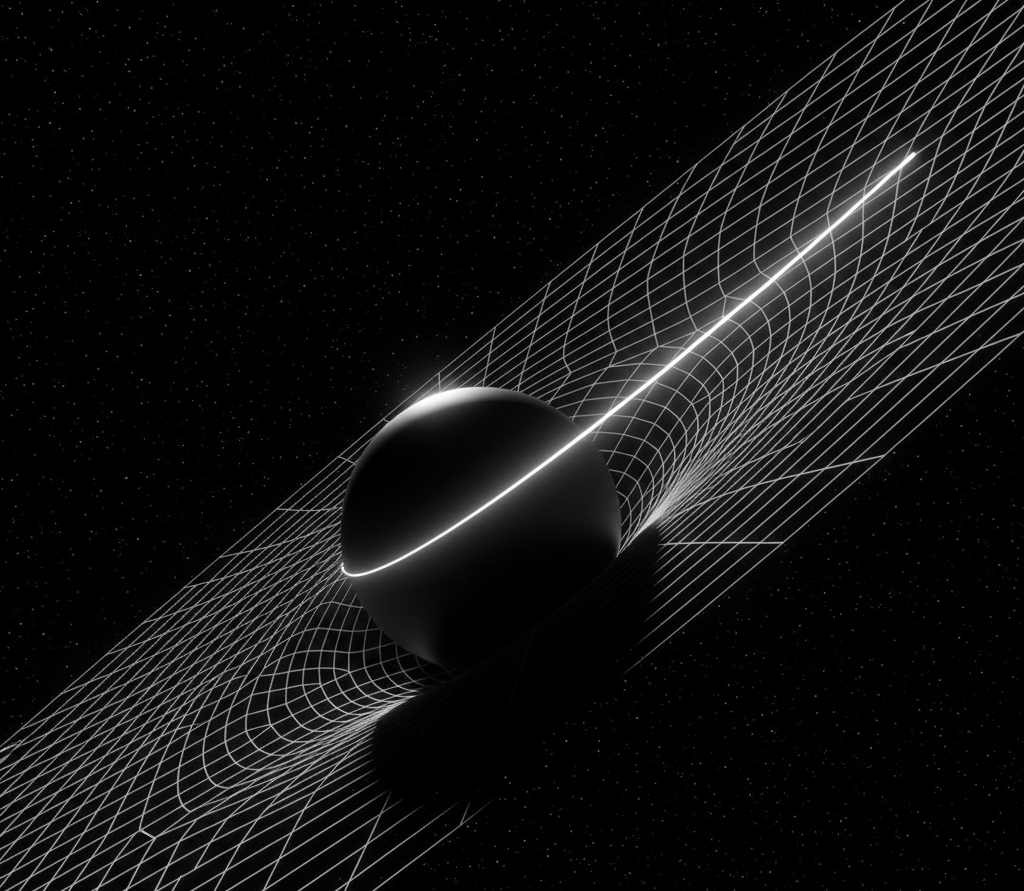
Relativity is the idea that space and time are not fixed. They stretch, squeeze, and tilt depending on speed and gravity. That sounds abstract, but it has a plain meaning: there is no single, universal clock ticking the same for everyone everywhere.
What makes relativity feel strange is that everyday life hides it. At human speeds and everyday gravity, the effects are tiny. But once you move fast enough, or deal with very precise clocks, the differences stop being philosophical and start being measurable.
This piece explains relativity in simple terms, without assuming a physics background. It separates what is solid from what gets exaggerated, and it shows why relativity matters in real technology, not just thought experiments.
The story turns on whether time is a shared backdrop or part of the moving, flexible stage.
Key Points
Relativity says there is no single “true” time for everyone; time depends on motion and gravity.
Special relativity is about motion at constant speed: if you move fast, your clock runs slower compared with someone at rest.
The speed of light is constant for everyone, and that forces time and distance to “adjust” between observers.
General relativity is about gravity: gravity is not just a pull, it is the shape of spacetime itself.
Clocks tick at different rates at different heights in a gravitational field; higher up, time runs a bit faster.
Modern navigation and timing systems need relativity corrections to stay accurate.
Background
Relativity comes in two parts.
Special relativity deals with observers moving at steady speed relative to one another. It starts from two claims that fit a huge range of experiments: the laws of physics look the same for all observers who are not accelerating, and light in a vacuum travels at the same speed no matter how fast the source or the observer is moving.
Those two claims collide with common sense, because common sense assumes that time is universal. If light’s speed is fixed for everyone, then something else has to give. What “gives” is the way different observers measure time and distance.
General relativity extends the idea to acceleration and gravity. Instead of treating gravity as an invisible force reaching across space, it treats gravity as a change in geometry. Mass and energy shape spacetime; shaped spacetime guides motion. In that picture, planets orbit for the same reason a marble rolls along a curved bowl: it is following the straightest path available in a curved space.
A useful definition helps here: spacetime is just space and time treated as one combined arena, because in relativity they cannot be fully separated.
Analysis
A Simple Way to Think About Special Relativity
Imagine two people trying to agree on the timing of events.
One person stands still on a platform. Another rides a train moving very fast. Both have clocks. Both do honest measurements. But they do not agree on what “at the same time” means in every situation.
That is the core: simultaneity is not absolute. If you and I are moving relative to each other, we can disagree on whether two far-apart events happened at the same time, and we can both be correct within our own frames of reference.
From that follow two famous results.
First, time dilation: the moving clock runs slow when compared with the stationary one. Not because it is broken, but because time itself is being measured differently between frames.
Second, length contraction: the moving object is measured as shorter in the direction it is moving. Again, not because it physically crumples, but because distance and time are linked in how measurements are made.
A clean mental shortcut is this: light sets the speed limit, and everyone must agree on that limit. To keep that agreement true, spacetime “reshuffles” how time and distance are counted for different observers.
A Simple Way to Think About General Relativity
Special relativity changes the rules of time when you move fast. General relativity changes the rules of time when gravity is involved.
Here is the simplest picture that stays honest: gravity is not just “pulling.” Gravity is warping.
If spacetime is flat, objects move in straight lines. If spacetime is curved, the straightest possible paths curve. That looks like a force, but it is really geometry.
This also means gravity affects time. In stronger gravity, time runs slower. A clock nearer a massive object ticks more slowly than a clock farther away. That difference is not a trick of perspective; it is built into how spacetime is shaped.
This is not only about black holes. The effect exists on Earth too. It is small, but it is real.
Economic and Market Impact
Relativity’s biggest “market impact” is quiet: it makes modern timing trustworthy.
A lot of the world runs on precise time stamps: financial transactions, data centers, telecom networks, satellite communications, and navigation. When systems need extremely accurate timing, even tiny errors accumulate into real drift.
Relativity matters because satellites move fast and sit higher in Earth’s gravitational field than receivers on the ground. Both special and general relativity affect their clocks. Without correcting for those effects, the system’s time would slide out of alignment, and position estimates would degrade quickly.
Relativity is not just a set of theories that happen to be true. It is also a set of corrections engineers must include when “good enough” becomes “not even close.”
Technological and Security Implications
Timing and navigation are strategic infrastructure.
Accurate positioning supports aviation, shipping, emergency response, and supply chains. Accurate timing supports encrypted communications and network coordination. When those systems are disrupted, the impact is not academic.
Relativity sits underneath that precision layer. It is part of why satellite navigation is reliable when it works, and part of why interference, spoofing, or degradation can have outsized consequences. The more society relies on systems that assume clean timing and clean location data, the more valuable it becomes to protect them.
Relativity itself is not a vulnerability. Dependence on precision is.
Social and Cultural Fallout
Relativity did something rare: it changed what educated people mean by “reality” without requiring a telescope or a microscope.
It popularized a new kind of humility. Your everyday intuition about time is not wrong; it is incomplete. It works where you live, at the speeds you move, inside the gravitational field you grew up in. But it is not the rulebook for the whole universe.
Relativity also fuels a lot of bad pop-science. People hear “time is relative” and jump to “anything goes.” That leap is backwards. Relativity is strict. It replaces one simple rule (“everyone shares the same time”) with a deeper, more consistent structure that still makes precise predictions.
What Most Coverage Misses
Most explanations treat relativity as a bag of weird effects. That makes it sound like a magician’s list: time slows, lengths shrink, gravity bends light, and so on. The deeper point is simpler.
Relativity is really about measurement.
It asks: if two people use rulers and clocks, what must be true for physics to be consistent for both of them? The answer is not that reality is subjective. The answer is that reality has a structure in which space and time are interwoven, and different observers slice that structure in different ways.
Once that clicks, the “weirdness” becomes less mystical. It becomes a new kind of bookkeeping for the universe—strange at first, but clean once learned.
Why This Matters
Relativity matters most where two things are true at once: the timing must be extremely precise, and the environment involves meaningful speed or gravity differences.
In the short term, that shows up in navigation, communications, and high-precision coordination. It affects how accurately devices can locate themselves and how tightly networks can synchronize.
In the long term, relativity is also the best framework available for explaining gravity at large scales. It underpins how people model black holes, gravitational waves, the behavior of light near massive objects, and the evolution of the universe on the biggest scales.
What to watch next is not a single date on a calendar, but a trend line: tighter precision demands. As clocks get better and systems coordinate at finer scales, relativity stops being an edge case and becomes standard engineering reality.
Real-World Impact
A logistics manager in California relies on satellite navigation to route deliveries through traffic. When positioning is accurate, fuel costs drop and time windows tighten. When positioning is off, the day becomes guesswork, and missed deliveries stack up fast.
A telecom engineer in Seoul keeps a network stable by syncing equipment to shared timing signals. Slight drift can mean dropped connections, degraded service, and hard-to-trace faults that look like “random” outages.
A surveyor in rural Australia maps property boundaries with precision tools that depend on clean positioning. Small errors do not stay small when they propagate across distance and time.
A pilot flying into bad weather depends on navigation systems that must remain reliable under pressure. The pilot never thinks about relativity, but relativity is part of what keeps the instruments honest.
Conclusion
Relativity is not a slogan about perspective. It is a set of rules about how space and time behave when you move fast or sit in gravity.
Special relativity says there is no universal clock everyone shares. General relativity says gravity is the shape of spacetime, and that shape changes how clocks tick and how objects move.
The fork in the road is simple to state: either time is a fixed background for everything, or it is flexible and tied to motion and gravity. Relativity picks the second option, and the modern world quietly runs on it.
The signs that show which way the story breaks are practical ones: whether precise timing and positioning keep matching reality as systems demand ever tighter accuracy. So far, relativity keeps winning that test.
