The Evolution Paradox: Diseases That Should Be Gone — But Aren’t
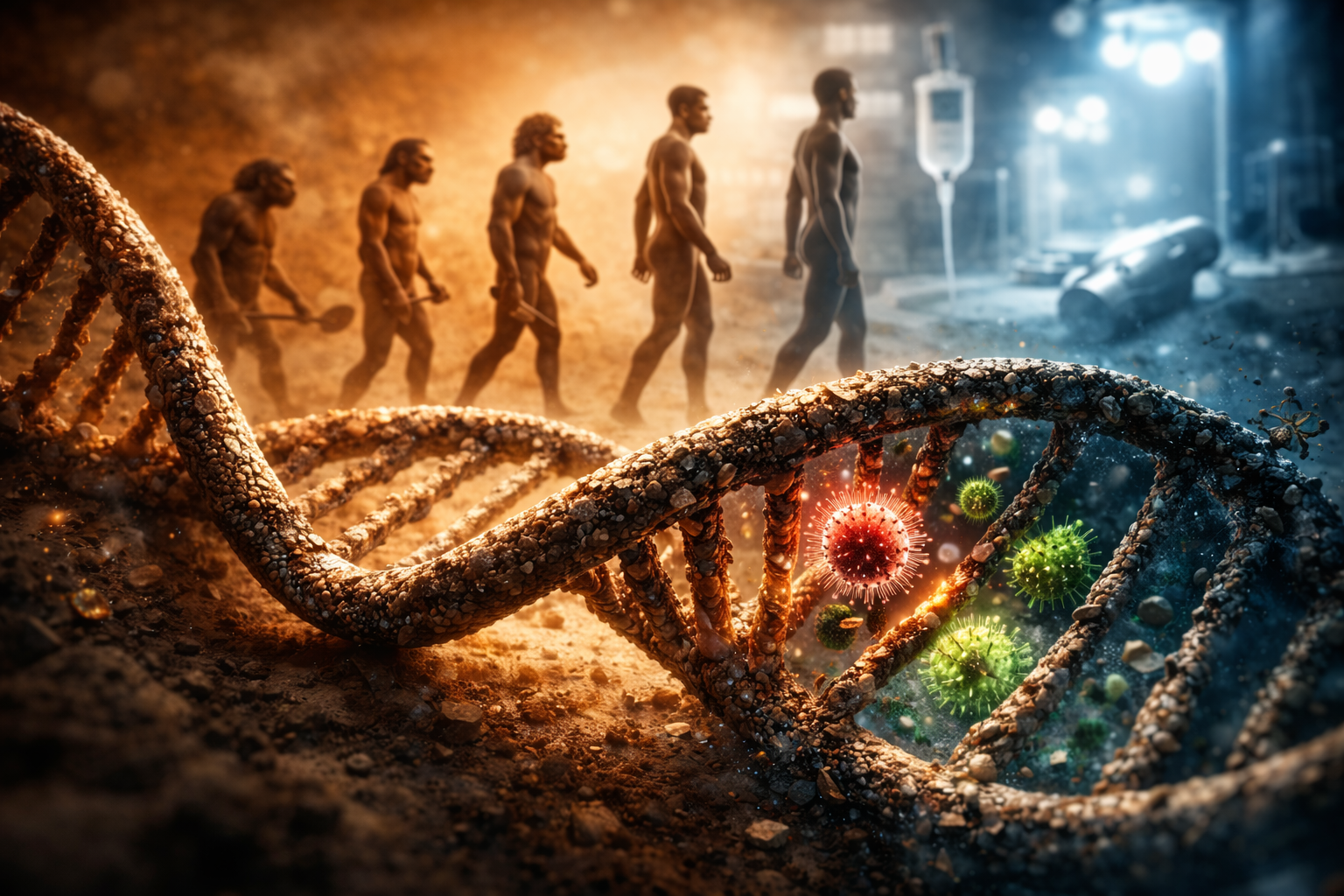
The Evolution Trap: Why Harmful Genes Refuse to Die Out
Natural selection filters for reproduction, not perfect health—and that boundary explains why asthma, sickle cell disease, and other childhood conditions continue to persist across generations.
The obvious question arises when we examine diseases affecting children and young people: why has evolution not eliminated them?
If a condition harms survival early in life, surely natural selection should have removed it by now.
The answer is uncomfortable but clear. Evolution does not optimize for perfect health. It filters traits based on whether they change reproductive success. Many of the world's most significant childhood diseases either fall outside this filter, evade it, or constantly reappear.
Below is a global ranking of major diseases affecting children and young people, ordered by a mix of mortality, lifelong burden, and the strength of the evolutionary forces that keep them in circulation.
First: Childhood Pneumonia and Severe Respiratory Infections
Respiratory infections remain one of the largest infectious killers of children worldwide. Global health estimates still attribute hundreds of thousands of under-five deaths to pneumonia each year.
Why it persists:
This is not primarily a genetic problem. It is an exposure problem. Pneumonia is caused by multiple viruses and bacteria. The pathogens evolve. The environment recreates risk through indoor air pollution, malnutrition, and incomplete vaccination coverage.
Natural selection cannot eliminate vulnerability to dozens of shifting microbes. Humans evolve slowly. Pathogens evolve quickly.
Second: Diarrhoeal Disease
Diarrheal disease remains a leading cause of child mortality in many regions and is responsible for hundreds of thousands of young deaths annually.
Why it persists:
Unsafe water, sanitation gaps, and repeated exposure drive transmission. Many pathogens cause similar symptoms. Even if some genetic variants provide slight resistance, environmental exposure overwhelms evolutionary filtering.
When infrastructure recreates the risk for every generation, selection cannot “solve” the disease.
Third: Malaria
Malaria continues to disproportionately affect children in endemic regions. In parts of sub-Saharan Africa, most malaria deaths occur in children under five.
Why it persists:
Malaria represents an evolutionary arms race. The parasite evolves rapidly. Humans evolve across generations.
Human genetic resistance has emerged in some regions. However, those adaptations often come with trade-offs. The clearest example is sickle cell trait. Carriers with one altered gene copy can gain protection against severe malaria. But individuals with two copies develop sickle cell disease.
This balancing selection keeps the gene in circulation.
Fourth: Tuberculosis
Tuberculosis infects millions each year, including large numbers of children.
Why it persists:
Tuberculosis can lie dormant in the body for years. Treatment requires long courses of antibiotics. Drug resistance is rising in some areas. Transmission thrives in crowded settings.
Evolution cannot easily remove susceptibility when exposure remains constant and bacterial evolution continues.
Fifth: Human Immunodeficiency Virus
Millions of people live with HIV worldwide, including many children infected through vertical transmission or adolescence.
Why it persists:
HIV integrates into human immune cells and forms latent reservoirs. It mutates rapidly. Even effective therapy does not eliminate the virus completely.
The flu is not a disease that evolution can simply purge. It spreads through transmission networks and persists because of biology, inequality, and incomplete global access to treatment.
Sixth: Asthma
Asthma is one of the most common chronic diseases in children globally.
Why it persists:
Asthma risk is polygenic. That means many genes contribute small effects. No single gene determines the condition. Selection works poorly on diffuse, small-effect traits.
There is also likely an immune trade-off. Immune systems shaped by past parasite and infection pressures may be more reactive. In today's world, where there is pollution, people live indoors, and the types of germs we are exposed to have changed, that heightened immune
Rapid environmental change outpaces evolutionary adjustment.
Seventh: Congenital Heart Disease
Congenital heart defects affect millions of children worldwide.
Why it persists:
New mutations, not inherited from parents, give rise to many cases. Others reflect complex genetic and developmental pathways rather than a single gene.
Selection cannot eliminate conditions that arise anew each generation. Improved survival also means more individuals with congenital conditions live to adulthood and can reproduce.
Eighth: Type One Diabetes
Type 1 diabetes is among the most common chronic autoimmune diseases in childhood.
Why it persists:
The genes involved are largely immune system genes. Immune diversity has historically protected populations against infectious threats. Some immune configurations that help fight infections can also increase autoimmune risk.
This situation represents a biological trade-off. Selection may preserve immune strength even if it carries a risk of misfiring.
Ninth: Sickle Cell Disease
Sickle cell disease is a severe inherited blood disorder that can cause significant early-life complications.
Why it persists:
The sickle cell gene remains common in malaria-endemic regions because carriers with one copy have a survival advantage against malaria. That advantage offsets the cost of severe disease in individuals with two copies.
This instance is one of the clearest examples of balancing selection in humans.
Tenth: Thalassemias
Thalassemias are inherited blood disorders affecting hemoglobin production.
Why they persist:
Like sickle cell variants, some thalassemia traits historically provided protection against malaria in certain regions. Carrier states are typically mild, allowing genes to pass silently across generations.
Eleventh: Glucose-6-Phosphate Dehydrogenase Deficiency
G6PD deficiency affects hundreds of millions worldwide.
Why it persists:
The condition often causes problems only under specific triggers, such as certain foods, infections, or medications. Many carriers remain healthy.
Historical malaria pressure appears to have maintained these variants in some populations. Because harm is conditional rather than constant, purifying selection is weak.
Twelfth: Hemophilia
Hemophilia is an inherited bleeding disorder, often linked to the X chromosome.
Why it persists:
It can arise through new mutations. Modern medical care allows individuals with hemophilia to survive into adulthood and reproduce. That dramatically weakens evolutionary pressure against the gene.
Thirteenth: Cystic Fibrosis
Cystic fibrosis is a severe inherited disorder affecting lungs and digestion.
Why it persists:
Carriers are healthy and common in some populations. Some hypotheses suggest historical carrier advantages against certain infections, though evidence is mixed.
What is certain is this: improved treatment now allows people with cystic fibrosis to live much longer. That means the gene remains in circulation through normal inheritance.
The Pattern Behind Persistence
Across all these conditions, four evolutionary principles recur.
First, natural selection is strongest before reproduction and weaker after.
Second, mutation constantly reintroduces harmful variants.
Third, some genes carry trade-offs that preserve them.
Fourth, the environment changes faster than genes.
Evolution does not aim for perfection. It works with constraints, timing, and probability.
Research Aimed at True Disease Modification and Cure
Despite evolutionary persistence, modern medicine is reshaping the landscape.
Gene editing and gene therapy are advancing rapidly for inherited blood disorders such as sickle cell disease and thalassemia. In recent years, regulatory approvals for gene-based treatments have marked the first credible pathway toward functional cures in some patients.
Hemophilia gene therapy has also reached approval in certain regions, aiming for long-lasting correction from a single treatment.
Malaria vaccines are now being rolled out in endemic countries, representing a major milestone in infectious disease prevention. Research continues with more effective formulations and broader access.
Tuberculosis vaccine candidates are in late-stage trials. If successful, they could shift the global burden dramatically.
For type one diabetes, immune-modifying therapies have already demonstrated the ability to delay disease progression in high-risk individuals, suggesting that immune recalibration is possible.
HIV cure research focuses on eliminating latent viral reservoirs or achieving durable remission without daily therapy. While a complete cure remains elusive, long-acting treatments and immune-based strategies continue to improve outcomes.
Asthma research is now paying more attention to environmental issues, like reducing pollution, early exposure to microbes, and treatments that change how the immune system works.
Cystic fibrosis treatment has greatly improved with powerful drugs that fix the main protein problem for many patients, and research is moving towards more gene-based solutions.
The Real Conclusion
The persistence of childhood disease is not evidence that evolution failed.
It reflects the boundaries of natural selection.
Selection filters for reproduction, not lifelong health. Mutation replenishes risk. Trade-offs preserve certain genes. And modern environments can amplify ancient vulnerabilities.
Evolution will not determine the future by eliminating these diseases.
It will be decided by whether medicine, infrastructure, and prevention outpace them
