

Why The World’s Biggest AI Companies Are Suddenly Warning About DNA
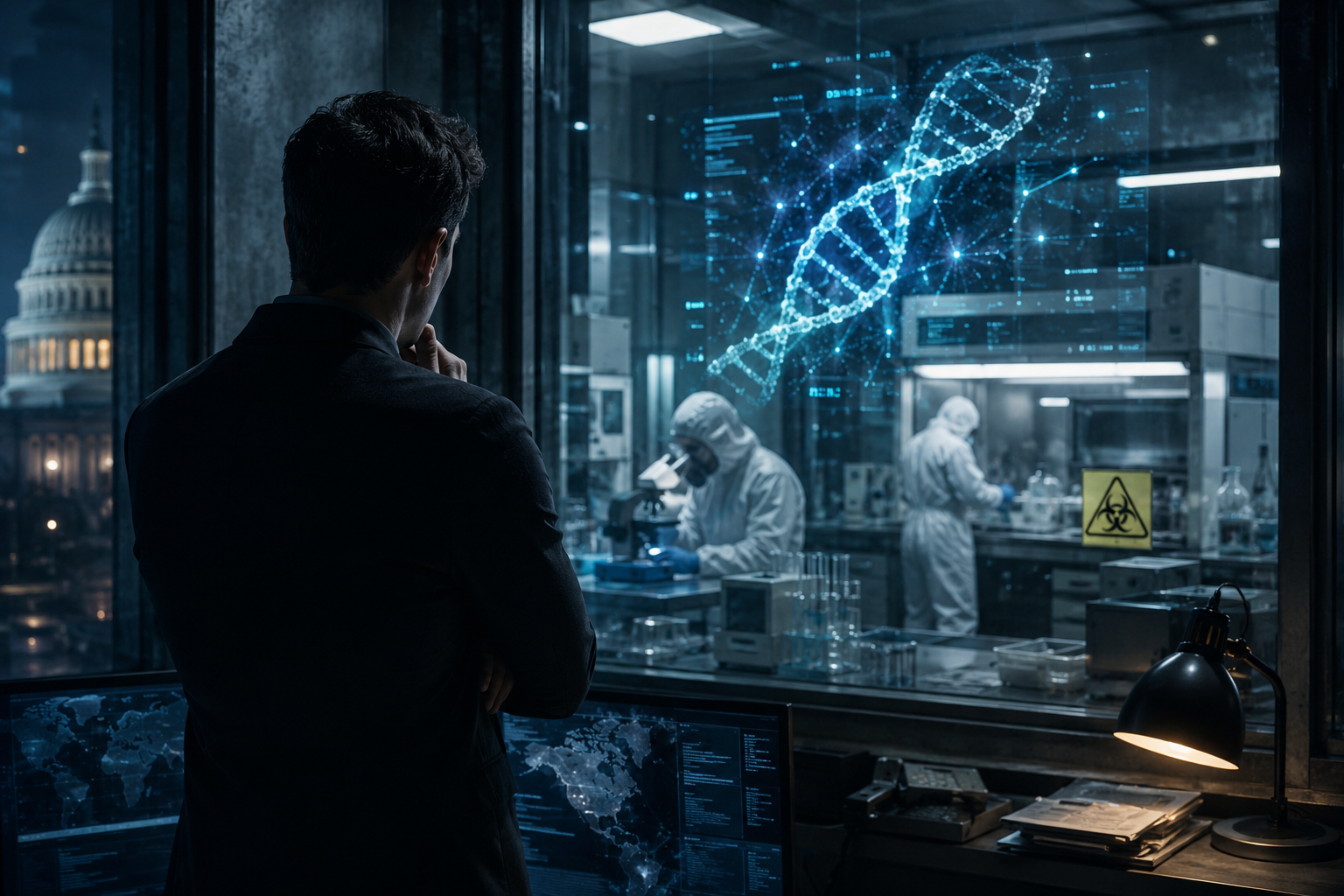
The AI Risk That Could Make Cyberattacks Look Small
The New AI Fear Is Not Chatbots — It Is Biology
For years, AI safety debates have focused on chatbots, misinformation, deepfakes, copyright disputes, and the future of work. Those concerns remain important, but a growing number of researchers now believe the most serious long-term risks may emerge somewhere else entirely: biology.
That is why a remarkable coalition of leaders from major AI companies, including Sam Altman, Dario Amodei, and Demis Hassabis, recently backed calls for mandatory regulation of gene synthesis technology. Their concern is not theoretical. It is rooted in the possibility that increasingly capable AI systems could help malicious actors design dangerous biological agents more easily than ever before.
The significance of this moment should not be underestimated. Fierce competitors rarely agree on regulation, particularly regulation outside their own industry. The fact that multiple frontier AI companies have aligned behind the same warning is itself a signal that they believe the underlying risk deserves serious attention.
The Technology At The Centre Of The Debate
Gene synthesis is a powerful biotechnology process that allows scientists to create custom DNA sequences in laboratories. It already plays a vital role in medicine, vaccine development, agriculture, and scientific research.
In the right hands, gene synthesis can accelerate breakthroughs that save lives. In the wrong hands, however, it could potentially be used to recreate dangerous pathogens, modify existing biological threats, or develop entirely new ones. Current safeguards rely heavily on screening systems and industry cooperation, but many experts worry those protections were designed before the latest generation of AI systems arrived.
The concern is not that AI suddenly gives someone a bioweapon at the push of a button. The fear is more subtle. Advanced AI systems can increasingly assist with research, troubleshooting, analysis, and technical problem-solving. As those capabilities improve, they could lower the expertise barrier required to pursue dangerous biological projects.
The Collision Between AI And Synthetic Biology
Artificial intelligence is already transforming biological research. Systems developed by organizations such as Google DeepMind have demonstrated remarkable abilities to analyse proteins, genetics, and biological processes. These tools promise faster drug discovery, better disease understanding, and potentially revolutionary medical advances.
Yet every powerful technology creates a dual-use dilemma. The same tools that help researchers develop treatments may also provide insights that could be exploited by bad actors. This is the challenge confronting policymakers.
The coalition supporting regulation is specifically calling for stronger screening of synthetic DNA and RNA orders, improved verification of customers, and better record-keeping across the gene synthesis industry. The goal is straightforward: make it significantly harder for dangerous biological materials to be created or acquired without detection.
Why Regulators Are Paying Attention
One reason this issue has gained momentum is that it sits at the intersection of two rapidly advancing technologies. AI is becoming more capable each year. Gene synthesis is becoming cheaper, faster, and more accessible.
Historically, many catastrophic risks required extraordinary resources, expertise, and infrastructure. Technological progress can gradually reduce those barriers. Policymakers are increasingly concerned about scenarios where multiple emerging technologies amplify one another in unexpected ways.
This explains why the conversation has expanded beyond traditional AI concerns. Rather than asking whether chatbots are safe, experts are asking whether AI could accelerate risks in fields such as biotechnology, cybersecurity, chemistry, and autonomous systems. Biology has become one of the most prominent examples of that broader challenge.
The Opportunity Hidden Inside The Warning
The story is not only about danger. It is also about prevention.
Unlike many historical technological crises, regulators and industry leaders are discussing safeguards before a major disaster has occurred. That creates a rare opportunity to shape the rules while the technology is still developing rather than after a catastrophic failure.
Supporters of regulation argue that mandatory DNA screening could become a biological equivalent of airport security or financial anti-fraud systems: an imperfect but essential layer of protection. Critics worry about costs, innovation barriers, and implementation challenges. The debate is likely to intensify as AI capabilities continue to improve.
What makes this debate unusual is that many of the strongest calls for regulation are coming from technology leaders themselves. That alone suggests the issue has moved beyond academic speculation.
The Real Question Is What Happens Next
The most important takeaway is not that AI has suddenly created a bioweapon crisis. It has not. The more important reality is that some of the world's most influential AI researchers now believe biology represents one of the next major frontiers of technological risk.
For years, AI safety was largely a discussion about information. Increasingly, it is becoming a discussion about the physical world. When the people building the most advanced AI systems begin warning about DNA, laboratories, and biological security, the conversation is no longer just about software. It is about whether humanity can manage technologies that are becoming powerful enough to reshape life itself.
