

Lindsay Clancy’s Next Trial Could Be Completely Different — Because Both Sides Now Know Where the First Jury Broke
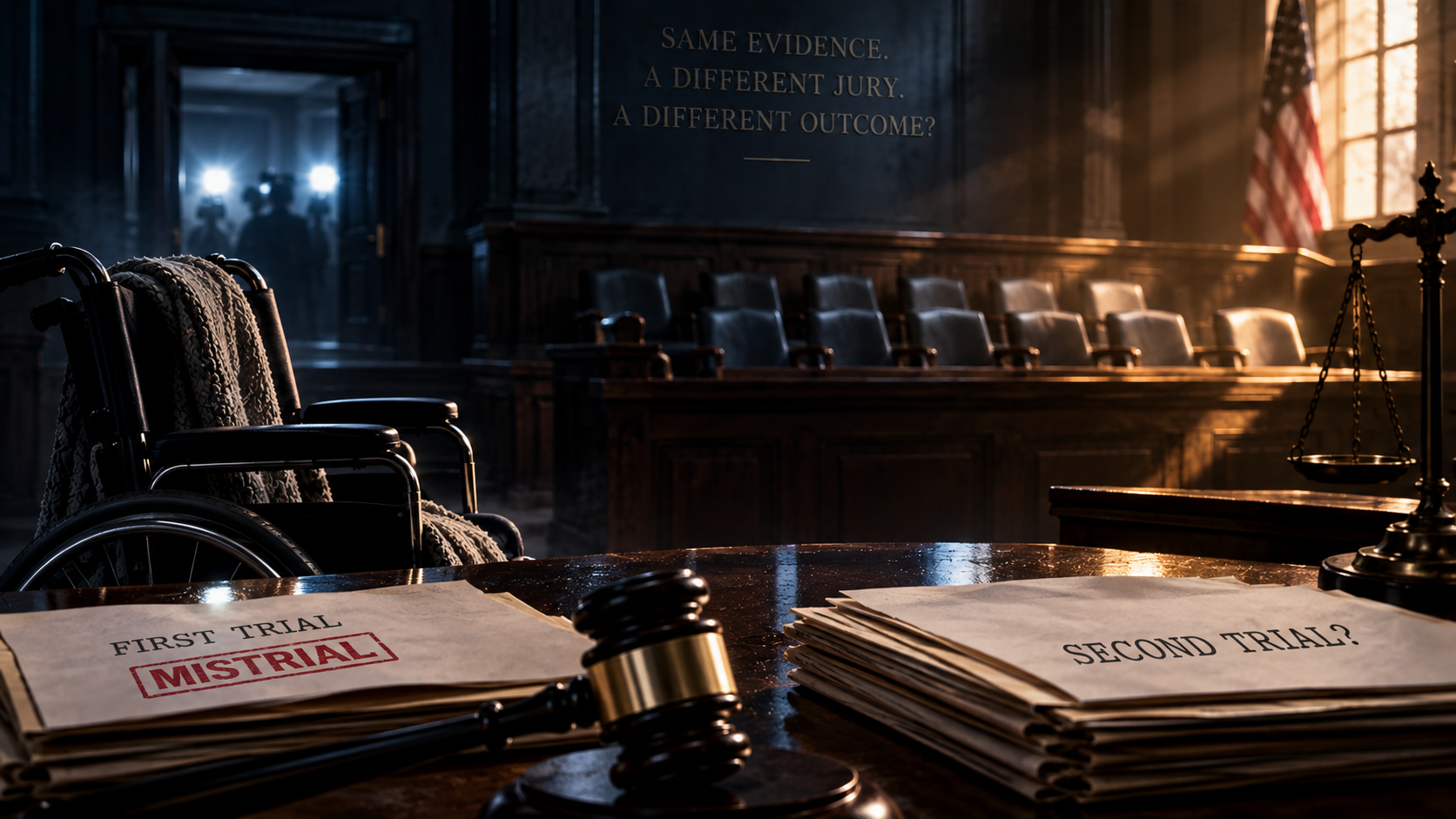
Waiting for Trial Two
A Verdict That Never Came
Lindsay Clancy has survived one of the most closely watched murder trials in America without either a conviction or an acquittal. After almost six weeks of testimony and seven days of jury deliberations, Judge William Sullivan declared a mistrial on September 4 when jurors said they could not reach a unanimous decision over whether Clancy was criminally responsible for killing her three children. The result has not freed her, cleared her or ended the case.
Instead, Clancy has entered an extraordinary legal limbo. She remains charged with murder and continues to be held in a psychiatric hospital while prosecutors decide whether to put her through the entire process again. A hearing scheduled for September 29 could reveal whether the Commonwealth intends to seek a second trial, pursue another resolution or face a defence attempt to bring the prosecution to an end.
What makes a potential retrial especially significant is that neither side would be entering it blind. Prosecutors and defence lawyers have now watched more than a dozen jurors react to their witnesses, experts, documents, arguments and theory of the case. If there is a second trial, it will not simply be a replay of the first. It will be a prosecution and defence rebuilt around what they have just learned.
What Happens to Lindsay Clancy Now?
For the immediate future, Clancy's daily life is likely to resemble the period before her first trial far more than the dramatic final days in Plymouth Superior Court. She does not return home because the jury failed to reach a verdict. A mistrial means the first jury produced no legally binding answer to the charges, leaving the criminal case alive.
Clancy remains in state psychiatric custody and continues to live with the catastrophic physical injuries she suffered after jumping from a second-storey window following the deaths of her children. The fall left her paralysed. Unless her legal status changes, custody, medical treatment and meetings with her lawyers are likely to define the period between the mistrial and whatever happens next.
That could last months. Judge Sullivan has indicated that a new trial is possible if prosecutors want one, but no retrial date has been fixed. The first immediate milestone is the September 29 hearing.
Defence attorney Kevin Reddington is expected to continue trying to end the prosecution without another jury trial. The defence has already signalled that it will seek further judicial relief, while prosecutors must decide whether another attempt at conviction is justified after what happened inside the first jury room.
The First Jury Has Given Both Sides Something Incredibly Valuable
Before the first trial, lawyers could study evidence, rehearse witnesses, run mock arguments and predict how jurors might react. None of that compares with what they now possess: the behaviour of an actual jury after hearing the complete case.
Reddington said after the mistrial that the jury was effectively divided 11–1, with one juror preventing the other 11 from reaching a not-guilty result. That claimed division was not returned as an official verdict, so it needs to be treated carefully, but the jury's own communications to the court confirm an extraordinary level of disagreement centred on a single juror.
On the final day, the defence sought to remove that juror after a note from the foreperson said one juror had acknowledged doubt but was refusing to apply it to the verdict. Judge Sullivan declined to remove the juror, and an emergency attempt to obtain intervention from Massachusetts' highest court failed. The mistrial followed.
If Reddington's description of the division is accurate, the prosecution now faces an uncomfortable strategic question. After weeks of evidence designed to prove that Clancy appreciated the wrongfulness of killing her children and remained capable of choosing her actions, why were prosecutors apparently unable to persuade anything close to a unanimous jury?
The defence has a different problem. If 11 jurors really were prepared to acquit on criminal responsibility, what prevented the final juror from getting there?
Those two questions could shape almost everything about trial two.
Why The Prosecution May Have More to Change
There was never meaningful dispute over the central physical fact of the case. Clancy killed Cora, Dawson and Callan at the family's Duxbury home in January 2023. The legal battle instead centred on her mental state and whether Massachusetts law considered her criminally responsible for those acts.
Prosecutors argued that Clancy was seriously troubled but not legally insane. They presented her actions before the killings as evidence of planning and rational decision-making, including sending Patrick Clancy away to collect food and visit a pharmacy and evidence that she had checked how long the journey would take. Their central proposition was that she understood what she was doing and understood that it was wrong.
The defence did not need to prove that Clancy was incapable of carrying out organised actions. Its case was that severe mental illness had destroyed her criminal responsibility despite the outward appearance of purposeful behaviour.
That distinction could become even more important in a retrial. Evidence of planning may sound powerful in an ordinary murder prosecution, but the prosecution must connect that planning to the specific legal issue the jury is being asked to decide. If jurors accept that a psychotic person can still perform organised actions, evidence showing organisation does not automatically answer whether that person understood wrongfulness or possessed the legally required capacity.
A second prosecution would therefore be able to tighten its presentation around precisely those questions. Its experts now know which attacks they will face under cross-examination. Prosecutors know which defence witnesses resonated strongly enough to produce a prolonged deadlock. They know how Reddington frames the medical history, how he approaches the timeline and where he will attack the state's interpretation of Clancy's behaviour.
That is an enormous advantage compared with trial one.
But the defence receives exactly the same advantage.
The Defence May Have Less Reason to Reinvent Its Case
Clancy's defence presented a long history of worsening mental health after the birth of her third child, repeated efforts to obtain treatment and testimony about her condition from people who knew her before the killings.
Patrick Clancy testified that his former wife had received psychiatric treatment and had been discharged from a hospital weeks before the deaths. He also testified that she appeared normal when he left the house shortly before the killings. Other evidence dealt with statements Clancy made about hearing a man's voice telling her that she had to act or would lose her chance.
The prosecution regarded those circumstances as compatible with deliberate murder. The defence treated them as parts of a psychiatric collapse.
If most of the first jury ultimately accepted the defence interpretation, Reddington has little incentive to tear that presentation apart.
Instead, trial two may involve refinement rather than reinvention. Witnesses who proved especially persuasive could receive greater emphasis. Arguments that generated confusion could be simplified. Evidence that consumed hours without materially moving the case could be shortened.
There is another potentially invaluable source of information: the first jurors themselves.
Jurors are not required to talk to the lawyers after the case, but they can choose to do so. Lawyers sometimes approach willing former jurors after a mistrial to understand what mattered inside deliberations. That information could reveal which psychiatric witnesses were trusted, which evidence was dismissed and which parts of the legal instructions caused disagreement.
In a retrial decided almost entirely by mental state, that feedback could be more valuable than almost any new exhibit.
Lindsay Clancy Herself Would Present a Huge Strategic Question
One of the hardest choices in any second trial would be whether the defence changes how directly Clancy participates in presenting her own story.
Putting a defendant at the centre of the case can be extraordinarily powerful. It can also be catastrophic.
If Clancy were subjected to substantive cross-examination, prosecutors could question her in detail about the period before Patrick left the house, the route calculations, the children, the exercise bands, the alleged voice, her suicide attempt and statements she made afterwards.
Every inconsistency would matter.
The opposite argument is simple. If the defence came within one juror of the result Reddington says it did without taking that risk, why introduce it now?
Unless new evidence or a major strategic development changes the calculation, a retrial may encourage the defence to preserve much of what already worked rather than gambling on a radically more personal presentation.
Finding Another Jury Could Be One of the Hardest Parts
The Lindsay Clancy case was already nationally known before the first jury entered deliberations. The mistrial has expanded the problem.
A future juror may now know not only what Clancy is accused of doing, but how the first trial unfolded, which witnesses testified, what the defence argued, what prosecutors said, how long jurors deliberated and the widely reported claim that the panel split 11–1.
That creates a fundamentally different jury-selection problem.
Massachusetts law does not require jurors to have lived in total ignorance of a famous case. The central issue is whether a prospective juror can put aside outside information and decide the case fairly from the evidence admitted in court.
Superior Court Rule 6 gives the trial judge significant discretion over how that process works. The court can use attorney questioning, individual voir dire and supplemental written questionnaires designed to identify explicit and implicit bias. Parties can propose subjects and questions they believe are necessary to uncover prejudice.
In a second Clancy trial, that could become exceptionally detailed.
Prospective jurors could face questioning about whether they watched the first trial, consumed clips online, followed commentary, discussed the case with friends, learned about the reported jury split or formed a view about whether Clancy was psychotic.
The questioning could also probe whether personal experiences with pregnancy, postpartum illness, psychiatric treatment, suicide, young children or violent crime would affect a juror's ability to evaluate the evidence neutrally.
The challenge is not finding 12 people who have never heard the name Lindsay Clancy.
It is finding jurors who can genuinely say that whatever they have heard has not already decided the case for them.
The Reported 11–1 Split Makes Jury Selection Even Stranger
Knowledge of the first jury's apparent division could influence people in opposite directions.
One prospective juror might think that if 11 people sat through weeks of testimony and apparently favoured acquittal, there must have been overwhelming psychiatric evidence supporting Clancy.
Another could identify emotionally with the reported holdout and conclude that somebody had to remain focused on the three children who died.
Neither person necessarily enters the courthouse capable of starting from zero.
That is why lawyers will care about something deeper than simple exposure to news coverage. They need to know what conclusion the person drew from it.
The first jury has therefore become part of the publicity surrounding the second jury.
That is unusual and potentially consequential.
Could The Trial Be Moved?
The enormous publicity also raises the possibility of a change of venue, although Massachusetts law sets a demanding standard.
A trial may be transferred when prejudice in the community is so great that a defendant may not be able to obtain a fair and impartial jury. But extensive publicity by itself does not automatically require moving a case. Massachusetts procedure specifically recognises that exposure to publicity can often be tested through voir dire.
That matters particularly here because moving the case geographically would not erase national exposure.
The first trial was televised. Clips circulated online. The mistrial became national news. Moving proceedings away from Plymouth County might reduce some local familiarity, but a prospective juror elsewhere in Massachusetts could have consumed exactly the same coverage.
The court could therefore conclude that intensive jury screening is more effective than simply changing courthouses.
Trial Two Could Be Sharper Than Trial One
Retrials can sometimes become more efficient because the lawyers have already seen the machinery of the case operate once.
There are fewer surprises.
Both sides know which objections are likely, which witnesses struggle under cross-examination, which expert explanations require clarification and which exhibits genuinely move the argument forward.
They also know the opposing closing argument.
The result could be a shorter and more focused second trial even if much of the witness list remains familiar.
That does not mean the second trial becomes predictable. Quite the opposite.
Small changes become disproportionately important when the first jury came so close to unanimity.
A different psychiatric explanation, a stronger cross-examination, one omitted witness, a different juror demographic or a cleaner explanation of criminal responsibility could change the result.
Why Prosecutors May Still Retry the Case
The mistrial places Plymouth County District Attorney Timothy Cruz in an exceptionally difficult position.
After court, Cruz said his office had not yet decided whether to retry Clancy but stressed the prosecution's responsibility to seek justice for Cora, Dawson and Callan.
That makes an immediate abandonment of the case difficult to imagine.
Three children are dead. Clancy remains charged with their murders. Prosecutors continue to maintain that the killings were calculated acts committed by a woman who understood what she was doing.
But a prosecutor deciding whether to retry a hung case cannot ignore what happened at trial either.
Another proceeding would require jurors, dozens of witnesses, psychiatric experts, court resources and the Clancy family to go through the evidence again. Patrick Clancy's lawyer has described the prospect of another trial as extraordinarily painful for the family.
The first jury's division therefore matters even though it produced no legal result.
If prosecutors believe they were one evidential adjustment away from changing several jurors' minds, a retrial may appear justified.
If they conclude that 11 jurors fundamentally rejected their theory of criminal responsibility, the calculation becomes considerably harder.
A Plea Agreement Remains Another Route
A second jury trial is not the only theoretical outcome.
Prosecutors and the defence could negotiate a resolution that avoids repeating the entire proceeding. The prosecution could also decide not to proceed, while Reddington will continue seeking judicial relief designed to end the case.
Any negotiated outcome would be extraordinarily sensitive because both sides would need to accept consequences very different from the absolute result they sought at trial.
The prosecution asked jurors to hold Clancy criminally responsible.
The defence asked them to find that mental illness meant she was not.
A compromise therefore carries both legal and emotional difficulty.
What If Another Jury Cannot Agree?
A second mistrial would not automatically end the prosecution.
There is no simple rule under which two hung juries erase the charges. Prosecutors could potentially seek another trial.
But the practical pressure would become enormous.
If two separate juries heard the state's best evidence and neither could unanimously find Clancy criminally responsible, prosecutors would have to ask whether a third attempt could realistically produce a different result.
The opposite would also be true for the defence. Repeated inability to secure a unanimous acquittal would keep Clancy in legal limbo rather than providing the final result it wants.
That is what makes the next decision so consequential.
September 29 Is Now the Date to Watch
For Lindsay Clancy, the weeks ahead will be defined by waiting.
She remains in psychiatric custody. The murder charges remain alive. Her legal team is preparing for the possibility of another fight, while prosecutors are deciding whether to ask another group of strangers to answer the question the first jury could not.
The September 29 hearing should provide the first significant indication of what that future looks like.
If prosecutors announce a retrial, the next Lindsay Clancy case will begin with something neither side possessed the first time: knowledge of exactly how close the original prosecution came to failing and exactly how close the defence came to winning.
That changes the psychology of the case before a single new juror is seated.
The evidence may look familiar. The courtroom may be the same. Many of the witnesses may return.
But trial two, if it happens, would be a fundamentally different contest.
This time, both sides already know where the jury broke.
