Why Tokyo's Killer Has No Name
How Can a Killer Leave His Blood, His Fingerprints and His Clothes Behind, and Still Have No Name?
Sometime between about 11pm on 30 December 2000 and dawn the next day, an intruder killed all four members of the Miyazawa family in their home in Kami-soshigaya, in Tokyo's Setagaya ward. Mikio was 44, his wife Yasuko 41, their daughter Niina eight and their son Rei six. The killer left his blood, his fingerprints, his clothes and the knife. Nearly 26 years later, Tokyo's Metropolitan Police Department still does not know who he is.
The evidence is extensive, but it has not produced an identification. Detectives know his blood type, roughly how tall he was, the size of his waist and where his sweatshirt was sold. None of it has led to a named suspect, and without an established motive there is no obvious circle of people against whom to test it.
The Family in the Last Houses Before the Park
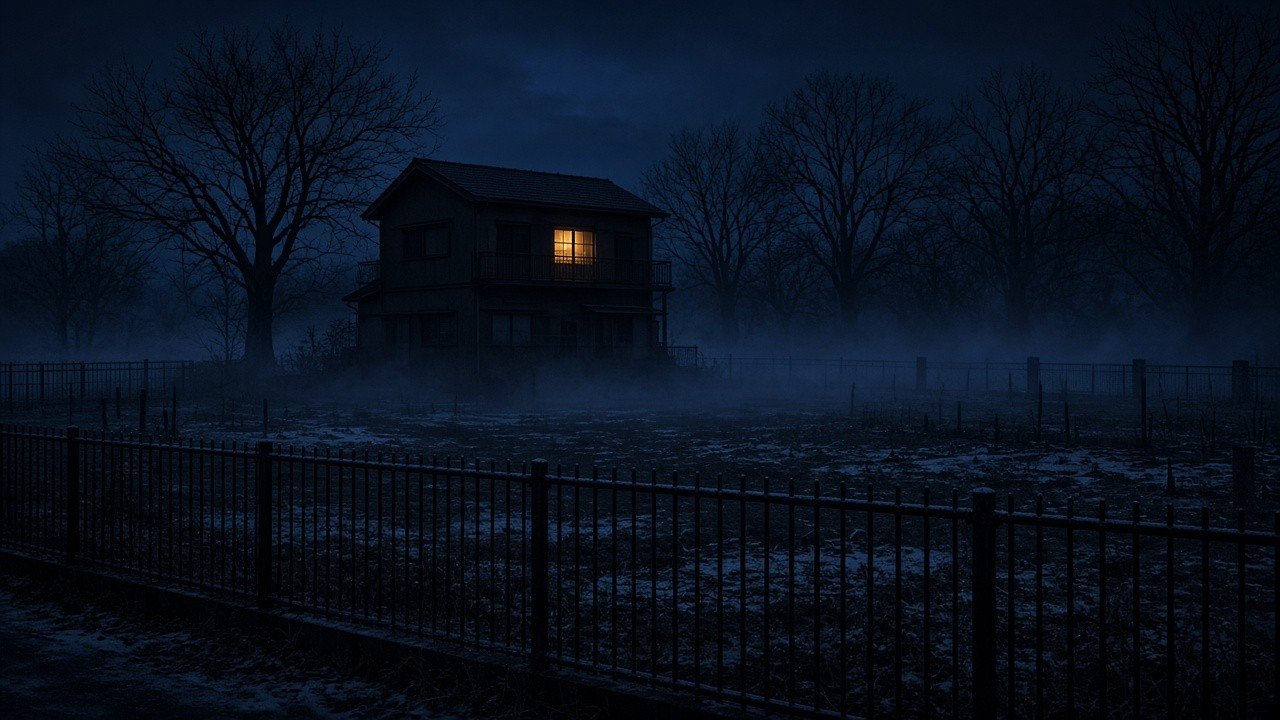
The Miyazawas lived in a corner of Setagaya that the city was absorbing into Soshigaya Park. According to the police appeal, there were about 200 households in the area when the family moved there in 1990. By December 2000, the planned expansion of the park had left only four houses, the Miyazawas' among them. To the north lay a university baseball ground, to the west the Senkawa river and to the east and south the park itself. Yasuko's mother, Haruko, lived next door.
The police appeal describes an ordinary end-of-year Saturday. The family went shopping in the morning in an arcade near Chitose-Karasuyama Station, then spent the evening at home eating dinner and watching television. Mikio worked for a foreign-affiliated company, developing corporate identity for large businesses, and had loved puppetry and theatre at school. Yasuko ran a cram school from home. Niina was in her second year at a public primary school and took ballet and piano lessons. Rei went to a public kindergarten in Setagaya.
Those details are published by the police themselves, in an appeal that still asks anyone who knew the family, visited their home or heard of any trouble in their lives to come forward.
What Happened on the Night of 30 December 2000
On the morning of 31 December, Haruko could not reach the family by phone. She went next door and found Mikio at the foot of the stairs near the front door. He had been stabbed repeatedly. Upstairs she found Yasuko and Niina, both stabbed. Rei was in his bed. He had been strangled, and police believe he was killed first.
The weapon was a yanagiba, the long, thin kitchen knife used to slice fish for sashimi. Takeshi Tsuchida, then chief of the local Seijo police station, later described attacks of exceptional brutality.
How the killer got in has never been settled. Some officers believe he climbed a tree, removed a screen and entered through an open upstairs bathroom window. Investigators accept that the point of entry is not clear. The uncertainty runs both ways: Haruko initially told police she unlocked the front door with a spare key that morning, but in later years she was no longer sure. That doubt makes it harder to say how he entered or left.
The Hours the Killer Stayed
The most disturbing part of the case came after the killings. Police say the killer stayed in the house rather than fleeing at once. He used the family's computer and ate ice cream from their freezer. Around 150,000 yen was taken from the house, but police have never established that robbery was the motive.
The lingering has prompted competing interpretations: confidence, indifference to the risk, or behaviour investigators cannot yet explain. It does not, by itself, establish the killer's state of mind. What it did leave was an extraordinary amount of physical evidence.
The Evidence: Everything Except a Name
The police appeal reads like an inventory. The killer left a hat, a jacket, a scarf, gloves, a sweatshirt, a hip bag, two handkerchiefs and the knife. His shoe prints were found in the house, and so was his blood. He had injured his hands during the attack.
From that material, police describe a man who was:
Young, judging by his clothes, which were large sizes.
About 170 centimetres tall and slim. The belt of his hip bag measured 83 centimetres, which police estimate means a waist of 70 to 75 centimetres.
Probably right-handed.
Blood type A.
The appeal adds a caution that is easy to overlook: his body shape may have changed since 2000, and the wounds on his hands may have healed long ago.
Each item has been traced as far as the records allow. Police say only 130 sweatshirts of that design, light grey with light purple sleeves, were sold in Japan up to the day of the murders. Only ten were sold in Tokyo, at four stores in Hachioji, Seiseki-sakuragaoka, Ogikubo and Aoto. Nationally, police say they have identified the buyers of 12. In Tokyo, they have found the owner of one and are still looking for the other nine.
The appeal tells anyone who owns one not to fear coming forward, because the killer left his at the scene. The remaining garments could help investigators account for the small number sold.
The footprints matched Slazenger trainers made in South Korea, in a 27.5 centimetre size that police say was never sold on the Japanese market. The knife was a Seki Magoroku Ginju model, one of 1,500 made in Fukui prefecture in June 2000 and sold through 46 outlets in the Kanto region. Traces of the men's fragrance Drakkar Noir were found on the bag and handkerchiefs.
The handkerchiefs are among the strangest details. Police say one had a cut about three centimetres long in the middle, and they believe the killer pushed the knife through it so the cloth would act as a guard. The other was folded into a triangle and squeezed at the edges, and police think he may have worn it as a mask.
Then there is the problem those details cannot solve. The fingerprints and DNA have never produced a public identification. A trail that narrows to ten sweatshirts in a city of millions still needs a name at the end of it.
Why the DNA Has Not Delivered a Name
The killer's DNA is among the strongest evidence in the case and the most frustrating. A crime-scene profile is not a name: investigators normally need a matching sample from an identified person, a database match or another route to a suspect.
Japan's investigative framework has also restricted the broader uses of genetic information. Reporting on the case describes police working under internal regulations focused on identification, rather than routinely using methods such as predicting appearance or searching consumer genealogy databases for relatives.
Those are different questions. Matching a suspect's DNA to blood left in the house could establish a connection. Identifying a suspect through distant relatives, as American investigators did with the Golden State Killer, requires a different process, access to suitable databases and legal and privacy safeguards.
Tsuchida, now an adviser to a group of bereaved families called Sora no Kai, has campaigned for legislation widening what police can do. Supporters hope genetic information could generate leads rather than merely test them. Privacy and accuracy remain important concerns, and there is no guarantee that broader testing would solve this particular case.
Some reports have described ancestry estimates drawn from the killer's DNA. They are not an identification, and they do not establish his nationality or where he lived.
What Investigators Still Cannot Explain
The case does not lack theories. What it lacks is evidence that would let investigators choose between them, and several basic questions remain open.
The first is motive. Money was taken, but that does not settle why the family was attacked. Tsuchida has asked the questions investigators still cannot answer: was it for money, a grudge against someone in the family, or something else entirely? Without an established motive, police cannot narrow the investigation to people with a known reason to target the Miyazawas.
The second is the route in and out. With the park on two sides and uncertainty over the front door, the killer had several possible paths. That makes it harder to work out where he came from or where he went.
The third is the setting. The house stood on the edge of a park where children played and teenagers skateboarded. The police appeal still asks to hear from anyone who was in or near the park that night, including people who were skateboarding, playing catch or simply walking past. It also asks about anyone who moved away suddenly around the time of the murders, or who arrived in Tokyo then.
Speculation has filled the space that evidence has not. Books, videos and online threads have named suspects and nationalities. None of those claims has established the killer's identity. The honest position remains that the case is unsolved.
Why the Killer Has Never Been Caught
The case has not stalled for lack of effort. By December 2015, police reported a cumulative deployment figure of 246,044 investigators and 12,545 pieces of information. That deployment total should not be read as 246,044 different people. A dedicated team has continued the investigation, with renewed anniversary appeals.
The obstacles are structural. Fingerprints and DNA need a useful comparison. The physical clues narrow the search to small numbers of products, but the buyers of most of them have not been identified. Uncertainty about motive and entry also limits investigators' ability to reconstruct the killer's movements.
Even clues that look promising can lead nowhere. On 9 April 2001, the 100th day after the murders, a small white granite jizo, a Buddhist statue, appeared on the far bank of the Senkawa river, west of the house. Police are still asking who made, imported or sold it. They say plainly that they do not know whether it was left by a well-meaning stranger or by the killer or someone close to him.
How the Case Changed Japanese Law
The Setagaya murders became one of the cases behind a campaign to end the time limit on prosecuting murder in Japan. Bereaved families argued that no killer should be able to wait out the clock.
In 2010, a revision to the Code of Criminal Procedure abolished the statute of limitations for murder and certain other fatal crimes carrying the death penalty. The Setagaya case can therefore continue without the old prosecution deadline. Members of Sora no Kai have continued handing out appeal leaflets near the house.
The House That Still Stands
The family home became a symbol of the case. Police guarded it around the clock for years to preserve the scene. In 2019, they proposed demolishing it because it was ageing and at risk of collapse, saying the evidence from inside had been preserved. Tsuchida worried about what would be lost for younger detectives who had never seen the scene.
The house was not demolished. Police ended the 24-hour guard in February 2020, and the empty building has since been entered more than once. In October 2023, several young people were caught after climbing the fence, and told police they had done it as a test of courage.
In December 2025, an officer found a broken window near the entrance. In May 2026, police said two men had admitted breaking in to look for valuables at some point between September 2023 and December 2025. They told police they had not known it was a murder scene. That break-in has no known connection to the killings. At the time, the house still held boxes of the family's belongings, including their slippers.
The cost of waiting falls on the family. Mikio's mother, Setsuko, has spent decades appealing for answers. In 2019 she spoke of her regret at never seeing her grandchildren grow up. At the end of 2024, aged 93, ill health stopped her visiting the family grave on the anniversary for the first time.
What Could Still Solve It
Ahead of the 25th anniversary in December 2025, the Metropolitan Police Department said it was redoubling its efforts. That year, arrests in other long-unsolved killings, including a 1999 murder in Nagoya, offered reminders that old investigations can change. In December 2025, police released images of clothing identical to items left at the scene.
The reward for information leading to an arrest stands at up to 20 million yen: three million yen from the National Police Agency's special reward scheme and 17 million yen from a private association supporting the investigation. The published reward period runs until 15 December 2026.
Unsolved family murders elsewhere, such as Hinterkaifeck in 1920s Bavaria, show how long a case can hold attention without an answer. Setagaya's physical evidence is preserved. What is missing is a connection: a useful DNA or fingerprint match, a new investigative lead, or someone who recognises an item or remembers a departure in late 2000 and finally speaks to police.
Sources
Tokyo Metropolitan Police Department: English Appeal, official account, evidence and reward details.
Tokyo Metropolitan Police Department: Detailed English Appeal PDF, family background, clothing and witness questions.
ABC News: The Killer Without a Face, discovery, investigation and family interviews.
The Mainichi: Police Vow to Solve 2000 Murder of Tokyo Family, investigation figures and changes to prosecution deadlines.
TokyoReporter: Expanded DNA Usage Urged, reporting on the campaign for broader DNA use.
The Asahi Shimbun: Break-In at the Setagaya Murder House, the building's status and later, unrelated break-ins.
The Japan Times: Police Continue Searching 25 Years On, anniversary appeal and released clothing images.
Next Reads
How Cold Cases Are Solved, how new evidence changes old investigations.
How Does Genetic Genealogy Solve Cold Cases?, the method and its limitations.
Hinterkaifeck: The Evidence Behind Germany's Unsolved Farm Murders, another enduring unsolved family murder.
