They Survived Their Executions — What Happened Next?
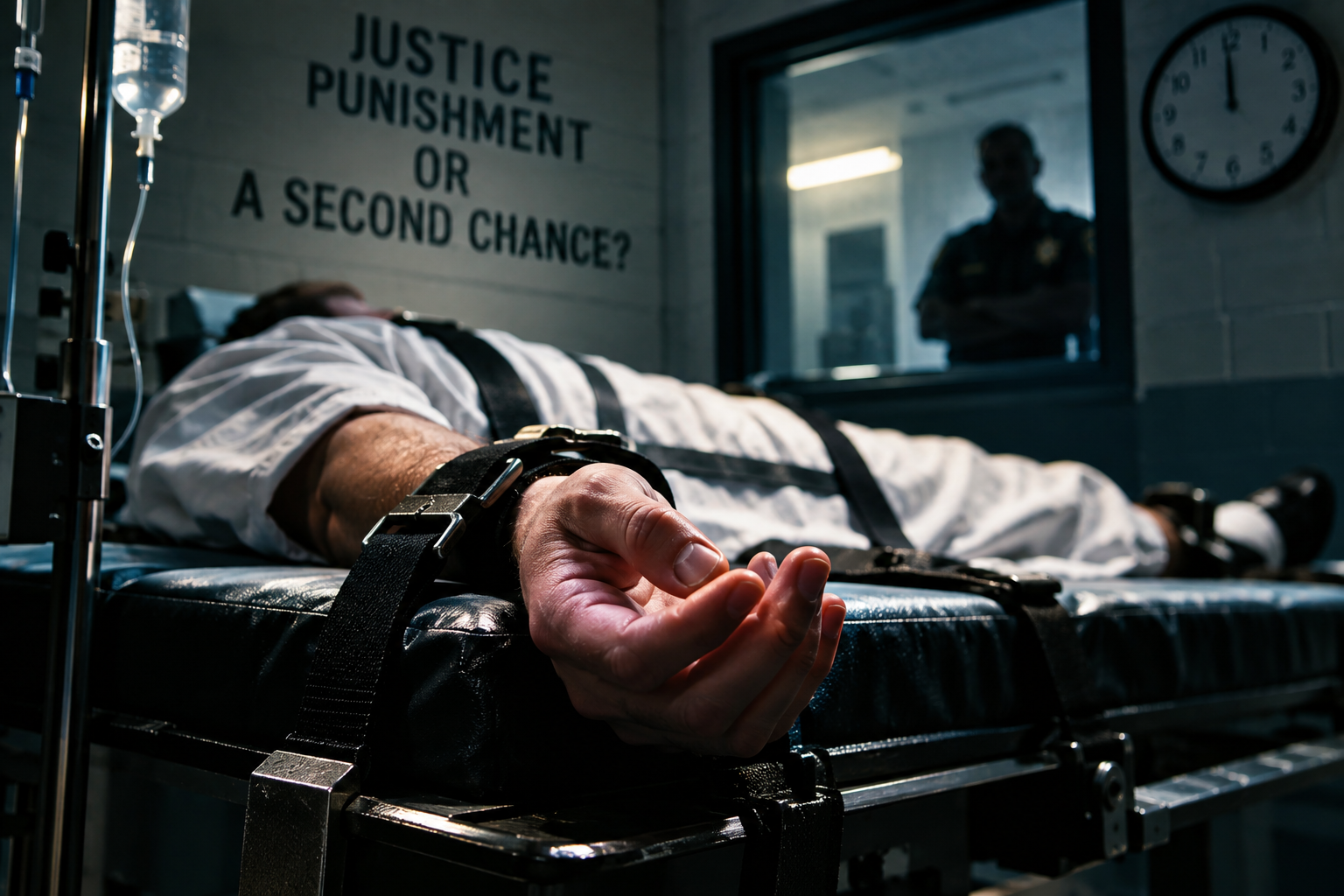
Can America Execute You Twice? The Cases That Tested The Constitution
The Law After A Botched Execution
An execution is supposed to be final. American history contains a small but disturbing group of cases in which it was not.
Prisoners have survived because an electric chair malfunctioned, because execution teams could not establish intravenous access, because a death warrant expired before the procedure could be completed, or because medical and procedural problems made the state abandon the attempt.
What happened next varied sharply.
Some prisoners were executed later. Some remained under sentence of death for years but died from other causes before the state could try again. One reached a settlement that prevented another execution attempt. Others remain alive under death sentences while litigation continues.
What almost never happened was the outcome a layperson might instinctively expect: the failed execution did not automatically void the sentence, amount to an acquittal or require the prisoner’s release.
The most important legal reason can be traced to a case from the 1940s.
A teenage prisoner named Willie Francis survived Louisiana’s electric chair. He argued that making him face the chair again would amount to cruel and unusual punishment and would punish him twice for the same crime.
The United States Supreme Court rejected that argument.
That decision still hangs over modern cases involving failed lethal injections.
It means the central legal question after a failed execution is usually not whether the death sentence disappears. It is whether another attempt, under the particular facts and method proposed, can lawfully be carried out.
Willie Francis Survived The Electric Chair — Then Louisiana Tried Again
Willie Francis remains the defining American case.
Francis had been convicted of murder in Louisiana and sentenced to die in the electric chair. On 3 May 1946, he was placed in the chair and the execution process began.
The machinery failed to kill him.
The official record later described the failure as apparently resulting from a mechanical problem. Francis was removed from the chair and returned to custody.
That created an extraordinary legal problem.
Louisiana had already taken Francis into the execution chamber, restrained him, activated the machinery and attempted to carry out the sentence. He had experienced the physical and psychological ordeal of an execution.
Could the state simply repair the problem and do it again?
Francis challenged the second attempt.
His case reached the U.S. Supreme Court as Louisiana ex rel. Francis v. Resweber.
The argument touched two constitutional protections that still appear in failed-execution litigation today.
The first was the Fifth Amendment principle against double jeopardy.
The second was the Eighth Amendment prohibition on cruel and unusual punishment, applied to the state through constitutional due-process arguments considered by the Court at the time.
Francis argued, in substance, that he had already been placed in jeopardy of his life and subjected to an attempted execution. A second electrocution would force him to undergo the punishment twice.
The Supreme Court disagreed.
The controlling position treated the first failure as an accident rather than a completed punishment followed by a second punishment.
The Court also rejected the argument that a second attempt automatically became cruel and unusual merely because the first attempt had failed.
The legal distinction was severe but important.
The state had sentenced Francis to death. It had failed to complete that sentence. In the Court’s view, an accidental mechanical failure did not extinguish the state’s authority to finish carrying it out.
Francis was returned to the electric chair.
On 9 May 1947, the second execution succeeded.
He was 18.
That outcome established the central historical lesson: in American constitutional law, surviving an execution does not in itself create a right to live.
Why The Francis Case Still Matters
Modern execution methods are very different from the electric chair that failed Willie Francis.
The legal problem is strikingly similar.
When a state attempts an execution and stops before death occurs, lawyers can argue that another attempt would expose the prisoner to unconstitutional pain, trauma or repeated punishment.
But the prisoner begins with a major obstacle.
The death sentence itself remains in force unless a court overturns it, a governor or clemency authority commutes it, or some other lawful action changes the sentence.
A failed execution is not the same thing as a reversal of conviction.
It is not a pardon.
It is not an acquittal.
And under existing precedent it is not automatically treated as completion of the punishment.
That is why modern prisoners who survive execution attempts generally return to death row or another secure prison unit while lawyers immediately begin new litigation.
The challenge then becomes narrower and more fact-specific.
Was the first attempt conducted negligently?
Did officials inflict unnecessary pain?
Would repeating the same method expose the prisoner to a known risk?
Has the state changed its procedure?
Is an alternative method available?
Could a second attempt become so extreme that it crosses the Eighth Amendment line even if a retry is not automatically unconstitutional?
Those questions have produced very different outcomes.
Romell Broom Survived Hours Of Needle Attempts
Ohio’s failed execution of Romell Broom became one of the most notorious lethal-injection cases in modern American history.
Broom had been sentenced to death for the kidnapping, rape and murder of 14-year-old Tryna Middleton.
Ohio scheduled his execution for 15 September 2009.
The execution team could not establish a usable intravenous line.
For roughly two hours, personnel repeatedly attempted to obtain access. Later accounts documented numerous puncture sites across his arms and legs.
The execution was eventually stopped.
Broom survived and was returned to custody.
His lawyers then made the argument that Willie Francis had made decades earlier in another form: forcing him through another execution would violate constitutional protections against double jeopardy and cruel and unusual punishment.
The litigation lasted for years.
In 2016, the Ohio Supreme Court allowed the state to pursue another execution.
The court’s reasoning followed the basic legal structure created by Francis. The first attempt had not completed the sentence. Therefore, another effort was not automatically a second punishment for the same offence.
Broom nevertheless was never executed.
His case is sometimes misunderstood as an example of a prisoner being spared because an execution failed.
That is not what happened.
He remained under a death sentence. A later execution date was contemplated, but he died in prison in December 2020 after being identified as a probable COVID-19 death.
The distinction matters.
The failed execution did not free him.
It did not erase his sentence.
Time and illness prevented the state from completing it.
Doyle Lee Hamm Was Never Subjected To Another Attempt
Doyle Lee Hamm’s case produced a different result.
Alabama attempted to execute Hamm by lethal injection on 22 February 2018.
Hamm already had serious medical issues affecting venous access. His lawyers had argued before the execution that his condition made the state’s usual procedure dangerous.
The execution team spent an extended period trying to establish access.
Court records later described repeated punctures in his limbs and groin during efforts that continued for roughly two and a half hours.
The execution was abandoned.
Hamm survived.
What followed was significant.
Instead of simply setting another date and repeating the same process, Alabama and Hamm ultimately reached a settlement in March 2018 that prevented any further attempt to execute him.
That made Hamm an unusual case.
He was not released from prison.
His murder conviction did not disappear.
The failed execution did not itself create a general rule that Alabama could never try again.
Rather, litigation over his individual medical circumstances ended in an agreement under which the state would not make another execution attempt.
Hamm remained incarcerated until his death from natural causes in 2021.
His case demonstrates another feature of American death-penalty law: even where the Constitution does not impose an automatic one-attempt rule, litigation can still produce a practical bar on a second execution.
Alan Eugene Miller Survived Lethal Injection — Then Was Executed By Nitrogen
Alan Eugene Miller illustrates what can happen when a state changes methods.
Alabama attempted to execute Miller by lethal injection on 22 September 2022.
Again, the problem was intravenous access.
The execution was called off after officials were unable to establish the line needed to administer the drugs before the death warrant expired.
Miller said he had endured repeated needle attempts and severe pain during the process.
The legal aftermath became tied to a separate dispute about his chosen method of execution.
Alabama had authorised nitrogen hypoxia as an alternative execution method. Miller maintained that he had selected nitrogen rather than lethal injection.
After the failed 2022 attempt, Alabama agreed that it would not try to execute him again by lethal injection.
That did not mean the state abandoned the death sentence.
Instead, the method changed.
On 26 September 2024, Alabama executed Miller using nitrogen hypoxia.
He was pronounced dead at 6:38 p.m.
Miller therefore belongs in the same broad historical category as Willie Francis: a prisoner who survived one execution attempt and was later executed.
The details were very different.
Francis faced the electric chair twice.
Miller survived a lethal-injection attempt and was later executed using an entirely different method.
The cases nevertheless answer one of the central questions surrounding failed executions.
Yes, American authorities have executed prisoners after those prisoners survived an earlier attempt.
Thomas Creech And The Modern Fight Over A Second Attempt
Idaho’s attempted execution of Thomas Eugene Creech in February 2024 brought the issue back before the courts.
Creech had spent decades under a death sentence.
Idaho prepared to execute him by lethal injection on 28 February 2024.
The medical team repeatedly tried to establish peripheral intravenous access. Veins collapsed during attempts involving his arms, hands and ankles.
After nearly an hour, officials abandoned the execution.
Creech survived.
He then argued that a second attempt would violate both the prohibition on cruel and unusual punishment and constitutional protections against double jeopardy.
The Idaho Supreme Court rejected those claims in 2024.
Its reasoning echoed Francis.
The first failed attempt had not completed the punishment authorised by the death sentence. A later effort therefore would not automatically constitute a second punishment.
The court also rejected the argument that the experience of the first failed execution alone made another attempt unconstitutional.
Idaho subsequently changed its execution procedure.
The state added provisions allowing a qualified physician to establish central venous access if peripheral access could not be obtained.
That response exposes one of the recurring consequences of botched executions.
States do not always abandon the method.
Sometimes they redesign the procedure to overcome the specific failure that stopped the previous attempt.
As of late September 2026, Idaho’s own custody records continued to list Creech as in custody under an active death sentence.
Have Any U.S. Prisoners Been Released Because They Survived Execution?
There is no recognised modern American rule under which a prisoner earns release simply by surviving an execution attempt.
The famous cases point the other way.
Willie Francis was executed later.
Romell Broom stayed on death row until he died in prison.
Doyle Hamm remained imprisoned after Alabama agreed not to attempt another execution.
Alan Miller was executed by a different method.
Thomas Creech remained in custody while the legality and mechanics of any future attempt continued to be litigated.
A prisoner could, of course, later leave death row for another reason.
A conviction can be overturned.
A death sentence can be vacated.
A governor can grant clemency.
A sentence can be commuted to life imprisonment.
New evidence can transform a case.
None of those outcomes follows automatically from surviving the execution itself.
That is a crucial distinction when the story is described as someone “surviving the death penalty”.
They have survived an attempt to carry out the penalty.
They have not necessarily escaped the legal sentence.
The Most Common Failure: Getting A Working IV Line
The recurring technical problem in modern lethal-injection failures is remarkably mundane.
Execution teams need reliable access to the prisoner’s bloodstream.
That can be difficult.
Some condemned prisoners are elderly.
Some have chronic illnesses.
Some have histories of intravenous drug use.
Some have damaged veins after years of medical treatment.
Dehydration and other physical factors can make access harder.
When the execution protocol depends on an intravenous catheter, failure to establish a line can stop the entire process.
That is what linked the cases of Broom, Hamm, Miller and Creech even though they occurred in different states and years.
The problem is also legally significant because repeated attempts to place lines can themselves become part of an Eighth Amendment claim.
The constitutional debate is not merely about whether the lethal drug would cause suffering once injected.
It can also concern what officials do to get the drug into the prisoner.
Repeated punctures, probing for veins, attempts in less conventional locations and prolonged restraint can all become evidence in later litigation.
Equipment Failure Was The Earlier Version Of The Same Problem
Before lethal injection became America’s dominant execution method, machinery itself could fail.
Willie Francis is the clearest example.
The electric chair did not carry out the sentence as intended.
Historically, electrocution also produced other executions in which witnesses reported flames, smoke, multiple electrical cycles or unexpectedly prolonged deaths.
Not all of those prisoners survived, so they are legally different from Francis.
But they reveal the same fundamental weakness.
An execution method may be designed as a controlled procedure. Its real-world performance still depends on equipment, people, physical conditions and the assumptions built into the protocol.
A death warrant cannot make machinery infallible.
The Clock Can Stop An Execution Too
Execution warrants normally operate within a legally defined period.
That creates another possible failure point.
If litigation delays the start or medical personnel spend too long trying to establish intravenous access, officials can run out of lawful time.
Alan Miller’s 2022 execution attempt unfolded against the deadline of an expiring warrant.
When it became clear that the execution could not be completed in time, the attempt ended.
This can create a strange result.
The prisoner survives not necessarily because the state concludes the method is impossible, but because the legal authority to continue expires.
A fresh warrant may later be sought.
That is another reason survival does not equal release.
The paperwork can be renewed even when the original execution night cannot.
What Does The Constitution Actually Prevent?
The Eighth Amendment prohibits cruel and unusual punishment.
That does not mean every painful, prolonged or failed execution automatically produces a permanent constitutional bar on another attempt.
Courts examine the legal standard and the specific facts.
The Supreme Court’s decision in Francis v. Resweber remains especially important because it rejected the proposition that an accidental first failure automatically makes the second attempt unconstitutional.
The Court distinguished an accidental malfunction from a deliberate plan to inflict repeated suffering.
That leaves room for a different case to produce a different result if the evidence showed intentional cruelty, reckless disregard of a known danger or a method creating an unconstitutional risk.
Modern challenges therefore often focus on the details.
What went wrong?
Did the state know it was likely to go wrong?
Has the problem been corrected?
Would officials repeat precisely the same procedure?
Is there a feasible alternative?
How much pain did the first attempt cause?
Are the prisoner’s medical circumstances unusual?
The answer can determine whether the litigation targets the death sentence itself, the chosen method or the state’s proposed procedure.
Why Double Jeopardy Usually Does Not Stop A Second Execution
The phrase “double jeopardy” sounds intuitively powerful in these cases.
The prisoner has already been taken to the chamber.
The state has already tried to kill them.
Why is doing it again not a second punishment?
American courts have generally answered that the punishment is the legally imposed sentence of death.
If the first procedure does not complete that sentence, an accidental failure does not transform a later attempt into punishment for a new offence.
The execution is treated as unfinished rather than completed.
That reasoning can sound highly technical when the prisoner has physically experienced an execution attempt.
But it explains why Francis lost, why Broom’s constitutional challenge failed and why Creech’s double-jeopardy argument did not prevent Idaho from seeking another execution.
Failed Executions Often Change The Rules Even When The Sentence Survives
One of the most consequential effects of a failed execution can occur outside the prisoner’s individual case.
Protocols change.
Executions pause.
States investigate.
Equipment and staffing are reviewed.
Alternative methods become more important.
Idaho revised its procedure after failing to establish IV access for Creech, adding the possibility of central-line placement.
Alabama’s failures became part of a wider review of the state’s execution process. In Miller’s case, the later execution did not repeat lethal injection. Alabama used nitrogen hypoxia.
That does not mean every procedural change resolves the ethical or constitutional dispute.
A new method can create new litigation.
A revised protocol can be challenged.
Medical professionals can object to participation.
Lawyers can argue that a state has responded to one known problem by creating another.
But historically, the institutional response to a failed execution has often been to work out how to complete future executions more reliably, rather than to abandon capital punishment altogether.
The Strange Legal Status Of Someone Who Has Survived Their Own Execution
There is no special constitutional status called an “execution survivor”.
Legally, the person remains a prisoner subject to whatever conviction and sentence remain valid.
That can produce an extraordinary reality.
The prisoner may have eaten a final meal.
They may have said goodbye to relatives.
They may have been moved into the execution chamber.
They may have been strapped to a gurney or chair.
They may have experienced needles, electrical current or other parts of the execution procedure.
Then they can wake the next morning still under sentence of death.
The emotional force of that experience is obvious.
The legal system, however, separates the experience of the failed procedure from the continuing validity of the judgment.
That separation explains almost every major American case.
Christa Pike’s Failed Execution Has Reopened An Old Question
The issue has returned with exceptional force after Tennessee’s failed attempt to execute Christa Pike on 30 September 2026.
Pike survived after Tennessee administered its lethal-injection procedure and the state ultimately transferred her for medical treatment rather than declaring the sentence complete.
Governor Bill Lee then halted the state’s remaining executions for the year and ordered an independent investigation.
The case now sits within a line of American history that stretches back at least to Willie Francis.
The facts are new.
The legal question is not.
Can a state that tried and failed to execute someone lawfully try again?
History says that the answer can be yes.
But “can” is not the same as “will”.
The next steps depend on the execution protocol, Pike’s medical condition, the findings of Tennessee’s investigation, fresh litigation and any decisions taken by the state or federal courts.
That is why the historical cases matter now.
They show the possible routes.
A second execution may be permitted.
A different method may be used.
A settlement or court order may prevent another attempt.
The prisoner may remain under sentence of death for years.
A governor may intervene.
Or events may overtake the legal process before the state tries again.
What history does not support is the idea that survival itself creates freedom.
What History Shows
The American cases produce five clear conclusions.
First, surviving an execution attempt does not normally void a death sentence.
Second, courts have permitted states to make another attempt where the first failed through accident, equipment problems or inability to establish IV access.
Third, some prisoners have later been executed. Willie Francis was returned to the electric chair. Alan Miller was ultimately executed using nitrogen hypoxia.
Fourth, others were never executed again, but not because a general legal rule freed them. Romell Broom died in prison. Doyle Hamm reached an agreement preventing another execution and remained incarcerated until his death.
Fifth, failed executions often change the machinery of capital punishment itself. States investigate procedures, rewrite protocols and sometimes change methods.
The uncomfortable truth is that American death-penalty law has generally treated execution failure as a problem to be litigated and, in some cases, corrected.
It has rarely treated survival as the end of the sentence.
That principle was established in the electric-chair era.
Nearly eighty years later, lethal injection and newer methods have changed the mechanics.
The underlying constitutional fight remains recognisable.
Sources
Legal Information Institute, Cornell Law School — State of Louisiana ex rel. Francis v. Resweber, 329 U.S. 459 (1947) — U.S. Supreme Court decision holding that a second execution attempt after the failed electrocution of Willie Francis was not automatically barred by double jeopardy or the prohibition on cruel and unusual punishment.
Idaho Supreme Court — Creech v. State, 2024 — Details the failed 2024 execution of Thomas Creech, his constitutional challenge to another attempt and the court’s rejection of his Fifth and Eighth Amendment claims.
Alabama Department of Corrections — Execution Carried Out for Alan Eugene Miller — Confirms Miller’s execution by nitrogen hypoxia on 26 September 2024 after the state’s failed lethal-injection attempt in 2022.
Next Reads
Christa Pike: The Woman Tennessee Is Preparing To Execute For The First Time In 200 Years — The background to Pike’s death sentence, the crime, appeals and Tennessee’s execution process.
The Final 24 Hours Before Execution: What Really Happens On Death Row? — Explains death warrants, final visits, execution-day procedures and the legal fight that can continue until the last hours.
10 Of America’s Most Infamous Death Row Prisoners, Ranked — Wider context on capital sentences, long appeals and life under a death sentence in the United States.
