True Crime: Charles Manson Murders - Inside The Family, The Evidence And The Myth
Inside The Cult That Terrorised Hollywood
The Cult, The Prophecy And The Bloodshed
How A Failed Musician Built A Closed World, Directed Unthinkable Violence And Became More Famous Than The People His Followers Killed
Content Note: This article discusses multiple homicides, coercive control, drug use and pregnancy loss without unnecessary graphic detail.
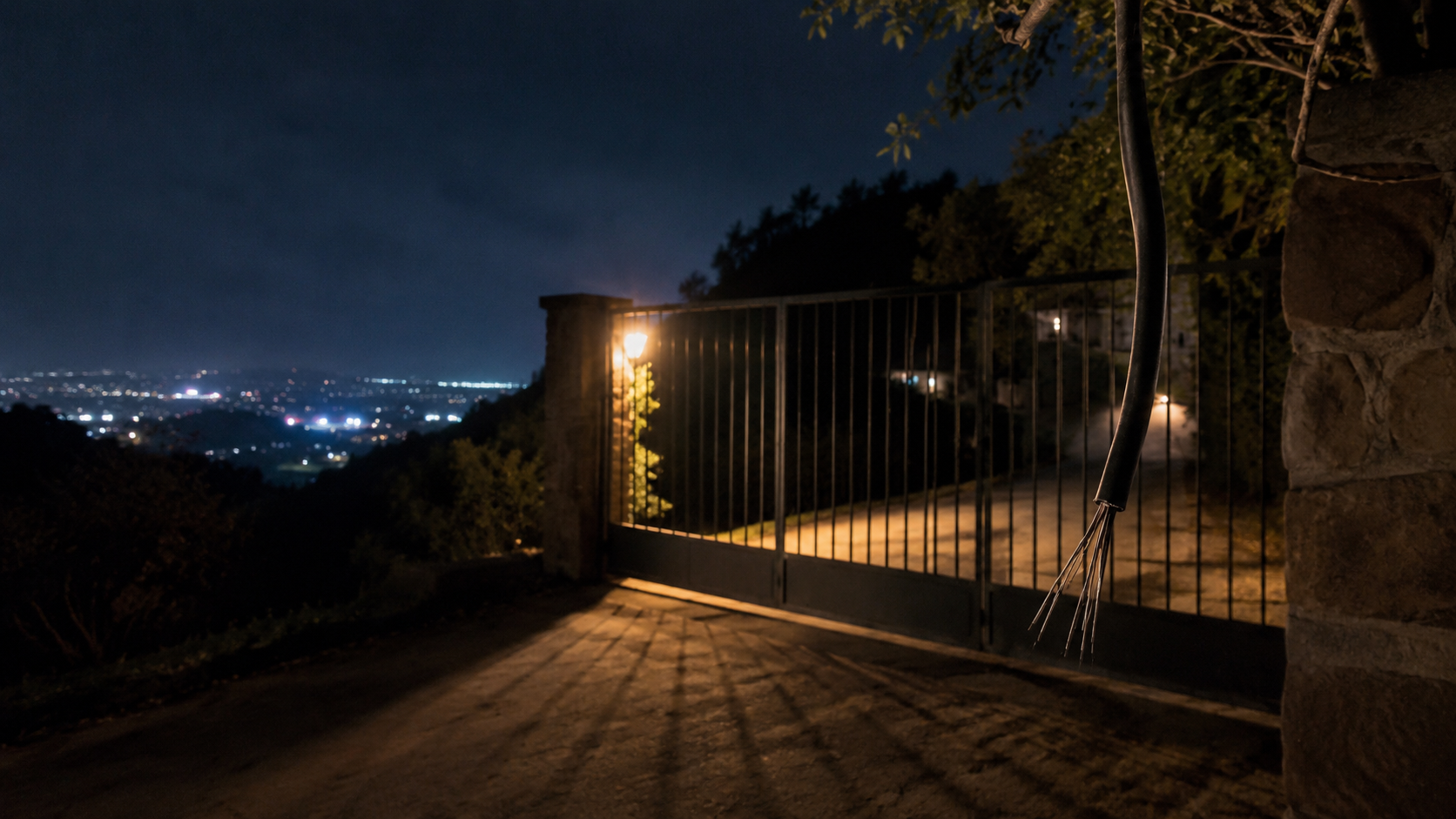
At the entrance to one of the most recognisable addresses in American criminal history, a telephone wire had been cut. The gate remained in place, but the house beyond it could no longer call out.
It was the early morning of the ninth of August, nineteen sixty-nine. Los Angeles was warm, Hollywood was expanding and the hillside above Benedict Canyon appeared removed from the traffic and noise below.
Inside the property lived Sharon Tate, a twenty-six-year-old actor preparing for the birth of her first child. Her husband, film director Roman Polanski, was working in Europe. Friends had joined her for what should have been an ordinary Friday evening.
By sunrise, five people inside the grounds were dead. The following night, two more people would be killed elsewhere in Los Angeles. The link between those homes would eventually lead investigators away from Hollywood society and towards an abandoned film ranch, a drifting commune and Charles Manson.
The People Behind The Famous Address
The mythology surrounding the Manson murders has often reduced the people at Cielo Drive to components of a notorious crime scene. Their lives were far larger than the final hours for which they became known.
Sharon Tate had worked as a model before establishing herself as an actor. Her films included The Fearless Vampire Killers and Valley Of The Dolls, for which she received a Golden Globe nomination. Friends described a woman excited about motherhood and increasingly confident about her career.
Jay Sebring, aged thirty-five, was Tate’s former fiancé and remained one of her closest friends. A Navy veteran and entrepreneur, he transformed men’s hairstyling into a high-profile business with salons, branded products and a prominent client list. His later depiction as merely a fashionable Hollywood companion erased much of what he built.
Abigail Folger was twenty-five. Although she came from a wealthy family, she had trained in art history, worked in publishing and volunteered in community projects. She was living with Wojciech Frykowski, a thirty-two-year-old Polish writer and friend of Polanski.
Steven Parent was eighteen and had recently graduated from high school. Interested in electronics, he had visited William Garretson, the young caretaker living in the property’s guest house. Parent was driving away when he encountered the intruders.
The following night’s victims, Leno and Rosemary LaBianca, were not connected to Tate’s household. Leno was a supermarket executive from a family established in the grocery trade. Rosemary operated a successful clothing business. They had returned home after collecting a newspaper and checking on the family’s boat.
Their lack of connection was one of the case’s defining facts. The crimes were not a conventional dispute between people who knew one another. To understand why these particular homes were selected, investigators first had to understand the group living at Spahn Ranch.
The Man Before The Family
Charles Milles Manson was born in Cincinnati on the twelfth of November, nineteen thirty-four. His early history contained instability, institutional placements, theft and repeated incarceration, but it does not provide a simple explanation for what came later.
Many children experience neglect, poverty or detention without becoming violent adults. Manson’s childhood can explain some of the environments in which he learned to survive. It cannot excuse the deliberate choices he made or establish an inevitable path towards murder.
By his early thirties, Manson had spent much of his life within reform schools, prisons and other controlled settings. His offences included theft, forgery, vehicle crime and violations of supervision. He became practiced at observing hierarchies, finding vulnerabilities and adapting his presentation to whoever held power.
When he was released from federal prison in March nineteen sixty-seven, he reportedly expressed anxiety about leaving. Outside, he entered a culture in which young people were questioning families, institutions, sexual convention and established authority.
San Francisco offered him an unusually receptive environment. Manson presented himself as a musician, spiritual guide and outsider who had rejected material society. He played guitar, repeated fragments of religious and philosophical ideas and encouraged followers to surrender the identities they had brought with them.
This was not yet the organisation later imagined in popular culture. It was a shifting group of young adults, children, drifters and acquaintances. People entered and left. Some were deeply committed; others stayed briefly. The label “Family” helped create the appearance of unity, but the group was never psychologically identical.
How Manson Created A Closed World
Manson attracted people who were often young, alienated or searching for belonging. Several had experienced family conflict, insecure relationships or rejection. He offered immediate acceptance, constant companionship and a supposedly higher purpose.
The attraction was strengthened by movement. The group travelled in a converted school bus, stayed in temporary accommodation and gradually separated from the routines that might have challenged Manson’s authority. Conventional employment, private property and exclusive relationships were discouraged.
Sex was used to produce attachment, reward loyalty and weaken boundaries. Large quantities of psychedelic drugs were consumed. Accounts from former members described Manson remaining more controlled than followers during some drug sessions, allowing him to direct the meaning of what they experienced.
He repeatedly attacked the idea of an independent self. Followers were told to abandon ego, family identity and personal judgement. He renamed people, assigned roles and turned disagreement into evidence that someone had failed to surrender completely.
That environment did not remove individual responsibility. Members still made decisions, and several rejected orders, escaped or cooperated with investigators. Linda Kasabian’s later refusal to participate directly in the killings is important precisely because it shows that resistance remained possible.
Manson nevertheless created conditions in which loyalty could become more important than truth. Isolation reduced exposure to competing explanations. Repetition made his claims familiar. Drugs affected judgement. Group approval rewarded compliance, while humiliation, threats and violence increased the perceived cost of leaving.
The result was not supernatural mind control. It was a coercive social system built from dependency, instability, fear and the gradual normalisation of conduct that would once have appeared unthinkable.
Spahn Ranch And The Collapse Of The Dream
By nineteen sixty-eight, the group had moved to Spahn Movie Ranch, a deteriorating property outside Los Angeles that had once been used for Western productions.
The ranch offered physical isolation and very little outside supervision. Members performed chores and assisted its elderly owner, George Spahn. Children, animals, discarded vehicles and temporary structures filled the property.
Manson’s hopes of becoming a successful recording artist continued. Through acquaintances, he met people connected to the music business, including producer Terry Melcher. Manson recorded material and received encouragement from Beach Boys drummer Dennis Wilson, but the professional breakthrough he expected did not arrive.
The rejection became part of a broader grievance. Manson could present failure as proof that the existing world was corrupt rather than evidence that his music lacked commercial promise.
At the same time, he became preoccupied with an approaching conflict between Black and white Americans. He interpreted songs, particularly material from the Beatles’ White Album, as coded confirmation of an apocalypse he called “Helter Skelter”.
The racial theory was incoherent and deeply racist. Manson imagined that Black Americans would begin a war, destroy white society and then prove incapable of governing. His group would supposedly survive in the desert before emerging to take control.
Evidence presented at trial showed that this language circulated within the group. What remains less certain is whether Manson believed every part of the prophecy, used it instrumentally to command followers or moved between genuine delusion and calculated manipulation.
The Warning That Was Not Yet Understood
Before the killings at Cielo Drive, the group had already crossed into lethal violence.
Gary Hinman was a thirty-four-year-old musician and teacher who knew several members of the commune. In late July nineteen sixty-nine, Bobby Beausoleil, Susan Atkins and Mary Brunner went to his home. Accounts differed over whether the dispute concerned money, a drug transaction or property that Manson believed Hinman possessed.
Hinman was restrained. Manson arrived during the confrontation and injured him with a sword. After Manson left, Beausoleil killed Hinman. Words were written in blood at the scene, accompanied by a symbol apparently intended to suggest political militancy.
Beausoleil was arrested while driving Hinman’s vehicle. That arrest became important to one alternative explanation for the later murders: that subsequent scenes were designed to resemble Hinman’s killing and persuade police that the real killer remained free.
Manson was eventually convicted of Hinman’s murder, even though he did not inflict the final wound. The law allowed the jury to consider whether he had directed, assisted or participated in the criminal plan.
At the time, however, the Hinman case did not lead authorities to predict what would happen in Benedict Canyon. The ranch community still appeared from the outside to be a disorderly collection of vehicle thieves and drifters rather than an organisation approaching mass murder.
The Last Ordinary Evening At Cielo Drive
On Friday the eighth of August, Tate spent part of the day at home. That evening she went to dinner with Sebring, Folger and Frykowski before the group returned to Cielo Drive.
Polanski was expected back in Los Angeles before the baby was born. Tate was more than eight months pregnant, and the child had already been given a name: Paul Richard Polanski.
The residence had previously been occupied by Terry Melcher. Manson had visited the property while searching for him and was told Melcher no longer lived there. The degree to which that earlier association influenced the choice of house remains debated.
At Spahn Ranch, Manson instructed Charles “Tex” Watson to go to the property. Susan Atkins, Patricia Krenwinkel and Linda Kasabian accompanied him. According to the case established at trial, the women were told to follow Watson’s directions.
The group travelled in an ageing car. Watson climbed a telephone pole near the gate and cut the lines. They parked below the property and approached on foot.
Parent was leaving after visiting Garretson in the guest house. Watson stopped his car and shot him. Parent had no connection to Manson, Melcher or the music industry. He was in the driveway because his visit happened to end as the group arrived.
That random intersection explains something fundamental about the case. Selection operated at the level of the property. Once inside its boundaries, personal identity offered no protection.
The Violence Inside The House
Watson entered the main house with Atkins and Krenwinkel. Kasabian remained outside and acted as a lookout.
Frykowski had been sleeping in the living room. Folger was reading in a bedroom. Tate and Sebring were talking in another part of the house. The intruders gathered them together and tied Tate and Sebring with a rope.
When Sebring objected to the treatment of the heavily pregnant Tate, Watson shot and attacked him. Frykowski and Folger attempted to escape. Both were pursued and killed outside.
Kasabian later testified that she heard screams and tried to stop the attack by falsely claiming that someone was approaching. Her intervention failed. She did not enter the house or physically attack anyone, but she remained with the group as the crimes continued.
Tate was killed inside. She sustained multiple stab wounds, and her unborn son also died. Atkins used Tate’s blood to write a word on the front door.
The exact allocation of every wound has generated conflicting accounts. Atkins initially made statements implying that she killed Tate, but later versions differed. Watson subsequently accepted responsibility for stabbing her. The convictions did not depend on assigning every injury to a single hand because the prosecution established a conspiracy in which the participants assisted a shared criminal purpose.
Garretson remained in the guest house and survived. Police initially detained and questioned him, but evidence did not connect him to the killings. His survival later fuelled speculation, yet there was no sound basis to treat it as proof of complicity.
A Second Night And A Different Home
The violence did not end at Cielo Drive.
During the following night, Manson joined Watson, Atkins, Krenwinkel, Kasabian, Leslie Van Houten and Steve Grogan in a search for another location. He reportedly criticised the previous attack as disorganised and indicated that he would show followers how it should be done.
The group stopped at the home of Leno and Rosemary LaBianca on Waverly Drive. Manson was familiar with the surrounding area because he had previously attended a gathering nearby.
Manson and Watson entered the house. The LaBiancas were awakened, threatened and restrained. Manson then left, directing Watson, Krenwinkel and Van Houten to complete the crime.
Watson killed Leno LaBianca. Krenwinkel and Van Houten attacked Rosemary. Evidence established that Van Houten inflicted wounds after Rosemary had probably already been fatally injured, but that distinction did not remove her legal responsibility for participating in the plan.
Messages were written around the house in blood. One included a misspelling of “Helter Skelter”. A carving implement was left in Leno’s body, and the word “war” was cut into his skin.
The group took money and food before leaving. The apparent mixture of robbery, symbolism and theatrical staging complicated the initial investigation. Police were confronted with an intimate-looking crime scene involving people who appeared to have no meaningful connection to the previous night’s victims.
Why The First Explanations Failed
The Cielo Drive murders immediately produced speculation about drugs, personal disputes and Hollywood relationships. The brutality encouraged investigators and the public to assume that such violence must have arisen from an equally dramatic hidden life.
This was misleading. Drugs were present within parts of the social environment, but that did not establish a motive. The victims’ fame and wealth made them visible, while the unknown offenders remained outside the obvious circle of suspicion.
Investigators also hesitated to connect the Cielo and LaBianca scenes. The attacks occurred in different police jurisdictions, and aspects of their presentation were not identical. Early investigators worried that linking them prematurely could distort both inquiries.
There were nevertheless similarities: multiple victims, bindings, bladed weapons and words written in blood. The Hinman scene contained another message and political symbol. What police initially lacked was a credible human bridge connecting all three locations.
The weapons offered partial leads. Investigators recovered a discarded revolver that was eventually associated with the Cielo killings, while pieces of a broken gun grip were found at the property. Fingerprint, blood and fibre evidence also helped reconstruct movement within the house.
None of those findings immediately identified Manson. The decisive change came from statements made far from the crime scenes.
The Jailhouse Conversations That Broke The Case
Susan Atkins was arrested in connection with the Hinman investigation and held at the Sybil Brand Institute for Women.
There, she spoke to other detainees about the Cielo Drive killings. Two women, Virginia Graham and Ronnie Howard, relayed what they had heard to authorities. Atkins’s descriptions contained details that had not been widely disclosed.
The information redirected attention towards Spahn Ranch and the people around Manson. Investigators began aligning names, vehicles, weapons, statements and movements.
Linda Kasabian became the prosecution’s central witness. She received immunity in exchange for truthful testimony. Her position was legally and morally complicated: she had travelled with the group and acted as a lookout, but she had not physically attacked the victims and had tried, however ineffectively, to interrupt the violence.
Her testimony placed Manson at the centre of the instructions and described the journeys on both nights. Defence lawyers attacked her credibility, drug use and involvement. The jury nevertheless had other evidence against which to test her account.
Kasabian’s evidence mattered because it supplied the connective narrative that forensic evidence alone could not provide. It linked words spoken at the ranch to actions at the houses and identified the participants’ respective roles.
The appellate record later confirmed that Manson, Atkins and Krenwinkel had been indicted on seven murder counts and conspiracy, while Van Houten faced the two LaBianca counts and conspiracy. The same record documents the extensive evidence introduced about the relationships among the defendants and the operation of the group. The appellate judgment provides the central legal account.
The Evidence Against Manson
Manson did not physically enter the Cielo Drive house on the night Tate and the others were killed. That fact has sometimes been misrepresented as a weakness in the case. Legally, it was not necessary for the prosecution to prove that he personally attacked anyone there.
The case was built around conspiracy, direction and shared intent. Witnesses described his instructions. Evidence showed the authority he exercised inside the commune, his knowledge of the Cielo Drive property and his participation in selecting and entering the LaBianca home.
The prosecution also presented testimony concerning Manson’s apocalyptic rhetoric, racial theories and desire to generate violent upheaval. The blood messages were used to connect the scenes to themes repeatedly discussed at the ranch.
Separate evidence connected the individual attackers to the homes. Kasabian placed them in the car and at the locations. Physical evidence supported parts of her account. Atkins’s custodial statements supplied information about the Cielo scene. Later admissions and parole testimony further clarified individual conduct, although some details changed over time.
The case did not rest on one confession, fingerprint or weapon. Its strength came from convergence. Multiple strands, each open to challenge, pointed towards the same organised sequence.
That is also why later disputes about the prosecution’s preferred motive do not erase the convictions. A jury could rationally find that Manson directed the murders without accepting that every participant sincerely believed the entire “Helter Skelter” prophecy.
How Control Became Violence
Documented Behaviour
Former members, trial witnesses and court records described a repeated pattern. Manson isolated followers, attacked their former identities, controlled sexual access, distributed approval and humiliation, and encouraged obedience to his interpretation of events.
He also demonstrated direct violence before the Tate–LaBianca murders. He injured Hinman during the confrontation that ended in Hinman’s death. At the LaBianca house, he entered the property, participated in restraining the couple and left followers with instructions to kill.
The behaviour moved beyond abstract influence. Manson created plans, assigned roles and tested compliance. Followers who stayed were repeatedly exposed to criminality, threats and increasingly extreme demands.
What Can Reasonably Be Inferred
The evidence is consistent with coercive control combined with group reinforcement. Manson appears to have identified emotional vulnerabilities and used belonging, sex, drugs, fear and ideology to make himself the centre of his followers’ moral world.
His conduct may also suggest a flexible relationship with belief. Apocalyptic language could motivate followers, excuse failure and give ordinary grievances cosmic significance. He did not need to choose between believing the prophecy and exploiting it; both processes may have operated together.
The participants’ youth and instability increased their vulnerability, but those factors do not reduce them to passive instruments. Watson, Atkins, Krenwinkel and Van Houten carried out sustained violence. Kasabian resisted direct participation, and other members left the group. Their different choices show that influence was powerful but not absolute.
An alternative interpretation is that some followers later emphasised Manson’s control because it helped them explain conduct for which they were individually responsible. That possibility does not disprove coercion. It requires the two realities to be held together: Manson manipulated them, and they still made consequential decisions.
What Cannot Be Known
The surviving record cannot measure precisely how much each person believed, feared or strategically performed loyalty. It cannot recreate the effects of every drug experience or private conversation.
It also cannot support a reliable retrospective diagnosis of Manson based solely on his crimes, prison performances or unusual speech. Behaviour can be documented without converting it into a clinical label.
Psychological explanation is not legal exoneration. Understanding the mechanisms through which the group escalated helps explain the danger of coercive systems, but it does not excuse planning, assistance or participation in murder.
The Problem With “Helter Skelter”
The prosecution argued that Manson intended the murders to ignite the race war he predicted. By leaving apparently political messages, the group hoped Black militants would be blamed, accelerating retaliation and social collapse.
Evidence supported the importance of that idea inside the commune. Witnesses heard Manson discuss the coming conflict. The phrase appeared at the LaBianca scene, and the staging reflected themes used at the ranch.
Yet motive is not identical to legal responsibility, and “Helter Skelter” should not be treated as a complete explanation.
Other factors were present. Manson was angry about rejection by the music industry. The Cielo Drive property was associated with Melcher, even though Melcher had moved. Beausoleil had been arrested for Hinman’s murder, creating a possible reason to stage further crimes with similar messages.
The crimes may therefore have served several purposes at once: creating chaos, demonstrating Manson’s power, reinforcing group commitment, redirecting suspicion and expressing accumulated grievance.
A single cinematic motive is attractive because it turns disorder into a clean story. The record supports something messier. Manson constructed an ideology broad enough to absorb humiliation, racism, revenge, loyalty and violence into the same narrative.
The Trial As A Performance
The joint trial of Manson, Atkins, Krenwinkel and Van Houten began in nineteen seventy. Watson was tried separately after fighting extradition from Texas.
Manson repeatedly attempted to turn the courtroom into an extension of his authority. He disrupted proceedings, addressed the jury improperly and appeared with an X cut into his forehead. His followers copied the mark and later transformed it into swastikas.
Women who remained loyal gathered outside the courthouse. Their presence reinforced the impression that Manson’s influence had survived arrest.
The proceedings faced extraordinary pressures. President Richard Nixon publicly referred to Manson as guilty while the trial was continuing, creating a serious fair-trial controversy. A newspaper carrying the comment reached the defendants. The judge questioned jurors and refused to declare a mistrial.
Van Houten’s lawyer, Ronald Hughes, disappeared during the trial and was later found dead. The circumstances generated decades of speculation, but no person was convicted of killing him. Van Houten’s original conviction was eventually overturned because of issues concerning representation after Hughes disappeared, not because the evidence had been disproved.
The defence attempted to place responsibility on the direct attackers and separate Manson’s words from their conduct. The prosecution argued that the crimes were the product of a conspiracy in which Manson’s direction was indispensable.
On the twenty-fifth of January, nineteen seventy-one, the jury returned guilty verdicts against Manson, Atkins and Krenwinkel on seven counts of first-degree murder and one count of conspiracy. Van Houten was convicted of the LaBianca murders and conspiracy.
Watson was convicted separately later that year. Manson was also convicted in another trial for the murders of Gary Hinman and ranch worker Donald “Shorty” Shea. The judgment in the Hinman–Shea case was subsequently upheld on appeal. That separate appellate decision records the additional convictions.
What The Record Cannot Prove
The case has attracted theories involving intelligence agencies, secret drug programmes and concealed law-enforcement operations. Some of those claims begin with genuine irregularities or unanswered questions. They do not automatically establish the larger conclusions attached to them.
Manson had connections to criminals, musicians, drug users and countercultural figures. Members of the group were arrested and released on different occasions. Investigators made mistakes, departments failed to share information efficiently and later accounts contradicted one another.
Those facts justify scrutiny. They do not establish that an institution created, protected or directed the murders.
Manson also made expansive claims about other crimes. A recorded boast is not the same as corroborated evidence. Statements from a person who repeatedly manipulated audiences require independent verification before they can be treated as admissions to additional killings.
The strongest account remains the one tested through witnesses, physical evidence, cross-examination and appellate review. It is imperfect and does not answer every question, but uncertainty at the edges should not be used to erase what the record established at its centre.
The Sentences And Their Consequences
The convicted defendants received death sentences. Those penalties changed after California’s highest court ruled the state’s death-penalty system unconstitutional in nineteen seventy-two.
Their sentences were converted to life imprisonment with the possibility of parole. This was not an individual finding that the Manson crimes deserved leniency. It was the legal consequence of a statewide constitutional ruling.
Manson was repeatedly denied parole and eventually stopped attending hearings. He remained imprisoned until his death from natural causes at a hospital on the nineteenth of November, twenty seventeen, aged eighty-three. The state correctional record confirms the date and circumstances.
Atkins remained in prison until her death from cancer in September two thousand and nine. Watson remains incarcerated after repeated parole denials.
Van Houten underwent multiple trials after her first conviction was reversed. A second trial ended without a verdict, while a third produced another conviction. After decades of imprisonment and repeated parole recommendations, an appellate court ruled in two thousand and twenty-three that the record did not support the governor’s latest reversal. The published parole judgment explains that legal reasoning. She was released under supervision in July of that year.
Krenwinkel received another parole recommendation in May two thousand and twenty-five. The official hearing result records that grant. The governor subsequently reversed it, finding that she continued to present an unreasonable danger and had not developed sufficient insight. She remains incarcerated.
The different outcomes reflect changing law, age, rehabilitation evidence, individual participation and judicial review. They do not alter the convictions or the losses experienced by the families.
The Victims’ Families And The Long Aftermath
For the families, the case did not end with the verdicts. Parole hearings repeatedly reopened the record, requiring relatives to confront the offences and argue over punishment, remorse and rehabilitation.
Sharon Tate’s mother, Doris Tate, became a significant victims’ rights advocate. She spoke at parole proceedings and campaigned for families to have a stronger voice within the criminal justice system.
Tate’s sister Debra continued that work. Relatives of other victims have also challenged portrayals that centre Manson’s personality while treating those he targeted as scenery.
The imbalance remains visible in popular culture. Manson’s face, words and music have been endlessly reproduced. He achieved through criminal notoriety a level of recognition his music never earned.
That attention can distort the case in two directions. Sensational retellings risk presenting him as an almost supernatural controller. Conspiracy-driven accounts can make him appear more connected and important than the evidence supports.
Both approaches strengthen the legend. The documented reality is more useful: Manson was a habitual offender who recognised vulnerability, created an isolated hierarchy, mixed ideology with grievance and directed followers who were willing to commit violence for him.
Why The Murders Still Matter
The Manson case survives because it sits at the intersection of several American stories: the collapse of countercultural optimism, Hollywood’s fear of intrusion, racial paranoia, celebrity crime and the destructive possibilities of charismatic authority.
It is often described as the moment the nineteen sixties ended. That is cultural symbolism rather than a literal historical boundary. The decade had already contained war, assassinations, racial violence and political upheaval.
What changed was the sense of where danger could come from. The offenders did not resemble organised criminals moving through a familiar underworld. They appeared young, mobile and outwardly connected to the language of peace, freedom and communal life.
The case also demonstrates how misleading appearances can become evidence only in retrospect. Communal language concealed hierarchy. Spiritual claims concealed domination. Rejection became grievance. Loyalty became a test requiring crime.
There was no single moment when every member ceased to possess moral choice. Escalation occurred through successive concessions: accepting Manson’s authority, separating from outsiders, participating in theft, tolerating violence and finally entering homes where strangers were treated as symbols rather than people.
That sequence is less mysterious than the legend, and for that reason more disturbing.
The Gate After The Myth
The cut telephone wire at Cielo Drive has become part of the crime’s imagery because it represents isolation at its most literal. Communication was severed before the attackers entered.
Manson’s deeper method had relied on a similar process. He separated followers from families, ordinary routines and independent sources of meaning. He did not remove free will, but he made obedience feel like belonging and resistance feel like betrayal.
The murders were committed by identifiable people making identifiable choices. Manson was convicted because the jury found that he did not merely speak recklessly around violent followers. He helped create, direct and advance the conspiracy.
The mythology makes him appear larger than the record. The record makes him more comprehensible: manipulative, violent, aggrieved and dependent on other people’s willingness to surrender judgement.
Beyond the gate were Sharon Tate and her unborn son, Jay Sebring, Abigail Folger, Wojciech Frykowski and Steven Parent. In another home were Leno and Rosemary LaBianca. Before them were Gary Hinman and, later, Donald Shea.
Their names are the part of the story that Manson’s legend has too often cut off.
