True Crime: The Flannan Isles Mystery - What Really Happened To The Three Missing Lighthouse Keepers?
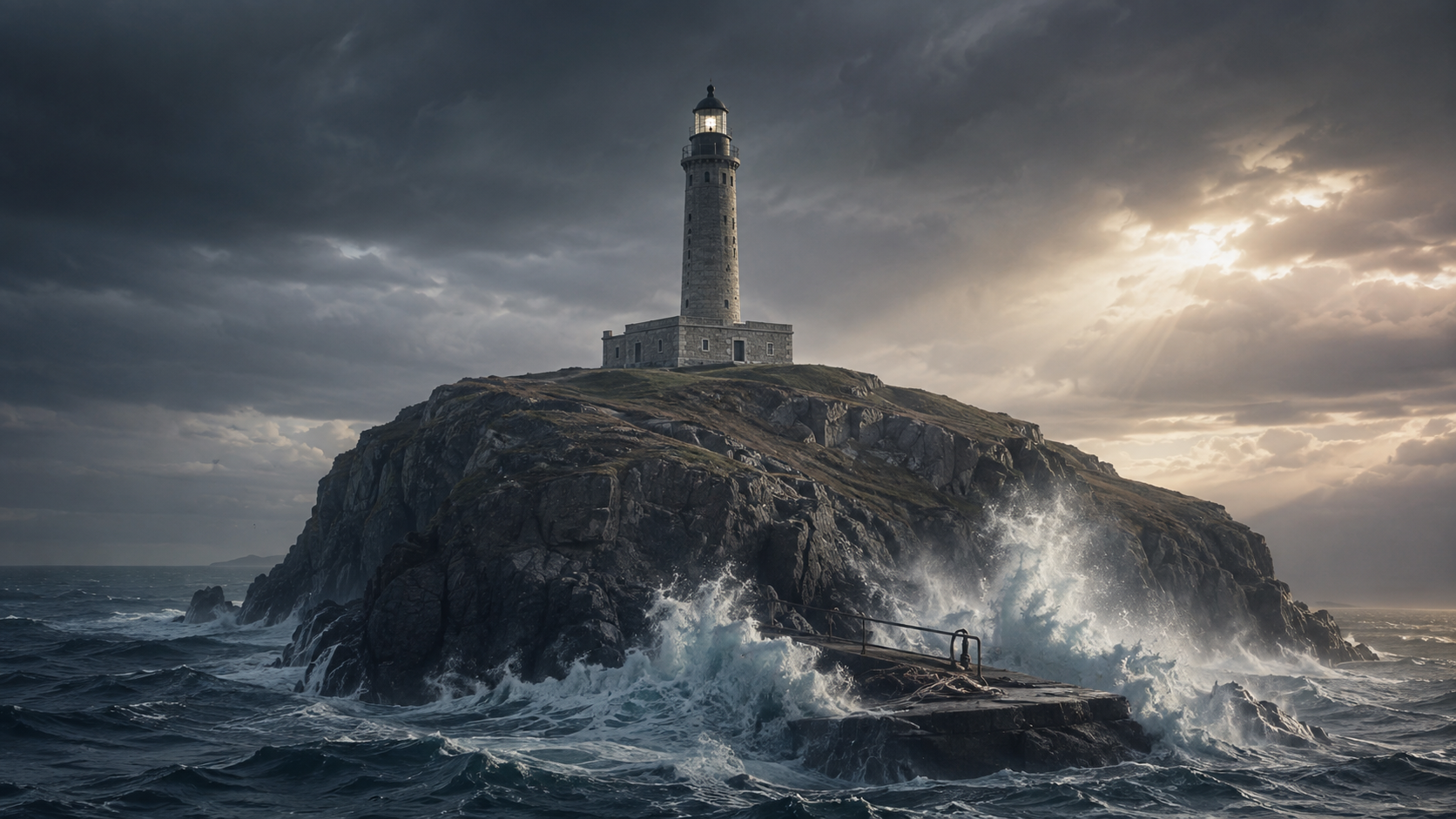
What Really Happened?
The Lighthouse Evidence Examined
On a December afternoon in nineteen hundred, three men are working inside one of the most isolated lighthouses in Britain. Around them is the Atlantic Ocean. Their station stands on Eilean Mòr, the largest of the remote Flannan Isles west of Lewis, a place where there is no village, no harbour in the ordinary sense and, at the time, no radio connection with the mainland.
James Ducat is the principal lightkeeper. Thomas Marshall is his assistant. Donald McArthur is serving temporarily as an occasional keeper. Their task is repetitive but essential: maintain the machinery, prepare the lamp, record the weather and keep the light operating for ships passing through dangerous waters.
The morning's work appears to proceed normally. The lamp is prepared. Its oil supply is filled. The machinery is cleaned. The kitchen is tidied. Weather observations are made.
Then something happens.
When another vessel passes the Flannans around midnight, the lighthouse is dark.
Eleven days later, a relief ship reaches Eilean Mòr. No flag appears. No keeper comes to the landing. The ship's horn sounds across the island. A rocket is fired.
There is no response.
Relieving keeper Joseph Moore climbs towards the lighthouse and opens a building that should contain three men.
It contains none.
More than a century later, James Ducat, Thomas Marshall and Donald McArthur have never been found. Yet the surviving evidence tells a considerably more coherent story than the supernatural legend surrounding the Flannan Isles mystery suggests.
The Lighthouse At The Edge Of The Atlantic
The Flannan Isles are a small group of rocky islands in the Outer Hebrides, separated from the west coast of Lewis by miles of exposed Atlantic water. Eilean Mòr — Gaelic for "Big Island" — is the largest.
The lighthouse was remarkably new when the mystery occurred. Designed by David Alan Stevenson and built as part of Scotland's expanding lighthouse network, it had entered service only in December eighteen ninety-nine. Its existence reflected a simple maritime problem: ships passing the western approaches needed a dependable warning from a coastline capable of disappearing beneath darkness, fog and violent weather.
Living there was very different from looking at the lighthouse from a safe distance. Supplies and men had to arrive by sea. Landings depended upon conditions. Lighthouse crews lived together in an environment where monotonous routine could suddenly become dangerous physical work.
There were two landing areas, on the eastern and western sides of the island. Equipment including ropes, cranes and associated gear was needed to move supplies between boats and the lighthouse station.
The sea therefore was not simply something visible beyond the windows. Keepers sometimes had to work close to it.
That distinction becomes crucial.
The Three Men On Eilean Mòr
James Ducat was the senior man at the station. He had entered lighthouse service in eighteen seventy-eight at twenty-two years old and accumulated extensive experience at several Scottish lights. He had been promoted to principal keeper in eighteen ninety-six.
Ducat was married to Mary Grierson and had four children. He was not an inexperienced recruit deposited on an unfamiliar rock. His service record stretched across more than two decades. Superintendent Robert Muirhead, who knew him personally, regarded him as one of the capable keepers selected for the important new station.
Thomas Marshall had entered lighthouse service in eighteen ninety-six at twenty-seven. Records describe previous experience as a seaman as well as work as an occasional keeper before his permanent appointment.
Donald McArthur occupied a slightly different position. He was an occasional keeper substituting for William Ross, the regular first assistant, who was absent on sick leave.
Joseph Moore completed the regular team but was ashore at Breasclete on Lewis during this rotation.
That detail matters because Moore knew both the station and the habits of the men. When he subsequently described clothing left behind and the condition of the lighthouse, he was not interpreting an unfamiliar workplace. He knew what was normal.
The Last Normal Morning
Popular versions of the Flannan Isles mystery frequently introduce bizarre diary entries immediately before the disappearance.
One supposedly records an enormous storm. Another claims an experienced keeper was crying. Another has the men praying together. These passages are then presented as evidence that something psychologically inexplicable was happening inside the lighthouse.
The surviving official record tells a much less theatrical story.
The completed lighthouse log ran through December thirteenth. Information for December fourteenth and the morning of December fifteenth had been written on a slate awaiting transfer into the formal log. The recorded material included ordinary operational information such as barometer and thermometer readings, wind conditions and the time at which the light had been extinguished that morning.
There is no reliable contemporary evidence for the famous entries describing one keeper crying, another becoming strangely silent or all three men praying during an extraordinary storm.
That does not remove the mystery.
It removes invented evidence from it.
The genuine records are more useful. They indicate that the keepers remained at their posts through the morning of December fifteenth and completed the normal work expected after extinguishing the light.
The lamp had been cleaned. Its fountain was full. The machinery and lens were in order.
Most significantly, the kitchen was tidy.
Whatever interrupted the men's routine apparently occurred after the ordinary work of the morning and after the person responsible for cooking had finished.
Investigators consequently narrowed the likely disappearance to the afternoon of Saturday, December fifteenth.
The Light Goes Out
At approximately midnight on December fifteenth, a passing steamer reported that it could not see the Flannan light.
This observation was important, but it did not trigger an immediate rescue.
Communication around the lighthouse system in nineteen hundred was fundamentally different from modern expectations. There was no telephone line or radio link allowing someone on Lewis simply to call Eilean Mòr.
A shore observer, Roderick MacKenzie, had been employed to watch for the lighthouse and any visual signals. But weather frequently prevented the tower or its light from being seen from Lewis. Superintendent Muirhead's later inquiry established that prolonged periods of invisibility were not automatically interpreted as emergencies because haze and poor atmospheric conditions could obscure the island for days.
This helps explain one of the strangest features of the story: the enormous delay between the probable disappearance and its discovery.
A dark lighthouse seems, from a modern perspective, like an unmistakable alarm.
In nineteen hundred, viewed from many miles away through December weather, it was not necessarily so simple.
The report from the passing vessel was not communicated to the lighthouse authorities before the mystery was independently discovered.
For approximately eleven days, whatever had happened on Eilean Mòr remained unknown.
The Hesperus Arrives
On December twenty-sixth, the lighthouse tender Hesperus approached the Flannan Isles for the routine relief.
The first warning was not something inside the building. It was what the arriving crew did not see outside it.
No lighthouse flag was flying.
The usual preparations for receiving supplies had not been made.
No keeper appeared.
Captain James Harvie sounded the ship's whistle and siren. Still nobody emerged. A rocket was fired to attract attention.
Nothing.
Joseph Moore was sent ashore.
Reaching Eilean Mòr itself was difficult enough that the boat had to manoeuvre against the landing before Moore could jump onto the rocks. He then began the climb from the water towards the station.
At the entrance, he found the gate closed. The outside doors were also closed.
Inside, the fire had apparently not been lit for several days.
The beds were empty.
The clock had stopped.
Moore's reaction, according to his own written account, was immediate. He understood that something serious had happened and ran back towards the landing to report the station deserted.
Other men joined him and searched again.
There was still no sign of Ducat, Marshall or McArthur.
What Was Actually Inside The Lighthouse?
This is where the documented Flannan Isles mystery and the famous Flannan Isles mystery begin to separate.
You may have encountered a version in which rescuers found an uneaten dinner sitting on the table, perhaps with plates prepared as though the keepers had suddenly abandoned their meal.
An overturned chair may be added.
Sometimes the scene becomes stranger still.
The real contemporary evidence points in virtually the opposite direction.
Moore found the kitchen utensils clean. Superintendent Muirhead later recorded that the pots and pans had been cleaned and the kitchen tidied. He regarded this as evidence that the keeper performing cooking duties had finished his work before the men disappeared.
There was no documented half-eaten dinner suggesting three terrified men had suddenly jumped up from the table.
The famous untouched-meal imagery appears prominently in Wilfrid Wilson Gibson's poem about the mystery, published years after the event. The poem helped transform the incident into folklore, and its dramatic details subsequently became entangled with descriptions of the real discovery. Historical archives preserve both the literary version and the contemporary reports, making the difference particularly clear.
This is important because the fictional version changes how the case feels.
An abandoned meal implies panic inside the lighthouse.
A clean kitchen implies something considerably more ordinary: the men finished their work and then went outside.
And outside is where the strongest physical evidence was found.
The Clothing Left Behind
Moore knew the keepers' working habits, and the missing clothing provided an important clue.
Marshall's sea boots and oilskins were gone.
Ducat's sea boots were gone, along with the waterproof coat he used.
McArthur's normal outdoor coat, however, remained at the station.
Muirhead was told that Ducat and Marshall wore this specialised clothing when they were going towards the landings. It therefore appeared that at least two men had deliberately equipped themselves for outdoor work near the water.
McArthur is more puzzling.
If the coat left behind really was the one he routinely used outdoors, he may have gone outside without taking the time to dress properly.
That allows a plausible sequence.
Perhaps Ducat and Marshall initially went to inspect or secure something near the western landing.
McArthur may then have followed.
But that remains reconstruction rather than proven chronology. Nobody witnessed the three men leaving the lighthouse, and the surviving records cannot establish whether they went outside together or separately.
The physical evidence can narrow possibilities.
It cannot replay the afternoon.
The East Landing Tells Investigators Almost Nothing
Once Moore and the other men were established on Eilean Mòr, they searched the island.
The eastern landing was essentially normal.
Ropes stored after the previous relief remained where they had been placed. Investigators found no obvious disturbance there suggesting an accident.
The western side was different.
Very different.
An equipment box situated partway along the landing railway was gone.
Ropes associated with it had been washed out and were scattered among rocks around the crane area.
Iron railings had been displaced and twisted.
Other railings and a handrail had been carried away.
A lifebuoy had disappeared from its mounting.
The damage continued at heights that demonstrated the extraordinary power of the water striking the island.
This was not merely evidence that there had been unpleasant weather.
It was physical evidence that enormous quantities of seawater had reached far above the normal shoreline.
The Twenty-Hundredweight Stone
One detail is particularly revealing.
Superintendent Muirhead found that a large block of stone weighing more than twenty hundredweight had been displaced and carried down onto a concrete path.
That is more than a ton of rock.
Meanwhile, equipment kept roughly one hundred and ten feet above sea level had been disturbed by the sea. The lifebuoy had apparently been torn directly from the ropes securing it, leaving pieces of canvas attached.
That evidence changes the scale of the mystery.
A person does not need to be standing on the shoreline to be vulnerable if Atlantic water is reaching structures tens of metres above it.
The crane itself had survived, which initially raised questions about exactly what the keepers might have been doing. But the box containing ropes and associated equipment was precisely the sort of item that worsening seas could threaten.
Muirhead therefore developed an explanation.
Ducat and Marshall's missing protective clothing suggested movement towards the landing.
The equipment damage supplied a reason for going there.
The extraordinary reach of the sea supplied a mechanism capable of making all three men disappear.
The Official Explanation
After visiting Eilean Mòr, examining the western landing and interviewing those involved, Muirhead concluded that the most probable explanation was accidental drowning.
His reconstruction was that the men had gone towards the west landing during the afternoon of December fifteenth, probably because they were concerned about the equipment box and mooring ropes.
An unusually large wave — described in the report as a large roller — then surged high onto the island.
Muirhead believed water travelled above the men's position and swept back down with enough force to carry them into the sea.
He considered another natural explanation: perhaps the keepers had simply been blown over the cliffs by extreme wind.
He rejected that as less likely.
The direction of the wind, he reasoned, would have pushed them further onto the island rather than towards the sea, and he believed experienced men would have been capable of dropping to the ground before being blown far enough to disappear.
The sea fitted the physical evidence better.
It remains the strongest explanation today.
But Why Would All Three Men Go Outside?
This is the most legitimate problem with the official theory.
Why would three experienced lighthouse keepers expose themselves simultaneously near a dangerous landing?
Keeping somebody inside the station would appear sensible, particularly when maintaining the light was the entire reason they were on Eilean Mòr.
The answer is that we do not know that they all left together.
One plausible reconstruction requires only two stages.
Ducat and Marshall dress for the weather and go towards the western landing after noticing conditions threatening equipment. Something happens to them — perhaps a sudden surge, perhaps one man gets into difficulty.
McArthur then leaves quickly after noticing that they have not returned or seeing an emergency developing. His coat remains behind because speed now matters more than routine.
A second wave catches him.
This scenario explains the clothing pattern better than three men calmly deciding to walk into danger simultaneously.
But there is an important distinction between an explanation fitting the evidence and an explanation being established by the evidence.
No contemporary document tells us this sequence happened.
It is simply one way the known facts can fit together.
Could One Man Have Fallen First?
Another variation may be even simpler.
Imagine one keeper working close to the landing and being struck or swept away.
A second man attempts to help.
The third joins the rescue.
Three professionals ending up in the same dangerous area does not necessarily require three professionals independently making the same bad decision. A single emergency could rapidly bring all of them together.
This pattern occurs in real accidents. Human beings sometimes enter dangerous environments because another person is already in trouble.
Again, however, there is no witness.
The theory's value is not that it solves the mystery. It demonstrates why the apparent irrationality of all three men being outside does not require anything extraordinary.
Could A Rogue Wave Really Reach Them?
The phrase "rogue wave" sometimes makes the official explanation sound speculative, almost as mysterious as the alternatives.
The evidence on Eilean Mòr makes an extreme wave considerably less exotic.
The western landing was physically wrecked.
Heavy equipment had been displaced.
Railings were distorted.
A large stone had been moved.
The lifebuoy had been torn away.
Ropes and equipment had been scattered despite being stored high above the sea.
Muirhead did not simply arrive at an empty lighthouse and invent a wave because no better idea occurred to him. He examined damage consistent with enormous seas and attempted to determine what could have produced it.
Whether the decisive water was technically a rogue wave, an exceptional breaker, a powerful swell or a combination of wave and surge matters less than the fundamental mechanism.
The Atlantic had demonstrably reached the area in which the keepers were likely to have been working.
Why Were No Bodies Found?
The failure to recover any of the keepers is one reason the mystery survived.
Yet it is not strong evidence against drowning.
Eilean Mòr is surrounded by open Atlantic water rather than a sheltered lake or enclosed harbour. A person swept from the western rocks could be carried away from the island, submerged, caught among underwater rock formations or transported over a considerable distance.
Searches of the island found nothing that established the men's fate, and no bodies were subsequently recovered.
That prevents the drowning theory from becoming absolute proof.
It does not make the absence itself inexplicable.
Official death records eventually listed all three men together, with probable drowning recorded as the cause. Their precise fate, however, could never be medically established.
The Famous Logbook Is One Of The Biggest Myths
Few elements have distorted the Flannan Isles story more than supposed final log entries describing bizarre behaviour among the keepers.
The problem is simple: those sensational passages are not supported by the surviving contemporary documentation.
The real evidence describes practical observations.
Weather information was being recorded.
The machinery had been maintained.
The lamp was prepared.
Morning work had been completed.
There is no reliable record showing Marshall commenting on one man crying, another keeper becoming unnaturally quiet or the men collectively praying before the disappearance.
Removing those claims eliminates much of the supposed psychological mystery.
There is no documented evidence that the three men were experiencing collective terror before they vanished.
There is evidence that they were continuing to operate the lighthouse normally.
The Untouched Dinner Never Needed Explaining
The abandoned dinner presents the same problem.
It is a fantastic storytelling device because it freezes an ordinary moment. Three men sit down to eat. Something suddenly interrupts them. They leave the table. None returns.
But Moore's contemporary account describes something different.
The kitchen was clean.
The utensils had been washed.
Muirhead explicitly used this condition to reason that cooking duties had been completed.
Gibson's later poem gave readers the more memorable image of a table prepared for dinner, food untouched and a chair overturned.
Poetry won the battle for cultural memory.
The archive tells another story.
Did The Men Fight?
Murder-suicide is another enduring theory.
Perhaps isolation created conflict. Perhaps one keeper attacked the others and then died himself. Perhaps a dispute escalated near the cliffs.
Almost nothing in the surviving evidence supports it.
There was no documented scene of violence inside the lighthouse.
No weapon or blood evidence established an assault.
No contemporary investigation uncovered a known dispute capable of explaining three disappearances.
Muirhead knew the keepers and described Ducat and Marshall as efficient men whom he had personally selected for an important new station. That does not make interpersonal violence impossible, but character references cannot replace evidence in either direction.
More importantly, murder does not explain the physical storm damage on the western landing or the missing working clothes as efficiently as an accident does.
It requires additional assumptions while accounting for fewer clues.
That makes it a substantially weaker theory.
Was McArthur Responsible?
Some later retellings focus particularly on Donald McArthur, occasionally describing him as volatile or prone to fighting.
Even if individual anecdotes about temperament were reliable, they would not establish that he killed anyone.
There is no documented forensic or eyewitness evidence linking McArthur to an attack on Ducat or Marshall.
His coat being left inside is more naturally interpreted as evidence that he went outside hastily than as evidence of violence.
The temptation with unsolved mysteries is to convert personality into proof. It is especially dangerous when dealing with people who cannot answer an accusation.
The surviving Flannan Isles record does not justify identifying any of the three men as responsible for the disappearance of the others.
Could The Keepers Have Left The Island Voluntarily?
Voluntary disappearance is even harder to reconcile with the geography.
There was no convenient second harbour and no ordinary means for three men to quietly depart the Flannans without detection.
Their work remained unfinished only because they vanished. Personal belongings and the operational station were left behind. Nothing in the record establishes preparations for escape or abandonment.
For three men to jointly disappear voluntarily would also require an unknown vessel or some other undocumented method of leaving Eilean Mòr.
There is no positive evidence for one.
The theory therefore solves the absence by introducing an even larger unexplained event.
What About Piracy Or Abduction?
Another speculative possibility imagines the men being removed by a passing ship.
Again, the evidence works against it.
Why would three lighthouse keepers be abducted from a remote Scottish island? Why would their attackers leave the lighthouse essentially orderly? Why would the disappearance coincide with major sea damage at precisely the area their working clothing suggests they were likely to visit?
Most importantly, there is no contemporary evidence for an unidentified vessel landing and forcibly removing them.
Possible is not the same as probable.
Almost anything can remain theoretically possible when there are no witnesses.
Historical investigation requires asking which explanation needs the fewest unsupported events.
Abduction fares poorly under that test.
The Supernatural Theories
Ghosts, sea monsters, curses, paranormal forces and extraterrestrial abduction have all become attached to Eilean Mòr.
None is necessary to explain the evidence.
The supernatural interpretation largely feeds upon the most atmospheric features of the popular story: mysterious log entries, inexplicable fear, an abandoned dinner, the sudden disappearance of three men and the failure to recover their bodies.
Several of those premises either lack contemporary support or were amplified through later literature.
What remains after stripping them away is still haunting, but it is not paranormal.
Three lighthouse keepers apparently completed their morning duties.
At least two dressed to work outside.
Severe sea damage existed at the western landing.
All three vanished.
That evidence points towards a workplace accident in an exceptionally dangerous natural environment.
The Question The Official Explanation Cannot Answer
The wave theory accounts for more evidence than any competitor.
It still cannot tell us exactly what happened.
We do not know who first noticed trouble at the west landing.
We do not know whether Ducat and Marshall went out together.
We do not know when McArthur left the lighthouse.
We do not know whether anybody had already fallen before the others approached the water.
We do not know whether there was one enormous wave or a sequence of waves.
We do not know where each man was standing.
We do not know whether anyone survived the initial impact for minutes or seconds.
And because nothing written by the keepers records those final movements, we probably never will.
That is the genuine Flannan Isles mystery.
Not whether something supernatural visited the lighthouse.
The mystery is the missing sequence between an orderly station and three men gone.
What The Evidence Actually Supports
If the competing explanations are ranked by how well they fit the documented evidence, the hierarchy is relatively clear.
The strongest explanation is an accidental loss to the sea at or near the western landing.
It explains the damaged equipment, twisted railings, displaced stone, missing lifebuoy, working clothing, timing and failure to recover the men.
A related version in which one or two keepers are caught first and the remaining man attempts a rescue is also plausible. It may help explain why McArthur apparently left without his normal outdoor coat.
An accident caused primarily by wind is possible but was considered less likely by the original investigator because of wind direction and the overwhelming evidence of wave action.
Interpersonal violence lacks supporting physical evidence.
Voluntary disappearance and abduction require events for which no evidence survives.
Supernatural explanations have no evidential foundation.
The most responsible conclusion is therefore slightly less dramatic than saying the mystery has been "solved."
The exact sequence is unknown.
The probable mechanism is not.
What The Record Cannot Prove
There were no witnesses to the decisive event.
No bodies supplied medical evidence.
No final message survives.
No photograph captures the western landing at the critical moment.
No modern forensic reconstruction can recover information that was never preserved.
Muirhead's conclusion was therefore an inference based upon circumstances, not a witnessed fact. Even the modern custodians of Scotland's lighthouse history continue to describe the men's ultimate fate as unknown while regarding loss to the sea during severe weather as the likely explanation.
That distinction matters.
"Almost certainly swept away" is defensible.
"We know exactly what happened" is not.
Why The Mystery Became So Much Stranger
The case has almost perfect ingredients for mythology.
A remote island.
An empty lighthouse.
Three missing men.
A winter sea.
A stopped clock.
No bodies.
An eleven-day information gap.
Then came literature and repeated retellings.
The untouched dinner gives the story a frozen moment. The overturned chair implies sudden terror. Invented diary passages offer psychological collapse. Supernatural interpretations fill the absence of witnesses.
Each embellishment makes the story more cinematic while moving it further from the strongest evidence.
The result is an unusual historical phenomenon: the fictionalised Flannan Isles mystery is considerably more mysterious than the real one.
The authentic case is not weak because of that.
It is stronger.
The Human Cost Behind The Legend
Turning the Flannan keepers into characters in a supernatural puzzle can obscure what actually disappeared on Eilean Mòr.
Ducat left a wife and four children.
Marshall left his father and siblings.
Records indicate that McArthur left a wife and two children.
Muirhead had personally worked alongside the men. He had visited the station during the relief on December seventh and remembered shaking hands with them before leaving. After investigating the disappearance later that month, he visited the families of Ducat and McArthur.
The disappearance was therefore not an abstract mystery to the people involved.
It was a workplace disaster without bodies, funerary certainty or eyewitnesses.
The families knew the likely explanation.
They never received proof.
What Really Happened To The Flannan Isles Lighthouse Keepers?
The best-supported reconstruction begins sometime after the routine work of the morning of December fifteenth, nineteen hundred.
Conditions around the western landing are dangerous enough for heavy seas to damage equipment far above the ordinary waterline.
Something draws at least Ducat and Marshall outside. Their sea boots and waterproof clothing suggest deliberate work near the landing.
Perhaps they intend to secure ropes or inspect equipment.
Perhaps one keeper goes first.
At some stage McArthur also leaves the lighthouse, apparently without taking his usual coat. That may indicate urgency.
One or more enormous waves strike the western side of Eilean Mòr.
Water reaches an extraordinary height, displacing equipment, damaging iron railings, tearing away a lifebuoy and moving a stone weighing more than a ton.
The keepers are caught in or around that area and swept into the Atlantic.
Their bodies are never recovered.
Nobody returns to illuminate the lighthouse that evening.
At approximately midnight, a passing ship sees no light.
Eleven days later, Joseph Moore climbs the island and finds an orderly station waiting for three men who are no longer there.
That scenario cannot be proven in every detail.
But it requires no invented logbook, no murderous breakdown, no inexplicable abandoned dinner and no supernatural intervention.
Just three men, an exposed landing and an Atlantic sea powerful enough to tear apart structures more than one hundred feet above the water.
The stopped clock inside the lighthouse has become one of the enduring symbols of the Flannan Isles mystery.
It probably recorded nothing mysterious at all. Without anyone left to wind it, eventually it simply stopped.
The more significant evidence was outside.
On the western rocks, the sea had left behind the closest thing the three missing keepers ever gave us to an answer.
