True Crime: The Louisa Dunne Timeline, The Palm Print, And The Window
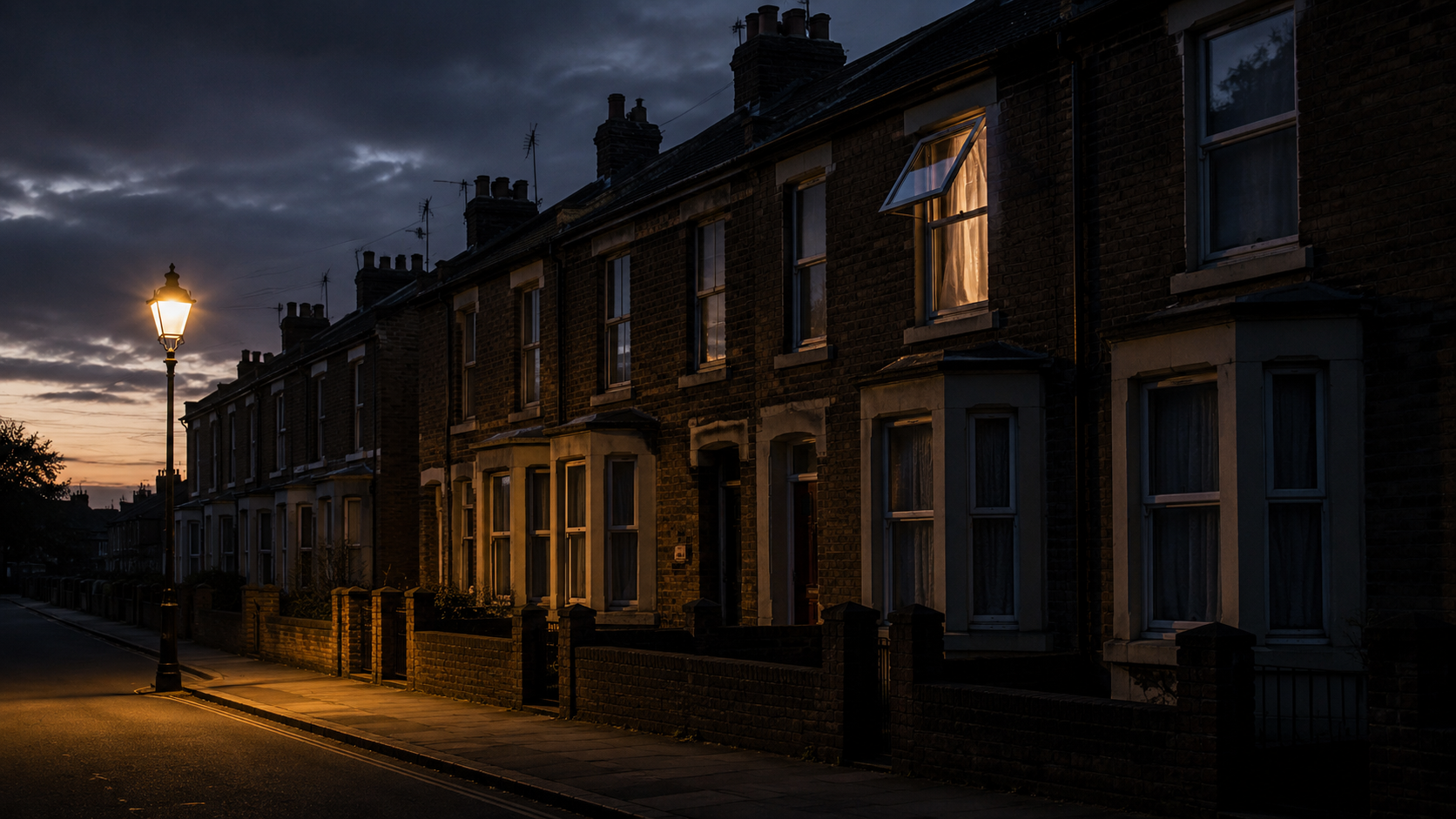
The Window That Changed Everything
What Happened On Britannia Road?
The newspaper was supposed to be there in the morning.
On Britannia Road in Easton, Bristol, that small routine mattered. A neighbor would leave the previous day’s paper on the garden wall. Louisa Dunne would collect it. The gesture was ordinary, almost too small to notice, until the morning it sat inside a larger absence.
There was another detail: a window that should not have been open. Louisa had lived at 58 Britannia Road for years. She had routines, neighbors who knew her, and a best friend she visited in the early evening. On June 27, 1967, she left that friend in good spirits and said she was going home to bed.
At first, what could be seen was limited. A woman had not appeared where people expected her. A house looked wrong. A familiar street had shifted by a few inches: a paper, a window, a silence.
The Life Before The Case
Louisa Jane Dunne was not only the name attached to a cold case. She was a widow, a neighbor, a mother, a grandmother, and a woman with a life that reached back into the early labor movement in Bristol. Court sentencing remarks said she had been born in 1892 and had been involved as a young woman in the movement’s mission to improve the lives of ordinary working people.
Her first husband, Edward Parker, was described in court as an Alderman and a leading figure in the local Labour Party. Their home had once been a place of social and political activity. They had two daughters, Iris and Edna. After Edward died in 1945, Louisa later remarried John Dunne, an Irish widower who worked as a night watchman for Bristol Corporation. He died about six years before 1967.
By the late 1960s, Louisa’s life was quieter. The court described her as living in her own home at 58 Britannia Road, Easton. Police and CPS material have described her as 75, while sentencing remarks described her as 74 at the time of death; the difference does not alter the central facts of the case.
Her granddaughter, Mary Dainton, later said Louisa’s house had once been a place of political and social life, and that Edward Parker had loved her dearly. Mary also said she had only one memory of meeting her grandmother, during a hospital visit when Mary was 14. That absence of memory became part of the harm: the public record knows Louisa through evidence, but her family knew there was more than the file could show.
The People Around Her
Louisa’s world in 1967 was small, but it was not empty. Her best friend, Alice Clarke, had known her for about 30 years. Because Alice had reduced mobility, Louisa usually visited her at least once a week, often in the early evening.
There were neighbors too. Kathleen Haines, who also lived on Britannia Road, had known Louisa for about 30 years and spoke to her in the street. Violet Fortune lived next door at number 60 and had been Louisa’s neighbor since 1957. Court remarks said Mrs. Fortune considered Louisa to have “always been a good neighbour.”
The newspaper routine belonged to that neighborly world. Mrs. Fortune would leave the previous day’s paper on the front garden wall for Louisa each morning. It was not dramatic. It did not look like evidence. It was just one of the small domestic signals by which people living close to each other noticed whether life was continuing as expected.
Court remarks also described Louisa as living simply, supported by her old age pension and supplementary allowance. She did not have significant money or valuables in the house. Her few treasured possessions included books and the deeds to her home. That detail matters because it made the later violence harder to explain as ordinary burglary alone.
The First Cracks
The last known ordinary movement was not a dramatic confrontation. On the evening of June 27, 1967, Louisa visited Alice Clarke from about 5:20 p.m. and left in good spirits, saying she would go home to bed. That was the version of the evening available to those around her: a visit, a departure, a familiar walk back into routine.
The next morning changed the meaning of that routine. Louisa had not been seen. Her window was unusually open. The collective concern of neighbors, as later described in sentencing remarks, spoke to her place in the local community.
What mattered in that first moment was not yet forensic science. It was human pattern recognition. A person who collected a paper had not done so. A house that should have been closed was not. People who knew the rhythm of the street understood that something was wrong before they could know what it meant.
The first crack in the case, then, was not one piece of evidence. It was the failure of ordinary signs to behave normally. On a street where small routines carried information, silence became the first alarm.
The Last Ordinary Movements
Louisa’s last known movements were narrow enough to matter and broad enough to leave uncertainty. The court record placed her at Alice Clarke’s home on the evening of June 27, then leaving in good spirits and saying she would go home to bed. Her body was found the following day, June 28, inside her home.
That left investigators with a gap: what happened between her return home and the discovery the next morning. There was no modern phone record, no home security camera, no GPS trail, no smart device, no digital timestamp that could quietly reconstruct the night.
The case belonged to 1967. It had neighbors, statements, physical impressions, clothing, and the work of officers who still preserved material even when no suspect could be matched to it. That preservation would become decisive decades later, but at the time it could not deliver an answer by itself.
The final ordinary detail remained the one Louisa herself gave to Alice Clarke: she was going home to bed. The sentence sounded like closure to an evening. It became the edge of a missing timeline.
The First Alarm
Louisa was found dead in a downstairs room of her home on Britannia Road on Wednesday, June 28, 1967. Police later said she had been raped, and the cause of death was determined as strangulation and asphyxiation.
The violence was not incidental. Sentencing remarks said Ryland Headley broke into Louisa’s home, sexually assaulted her, and caused her death. The judge said Headley may not have intended to kill, but found that he planned to rape her and used force sufficient to kill when she screamed and struggled.
The method mattered legally. The judge described strangulation and pressure to the mouth, with injuries to Louisa’s face, eyes, and neck. Those findings explained why the case was not only a sexual assault or a burglary gone wrong. The violence showed the fatal mechanism and the degree of force used inside a home where Louisa had every right to feel secure.
At that point, the investigation had a dead woman, a violated home, a serious sexual assault, and physical evidence. What it did not have was the person who had entered the house.
The Search For An Explanation
The original investigation was huge by the standards of the time. Police later said more than 19,000 palm prints were taken, 1,300 statements were gathered, and more than 8,000 house-to-house records were created. Officers from outside Bristol assisted with the mass printing exercise.
That scale matters. It prevents a lazy reading of the case as one that was ignored until modern science arrived. The 1960s investigation produced and preserved the very material that later gave the cold case team something to test. The failure was not that nobody looked. It was that the available technology and the boundaries of the original inquiry did not reach the man later convicted.
Police said Headley did not feature in the original investigation because he lived outside the area covered by the house-to-house inquiries. That small geographic fact became one of the case’s lasting frustrations. A mass operation can be enormous and still miss the person just beyond its edge.
The first investigation had a palm print from the scene, witness material, and a community under pressure. But without a match, evidence can sit in a file for decades as a question rather than an answer.
The Evidence That Did Not Fit
The case began to move again in 2023, when Avon and Somerset Police’s Major Crime Review Team re-examined unsolved murder investigations and looked at the Louisa Dunne file for forensic opportunities. The review led to items being submitted for modern testing, including clothing.
One item became central: Louisa’s blue skirt. Police said the skirt was among the items sent for forensic examination in May 2024. By September 2024, a full DNA profile had been obtained from it and matched to Ryland Headley, whose DNA profile had been added to the national database in 2012 after an unrelated incident.
The statistical strength was stark. Police and prosecutors said the DNA was a billion times more likely to be from Headley than from someone else. The CPS said the DNA profile obtained from Louisa’s clothing matched samples taken from Headley following his arrest for two rapes in 1977.
A second strand followed. A palm print found on an upstairs bedroom window at Louisa’s house was matched to Headley after new prints were taken from him in custody. The CPS said four fingerprint experts analyzed a partial handprint from the section of the palm between the wrist and the base of the little finger and concluded it was left by Headley.
The evidence did not record every private moment inside the house. It could not show what Louisa thought, when exactly Headley entered, or every second of the assault. What it did was place him inside the case through two independent physical routes: biological material on preserved clothing and a palm print connected to entry.
The Event At The Center Of The Case
The central event was reconstructed through physical evidence, witness accounts, preserved material, and the legal findings that followed. Louisa was alone in her own home. Headley entered. The judge found that he broke in, sexually assaulted her, and caused her death.
The violence had a clear forensic and legal meaning. Court remarks described strangulation and pressure to the mouth, with injuries to the face, eyes, and neck. The judge said Louisa’s screams and struggles were met with force sufficient to kill. That wording matters because it separates the fatal act from vague euphemism. This was not simply “an incident.” It was a sexual attack inside a home, followed by violence that stopped Louisa from breathing.
The prosecution case did not rely on one fragile memory from 1967. It drew force from accumulation. The DNA linked Headley to clothing worn by Louisa at the time of the attack. The palm print linked him to the house. The later bad character evidence, admitted after legal argument, showed similarities with later attacks on elderly women in their homes.
The CPS explained that previous misconduct is not automatically admissible as evidence. In Headley’s trial, prosecutors successfully argued that his later rape convictions were relevant because the similarities were too significant to ignore: in 1977, he had broken into the homes of elderly women in Ipswich at night and raped them.
That did not mean the later offenses proved the 1967 case by themselves. Bad character evidence has to be treated carefully. Its role was to help the jury assess whether the physical evidence and pattern pointed to the same man, not to replace the need to prove the charges.
When The Story Broke Open
The modern break came quickly once the forensic match was made. Police said Headley was arrested at his home in Ipswich on November 19, 2024, taken into custody for questioning, and charged the same day with Louisa’s murder and rape. He appeared by video link at Bristol Magistrates’ Court the next day and then at Bristol Crown Court, where he was remanded pending trial.
By then, Headley was 92. The age of the defendant became part of the public attention, but it was not the legal core of the case. The court still had to decide whether the prosecution could prove the charges beyond reasonable doubt using evidence that had survived from 1967 and forensic methods unavailable at the time.
The case also reopened a question about time. How long can evidence keep speaking? The answer here was almost six decades, but not because evidence is magical. It survived because material was kept, because later forensic science could extract meaning from it, and because a database comparison connected an old crime scene to a living suspect.
The public story became larger than one street in Bristol. It became a test of cold-case policing: whether a file that had outlived most witnesses could still reach a jury.
The Case Built From Fragments
At trial, Headley denied the offenses. The jury’s task was not to decide whether the case felt suspicious or whether the passage of time created moral pressure. It had to decide whether the evidence proved rape and murder to the criminal standard.
The prosecution had several strands. The DNA profile from Louisa’s clothing was said to be a billion times more likely to be Headley’s than someone else’s. The palm print at the upstairs bedroom window was matched by experts to his hand. The witness evidence included historic statements, because nearly all trial witnesses from the time had died.
That last point required a legal bridge. The CPS said that because most witnesses were no longer available to give evidence and be challenged in court, their statements had to be treated as hearsay evidence. Prosecutors successfully argued for their inclusion as part of the case.
The defense position was that Headley denied the rape and murder. The case therefore turned on whether the physical evidence, admitted witness material, and bad character evidence formed a pattern strong enough for conviction. The jury convicted him unanimously of rape and by a 10-to-two majority of murder.
This is where cold cases often become misunderstood. The trial did not turn on nostalgia, outrage, or the simple fact that an old file had finally reopened. It turned on whether old evidence could meet a modern courtroom standard.
The Outcome That Did Not End The Story
On June 30, 2025, Ryland Headley was found guilty at Bristol Crown Court of Louisa Dunne’s rape and murder. The next day, Mr Justice Sweeting sentenced him to life imprisonment with a minimum term of 20 years, reduced by 223 days on remand to 19 years and 142 days.
The judge took the rape into account as a feature making the murder more serious and imposed no separate penalty for it. He also explained that sentencing had to take account of the legal framework that would have applied to an offense committed in 1967, when the tariff system operated differently.
Because of Headley’s age, the practical effect was direct. The judge told him he would never be released and would die in prison.
For Louisa’s family, the legal outcome arrived too late for many of the people who had known her. Mary Dainton said her grandmother’s death had affected the family across generations, that her mother never really recovered, and that the stigma attached to rape and murder had caused people to withdraw.
The verdict answered who the jury found responsible. It did not return the decades the family had lived without that answer.
The Aftermath People Still Argue About
After the conviction, police emphasized the combination of old and new investigative work. Senior Investigating Officer Det. Insp. Dave Marchant said the original 1960s investigation had been extensive and meticulous, and that its preserved material helped make the modern case possible.
The aftermath also raised the question of whether Headley might be linked to other unsolved offenses. Police said after the verdict that they remained committed to advancing unsolved murder cases in the Avon and Somerset area. Established reporting also described police reviews in other regions of unsolved murders and rapes involving elderly women, but any such links would need evidence and cannot be assumed from pattern alone.
That distinction matters. Headley’s 1977 rape convictions were legally relevant in Louisa’s trial because the court allowed them and because they shared features with the 1967 attack. But suspicion about other cases is not proof. Cold-case work has to remain disciplined precisely because public imagination can outrun evidence.
The case also forces a harder look at how sexual violence against older women is remembered. Louisa was elderly, living alone, and not wealthy. The judge described her vulnerability, but vulnerability should not be mistaken for reduced personhood. She had a history, a home, politics, friendships, books, and neighbors who noticed when the newspaper routine failed.
The Review, Appeal, Or Unanswered Question
As of the latest reliable material found for this article, the public record shows Headley convicted and sentenced. No verified appeal result was found in the searched material. The conviction and life sentence therefore remain the latest confirmed legal position.
The unanswered question is not whether the jury reached a verdict. It did. The harder question is how many cases can still be solved only if old evidence was preserved well enough for new science to examine it.
Louisa Dunne’s case shows both the power and the limit of forensic progress. DNA did not create the original investigation. It depended on it. The palm print did not matter only because it existed; it mattered because it could eventually be compared with the right person. The witness statements did not become more reliable because time passed; they required legal argument because the witnesses could not mostly appear in court.
That is the real lesson of the case. Cold-case justice is not simply about waiting for technology to improve. It is about preserving the material, understanding the legal limits, and returning to old assumptions with enough care to avoid both missed guilt and wrongful certainty.
Why This Case Still Matters
The Louisa Dunne case matters because it refuses to stay in one category. It is a homicide case, a sexual violence case, a cold-case forensic case, and a family-impact case. It is also a reminder that time does not weaken the importance of the person at the center of the file.
The public may remember the age of the defendant or the length of the delay. Those details are striking. But the strongest part of the case is smaller and more human: a woman’s life was interrupted inside her own home, and the people who loved her carried the unanswered question for decades.
Mary Dainton said it saddened her that the people who knew and loved Louisa were not there to see justice done. That is the cost no sentence can repair.
The newspaper on the wall was never evidence in the forensic sense. It did not identify the attacker. It did not prove the charge. But it showed what Louisa’s neighbors understood before science could: her life had a rhythm, and one morning that rhythm stopped.
