True Crime: The Nicola Payne Disappearance - What Happened During Her Eight-Minute Walk Home?
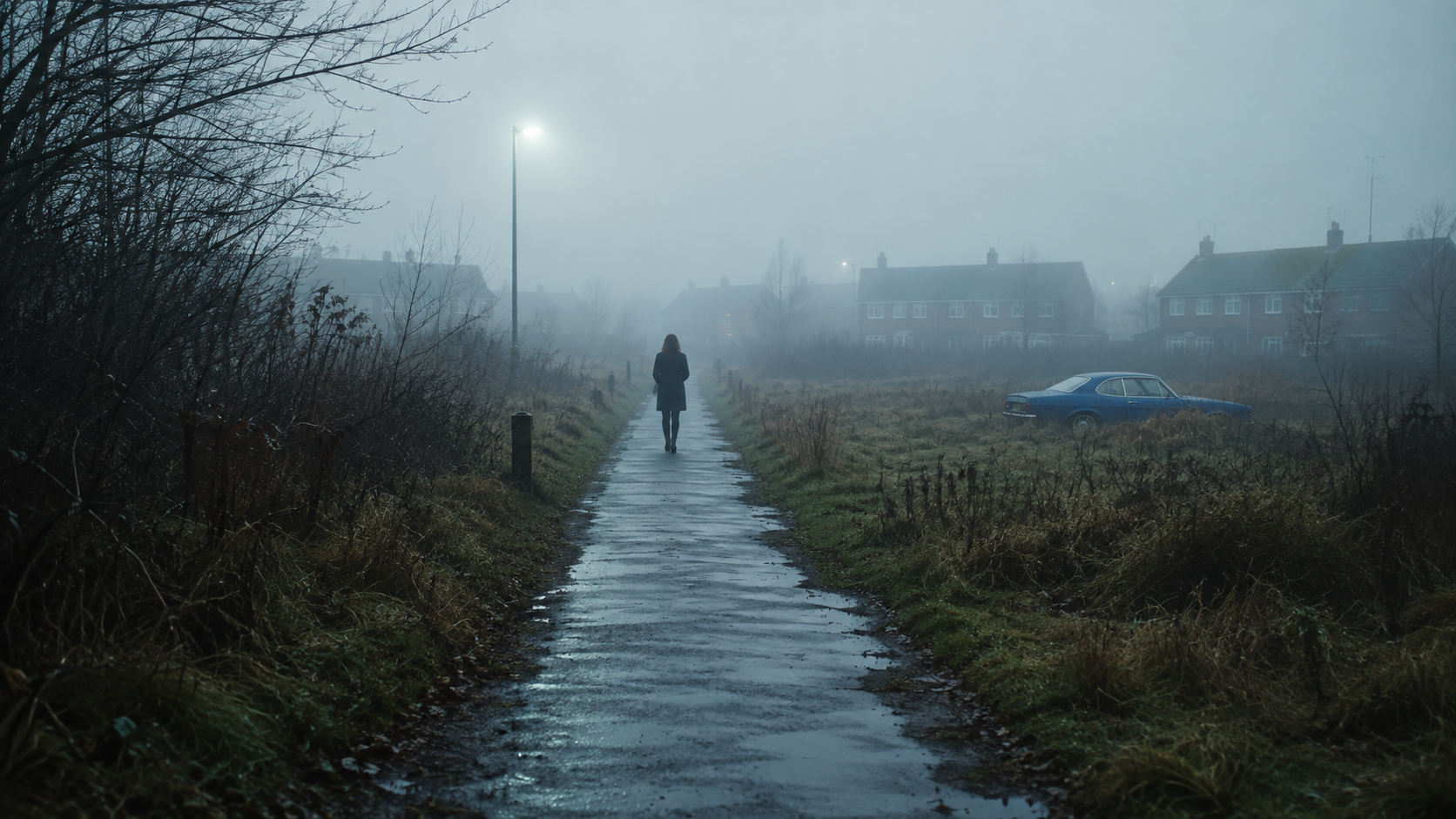
What Happened In Coventry?
The Black Pad Mystery
On Saturday, December fourteenth, nineteen ninety-one, the distance separating two homes in Coventry is almost absurdly small. Eighteen-year-old Nicola Payne is at her boyfriend Jason Cooke’s address in Winston Avenue. Her parents, John and Marilyn Payne, live nearby in Woodway Close. Depending on the route and the later account being used, the walk between them is described as roughly five, seven, eight or ten minutes. Either way, it is not a journey that should require planning.
Nicola has a seven-month-old son, Owen. She and Jason are preparing to move into a three-bedroom house, with Christmas approaching. The trip to her parents’ home is familiar territory through a part of Wood End she knows well. One possible shortcut crosses an area of waste ground locally known as the Black Pad.
At around lunchtime, Nicola leaves Winston Avenue on foot. Nothing publicly established about the decision suggests anything remarkable. She is simply making a short journey between two addresses connected to her family.
Enough time passes for that ordinary assumption to stop working.
Nicola has not reached Woodway Close.
And a journey measured in minutes is about to generate questions that will still have no complete answer more than three decades later.
Nicola Payne Before The Disappearance
Nicola is eighteen years old in December nineteen ninety-one and the youngest of five children. Accounts from her family describe a close household. The most important new part of her life is Owen, born seven months earlier. Years later, evidence about Nicola’s life presented during legal proceedings would describe her as a devoted young mother.
She and Jason Cooke are also looking forward. They have been preparing a new home and expect to move shortly before Christmas. That matters because it gives the events of December fourteenth their proper context. Nicola is not publicly known to be planning a disappearance from her family or abandoning her baby. She has immediate plans, familiar relationships and a reason to move between the two houses that day.
Later descriptions sometimes make the Black Pad sound like an inherently sinister place. At this stage, it is better understood simply as local geography: waste ground providing a shorter route through Wood End towards Woodway Close.
The distance is precisely what makes the first concern so immediate.
Someone undertaking a journey of several miles can be delayed in dozens of ordinary ways. Nicola is expected only minutes away.
Saturday December Fourteenth, Nineteen Ninety-One
Accounts place Nicola leaving Jason’s home at around twelve fifteen p.m., although some contemporary summaries use the broader description of around midday or just after twelve ten. She leaves Owen with Jason and sets out towards her parents’ home.
The weather is cold and foggy. Her likely route takes her towards or across the Black Pad before continuing into the residential streets around Woodway Close. The precise estimated walking time varies between later accounts, but they agree on the essential point: the journey should take only minutes.
Nicola does not arrive when expected.
Her family quickly takes the absence seriously. This is not merely because she is late. Her parents know the length of the journey and know Nicola’s routine. They also know that her baby is waiting behind.
The first question is therefore brutally simple.
Where can somebody go during such a short walk?
The First Search
Police begin treating Nicola as a missing person. The response expands through the surrounding area, with searches, house-to-house enquiries and appeals for information. Sniffer dogs and a police helicopter are used, but the immediate searches produce no trace capable of explaining what has happened.
For investigators, the geography creates both an advantage and a problem. The likely route is short enough to focus attention tightly. Yet the Black Pad is open ground adjoining residential areas, roads and other routes. If Nicola continued through it, investigators need witnesses. If she left the expected route, they need to know where and why.
Nothing publicly established from the initial search answers those questions.
There is no confirmed sighting placing Nicola safely somewhere else. There is no communication explaining an intentional absence. The family continues to insist that leaving Owen voluntarily makes no sense.
As the hours turn into days, the case begins to lose the most valuable commodity available in any disappearance: immediacy.
Every vehicle has moved. Every pedestrian has gone home. Weather changes. Memories begin the slow process of becoming less exact.
The Black Pad remains at the centre of the map.
Nicola does not reappear.
When The Missing-Person Inquiry Deepens
The investigation continues beyond the first days. Police retain objects and speak to people in the area, although the significance of some of that material will not become clear publicly for many years.
What matters during this stage is what investigators cannot establish.
They cannot trace Nicola beyond the short journey from Winston Avenue. They cannot locate her through the initial searches. Her family receives no convincing explanation for her absence.
Over time, police increasingly come to believe something criminal happened to her. The distinction is important: Nicola has still not been found, and the physical evidence available publicly does not provide a complete reconstruction.
That uncertainty begins a pattern that will define the case.
A new lead creates hope.
A search follows.
Nothing conclusive is recovered.
Then years pass before the next promising development.
The Garden Search And The First Long Years
By April nineteen ninety-six, investigators are acting on information suggesting Nicola might have been buried in a garden close to her family’s home.
Police excavate the property with specialist assistance. After hours of searching, nothing is found that resolves the disappearance.
The significance of an unsuccessful search can be misunderstood. It does not necessarily prove that the information behind the search was malicious or worthless. It proves only that investigators were unable to locate what they were looking for at that location.
The same difficulty follows the investigation into the next decade.
In two thousand and one, part of the Oxford Canal near Ansty is searched after further information is received. Again, the operation fails to locate Nicola.
For the Payne family, the case is no longer simply an investigation. It becomes a permanent part of family life.
Owen grows up without his mother. Nicola’s parents continue appeals. Posters, interviews and anniversary publicity are used in the hope that somebody who remained silent in nineteen ninety-one might eventually decide to speak.
The problem is that publicity cannot manufacture evidence.
The Two Thousand And Seven Review
In two thousand and seven, detectives re-examine Nicola’s disappearance and her family again publicly appeals for information. A thirty-seven-year-old man is arrested in connection with the investigation but is not ultimately charged.
Another search follows.
In two thousand and eight, officers excavate a garden in Winston Avenue, close to the area from which Nicola began her journey. Once again, the operation provides no publicly identified breakthrough.
These repeated searches illustrate one of the central difficulties of the case. Investigators can receive information persuasive enough to justify substantial operations without that information being strong enough to reveal what actually happened.
By this stage, more than fifteen years have elapsed.
The landscape has changed.
Witnesses are older.
Objects retained from the original inquiry were collected during an era when forensic science—and particularly DNA analysis—was far less powerful than it would later become.
That technological difference will eventually matter enormously.
But first another tip changes the geography of the search.
The Purcell Road Search
In June two thousand and twelve, police return to the case after receiving new information.
This time investigators focus on parkland off Purcell Road in Coventry, only a few hundred metres from the area associated with Nicola’s disappearance. Around thirty officers are involved, supported by specialist equipment including metal detectors, trained dogs and imaging technology.
The scale of the operation immediately raises expectations.
Two men, aged seventy-four and forty-five, are arrested on suspicion of conspiracy to prevent the lawful and decent burial of a body. Police also search an address in Miles Meadow.
For Nicola’s family, the activity offers a possibility they have been denied for two decades: that investigators may finally have information capable of locating her.
The search ends without finding evidence or items that establish what happened to Nicola. The older man is released without charge. The other is initially bailed, but the investigation against him does not result in charges.
Another apparent opening has closed.
Yet the renewed investigation does not stop.
The Nineteen Ninety-One Evidence Is Looked At Again
By December two thousand and thirteen, detectives announce that forensic work has produced new evidence.
The difference between nineteen ninety-one and two thousand and thirteen is enormous. DNA profiling existed at the time Nicola disappeared, but later techniques could analyse material that earlier methods could not use effectively.
Police say a number of items have been sent for examination. They do not publicly disclose every detail immediately.
The investigation also returns attention to an old question involving a blue Ford Capri.
During an anniversary appeal, detectives highlight two men reportedly seen near a blue Capri close to Nicola’s route on the day she disappeared. The vehicle had been positioned near playing fields bordering the Black Pad. Police release descriptions and ask for help identifying the men.
On December seventeenth, two Coventry men are arrested on suspicion of Nicola’s abduction and murder. A woman is arrested on suspicion of perverting the course of justice. She is later released without charge.
The two men are Nigel Barwell and Thomas O’Reilly.
An investigation that has repeatedly advanced and retreated is now concentrating on a particular theory.
Searches Move To Coombe Abbey
The inquiry expands again during two thousand and fourteen.
Police begin searching woodland at Coombe Abbey Country Park after receiving new information. Specialist search officers, forensic personnel and dogs are involved. During the three-day operation, police say several “items of interest” have been recovered and require further examination.
That language is cautious for a reason.
An item recovered during a search is not automatically evidence of a crime, and something considered potentially relevant during an operation may later be eliminated.
The searches nevertheless show how widely the investigation has moved from Nicola’s original few-minute route. Investigators have now examined gardens, parkland, waterways and countryside locations across years of renewed enquiries.
Meanwhile, forensic scientists are returning to material collected during the original investigation.
Among it is a tent.
The importance of that tent will transform the case.
It will also expose one of its greatest weaknesses.
The Hair From The Tent
Investigators ask for the tent recovered during the original nineteen ninety-one inquiry to be re-examined for biological material.
Several hairs are identified. One contains a root suitable for nuclear DNA testing. In July two thousand and fourteen, the sample is submitted for analysis. By early September, investigators receive a result they regard as a major breakthrough: the statistical assessment attached to the profile provides extremely strong support for an association with Nicola rather than an unrelated person. Further hairs are subjected to mitochondrial DNA testing.
The discovery matters because the investigation is no longer dealing only with recollections, old sightings or information supplied decades after the disappearance.
There is now biological material.
Detectives attempt to establish the history and ownership of the tent and whether it can connect Nicola with the men under investigation.
By January two thousand and fifteen, the Crown Prosecution Service has authorised charges.
Nigel Barwell and Thomas O’Reilly are charged with Nicola Payne’s murder. Both deny involvement.
For the first time since Nicola walked away from Winston Avenue, the disappearance is moving into a courtroom.
The Case Reaches Birmingham Crown Court
The trial begins in October two thousand and fifteen.
Only at this stage does the public record bring several strands of the original investigation together in detail.
The prosecution alleges that Nicola was abducted while crossing the Black Pad and that Barwell and O’Reilly were responsible.
The jury hears about a dog walker, Patrick Carter. According to the prosecution case, Carter had been near the Black Pad around the relevant period and saw a figure apparently positioned in bushes close to a school. He also heard a vehicle engine. After passing through a gate, he saw a metallic blue Ford Capri. Shortly afterwards he heard a short female scream coming from the direction of the bushes.
The prosecution invites the jury to conclude that the scream came from Nicola.
That is an inference, not something Carter could identify directly.
The distinction becomes important because nobody is presented as having witnessed Nicola being physically abducted.
The Blue Ford Capri
The Capri becomes another major part of the prosecution’s reconstruction.
The jury hears that Nigel Barwell owned a distinctive blue nineteen eighty Ford Capri with alloy wheels at the time.
Another witness, Louise Sambrook, had reported seeing a blue Capri near a route leading towards the River Sowe. The prosecution alleged that Barwell and O’Reilly were beside the vehicle and relied on the sighting as part of the circumstantial case connecting them to the relevant area.
The prosecution also introduced evidence suggesting Barwell had previously encountered Nicola in a Coventry pub and had shown an interest in her.
Barwell denied knowing Nicola.
When he later gave evidence, he said he had never laid eyes on her and accused Nicola’s brother Scott of being untruthful about an alleged earlier encounter. Both Barwell and O’Reilly denied abducting or killing Nicola.
The case therefore depends on whether numerous separate strands can safely be connected.
And the tent is supposed to provide the strongest connection.
Why The Tent Became So Important
The prosecution case was that the tent could be linked to Barwell and that biological material recovered from it linked Nicola to the tent.
The forensic findings sound extraordinarily powerful when reduced to a single sentence.
A hair associated with Nicola had been identified inside an object investigators attributed to one of the accused.
But forensic evidence is not evaluated solely by asking what a laboratory detected.
The court also has to know where an exhibit came from, who handled it, how it was packaged, where it was stored and whether material could have been transferred onto it through contamination.
This is where the history of the nineteen ninety-one investigation becomes decisive.
The tent had been recovered five days after Nicola disappeared.
It was not entered into the exhibits log until roughly a month later. The court heard that there was no satisfactory account establishing exactly where it had been stored during part of that period or the condition in which it had been kept.
A forensic result that initially looked capable of transforming the case now had to survive a much more difficult question.
Could the jury be sure the biological material had reached the tent in the circumstances alleged by the prosecution?
The Continuity Problem
The defence attacked the handling of exhibits from the original investigation.
Lawyers argued that forensic safeguards had been inadequate and that the possibility of cross-contamination could not safely be excluded. The judge also drew attention to deficiencies in the records surrounding the tent’s storage and handling.
That does not mean contamination was proved.
It means the prosecution had to persuade the jury beyond reasonable doubt that the evidence could safely support the inference being placed upon it.
Modern DNA science could extract information investigators in nineteen ninety-one had not been able to obtain.
It could not travel backwards in time and repair the chain of custody.
That distinction is arguably the most important lesson in the entire Nicola Payne investigation.
Technology can improve.
An old exhibit can yield a new profile.
But twenty-first-century science remains dependent upon twentieth-century evidence handling.
What The Prosecution Said Happened
By the time all of the strands were presented, prosecutors asked the jury to accept a reconstruction.
Nicola leaves Winston Avenue and begins crossing the Black Pad.
The prosecution contends that she is abducted and killed. It relies upon the timing of the journey, the dog walker’s account, the scream, sightings associated with the Capri, the alleged previous interest in Nicola and the forensic findings from the tent.
There is, however, no recovered body and no eyewitness who says they saw the abduction itself.
There is no confession accepted by the defendants.
The exact motive cannot be established with certainty.
And crucially, the central forensic exhibit is subject to a substantial continuity challenge.
The prosecution argues that the different strands reinforce one another.
The defence argues that suspicion and imperfectly preserved evidence cannot substitute for proof.
What The Defence Said
Barwell and O’Reilly deny involvement.
The defence challenges witness evidence produced many years after the event and attacks the reliability of the original investigation. Barwell disputes claims that he knew Nicola. The defendants maintain that the prosecution has failed to establish the sequence it alleges.
The handling of the tent gives the defence its most powerful forensic argument.
The issue is not whether DNA profiling is generally reliable. The issue is whether the sample can reliably prove what the prosecution says it proves when the history of the exhibit itself contains gaps.
A case built decades after an alleged offence is particularly vulnerable to that problem.
Witnesses remember differently.
Records may be incomplete.
Investigators who made decisions years earlier may no longer remember why.
Evidence-storage practices considered inadequate by modern standards cannot simply be recreated.
The jury must decide the case on the evidence that exists, not on the possibility that better evidence might once have existed.
The Verdict
After around eight hours of deliberations spread across three days, the jury returns unanimous not-guilty verdicts for Nigel Barwell and Thomas O’Reilly on November sixteenth, two thousand and fifteen.
The verdict has a precise legal meaning.
The prosecution has not proved the charges against either man beyond reasonable doubt.
It does not authorise treating either man as Nicola’s killer afterwards. Both were acquitted and must be described accordingly.
Nor does the verdict establish an alternative explanation for Nicola’s disappearance.
The central question survives the trial.
What happened to Nicola Payne?
West Midlands Police says after the acquittals that the investigation will remain open and any new evidence will be examined.
The Payne family returns to the position it occupied before the charges.
Nicola is still missing.
The Search Does Not End With The Trial
The acquittals do not end attempts to locate Nicola.
In November two thousand and sixteen, police again search woodland at Coombe Country Park after receiving information considered credible enough to investigate. Weeks of enquiries fail to produce anything relevant to the suspected abduction and murder.
The family continues campaigning independently.
Appeals focus increasingly on a different objective from proving a particular prosecution theory: finding Nicola.
That distinction matters.
A person could possess information about where Nicola is without being able to prove who caused her disappearance. Someone may have heard something second-hand. Someone may have witnessed activity that seemed meaningless in nineteen ninety-one. A person previously unwilling to speak may no longer feel the same loyalty or fear decades later.
The Payne family repeatedly hopes that changing circumstances might finally break that silence.
Another Search Beneath The Water
In February two thousand and twenty, investigators search a stretch of canal near Rugby as another potential lead is assessed.
Again, no discovery publicly resolves Nicola’s disappearance.
By now, the list of searched locations itself tells the story.
The Black Pad.
Nearby gardens.
The Oxford Canal.
Purcell Road.
Coombe Abbey Country Park.
Water around Coombe Abbey.
A canal near Rugby.
Decades of investigative activity have dramatically expanded the physical map of the case without answering the question created by the smallest journey on it.
Where did Nicola go after leaving Winston Avenue?
The Cost To Nicola’s Family
Cold cases are often described through numbers: years missing, searches completed, suspects interviewed, exhibits tested.
Those figures can obscure what unresolved disappearance actually means.
Nicola’s son Owen was seven months old when she disappeared. Her parents John and Marilyn effectively lived with two possibilities simultaneously: the practical recognition that their daughter was unlikely to return and the absence of the physical certainty that finding her could provide.
Owen later spoke publicly about growing up without the ordinary experiences of having his mother at school gates, sports days and other childhood events.
Marilyn Payne continued campaigning for answers for more than three decades. She died in March two thousand and twenty-three without knowing where her daughter was. Nicola’s brothers and other relatives continued the campaign afterwards.
By two thousand and twenty-five, the family decided to step back from the relentless public campaigning that had accompanied the case for decades, citing the emotional burden and the need to consider those still living. Recent renewed public interest has not changed the fundamental investigative position.
What Can Actually Be Said About The Eight-Minute Walk?
The most tempting question is also the one the evidence cannot fully answer.
What happened during those few minutes?
Several points are strong.
Nicola leaves Jason Cooke’s address around lunchtime intending to make a very short journey to her parents’ home.
She does not arrive.
No reliable evidence establishes that she intentionally disappeared to begin another life.
Police have long treated the circumstances as consistent with abduction and murder.
But the precise event that interrupted the journey has never been proved in a way that produced a conviction.
The Black Pad remains central because it lies on the expected route and because later evidence placed potentially significant activity around the surrounding area. Yet nobody has produced a publicly verified eyewitness account of Nicola being physically seized.
That gap cannot responsibly be filled with narrative certainty.
The Strongest Evidence Ranked
If the case is assessed without assuming that any one theory is automatically correct, several strands stand out.
The short timeline is fundamental. Nicola was travelling between two nearby family addresses. There was only a narrow window in which something unexpected needed to occur.
The witness evidence around the Black Pad is potentially significant. A man reportedly seen in bushes, a vehicle engine, a blue Capri and the sound of a female scream created a sequence prosecutors later argued was connected. But interpreting those observations as proof of one specific reconstruction requires inference.
The tent evidence was scientifically powerful but procedurally vulnerable. Modern testing identified biological material strongly associated with Nicola, yet deficiencies in the exhibit’s original handling created a realistic courtroom dispute about what the result could safely establish.
The repeated searches demonstrate how seriously numerous later leads were taken, but an unsuccessful search cannot independently prove the underlying information was correct.
Finally, Nicola’s complete absence from ordinary life after December fourteenth strongly undermines any simple voluntary-disappearance explanation. Yet absence alone cannot identify who was responsible or establish where she was taken.
What The Record Cannot Prove
The public record cannot establish exactly where Nicola was intercepted.
It cannot establish the identity of the person or people responsible beyond reasonable doubt.
It cannot establish with certainty the precise motive.
It cannot establish where Nicola was taken afterwards.
And it cannot establish where she is now.
The acquittals of Barwell and O’Reilly are not an inconvenience to be written around. They are part of the evidence history of the case. Any theory involving either man must acknowledge that both were tried and found not guilty.
Equally, the acquittals did not solve Nicola’s disappearance.
No alternative sequence was established that explained where she went.
That is why the case remains suspended between unusually strong suspicion that a serious crime occurred and the absence of the final evidence necessary to establish who committed it.
Why The Original Investigation Still Matters
Nicola Payne’s disappearance is often presented as a story about modern forensic science reviving a cold case.
It is also a story about the limits of forensic science.
The DNA work demonstrates what can become possible when evidence survives for decades. Material incapable of producing a meaningful result in the early nineteen nineties can become valuable as laboratory techniques improve.
But preservation is part of forensic science.
Packaging is part of forensic science.
Documentation is part of forensic science.
Continuity is part of forensic science.
If those foundations are weak, an extraordinary laboratory result can become much less extraordinary when tested in court.
The Nicola Payne case therefore contains one of the clearest possible warnings for modern investigators: evidence collected today may have to survive technologies, questions and legal scrutiny that do not yet exist.
Why The Disappearance Remains Unresolved
As of August twenty-ninth, two thousand and twenty-six, Nicola Payne has never been found and nobody stands convicted in connection with her disappearance.
The case has generated arrests, major searches, forensic breakthroughs and a full murder trial. None has answered the two questions Nicola’s family has asked since nineteen ninety-one.
What happened?
And where is Nicola?
The investigation has repeatedly come close enough to an answer to prevent the case from disappearing from public consciousness, yet never close enough to provide legal or physical resolution.
That combination is why Nicola Payne’s disappearance remains one of Britain’s most enduring missing-person cases.
The Black Pad
The story begins with distance.
Winston Avenue to Woodway Close.
A walk described variously as five, seven, eight or ten minutes.
The Black Pad is merely the route between them when Nicola leaves that Saturday afternoon. By the time her family realises she has not arrived, it becomes the geographical centre of a mystery.
More than three decades of searching have taken investigators far beyond it.
Gardens have been dug.
Canals have been examined.
Woodland has been searched.
Old exhibits have been subjected to forensic techniques unimaginable when Nicola disappeared.
Two men have been prosecuted and acquitted.
Still the shortest route in the entire investigation contains its largest unanswered space.
Somewhere between Nicola leaving one family home and failing to reach another, the known timeline stops.
Thirty-five years of investigation have never completely restarted it.
