

True Crime: The Springfield Three Disappearance
The Night a Quiet Street Became a Mystery
The Night Three Women Vanished from Springfield
Just after sunrise, a quiet street in Springfield begins to stir.
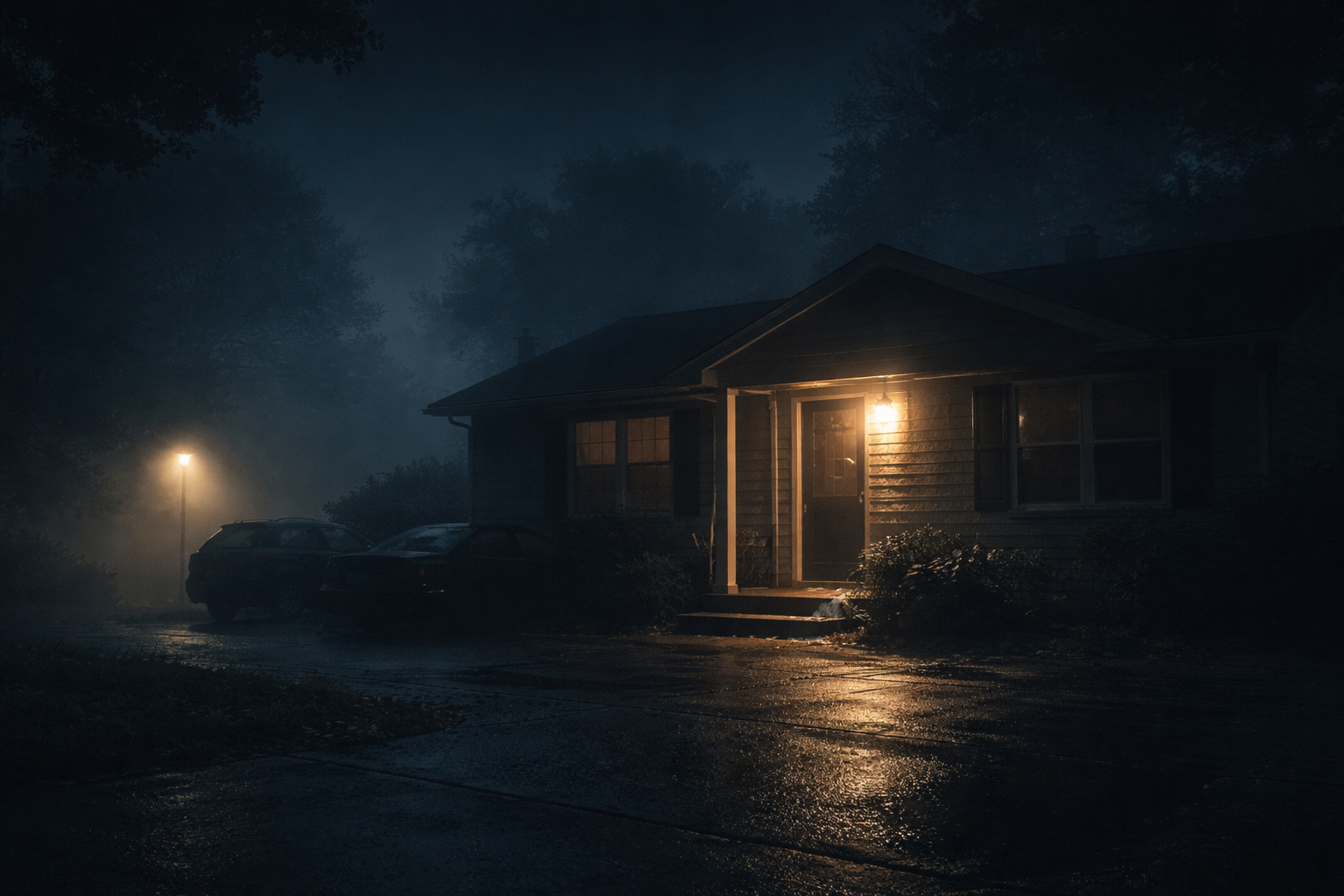
Three cars sit outside a modest home on East Delmar Street. Inside, three purses remain where they were left. Keys are still there. Money is still there. A small dog is still there.
But the women who should be inside the house are gone.
There is no obvious struggle. There is no evident indication of a break-in. The eerie silence of a seemingly ordinary place and the increasing feeling that something is profoundly amiss are the only indications.
The Morning That Should Have Been Ordinary
Springfield wakes on Sunday, June 7, 1992, with the soft, slow rhythm of early summer. The night before had been full of celebration. Kickapoo High School seniors had graduated. Families had taken pictures. Friends had moved from one gathering to the next. For most people, the morning ahead is supposed to mean sleep, lazy conversation, and plans for the day. For three women, it becomes the start of one of the most haunting disappearances in modern American true crime.
Nineteen-year-old Suzanne “Suzie” Streeter and eighteen-year-old Stacy McCall spend the night moving through the loose, cheerful orbit of graduation parties. Earlier, they had planned to stay at a hotel in Branson. Then those plans changed. At one point they considered staying at a friend’s house in Battlefield, but that place is too crowded, so they ultimately decided to return to the home Suzie shares with her mother, Sherrill Levitt, at 1717 East Delmar Street in Springfield, Missouri. Sometime around 2:15 a.m., they return to the home Suzie shares with her mother, Sherrill Levitt, at 1717 East Delmar Street in Springfield, Missouri. According to later reporting and police summaries, that is the last confirmed point at which the timeline still feels clear.
Sherrill, forty-seven, has been home. A friend later says Sherrill seemed normal when they spoke around 11:15 p.m. She had been painting a chest of drawers. Nothing in that conversation suggested fear, urgency, or chaos. It is the kind of small domestic detail that becomes unsettling only in hindsight. Suzie is a woman who works on furniture late at night, anticipating the arrival of tomorrow like any other day.
The next morning, Suzie and Stacy are supposed to meet friends and head to White Water, the water park in Branson. It is an ordinary summer plan. This is also the initial indication of the girls' absence. At first, that absence seems explainable. Teenagers run late. Plans change. Phones are missed. But as the hours begin to pass, that easy explanation starts to break down. Stacy is known as responsible. Suzie, too, is not the sort of person who simply disappears from a day she has already arranged. Concern begins quietly. Then it hardens. And by evening, that concern becomes a crisis.
Three Lives at the Center of the Mystery
Cases like this persist not just because they are puzzling, but also because the people involved feel heartbreakingly close. The Springfield Three are not strangers to those who knew them. They are a mother, a daughter, and a best friend standing at the edge of an ordinary American summer.
Sherrill Levitt is a cosmetologist, described in official summaries as petite, blonde, and deeply familiar with the routines of work and family life. She and Suzie had moved into the Delmar Street house only about two months earlier, after financial strain following her divorce. It is a smaller home, a fresh start of sorts, though not necessarily an easy one. In the records that survive, Sherrill is not presented as someone drifting from place to place. She has appointments ahead of her. She has work later that week. She has a daughter graduating high school. Her life is in motion, but it is anchored.
Suzie Streeter is nineteen, newly graduated, and standing in that strange interval between adolescence and adulthood. Official descriptions note her height, hair, and identifying marks, but those bare facts do not capture the emotional shape of where she is in life. Graduation night always carries a charge to it. It is a celebration mixed with uncertainty. The future feels close enough to touch and impossible to fully imagine. Suzie is at that threshold when she vanishes. She also appears in reporting as someone with friendships, routines, and a strong bond with her mother. That closeness matters because it makes the disappearance of both women together feel even more unsettling.
Stacy McCall is eighteen. Her mother, Janis McCall, would later speak publicly about that last conversation with her daughter the night before, remembering that they said, “I love you," before hanging up. That detail has stayed with the case for decades because it compresses the entire tragedy into one ordinary moment no one knew was final. Stacy is also described by friends and family as responsible. When she does not return home, it does not feel like teenage spontaneity. It feels wrong.
That human reality is what gives the case its weight. This is not simply a mystery about missing persons. It is a story about three interrupted lives, three families pushed into permanent uncertainty, and a city left to measure time by anniversaries instead of answers. But the house on Delmar Street will soon present investigators with a far stranger question than grief alone can explain: how can three women vanish and leave behind almost everything except themselves?
The House on East Delmar Street
When friends begin checking the Delmar Street house, the scene they encounter is eerie precisely because it does not look violent. The front door is unlocked. Inside, the women are gone, but much of what should travel with them remains. Their cars are outside. Their purses are in the home. Keys, money, clothing, and other personal effects are still there. The family dog, Cinnamon, is still inside. For investigators, this becomes one of the defining features of the case: there is absence everywhere, but almost no visible disruption to explain it.
Police later state that there are no apparent signs of a struggle. Sherrill’s bed appears to have been slept in. A window blind looks bent awkwardly. A porch light globe is shattered, though the bulb remains intact. Those details are small, but in a case like this, small details become entire worlds of speculation. Was the broken light connected to an abduction? Was it broken before? After? By whom? The terrible truth is that even potentially meaningful fragments become harder to trust because the scene is not preserved cleanly in those first crucial hours.
The unanswered phone messages add another layer of dread. One strange message on the answering machine is reportedly erased inadvertently before investigators can recover it. Friends also reportedly receive disturbing, sexualized prank calls while inside the house, though police do not believe those calls are necessarily connected to the disappearance itself. Still, the very idea of the phone ringing in that house while the women are missing gives the case a chilling texture that has never really faded.
Investigators come to believe the women disappear sometime between about 2:15 a.m. and 7:30 a.m. on June 7. That is not a wide window in the abstract, but in real life it is large enough for darkness, silence, and chance to erase the clearest edges of what happened. No neighbor reports hearing the kind of unmistakable disturbance one might expect if three women were taken by force. That absence of noise becomes part of the mystery itself. It suggests speed, deception, control, or some combination of all three. And the longer one studies the details, the more unsettling the house becomes. Not because it tells investigators what happened, but because it refuses to.
The First Hours of Fear
One of the cruelest elements in the Springfield Three case is how quickly the first hours slip away. Concern is immediate among friends and family, but the pattern of that concern is ordinary at first. People call. They stop by. They wait. They tidy. They try to make sense of an absence before fully accepting that something criminal may have happened. In many disappearances, the earliest window is where the clearest evidence lives. Here, that window begins closing almost as soon as it opens.
Reports indicate that multiple friends and relatives pass through the Delmar Street house on June 7 before police fully secure it. Some straighten up. Some move objects. Broken glass from the porch light is swept away. Ashtrays are emptied. Cups are cleaned. Later estimates suggest at least ten to twenty people may have entered the home during that period. Retired investigators would later describe arriving to find people coming and going. It is not malicious. It is the chaos of worried loved ones acting like worried loved ones. But in hindsight, it is devastating. A case that already offers few obvious clues may have lost some of its best ones before investigators even knew how badly they needed them.
By the time Stacy’s family alerts authorities that evening, the psychological atmosphere has shifted. This is no longer a delay. It is no longer a missed appointment or a careless morning. Three women have vanished from a home while leaving behind the very things that suggest they never meant to go anywhere at all. That contradiction gives the case its power. People leave abruptly all the time. They do not usually leave without purses, money, cars, keys, cigarettes, medicine, and every visible sign of intention.
And yet that is exactly what Delmar Street seems to say. It tells investigators that departure happened. It refuses to say whether that departure was coerced, staged, interrupted, or disguised. The emptiness inside the home is not dramatic in the usual sense. There is no overturned furniture. No bloodstained floor. No obvious forced entry. The scene does not look like panic. It looks like a life paused mid-sentence. That makes it harder to reconstruct, harder to narrate, and far harder for families to endure. Because if a crime scene screams, this one barely whispers. And investigators still have to build a theory from the silence.
A City Starts Searching
Once authorities understand the gravity of what may have happened, the search expands quickly. Springfield police are joined over time by the Missouri State Highway Patrol, the FBI, and other agencies. The women’s faces begin appearing on flyers and posters throughout the community. Search efforts extend into rural and suburban areas around Springfield, including Lake Springfield, Forsyth, Joplin, and Stockton. In the years that follow, investigators will pursue thousands of leads and carry the case far beyond the boundaries of one neighborhood.
The public response matters because the case almost instantly becomes larger than a local missing-person file. Something about it captures attention: the number of victims, the lack of visible struggle, the domestic setting, and the impossible question of how three people disappear at once. That kind of mystery spreads. It moves through television coverage, tip lines, national segments, and eventually decades of retellings. Even now, the images most associated with the case remain frozen in a specific American moment: early-1990s hair, graduation smiles, and missing posters on storefront glass. The case is not only unsolved. It is visually lodged in time.
But searches, however extensive, do not guarantee clarity. In 1993, investigators search forty acres in Webster County. In 2002, cadaver dogs hit on three spots at a concrete company, and bones are recovered, only to be determined too old to belong to the women. In 2003, tips lead law enforcement to farmland south of Cassville, where they dig extensively and recover possible blood and a fragment of a green vehicle; testing on the blood is later described as inconclusive. These are the kinds of developments that keep hope alive and then drain it again. Each search suggests motion. Each inconclusive result returns the case to uncertainty.
That pattern becomes the emotional structure of the Springfield Three investigation: hope, movement, setback, and repetition. Every new lead briefly promises a door. Every failed result leaves families and detectives in the same dim corridor. Over the decades, that repetition hardens into something heavier than suspense. It becomes endurance. And the city that first searched with urgency learns the cruel mathematics of a long cold case: years can pass, thousands of tips can arrive, and the central mystery can remain almost exactly where it began.
The Leads That Seemed to Matter
Every major cold case develops a shadow archive of moments that feel close to meaning. The Springfield Three has several. One is the anonymous caller to the hotline of America’s Most Wanted in late December 1992, after the case is profiled nationally. According to later summaries, the caller is disconnected before speaking directly with Springfield investigators. Authorities publicly state they believe the person may have had vital information. He never calls back, or at least never in a way that leads to resolution. That single missed connection has haunted the case for decades because it sounds like the kind of moment fiction would never dare invent.
Another lead centers on a possible van. One witness reportedly recalls a suspicious vehicle and, even under hypnosis, can provide only part of a license plate. Authorities are never able to conclusively tie a van to the disappearance. Other possible sightings also emerge, including an unconfirmed report from a restaurant server who says she saw the women together in the early morning hours and reports of screams and squealing tires in eastern Greene County. None of those leads produces the kind of corroboration investigators need. In a case with so little physical evidence, the difference between a genuine clue and a false memory is enormous.
There is also the theory that whoever took the women may have used the dog, Cinnamon, as a way to get someone to open the door. One original investigator later speculates that an assailant could have approached the house under the pretense of bringing the dog back after it wandered outside. It is only a theory, but it remains striking because it fits the basic challenge of the case: how do you get access to a home without creating noise, obvious forced entry, or a visible struggle? A deception at the doorway could explain some of that. It cannot explain all of it.
That is what makes these leads so maddening. None is absurd. None is enough. Each one opens a possible route into the mystery, then stops just short of carrying investigators through. And because the case is so famous, every unresolved detail acquires a second life online, in documentaries, and in public memory. But notoriety is not evidence. It only magnifies the emptiness at the center.
Suspicion Falls in Different Directions
Over time, several names begin circling the case, some officially, some publicly, and some only because the void invites suspicion. That distinction matters. The Springfield Three has generated decades of theory, but theory is not proof, and the gap between the two is where cold cases can become distorted.
One early line of suspicion touches people already in Suzie’s orbit. Dustin Recla, a former boyfriend, is often mentioned because Suzie had reportedly given police information connected to a mausoleum burglary in which gold fillings were stolen from a skull. That detail is lurid enough to stick in memory, and it has fueled speculation about retaliation. But reporting also makes clear that he was never officially charged in connection with the women’s disappearance. The case draws him close but cannot bring him all the way in.
Another figure is Bartt Streeter, Suzie’s brother and Sherrill’s son. Public reporting later notes that he was suspected at one point and then cleared. That matters because it reflects something many long investigations go through in private: circles of suspicion often begin near the victims, then widen only when evidence refuses to settle there. Families do not only suffer loss in such cases. They can also endure scrutiny.
Then there is Robert Craig Cox, the name most often attached to the Springfield Three in broader public memory. Cox had been living in Springfield at the time. He had a violent criminal history, and his alibi became murkier when a girlfriend who initially supported it later said the statement was false, according to later reporting. In 1996, KY3 reporter Dennis Graves interviewed Cox in a Texas prison. Cox said he knew the women were dead, insisted that was not a theory, and then refused to elaborate. A grand jury later reviewed the material and returned no charges. Newsweek, summarizing the case decades later, notes that police have long regarded Cox as uncorroborated and unreliable.
That combination is what keeps suspicion alive. Cox sounds like someone playing with fire in the dark. But sounding sinister is not the same thing as being provably guilty. The Springfield Three resists easy villains. Every time one seems to emerge, certainty slips away again.
False Trails, Dead Ends, and the Weight of Rumor
Cold cases are not only built from evidence. They are also built from the wreckage of evidence that fails. The Springfield Three has accumulated decades of such wreckage. Search warrants. Excavations. Sightings. Inmates. Rumors. Alleged confessions. Stories are repeated until repetition makes them feel sturdier than they are. But the record shows a familiar pattern: investigators follow leads, sometimes aggressively, and still end up with little they can prove.
One of the most persistent public theories is that the women’s remains are buried beneath a hospital parking structure. That idea gained renewed attention after ground-penetrating radar identified anomalies years later. But official summaries and later reporting indicate Springfield police do not consider the theory credible enough to justify tearing up the structure, citing both cost and lack of substantiation. The parking garage itself was not even built until after the disappearance. That does not stop the theory from surviving. It only places it in the category where many famous case details live: compelling, cinematic, and unproven.
Rumor also thrives because the original scene is so thin. When a case lacks a definitive physical narrative, people rush to supply one. That can mean attaching disproportionate weight to half-glimpsed vehicles, eerie phone calls, possible witnesses, or prisonhouse hints. It can mean turning every suspicious man into a likely perpetrator and every unsourced anecdote into hidden truth. The Springfield Three is especially vulnerable to this because the central event feels almost impossible. Three women disappearing at once seems too large for accident, too quiet for obvious force, and too strange for ordinary explanation. So the mind keeps reaching for something bigger.
Yet the hardest possibility may be the simplest: that the answer is not dramatic enough to survive decades of mythmaking. That the abductor or abductors was/were efficient, opportunistic, and lucky. That evidence was lost early. That the person most responsible may never have looked as memorable as the theories built around him. Investigators in many cold cases confront that possibility with frustration because mystery encourages imagination, while truth often depends on something smaller and crueler. The Springfield Three may still be waiting in that gap.
The Families Left Behind
If the public knows this as a famous mystery, the families have lived it as an unending present tense. For them, the case is not an intellectual puzzle. It is a wound that never properly closes because it never receives a final shape. There is no confirmed scene of death. No burial. No definitive trial. No answer solid enough to grieve around. Only a prolonged state of absence.
Janis McCall, Stacy’s mother, has become one of the clearest human voices in the story. In interviews over the years, she speaks not like someone chasing spectacle, but like someone refusing erasure. She says she never imagined she would still be calling her daughter missing decades later. She says there is no such thing as closure for a family member who simply vanishes. She helped found advocacy work for missing persons’ families, turning private grief into public action. That is one of the most dignified and painful patterns in true crime: when those left behind are forced to become organizers, spokespeople, and archivists because the world eventually moves on unless someone prevents it.
There is another emotional complication in this case. Sherrill and Suzie were legally declared dead in 1997, according to later summaries, but the official investigative file still treats them as missing. That distinction captures the cruel split between law and hope. Legally, systems sometimes require a conclusion. Emotionally, families can resist it for years, or forever. To declare someone dead without knowing where they are or what happened to them is not resolution. It is paperwork forced onto uncertainty.
The case also remains visible because the families and the city have refused to let the women become abstractions. Posters stayed up. Anniversaries continued. Age-progressed images circulated. Reward money remained attached to the file. More than thirty years later, the women are not remembered only as missing. They are remembered as missing still. That single word carries the full burden of the case.
Why This Case Still Matters
The Springfield Three still matters because it exposes how fragile an investigation can be in its earliest hours, how stubborn a mystery can become when physical evidence is scarce, and how permanently violence can alter a family even when the final facts never arrive. It also matters because the case remains officially open. The Springfield Police Department still offers a reward, and the FBI’s ViCAP page continues to list the disappearance, keeping the women inside an active national framework for violent crime analysis rather than treating them as a story that has simply aged out of relevance.
It matters culturally because the case has become one of the defining American disappearance mysteries of the 1990s. Not because it is theatrical, but because it is restrained. A home. Three women. A dog left behind. Purses untouched. A shattered porch light. A message erased before it can be understood. Those details feel less like a solved crime withheld from the public than like a question history itself misplaced.
It matters legally and investigatively because it is a reminder that unresolved cases are not static. New forensic tools, new witnesses, fresh reviews, and delayed confessions can all reshape what once seemed impossible to solve. The decades do not guarantee an answer, but neither do they eliminate the possibility of one. More than 5,000 tips have reportedly been processed over the life of the investigation, and still the reward remains in place. That alone tells you how law enforcement views the case: not finished, not forgotten, and not beyond the reach of a breakthrough.
And above all, it matters because three women entered a summer night after a high school graduation and never came back. The years have changed the city, the media, and the technology around the case. They have not changed that central fact. Somewhere between celebration and sunrise, the ordinary world gave way. The house stayed behind. The cars stayed behind. The purses stayed behind. And the question that has haunted Springfield ever since still waits in the dark: how do three women vanish from a home without leaving the story of how they were taken?
