True Crime: Why the JonBenét Ramsey Case Still Haunts America
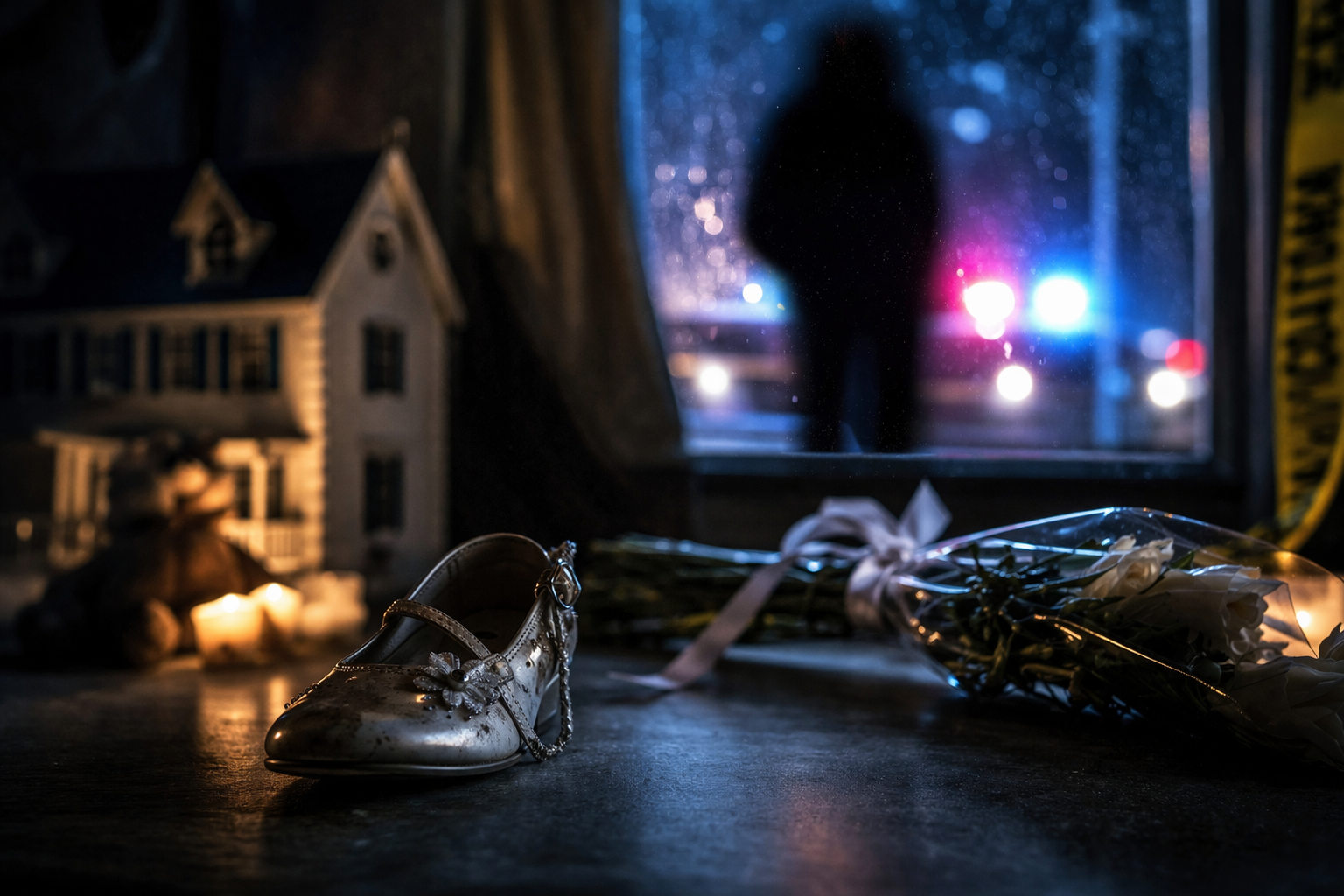
JonBenét Ramsey and the Basement Secret
The Night That Never Ended
In Boulder, the case now lives inside a digital archive measured in millions of pages. Detectives and outside specialists have spent recent years re-indexing evidence, retesting material, and trying to decide whether modern forensic tools can do what the first chaotic hours could not.
That is one reason the JonBenét Ramsey case still feels unfinished in a uniquely unsettling way. It is solved. It is over-examined, over-imagined, and still resistant to certainty. Nearly three decades later, police say they have conducted new interviews, gathered new evidence, and retested older evidence while insisting the murder remains a live priority.
Some crimes fade because the facts eventually harden. This one never did. The little girl at the center of it was turned into an image before she could remain a child in public memory. The family home became one of the most analyzed houses in America. And the question that entered Boulder the day after Christmas in 1996 never really left.
Someone killed JonBenét Ramsey. The country still does not know who.
The Child Before the Obsession
Before the theories, there was a six-year-old girl in a wealthy Boulder family, living inside the ordinary rituals of childhood and the much less ordinary world of child pageants. Public memory fixed on the pageant images so quickly that it flattened everything else. JonBenét became a symbol almost immediately: the blonde child in makeup, the impossible victim in a case too strange to process cleanly. But in real life she was an ordinary girl with a brother, parents, school, Christmas routines, and a house full of family plans.
The case's distortion matters because image warped it from the start. The pageant footage helped drive international fascination, and the family’s money only intensified the reaction. Her father was a successful business executive. Her mother had her own pageant background. Those details were treated as clues by a culture already preparing to judge. But none of that answered the central question of what happened inside the Ramsey home after Christmas night. It only guaranteed that when the case broke, it would break nationally and never really calm down.
Christmas Night on 15th Street
The final ordinary part of the story has always sounded deceptively simple. The Ramseys returned home to Boulder on Christmas night after a gathering with friends. In the early hours of December 26, Patsy Ramsey reported that JonBenét was missing. A handwritten ransom note had been found on the stairs near the kitchen. It demanded $118,000, a number that immediately stood out because it matched John Ramsey’s bonus that year. Seven hours later, JonBenét’s body was found in a small basement room inside the same house.
That sequence is the engine of the case. A kidnapping note without a kidnapping. A child allegedly taken by an outsider yet still inside the house. A family waking into panic, then into horror, without ever leaving the property that contained both the disappearance and the body. From that moment on, every detail carried too much weight: the stairs, the note, the amount demanded, the basement, the timing, who moved through which room, and what officers did or did not understand in those first passes through the home.
The Note on the Stairs
Few pieces of evidence in modern American true crime have been studied as obsessively as that ransom note. Public reporting described it as unusually long at two and a half pages. It was found inside the home, not brought from outside into an unmistakably foreign scene. It warned against contacting police, yet police were called anyway. It demanded a strangely specific sum. And because it appeared to turn a homicide into a kidnapping narrative before the child’s body had even been found, it shaped the entire emotional weather of the case.
The note did something else. It created competing stories before investigators had firm ground. If it was genuine, the killer might have been an intruder who entered, wrote, waited, killed, and left. If it was staged, then it was not just a false lead but a dramatic act of misdirection created from inside the known circle. Those possibilities were so different and so mutually destructive that the case quickly split into camps. And once that happened, every later development was interpreted through a lens people had often chosen long before the evidence could justify it.
Seven Hours Inside the House
The most brutal fact never changed. JonBenét was not found outside, not recovered in exchange for money, not returned by anyone pretending to negotiate. She was discovered dead in the basement of her own home several hours after the 911 call. Public reporting and later summaries described her as having suffered both head trauma and fatal strangulation. Her body was wrapped in a white blanket, and duct tape covered her mouth. The murder weapon involved a cord and a broken paintbrush handle fashioned into a garrote-like device.
That discovery changed the story from bizarre to almost incomprehensible. It also altered the practical reality of the investigation. Once John Ramsey found and moved his daughter, the scene became even harder to preserve in a form a future prosecution would trust. Critics of the original response have argued for years that the house was not secured tightly enough in the beginning and that contamination in those early hours permanently damaged the case. Whether one believes the killer came from inside the family or outside it, that first-day disorder became one of the enduring tragedies of the investigation.
A Crime Scene That Never Held Still
Early responding officers did not report a clear forced entry during their initial search, and that fed immediate suspicion toward the family. At the same time, the house itself was large, the circumstances were unusual, and later arguments about possible entry points never fully disappeared. The basement window became part of that debate. So did the broader question of whether the scene reflected a rushed assault, a staged aftermath, or a plan that collapsed halfway through.
The deeper problem was that the crime scene could never again be what it had been at the first instant of discovery. Friends were present. The family moved through the house. A note was handled. A body was found by a parent rather than isolated first by crime scene technicians. By the time the country began to argue about guilt, innocence, or intruders, a quieter but possibly more important truth had already settled in: the scene that might have answered those arguments had been compromised before anyone understood how historic the case would become.
Forensics, Unknown DNA, and the Limits of Certainty
Forensic evidence gave the case both hope and confusion. JonBenét’s autopsy findings established a homicide involving strangulation, skull fracture, and sexual assault evidence described in later reporting. Unknown male DNA was reported from her underwear, and later reporting also described unknown DNA under her fingernails. For years, that became the foundation of arguments that an outsider must have been involved.
But the DNA story was never as clean as the public wanted it to be. In 2008, prosecutors said newer DNA tests cleared the Ramsey family. In 2016, later reporting challenged how definitive that conclusion really was, noting that the results were not as clear-cut as first presented. Boulder police themselves have repeatedly said the usable DNA evidence is extremely small and complex, that some testing could consume the sample, and that further analysis depends on validated technology that can work reliably with what remains. That is the central frustration of the case in one paragraph: the science matters enormously, but it has never produced a public answer strong enough to end the argument.
The Family Under the Umbrella of Suspicion
The Ramseys became suspects in the public mind almost immediately. That was partly because of the bizarre internal logic of the case and partly because investigators focused heavily on the family early on. The note was inside the house. The body was inside the house. The timeline seemed to compress the circle of possible actors down to almost nothing. In the public imagination, suspicion hardened before the law could say much at all.
Yet suspicion is not proof, and the legal record never reached the certainty the culture craved. In a 2003 defamation case, a federal judge wrote that the weight of the evidence was more consistent with an intruder theory than with Patsy Ramsey killing her daughter. That was not a criminal verdict, and it did not solve the homicide. But it mattered because it showed how even within formal legal settings, the evidence could point away from the narrative many Americans had already embraced. The case was becoming a perfect machine for permanent division: enough evidence to fuel conviction, not enough to end it.
Grand Jury, No Trial
In 1999, a Colorado grand jury voted to indict John and Patsy Ramsey. The unsealed documents later showed proposed counts including child abuse resulting in death and accessory to first-degree murder. That sounds, on paper, like a major breakthrough. In public memory, it became exactly that: proof, for many people, that prosecutors had once come close to accusing the parents formally of responsibility.
But the case did not go to trial. The district attorney at the time, Alex Hunter, declined to sign the indictment and said there was insufficient evidence to proceed. That distinction is everything. A grand jury true bill uses a much lower threshold than a criminal conviction. It can tell you there was enough to move forward. It cannot tell you guilt was provable beyond a reasonable doubt. And in the JonBenét Ramsey case, that gap between suspicion and trial-ready proof became one of the defining features of the entire story. The papers existed. The prosecution never did.
DNA, Exoneration, and the Fight Over What “Cleared” Means
Nearly twelve years after the murder, prosecutors announced that new DNA testing had definitively cleared the parents. For the Ramsey family, that was a major public turning point. For many observers, it was supposed to reset the story entirely. The family had spent years under suspicion; now there was a statement from the district attorney’s office pushing the case back toward an outside killer.
But the word “cleared” became its own battlefield. Later reporting questioned whether the DNA result justified such an absolute conclusion, and critics argued that trace DNA in a compromised environment did not automatically identify the killer or eliminate every alternative theory. That debate has never really ended. It sits at the center of why the case still splits people so sharply. One side hears unknown male DNA and sees the outline of an intruder. The other hears caution from later analysts and sees ambiguity, transfer, contamination, or incompleteness. The law never resolved that fight, and the science never simplified it enough for the public to stop having it.
False Confession, Television Theory, and a Family That Kept Getting Re-Tried
In 2006, the case seemed to lurch toward an answer when John Mark Karr was taken into custody after confessing. Then it collapsed almost at once. Prosecutors dropped the case after DNA testing failed to place him at the scene, and authorities said they found no evidence he was even in Boulder at the time of the killing. He was never formally charged in JonBenét’s murder. It was one more swing between apparent breakthrough and humiliating retreat.
The same cycle repeated in media form. Decades after the homicide, new documentaries and televised theories continued to put the family back on trial in front of viewers. In 2019, Burke Ramsey settled a lawsuit against CBS over a documentary that advanced a theory that he had killed his sister and that the parents staged the scene. The settlement terms were not disclosed. That did not settle the homicide, obviously. But it showed how the case had evolved into something broader and uglier: a permanent content engine in which family members were repeatedly recast as central villains or tragic innocents depending on the production.
The Cold Case in the Age of Genealogy
Modern cold-case culture has changed expectations. When genetic genealogy solves decades-old murders elsewhere, people naturally ask why JonBenét Ramsey’s case cannot be cracked the same way. John Ramsey has publicly argued that newer DNA methods, especially genealogy-based approaches, could still identify the killer. Boulder police have answered with a more cautious position: they say DNA remains a focal point, but the available material is limited, complex, and not always suitable for every emerging method.
What police have done is substantial. They say they have pursued more than 21,000 tips, interviewed more than 1,000 people, digitized the full case file, preserved the evidence, worked with the FBI and outside labs, updated hundreds of reference samples, and, in 2025, conducted new interviews while collecting and re-testing evidence for fresh leads. That is not the profile of a dead file sitting untouched on a shelf. It is the profile of a case still alive but still trapped by the quality of what survived from the beginning.
Why JonBenét Ramsey Still Matters
This case still matters because it sits at the collision point of almost every modern true-crime anxiety: a murdered child, an early investigative failure, wealthy parents under suspicion, a media frenzy that blurred fact and performance, and forensic evidence powerful enough to sustain hope but not powerful enough to close the file. It also matters because the public treatment of the Ramsey family became part of the story itself. The murder was one catastrophe. The decades of accusation, reinvention, and televised certainty were another.
And still the case remains open. Boulder police said again in their 2025 update that detectives have generated new leads, re-interviewed people, and continued testing evidence, while urging anyone with knowledge to come forward. That is where the story stands now: not solved, not abandoned, and not clean enough to give anyone full peace. JonBenét Ramsey’s life lasted six years. The argument over her death has lasted almost thirty, and that imbalance is the case’s most enduring indictment of all
