£180 to Watch TV: Why the BBC Licence Fee Is Becoming Politically Toxic
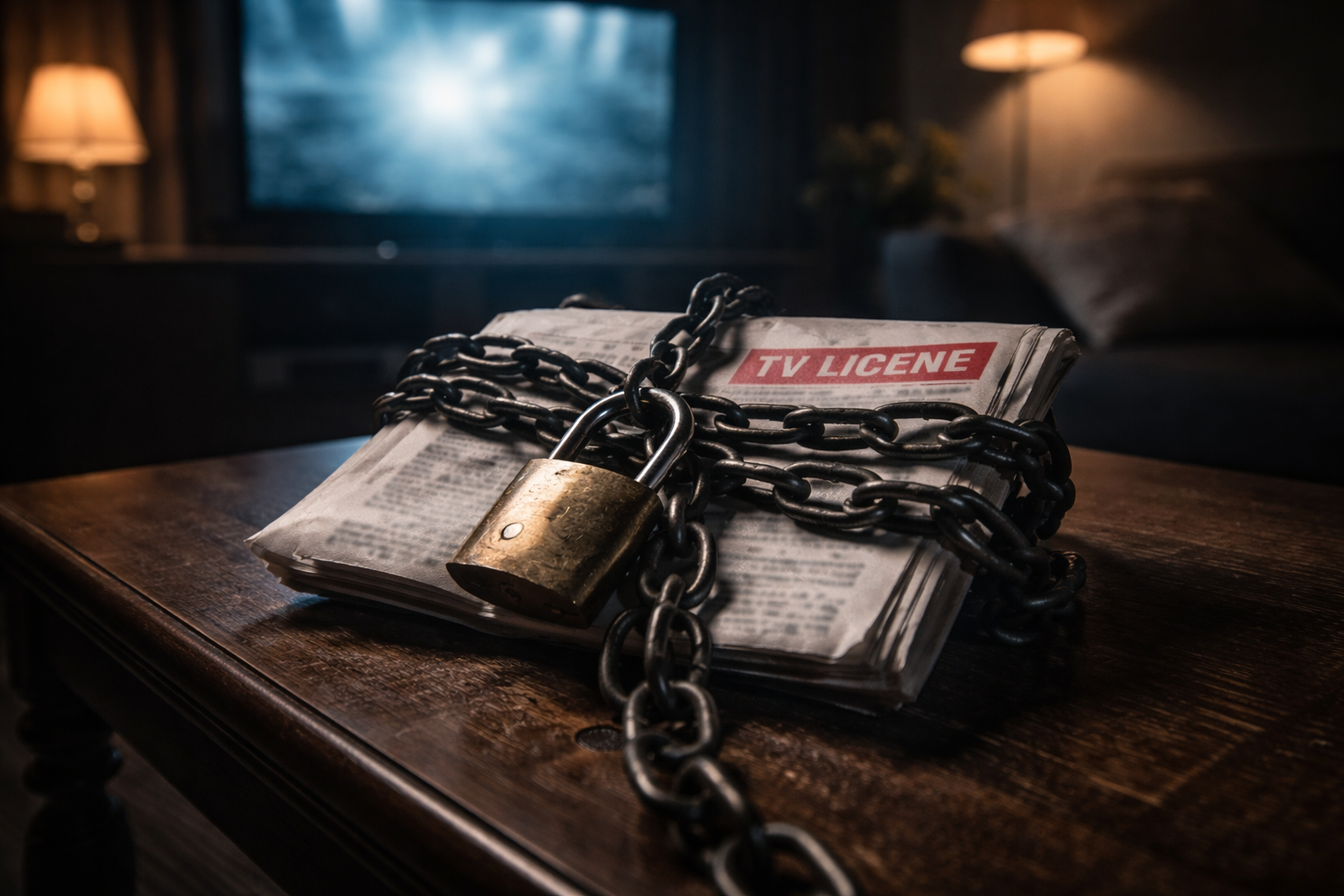
UK TV licence fee rises to £180 on April 1, 2026. Here’s who must pay, the penalties, the backlash, and why the BBC funding model faces a cliff edge.
UK TV Licence Fee Rises to £180 From April 2026—Advertising and the Backlash Is Turning Structural
The UK government has confirmed the annual cost of a color TV licence will rise to £180 from April 1, 2026, an inflation-linked uplift under the 2022 licence fee settlement that runs through the end of the current BBC Charter in December 2027. The headline number looks modest. The reaction does not. The argument is no longer just “too expensive.” It is “Why should this obligation be mandatory at all?”
One reason this moment is sharper than the usual annual grumble is timing: the BBC’s funding model is being scrutinized ahead of the next charter cycle, and public trust has taken repeated hits from high-profile scandals and workplace culture controversies. The rise lands in the middle of that credibility squeeze.
The story turns on whether a mandatory, criminally enforced household charge can survive a streaming era in which many people feel they can opt out of the BBC without opting out of television.
Key Points
The government confirmed the color TV license will increase to £180 from April 1, 2026, under the inflation-linking framework set in the 2022 settlement.
A TV license is required if you watch or record live TV on any channel or service or if you use BBC iPlayer. It is not required if you only watch on-demand content on other platforms.
The rise is reigniting calls to abolish the license fee outright, or at least to decriminalize non-payment.
Non-payment can lead to prosecution and a fine of up to £1,000; additional court costs and surcharges can apply, and jail is a risk only if court fines are not paid.
The backlash is amplified by scrutiny of presenter pay, plus reputational damage from scandals including Huw Edwards and ongoing workplace-culture controversies.
The BBC also faces litigation pressure from abroad, including Donald Trump’s lawsuit over alleged defamatory editing, raising fresh questions about legal risk and who ultimately pays.
Background
The TV license is a household charge tied to a specific set of viewing behaviors, not to device ownership. The current enforcement logic is simple: if you watch TV “as it’s broadcast” (live) on any channel—traditional or online—or if you use BBC iPlayer, you need a license. If you only stream on-demand services (other than iPlayer), you generally don't need a license.
The government sets the fee level. The current path was shaped by the 2022 license fee settlement: the fee was frozen and then moved onto inflation-linked rises during the remainder of the current Charter period, which ends December 31, 2027. With that charter endpoint approaching, policymakers are already gathering options for what replaces the model: subscription, hybrid funding, broader levies, or reform of what the license covers.
That forward-looking review collides with a present-tense reputational problem: the BBC is trying to argue that stable public funding is essential at the same moment many viewers are asking whether the institution still deserves compulsory support.
Analysis
The Backlash Isn’t Just About £5.50—It’s About Consent
The loudest reaction to the £180 figure is not strictly economic. For plenty of households, the “extra £5.50” argument is symbolic: another unavoidable bill in a cost-of-living environment where people are aggressively trimming subscriptions.
But the deeper friction is moral and political: a growing segment of the public does not view the license as a “shared civic contribution.” They see it as a forced purchase of a service they may not use. That is why “abolish the license fee” rhetoric keeps resurfacing whenever the number moves. The anger is often less “this is too high” and more “why is this compulsory in 2026?”
Mechanically, that matters because legitimacy is what makes broad-based funding models work. If consent breaks, evasion rises, enforcement becomes uglier, and the entire system starts to look unstable.
The Scandals Keep Rewriting the Value Proposition
The BBC’s defenders tend to argue from output: national news capacity, local radio, emergency broadcasting, educational programming, culture, sport, and a production ecosystem that supports UK creative industries. Critics argue from governance: if the institution repeatedly mishandles misconduct, bias accusations, and internal culture problems, then “public service” stops feeling like a clean justification for compulsory funding.
This is where recent scandals and controversies sharpen the backlash:
Huw Edwards’ criminal case has been especially damaging because it touched the BBC’s most recognizable “trust” brand: national news authority. Edwards was sentenced in 2024 after pleading guilty to offenses relating to indecent images of children. Even when a scandal involves an individual, the institutional question follows immediately: what did leadership know, what safeguards failed, and how quickly did they act?
At the same time, the BBC has faced repeated headlines about workplace culture and misconduct across programs and departments, feeding a narrative that discipline is inconsistent and consequences arrive late. Each new episode adds weight to the argument that the BBC is asking for compulsory money while struggling to manage its house.
The backlash pattern is predictable:
First comes the demand for accountability.
Then comes the demand for reform.
Then comes the demand to stop paying until reform happens.
And the license fee model has a problem with that last step: it does not treat non-payment as a protest; it treats it as an offense.
“Abolish It” vs “Fix It”: The Political Split Is Widening
In policy terms, there are three broad public positions:
One group wants abolition and replacement with a voluntary model (subscription or advertising).
A second group wants to keep public funding but modernize the scope (for example, extending charges to match actual consumption patterns).
A third group wants the BBC largely as-is but better managed and more credible.
The intensity of the current backlash suggests the center of gravity is shifting from “grumble but pay” toward “why is this mandatory?” That is a serious change because it makes the charter review less about marginal tweaks and more about re-legitimizing the entire funding logic.
The complication is that every alternative creates losers:
Subscription risks exclude lower-income households from “universal” content.
Advertising risks distorting incentives toward clicks and ratings.
Direct taxation risks turning the BBC into a routine political football.
Hybrid models risk confusion and administrative complexity.
So the debate is not just about whether people want the fee abolished. It is about which replacement failure mode the public fears least.
Punishment and Enforcement: Why the System Feels Out of Step
A key accelerant for backlash is enforcement reality. In the UK, license evasion is a criminal offense prosecuted in the magistrates’ courts, and the fine can be up to £1,000. On top of that, there can be prosecution costs and victim surcharges in parts of the UK.
Even if most cases do not end at the maximum penalty, the psychological effect is blunt: people experience the license fee as a modern bill backed by a pre-streaming-era enforcement framework. It is not simply “pay or lose access,” as with Netflix. It is “pay or risk court.”
That enforcement gap explains why decriminalization keeps coming up. Decriminalization does not mean “no consequences.” It means shifting to civil penalties, debt collection routes, or different compliance mechanisms that feel more proportional to a media choice. Whether that is workable is a policy question, but politically it is easy to sell because it aligns punishment with contemporary consumer expectations.
Trump’s Lawsuit Turns the License Fee Debate International
International litigation is also exerting pressure on the BBC. Donald Trump filed a major lawsuit against the BBC over alleged defamatory editing of a January 6 speech, and the BBC has sought to have the case dismissed, arguing jurisdictional and legal defenses.
For UK audiences, the immediate emotional takeaway is simple: if the BBC is exposed to expensive legal battles abroad, does that risk flow back to UK fee payers? Even if the BBC ultimately wins, legal defense is costly, and critics will use the headline numbers to argue the institution is becoming financially and reputationally riskier just as it asks households to pay more.
This matters because it changes the optics of “stability.” The BBC says the fee rise helps restore stability. Opponents reply that stability is exactly what the institution is failing to deliver: fewer scandals, fewer legal risks, fewer cultural crises, and fewer self-inflicted reputational wounds.
What Most Coverage Misses
The hinge is that the license fee’s biggest vulnerability is not inflation—it is enforceability.
The mechanism is straightforward: the more households shift to on-demand viewing outside iPlayer, the easier it becomes to claim (truthfully, in many cases) that they do not need a license. That shrinks the paying base, increases perceived unfairness among those still paying, and pushes enforcement into a more visible, politically sensitive role. Once enforcement becomes a culture-war symbol, the funding model stops being a quiet utility and becomes a permanent controversy.
Two signposts will confirm this in the coming weeks and months:
First, whether the government and Parliament signal stronger intent toward decriminalization or a redesigned fee structure ahead of the charter renewal window.
Second, whether the BBC proposes reforms that explicitly widen the paying base or shift parts of its offering behind optional payment—an implicit admission that universal compulsory funding is losing consent.
What Changes Now
In the short term, the practical change is simple: from April 1, 2026, the annual cost is £180 for a color license.
In the medium term, what changes are expected in the tone of the policy runway? This is no longer a technical inflation adjustment. It is another stress test of legitimacy in the run-up to the next charter settlement.
Who is most affected:
Households already under pressure are most likely to treat the license as optional.
People who mainly watch streaming and feel the BBC is not part of their media diet.
The BBC itself, because rising evasion and falling consent weaken its negotiating position for any future funding model.
The main consequence mechanism is political: every increase that arrives alongside scandal headlines makes it harder to argue the fee is a shared national good and easier for opponents to frame it as a compulsory subsidy for an institution that has not earned trust.
What to watch:
Signals on whether the charter review moves toward a voluntary model.
Any official moves toward decriminalization or major enforcement reform.
Whether the BBC tries to protect “universality” by changing what is paid for and how.
Real-World Impact
A household that only streams on-demand services may double-check whether it needs a license at all, and the “opt-out” becomes a monthly budgeting move rather than a political statement.
A student house might decide to avoid live TV entirely to keep costs down, shifting viewing habits away from live events and toward on-demand clips and box sets.
A family that uses iPlayer for kids’ programming might feel trapped: they want the service but resent the mandatory charge, especially when headlines highlight salaries or legal disputes.
A retiree on a tight income might rely on exemptions or discounts while still feeling anxious about enforcement messaging that can sound punitive and impersonal.
The BBC’s Funding Fight Is Now a Trust Fight
The £180 license fee is not the biggest number in the story. The biggest number is the gap between what the BBC needs—broad consent—and what it is currently fighting—broad skepticism.
The next phase will not be won by arguing that £180 is only pennies a day. It will be decided by whether the BBC and government can persuade the public that compulsory funding still matches modern media reality and that the institution’s governance and culture are strong enough to deserve it.
If they cannot, the license fee does not merely become unpopular. It becomes politically untenable. And once a universal fee loses “universal” consent, history tends to move fast.
