

Britain’s Prime Minister on the Brink: The Rules That Decide Whether Starmer Falls
UK Prime Minister Quits? What Happens Next in Britain
Britain’s Leadership Shockwave: The Hidden Rules That Could End Starmer
The UK has not entered a formal “Prime Minister exit” process. Keir Starmer remains in office and has indicated he intends to continue, even as pressure intensifies after two senior Downing Street departures in under 24 hours and a public call for his resignation from Scottish Labour leader Anas Sarwar.
This is the dangerous part of a fast-moving leadership storm: the public conversation accelerates, but the constitutional and party-rule machinery does not. The result is high-velocity uncertainty—exactly when investors, allies, civil servants, and MPs care most about timelines and trigger points.
The central question is not whether a scandal story keeps running. It is whether the governing party can produce a clean, fast resolution that preserves a working majority and avoids a confidence crisis.
One underappreciated hinge is that the quickest route is often the one that produces a single, credible successor early enough to prevent a prolonged internal contest.
The story turns on whether Labour can consolidate behind one successor before the situation spills from party management into a parliamentary confidence risk.
Key Points
Starmer has not resigned as of February 9, 2026, but pressure is rising after senior staff exits and Sarwar’s call for him to step down.
Resignation does not automatically trigger a general election; a governing party with a majority can change leaders and continue governing.
In practice, the UK system changes prime ministers fastest when one successor becomes the obvious choice and rivals stand down.
A formal Labour leadership challenge depends on MPs crossing a nomination threshold; if multiple candidates qualify, the timetable slows and uncertainty rises.
A “managed reset” can happen without a formal challenge if party pressure forces a negotiated exit and a successor is lined up.
The highest-stakes acceleration is a Commons confidence threat or defeat, because that forces an answer to “who can govern,” not just “who leads the party.”
Over the next 72 hours, the most important signals are procedural: nominations, endorsements, cabinet discipline, and any move toward a confidence showdown.
Background
The UK is a parliamentary system. The prime minister is not elected directly by the public. They lead the government because they are able to command the confidence of the House of Commons—usually by leading the party (or coalition) that can win key votes, including budgets and major legislation.
Formally, the monarch, Britain’s Prime Minister on the Brink: The Rules That Decide Whether Starmer Falls
appoints the Prime Minister. Practically, the Monarch appoints the person who is clearly best placed to command Commons confidence. That usually means the leader of the largest party with a working majority.
When a prime minister is under intense pressure, three arenas matter:
Party rules decide who leads the governing party. Commons confidence decides who can govern. The Crown provides the constitutional appointment at the end of the chain, but the political facts determine who is appointed.
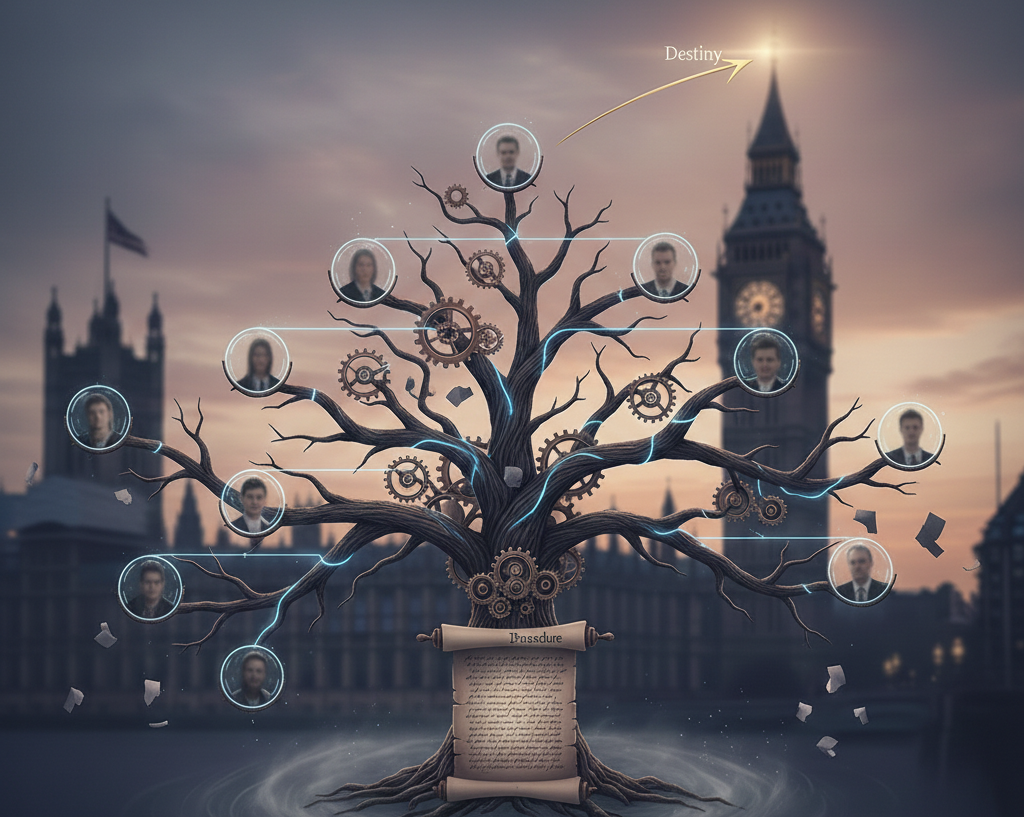
This is why “what happens next” is not one road. It is a decision tree with different trigger points, different clocks, and different ways to freeze the system in place while the public expects instant answers.
Analysis
Path 1: The resignation route, and why it can be swift
If a prime minister resigns, the government does not shut down. There is typically a caretaker period while the governing party selects a successor. The outgoing prime minister can remain in office until the new leader is chosen and appointed because the state requires continuity.
The key variable is whether the party produces a quick successor. If one candidate is clearly dominant—because they can command parliamentary support and deter rivals—the timeline compresses. If the party enters a full contest with multiple candidates, the timeline expands, and the country lives inside a prolonged leadership vacuum.
The most common public misunderstanding is the assumption that resignation automatically triggers a general election. In reality, a governing party with a Commons majority can replace its leader and continue governing. An election becomes likely only if the new leader lacks confidence or if political strategy favors an early election.
Path 2: The formal internal challenge, and the nomination threshold reality
A formal leadership challenge is governed by party rules, not by a national constitutional switch. That matters because party rules can be designed to prevent rapid destabilization.
For Labour, the critical gate is the nomination threshold among Labour MPs. Without enough MPs formally backing a challenger, there is no credible route to a leadership contest.
If a challenger clears the gate and only one candidate qualifies, the party can move quickly. If more than one candidate qualifies, the process typically broadens into a wider contest, increasing uncertainty and weakening the government’s ability to project control.
The outcome is counterintuitive: the presence of multiple plausible challengers can delay removal, not accelerate it, because it prevents consolidation and forces a longer selection process.
Path 3: The “managed reset,” and why it is often the real plan
Most leadership crises do not end with a dramatic formal challenge. They end with a negotiated exit—sometimes framed as “for the good of the project,” sometimes timed around a fiscal event, a cabinet reset, or a moment where the party believes it can change the subject.
A managed reset is essentially an engineered resignation. It happens when internal pressure reaches a threshold, and the leader decides the exit is inevitable but wants control over timing and succession.
The advantage is speed and stability. The disadvantage is legitimacy risk. If the party appears to be running a private process disconnected from public accountability, the reset can stabilize the system in the short term but deepen the trust problem in the long term.
In the current moment, the resignation of a chief of staff followed quickly by a communications chief is a classic signal of an attempt to reconstitute control. It can be the prelude to survival—new team, new message—or the prelude to an organized transition, where staff moves anticipate a handover rather than a recovery.
Path 4: The confidence escalation occurs when the system is no longer optional.
A Commons confidence crisis changes the nature of the question. Party management becomes secondary to national governance.
Confidence can be tested directly through a confidence motion or indirectly through votes that are treated as matters of confidence in practice—especially budgets or critical legislative priorities. The UK system is built to resolve confidence shocks, not to sustain ambiguity.
If a prime minister resigns in the shadow of confidence risk, the imperative shifts to the fastest appointment of someone who can demonstrably command the Commons. If no such person exists, or if the governing party fractures, the path can move toward a general election.
This is why markets, allies, and institutions care less about internal party drama than about whether confidence has become genuinely unstable.
What Most Coverage Misses
Whether Labour can make one successor inevitable quickly enough to prevent a prolonged contest largely determines the timeline.
The mechanism is simple: once one candidate is close to the MP nomination threshold and cabinet-level support begins to consolidate, rivals face a choice. Run and force a long contest that drags the government through uncertainty, or stand down and allow a rapid transition. If rivals step aside, the party can shorten the crisis dramatically.
Signposts to watch are concrete: visible nomination gathering among MPs, endorsements that lock in factions and regional party organizations, and the absence of a second credible figure willing to cross the nomination gate and trigger a longer party-wide ballot.
What Happens Next
Over the next 24–72 hours, the biggest question is whether the turbulence remains an internal management problem or becomes a parliamentary stability problem.
In the short term, the system will look for proof that the government continues to function: a disciplined cabinet, a clear message strategy, and no drift toward a confidence showdown. This is why staffing changes matter—they are an attempt to regain narrative control and operational coherence.
In the medium term, if pressure continues, the question becomes succession mechanics. The country will watch for whether a credible successor begins to attract enough MP backing to become inevitable, because inevitability is the quickest stabilizer.
In the longer term, even a successful survival can be costly. A prime minister who remains in office but cannot restore internal cohesion and trust may retain office while losing governing capacity. That is how majorities become unusable: not through arithmetic collapse, but through discipline collapse.
The main consequence is speed versus authority, because a rapidly managed transition stabilizes institutions faster, but a rushed handover can produce a leader with a thin mandate and persistent internal resistance.
Real-World Impact
A finance director delays investment decisions because policy direction becomes unclear during a leadership fight, even if formal power has not changed.
A government contractor pauses hiring because big public-sector programs can be slowed by reshuffles and ministerial uncertainty.
Political instability can alter expectations about fiscal policy and interest-rate risk, causing a retail borrower to experience a surge in anxiety and delay a property move.
A senior civil servant narrows options and avoids irreversible commitments because interregnum conventions encourage caution—leading to real-world delivery delays even without a single law changing.
The Next 72 Hours Will Be Won by Mechanics, Not Drama
The UK system ensures the smooth operation of the state, even in the face of chaotic politics. But it is also designed to reward clarity. If one successor becomes inevitable, the system can switch quickly and move on.
If no successor consolidates, the crisis stretches, and the risk shifts from leadership optics to governance capacity. The closer the story moves to Commons confidence risk, the less optional the resolution becomes.
Watch three things: whether Starmer’s position hardens or erodes inside the cabinet, whether any successor visibly assembles MP nominations, and whether the crisis stays in party rules or spills into confidence reality. The moment those signals shift, Britain’s political timeline snaps into a new shape—and historians will treat it as more than a bad week.
