

Britain’s Second Cost Of Living Crisis Has Already Begun: The Hidden Economic Fallout Of A War Thousands Of Miles Away
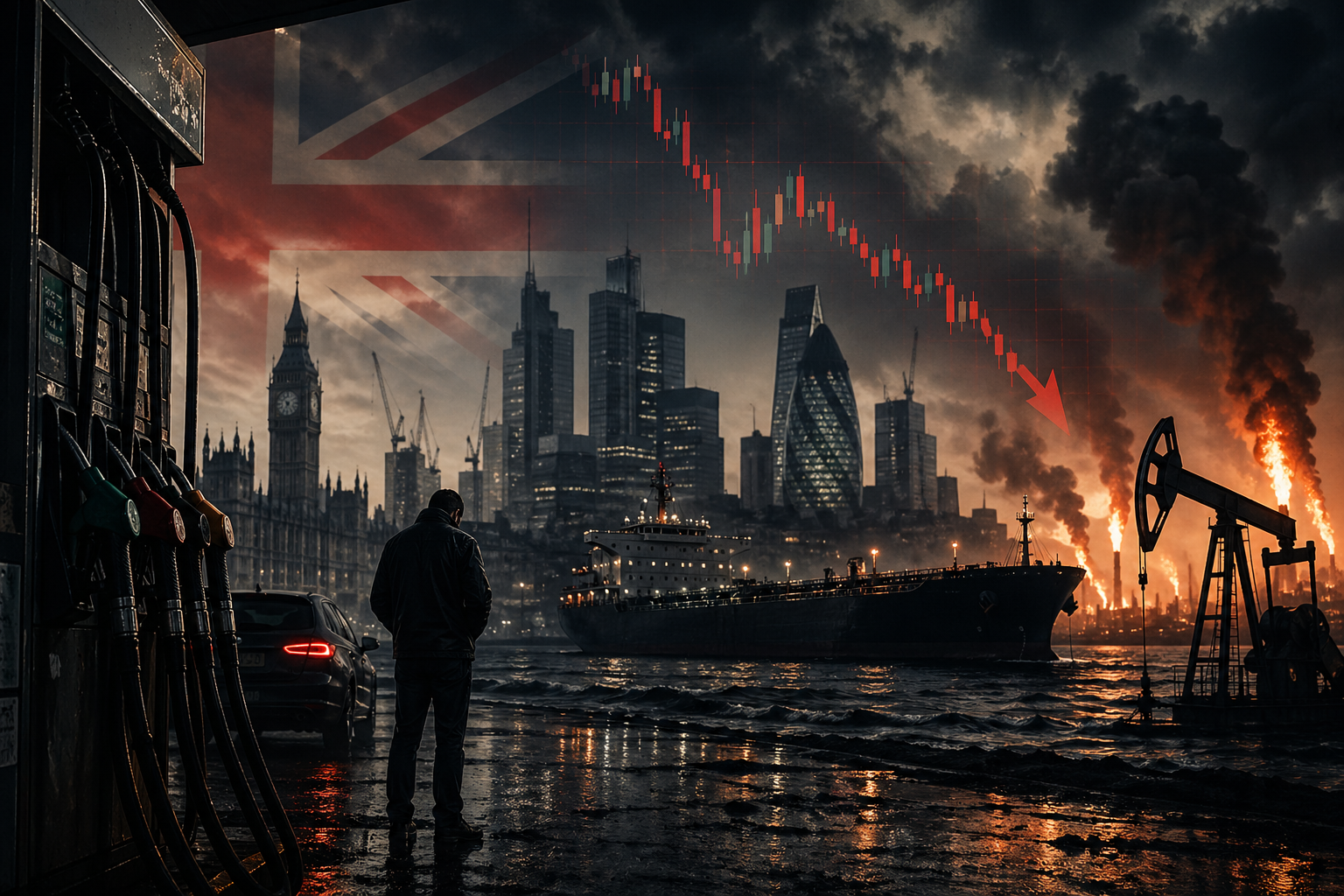
Why The Iran War Could Reshape The UK Economy
The Government Is Preparing Britain For A Long Economic Shock — Not A Temporary Spike
The UK government has quietly shifted its posture from monitoring a crisis to managing one.
Prime Minister Keir Starmer is convening an emergency COBRA meeting with the Bank of England — a signal usually reserved for national security threats, not just economic concerns. But this time, the threat is economic, and we are treating it with the same urgency.
The reason is simple: the Iran war is no longer a distant geopolitical event. It is now feeding directly into rising fuel prices, inflation pressure, and household costs across Britain — and officials believe this is not a short-term spike.
They are preparing for persistence.
A Crisis Triggered Far From Britain — But Felt Immediately
The conflict has destabilized one of the most critical arteries in the global economy: energy supply.
Roughly 20% of the world’s oil flows through the Strait of Hormuz, and disruption there has already affected global markets.
Oil prices surged sharply in the early stages of the conflict, with some forecasts warning they could climb further if instability continues.
For the UK, which relies heavily on global energy markets, the transmission mechanism is brutally direct:
Higher oil prices → higher fuel costs
Higher fuel costs → higher transport costs
Higher transport costs → higher food and goods prices
That chain is already underway.
Petrol and diesel prices have risen significantly since the conflict began, with early estimates showing increases of around 10–20% within weeks.
This is not theoretical. It is already showing up at the pump—and soon, across supermarket shelves.
Why The Government Is Treating This As A National-Level Event
COBRA meetings are not routine economic briefings. They are emergency coordination mechanisms.
The decision to bring together senior ministers and central bank officials reflects a growing recognition:
This is not just inflation—it is systemic pressure.
Starmer has made clear the government expects “significant economic impact,” particularly through fuel prices, and is actively exploring coordinated responses with the Bank of England.
That coordination matters.
Because the UK is facing a difficult policy collision:
Rising inflation demands tighter monetary policy
Slowing growth demands looser economic support
You cannot easily do both at the same time.
The Bank Of England’s Dilemma Is Getting Worse
The Bank of England is already under pressure.
Markets expect interest rates to remain steady in the short term, but the direction of travel is becoming more uncertain as inflation risks rise again.
Energy-driven inflation is particularly dangerous because it spreads quickly across the economy. It is not limited to one sector—it raises costs everywhere.
That leaves policymakers with a narrowing set of options:
Raise rates → control inflation but risk recession
Hold rates → support growth but allow prices to rise
Cut rates → stimulate demand but risk worsening inflation
None of these are clean solutions.
This Is Not A Short-Term Shock
The most important signal coming out of the government is not the meeting itself—it is the messaging.
Officials are already warning that the economic impact could last well beyond the immediate conflict.
UK ministers have suggested that higher prices could persist for months even after the war ends.
That is a critical shift in expectation.
This is no longer being framed as a temporary disruption. It is being treated as a sustained economic phase.
In practical terms, that means:
Prolonged pressure on household budgets
Continued volatility in energy markets
Delayed relief even if geopolitical tensions ease
The Risk Of “Cost Of Living Crisis 2.0”
Britain has been here before—and the signs are uncomfortably familiar.
The previous cost of living crisis was driven by energy shocks, inflation, and supply chain disruption. This time, the trigger is different, but the mechanics are the same.
Economic forecasts already suggest the Iran war could
Push inflation higher
Slow economic growth
Reduce consumer spending
In the worst-case scenario, the UK could face stagflation—a combination of rising prices and weak growth.
That is one of the hardest economic environments to manage.
What Most People Are Missing
The headline story is fuel prices.
The deeper story is vulnerability.
Britain is being reminded, again, that its economic stability is tied to global energy flows it does not control.
Even domestic production offers limited protection. Much of the UK’s oil and gas is priced at global rates, meaning local supply does not shield households from global shocks.
This is why the government response is not just reactive — it is strategic.
Behind the scenes, this crisis is likely to accelerate debates around:
Energy security
Domestic production vs global dependency
Renewable transition speed
Supply chain resilience
These are long-term questions, triggered by a short-term shock.
The Real Consequence: A Shift In Economic Mood
Crises like this do not just change prices. They change behavior.
If fuel costs remain high:
Consumers spend less elsewhere
Businesses delay investment
Confidence drops
That shift in mood can become self-reinforcing—slowing the economy even without further shocks.
This is why the government is moving early.
Not because the worst has already happened.
But because it may still be coming.
The Bottom Line
The emergency COBRA meeting is not about reacting to a spike.
It is about preparing for a phase.
The Iran war has already begun reshaping Britain’s economic outlook — through fuel prices, inflation risk, and policy pressure.
And the clearest message coming from government is this:
They are not expecting a quick return to normal.—through
