

Car Ploughs Into Crowd in Derby — Is This the New Normal?
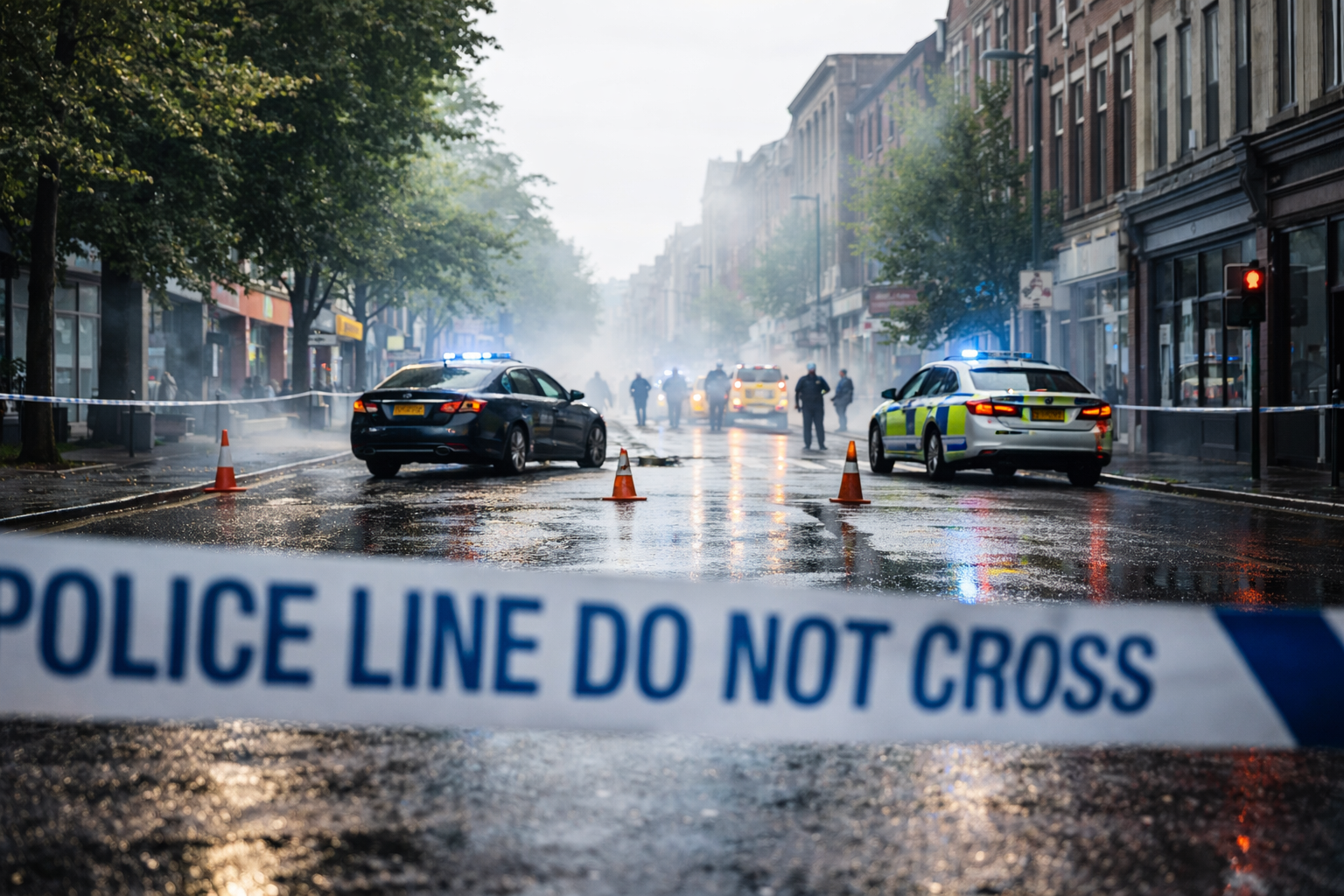
Derby Car Attack Sparks Fear — But Is Britain Really Becoming Unsafe?
Man Arrested After Derby Car Attack — Is “Random Violence” Rising in Britain or Being Misread?
A man has been arrested on suspicion of attempted murder after a car struck multiple pedestrians in Derby city center late Saturday night, leaving seven people injured, some seriously.
The incident, which unfolded around 9:30pm on Friar Gate—a busy nightlife area—has triggered immediate public anxiety about safety in UK cities. But the deeper question is whether this is evidence of a wider surge in random violence or something more complex.
One overlooked reality: incidents like this feel random but are often highly specific in cause, motive, or context.
Police have stated that there is no immediate danger to the public and are considering all possible motives.
The story turns on whether Britain is becoming more dangerous—or whether perception is outpacing reality.
Key Points
A man in his 30s was arrested on suspicion of attempted murder after driving into pedestrians in Derby city center.
Seven people were injured and taken to the hospital with serious but not life-threatening injuries.
The incident occurred in a crowded nightlife area, amplifying shock and visibility.
Police say there is no indication of an ongoing threat and are still investigating motive.
Similar high-profile violent incidents in recent weeks are shaping public perception of rising insecurity.
Vehicle-based attacks are rare but disproportionately impactful due to their suddenness and scale.
What Happened in Derby—and Why It Hit So Hard
Late on Saturday night, a black car drove into pedestrians on one of Derby’s busiest streets. Emergency services rushed to the scene, treating victims on the pavement before transferring them to nearby hospitals.
Witnesses described chaos—people on the ground, panic spreading quickly through nearby bars and crowds.
This kind of incident lands differently from typical violent crime. There is no visible argument, no warning, no obvious target. It appears sudden, arbitrary, and uncontrollable.
That perception is what makes it feel like “random violence”—even before investigators establish what actually happened.
The Pattern: Why Vehicle Attacks Trigger Disproportionate Fear
Vehicle-ramming incidents occupy a unique psychological category.
They are:
Fast
Indiscriminate in appearance
Hard to predict
Highly visible
Globally, similar incidents—from Germany to the US—have reinforced this fear pattern.
Even when rare, they create a sense that anyone, anywhere, could be a victim.
That perception spreads faster than the facts.
Are UK Cities Actually Becoming Less Safe?
The short answer: not in the way people think.
Most violent crime in the UK remains the following:
Localized
Between known individuals
Driven by specific disputes or circumstances
Events like Derby stand out precisely because they break that pattern.
But here’s the tension: while overall trends may not show a dramatic surge in random attacks, the visibility of extreme incidents is increasing.
Social media, 24/7 news cycles, and real-time footage amplify every event into a national moment.
The result is a widening gap between:
Statistical reality
Lived perception
Consequences: Fear, Policing, and Public Pressure
Even isolated incidents have systemic effects.
1. Public Fear Rises Fast
One incident can shift how people feel about the following:
Nightlife areas
City centres
Crowded public spaces
2. Political and Media Pressure Intensifies
Calls for:
More policing
Stronger sentencing
Expanded surveillance
often follow quickly, regardless of motive.
3. Policing Becomes More Reactive
Resources shift toward visible reassurance:
Patrols
Road closures
Public messaging
Even if the risk remains low.
What Most Coverage Misses
The key misunderstanding is treating incidents like Derby as part of a single trend.
They are not.
Vehicle attacks fall into multiple categories:
Intentional targeted violence
Mental health crises
Reckless or dangerous driving escalations
Rare terror-related incidents
Lumping them together under “random violence” distorts the picture.
It suggests a systemic breakdown when, in reality, these events often emerge from very different causes.
This matters because the response depends entirely on the cause:
Counterterrorism measures won’t fix mental health-driven incidents
Policing alone won’t prevent impulsive acts
Urban design may reduce impact, but not eliminate risk
The real issue is not a single rising threat but multiple overlapping risks being perceived as one.
The Real-World Stakes: How This Changes Daily Life
For ordinary people, the impact is immediate.
You don’t think in statistics—you think
Could this happen to me?
Is it safe to go out tonight?
City centers rely on confidence. Once shaken, even briefly:
Footfall drops
Businesses feel it
Communities change behaviour
Even if nothing structurally has changed.
That’s the hidden cost of incidents like Derby.
What Happens Next—and What to Watch
The investigation will now focus on motive.
Key signals to watch:
Whether police classify intent (deliberate vs reckless)
Any known connection between driver and victims
Evidence of premeditation
If this remains an isolated case, it will likely fade from national focus.
If linked to a broader pattern—or repeated elsewhere—it could trigger the following:
Policy changes
Policing shifts
Renewed debate on public safety
The deeper question is not just what happened in Derby but how Britain interprets it.
Because the real risk may not be a surge in random violence but a growing belief that it is everywhere.
