Churchill Won Britain's Greatest War. So Why Is He Being Removed From The £5 Note?
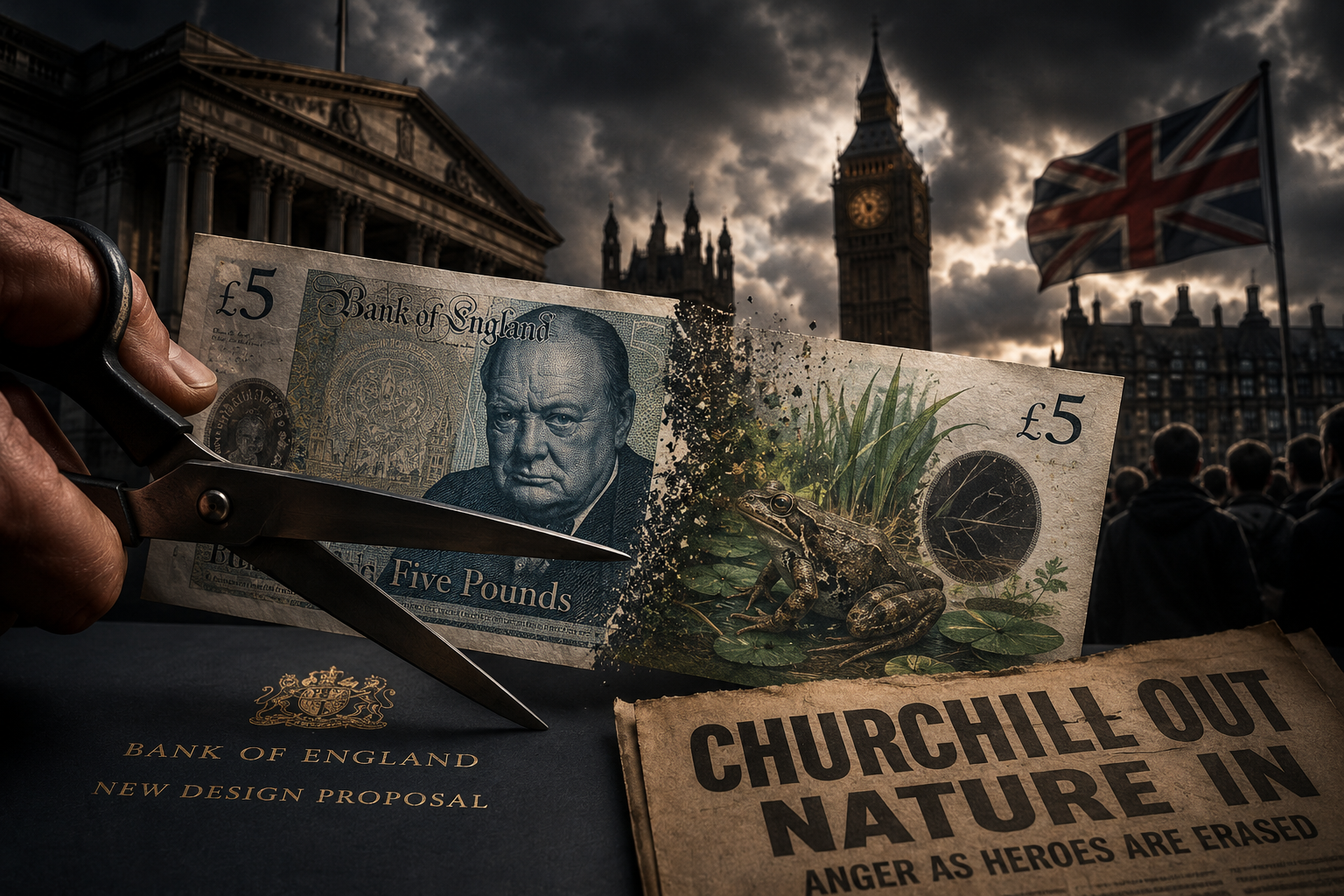
Churchill Defeated Hitler. Now Britain Wants Him Off The £5 Note
The Question Nobody Can Ignore
The Bank of England has announced that future banknotes will move away from historical figures and instead feature British wildlife. On paper, this sounds harmless. New note designs happen periodically, security features evolve, and public consultations influence the final result.
Yet the reaction has been anything but calm. The reason is simple. One of the figures ultimately due to disappear from the £5 note is Winston Churchill, the man many regard as the central political leader of Britain's victory in the Second World War.
For millions of people, this is not merely a design change. It is a statement about what modern Britain chooses to celebrate.
Why Churchill Matters
Churchill is not remembered because he was perfect. He is remembered because Britain faced an existential threat and survived.
His speeches, leadership and refusal to surrender during the darkest days of 1940 helped define one of the most important periods in British history. Whether people agree with every aspect of his legacy is beside the point. His place in the national story is beyond dispute.
That is why critics ask a simple question: if Churchill cannot justify a place on British currency, who can?
The argument becomes even sharper when the proposed replacement is wildlife. To many people, it feels absurd that frogs, puffins or bees could be considered more representative of Britain than the man who led the country through its greatest modern crisis.
America Is Moving More Carefully
The contrast with the United States is striking.
American banknotes remain dominated by presidents, founders and national figures. George Washington, Thomas Jefferson, Abraham Lincoln, Ulysses S. Grant and Benjamin Franklin continue to appear on everyday currency.
Even the long-running debate over replacing Andrew Jackson on the $20 bill has not resulted in the wholesale removal of historical figures from American money.
The broader American instinct remains clear. Currency is viewed as a place to celebrate national history, achievement and identity.
Many critics therefore ask why Britain appears to be moving in the opposite direction.
The Wider Culture War
Officially, the Bank of England says the decision is about wildlife, public consultation and future design priorities.
Critics are unconvinced.
Reports surrounding the consultation included suggestions that some participants viewed historical figures as potentially divisive or elitist. Whether or not that was decisive, the language immediately triggered accusations that modern institutions have become uncomfortable with traditional symbols of national pride.
That criticism does not exist in isolation. It arrives after years of arguments about statues, historical figures, national identity and how Britain's past should be taught and remembered.
For many voters, Churchill's removal therefore looks less like a technical redesign and more like another chapter in a broader cultural trend.
Why Starmer's Britain Faces Questions
The controversy has inevitably become political.
Critics on the right argue that modern Britain increasingly struggles to celebrate its own achievements. They believe institutions are far more comfortable promoting neutral themes than recognising figures who shaped the nation's history.
Supporters of the government's broader cultural direction reject that argument and say Britain can honour its history while also embracing different themes and perspectives.
The result is a debate that goes far beyond currency. It is really a debate about confidence, identity and what Britain wants to project about itself in the twenty-first century.
The Real Issue Is Not The Banknote
Ultimately, the argument is not about paper money.
It is about memory.
Nobody is genuinely worried that Winston Churchill will disappear from history books. The concern is that public institutions increasingly seem reluctant to celebrate the people who built, defended and shaped the country.
The Bank of England sees wildlife.
Critics see symbolism.
And that is why a simple banknote redesign has become one of the most emotionally charged cultural debates in modern Britain.
