“‘Dirty White People’: The Viral Clip That Ignited the “Two-Tier” Policing Debate”
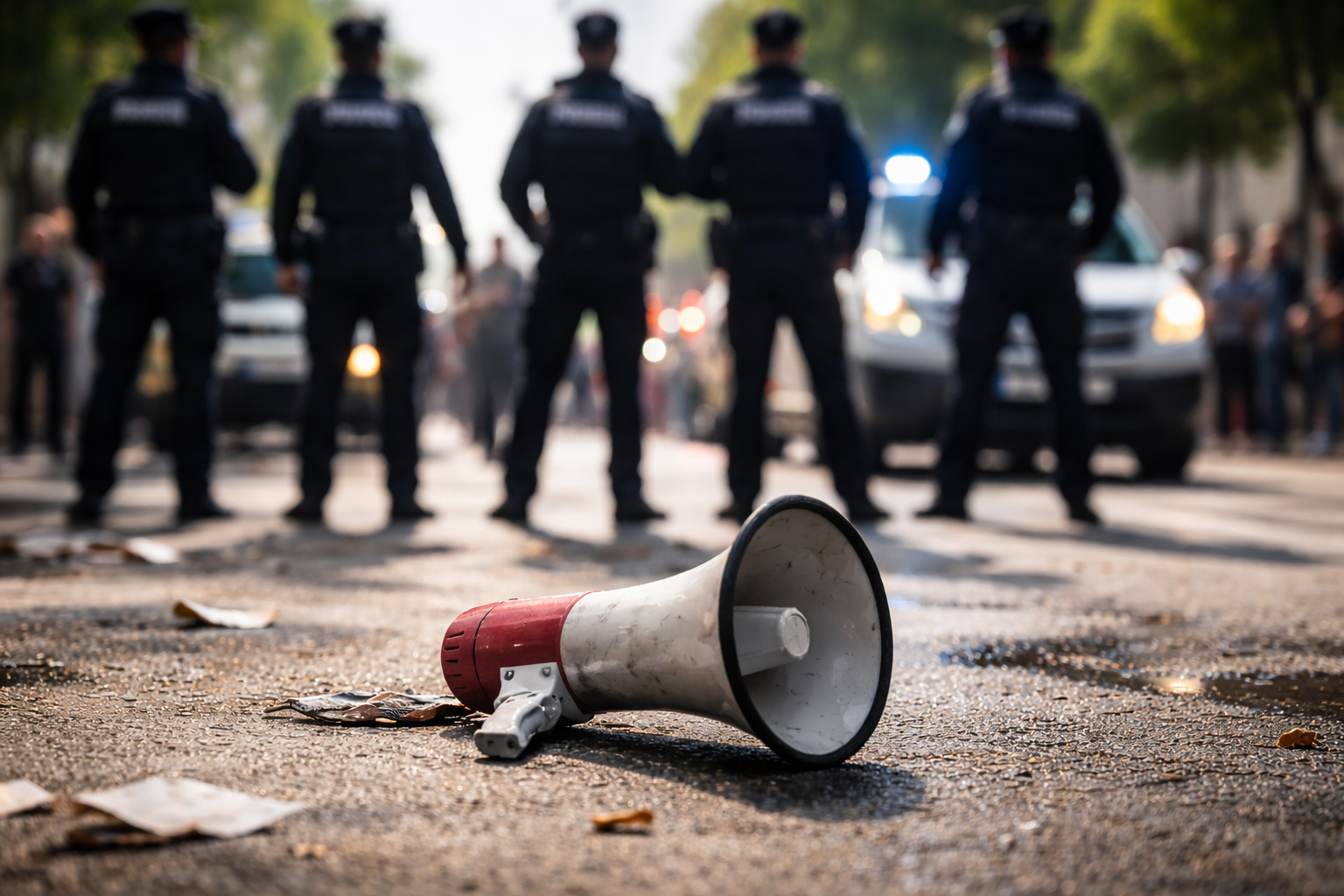
Two-Tier Policing? Free Speech, Hate Speech, and the Law
When Racial Slurs Aren’t Stopped but Insults Are: What the Law Really Says
A short clip, currently trending on social media, intensifies a well-known debate: it depicts a woman shouting anti-white slurs, without any police intervention, and then reacts when someone responds with a non-racist insult. The clip is being framed as proof of “two-tier policing” and a double standard on race.
The basic facts that matter most are also the least settled: where the event happened, what happened immediately before filming, what officers could hear, what was reported to them in real time, and what the full unedited footage shows. That uncertainty is precisely why the clip is powerful: it lets viewers project a full theory of the system onto a few seconds of video.
There is a simpler hinge beneath the outrage: the gap between what people call “hate speech” and what the law actually criminalizes—and how frontline police triage disorder in public spaces. That gap produces the perception of bias even when the underlying rulebook is formally race-neutral.
The story turns on whether the phenomenon is a selective enforcement problem—or a mismatch between public expectations, legal thresholds, and real-world policing constraints.
Key Points
A viral clip is being shared as evidence of “two-tier policing,” but key context is unconfirmed: location, full sequence of events, what officers perceived, and what was reported.
In England and Wales, being racist is not automatically a standalone crime; police action usually depends on specific offenses like public order, harassment, or stirring up racial hatred.
Public order law focuses on threatening/abusive behavior and harassment, alarm, or distress, which can be hard to prove from a short clip without witness statements and officer observations.
The law is race-neutral on paper: anti-white hostility can fall under the same frameworks as any other racial hostility.
Enforcement can still look uneven because protests and crowded scenes are policed through triage, evidence thresholds, and risk management.
The deeper debate is not only about the clip. It is about where free speech ends, where criminal speech begins, and whether policing is consistent across groups.
Background
The phrase “free speech” gets used as a moral shield and a legal claim, but they are not the same thing. Most democracies protect wide expression while carving out exceptions for certain categories: threats, harassment, incitement, and public order offenses. The United States occupies a permissive position on the spectrum. Much of Europe sits closer to the “dignity and public order” end, allowing broader restrictions on hate speech.
In England and Wales, police and prosecutors work with a practical definition of hate crime: a criminal offense that is perceived by the victim or any other person to be motivated by hostility or prejudice toward a protected characteristic. But that definition simply recognizes existing crimes. It sits on top of existing offenses.
That leads to a recurring public confusion: someone can say something vile and racist, and it can still be non-criminal if it does not satisfy the legal elements of an offense. Another person can respond with a crude insult and still be dealt with if their behavior clearly meets a lower threshold offense. That feels backwards, but it is often how the law’s “elements test” works in practice.
Analysis
What “Free Speech” Actually Means in Law, Not Vibes
In the United States, the First Amendment generally protects even hateful expression unless it falls into narrow unprotected categories such as true threats or incitement to imminent lawless action. That is why American debates often treat “hate speech laws” as inherently suspect: “hate speech” is not a distinct legal category there, and the default is protection unless a recognized exception applies.
In England and Wales, freedom of expression exists, but it is qualified. The state can restrict speech where it is prescribed by law and justified for reasons like public safety, prevention of disorder or crime, and protecting the rights of others. In plain terms: you have speech rights, but you do not have a right to harass, threaten, or stir up racial hatred.
So when people ask, “Is this free speech?” the real question is, did the conduct cross into an actual offense?
The UK Legal Buckets That Could Apply to a Street Clip Like This
If the clip happened in England or Wales, several legal routes are commonly discussed in cases involving shouted abuse in public:
Public order offenses cover behavior and words that are threatening or abusive and likely to cause harassment, alarm, or distress. A more serious version requires intent to cause harassment, alarm, or distress and that it actually occurs. These offenses often depend on what was said, how it was said, who was within hearing or sight, whether someone was actually caused distress, and what the officer observed.
There is also the separate category of stirring up racial hatred, which is more serious and carries heavier penalties, but it is not triggered by “generic racism” alone. It turns on specific statutory tests, including intent and the likelihood of stirring up hatred. In practice, it is typically used for more extreme cases than a single street argument, though a crowd context can matter.
Then there is the “hate” overlay: if an underlying offense is proved, hostility based on race can be treated as an aggravating feature, affecting charging decisions and sentencing. The key point is structural: hate is usually an accelerator, not the engine.
Why Officers “Do Nothing” Even When Everyone Hears It
This is where public expectations collide with frontline reality.
In a crowded, loud environment, officers may not hear every word clearly. Even if they do, they may not know whether the target is a specific person, a general statement, or part of a larger confrontation. They may be prioritizing immediate risks—violence, crowd surge, weapons, vulnerable people—over verbal abuse that is offensive but not obviously chargeable at that moment.
Crucially, many public order offenses are evidentially fragile if nobody is willing to provide a statement, if the speaker cannot be identified confidently, or if the audio cannot be proved. That is why policing often looks like this: warnings, dispersal tactics, moving people apart, de-escalation, and only later—if at all—formal action based on statements, identification, and fuller footage.
A short clip erases that complexity. It shows moral certainty and hides procedural uncertainty.
Is Anti-White Racism “More Tolerated,” or Does It Just Look That Way?
Legally, anti-white hostility is not “allowed” as a category. Race is race. The same frameworks can apply.
But perception matters, and several dynamics can make enforcement look uneven:
First, society does not assign the same historical meaning or risk to every slur. That affects how bystanders react, how quickly complaints are made, and how strongly institutions anticipate escalation.
Second, police decision-making is shaped by “harm forecasting.” Officers may intervene faster when they believe a situation is likely to turn violent, generate disorder, or create immediate vulnerability. That is not the same as moral endorsement, but it can produce visible asymmetry.
Third, policing is currently wrapped in a wider argument about how forces record and handle non-crime hate incidents and perceived overreach in speech policing. That broader controversy can make officers more cautious about stepping into borderline speech cases in real time, especially in politically charged settings.
So the hardest truth is this: the system can be formally race-neutral and still generate outcomes that feel inconsistent, because consistency is not only about rules. It is also about evidence, context, and incentives.
What Most Coverage Misses
The key point is straightforward: the legal system penalizes "offenses," not "awful opinions," and public order policing involves triage in the face of uncertainty.
Mechanism: when a situation is loud, crowded, and contested, officers optimize for preventing immediate harm and maintaining order. That pushes them toward warnings and separation first, because those actions are fast and defensible. Arrest or summons for speech-linked offenses often requires clearer evidence: an identifiable speaker, clear words, clear impact, and usually a complainant or corroboration. A clip can demonstrate offensiveness, but it does not automatically establish the legal elements.
Signposts that would confirm these developments in the coming days: release of longer unedited video; a confirmed location and force; confirmation of whether a complaint was recorded; any later identification and enforcement action; and whether the incident is treated as a public order matter, hate-related aggravation, or something else.
What Changes Now
In the short term, the clip will intensify pressure on police forces to explain operational decisions, because public trust is shaped as much by visible fairness as by outcomes. Expect demands for clarification: what officers heard, what they said, and what decision they made in the moment.
Over the next weeks, the bigger shift is political, not procedural. The debate will likely collapse into two camps: “hate speech is policed too much” versus “hate speech is policed too little.” That framing misses the operational middle: police are being asked to enforce contested speech norms in real time while also being criticized for both over-intervention and under-intervention.
The main consequence is a trust hit, because when people believe the rules are applied inconsistently, they stop cooperating, and that makes every public order incident harder to police.
Real-World Impact
A commuter walking past a protest sees officers apparently ignore a racial slur and decides reporting hate is pointless, so they stop engaging with police altogether.
A local business near demonstrations faces repeated disruption. Staff feel unsafe, but they also fear becoming the next viral clip if they intervene.
A schoolteacher watches the debate and struggles to explain to students why some speech is “allowed” even when it is hateful, while other speech triggers consequences.
A community organizer tries to plan an event and finds both sides expect the police to “take their side,” turning basic crowd management into a political test.
The Question Everyone Is Avoiding: What Do We Want Police to Be?
Treating every ugly sentence as a police matter transforms policing into a uniform cultural regulation. If hateful harassment in public is treated as “just speech,” public spaces become hostile to ordinary people who do not want to be targets.
The issue is not whether racism is harmful. It is whether the public wants a model that relies on arrests for speech in public spaces or a model that reserves criminal enforcement for clearer thresholds—threats, harassment, incitement, and disorder—while using other tools for the wider culture war.
Watch for three concrete signposts: confirmation of the incident’s location and legal treatment; whether an investigation follows based on fuller evidence; and whether police policy shifts toward clearer, more consistent real-time thresholds in protest settings. This is one of those moments where a few seconds of video can change how a society thinks about authority, fairness, and the boundaries of speech.
