

Elon Musk Throws His Weight Behind Britain’s Grooming Gangs Reckoning
Survivors testify as Lowe’s crowdfunded inquiry escalates. Musk pledges funding, but UK prosecution rules may decide what happens next.
Rupert Lowe’s Grooming Gangs Inquiry Puts Survivors First—Then Aims at Prosecutions
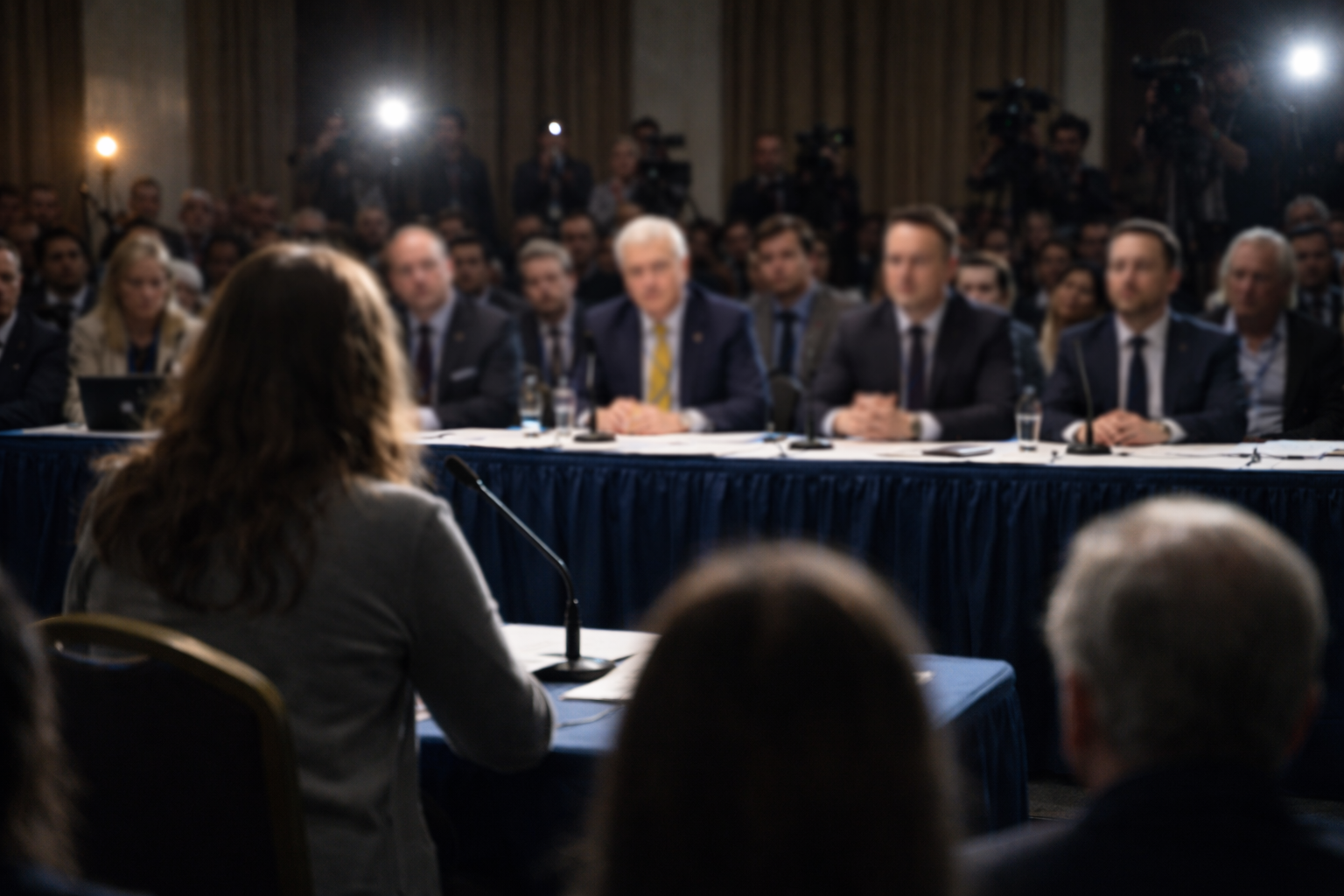
Great Yarmouth MP Rupert Lowe’s crowdfunded “Rape Gang Inquiry” is hearing survivor testimony in central London, positioning itself as a pressure campaign in a space the state has struggled to occupy with credibility. The inquiry’s headline promise is simple: listen to survivors, document institutional failure, and turn the record into legal action—potentially including private prosecutions.
The new accelerant is Elon Musk’s public pledge to help fund legal actions tied to alleged official failures around grooming-gang scandals—an intervention that supercharges attention but also raises practical and political questions about what can actually be prosecuted, by whom, and under what evidentiary rules.
The state's gatekeeping powers over criminal prosecutions still affect even well-funded private cases.
The story turns on whether an unofficial inquiry can convert testimony into admissible, charge-ready cases faster than government processes can stall.
Key Points
Rupert Lowe’s independent, crowdfunded inquiry has begun public hearings in London, foregrounding survivor testimony and alleging continuing institutional blind spots around organized child sexual exploitation.
The inquiry’s funding and architecture are unusual for a criminal-justice-adjacent process: it is not a statutory inquiry and does not have state powers to compel evidence, but it aims to build case files for legal action.
Elon Musk has expressed his desire to contribute to the funding of legal actions against "corrupt officials" suspected of cover-ups or failures, thereby escalating political tensions and enhancing the scrutiny of conflicts, motives, and accountability.
The UK’s legal framework allows private prosecutions, but the Crown Prosecution Service can take over and discontinue a private case if it fails evidential or public-interest tests, limiting how far money alone can push outcomes.
The strategic success of the inquiry is likely to hinge on the discipline of evidence, which includes corroboration, maintaining clean chains of custody, and refining claims to meet criminal standards.
Expect near-term focus to shift from testimony headlines to process: what evidence is collected, how it is verified, and whether any referral packages are credible enough to survive CPS review.
Background
Grooming-gang scandals, which often involve networks exploiting vulnerable children, have become a recurring issue in British politics due to three volatile elements: severe harm, institutional failure, and accusations that discouraged earlier interventions due to fear of being labeled as racist. Public debates repeatedly invoke cities like Rotherham and Rochdale, yet the broader issue extends across multiple jurisdictions and time periods.
Lowe, elected as an MP for Great Yarmouth in 2024 and later sitting as an independent, has linked his project to frustration with what he frames as stalled or inadequate official action. His inquiry is funded by public donations rather than government budgets, and it positions itself as an accountability mechanism aimed at creating a record that can be used in legal and political forums.
Survivor testimony is central to the inquiry’s design. Public clips and posts around the hearings highlight accounts describing grooming patterns, coercion, and alleged failures by police or other authorities to intervene. The inquiry’s stated next phase is not just a report but the pursuit of tangible accountability—potentially including private prosecutions against individuals alleged to have committed crimes and possibly actions aimed at officials accused of serious negligence or wrongdoing.
Analysis
Why This Inquiry Exists Outside the State—and Why That Matters
The inquiry sits outside statutory powers. That is both its selling point and its constraint.
It is a selling point because it signals distrust of official processes and attempts to create a survivor-centered forum that feels less like bureaucratic containment. It is a constraint because without compulsory powers—subpoena-like tools, mandated disclosure, and compelled testimony—an inquiry cannot force reluctant institutions to hand over documents, raw data, or internal decision trails.
That means the inquiry’s output is only as strong as what it can gather lawfully and verify independently. The difference between “harrowing testimony” and “charge-ready case file” is not emotion; it is corroboration.
The Musk Factor: Attention, Leverage, and Immediate Blowback
Musk’s intervention instantly changes attention economics. It boosts reach, concentrates outrage, and signals to supporters that resources exist to pursue litigation. In a crowded media environment, that matters.
But it also triggers immediate blowback: opponents can argue the effort is politicized or externally amplified, and parliamentary critics can frame it as a conflict-of-interest story rather than a safeguarding story. That reframing risks shifting the public argument away from institutional performance and toward personalities, motives, and legitimacy—especially if any funding relationship, direct or indirect, becomes a political weapon.
In practical terms, Musk’s pledge is only useful if it funds the unglamorous parts: evidence review, disclosure discipline, victim safeguarding, counsel with criminal case-building experience, and the slow work of narrowing allegations to what can be proved.
Private Prosecutions: The Promise—and the Hard Ceiling
Private prosecutions are often discussed as a workaround for state inaction. In England and Wales, they can be used, and they can be powerful in specific circumstances—especially where victims believe agencies failed them.
But there is a hard ceiling: the CPS can take over a private prosecution and discontinue it if the case does not meet evidential sufficiency or public-interest standards. That reality turns private prosecutions into a test of legal engineering, not just funding.
This creates an incentive shift. If the inquiry’s leadership wants cases to survive, it must behave like a prosecution team from day one: controlled claims, preserved evidence, careful witness handling, and a disciplined theory of liability. The more the project drifts into broad accusations and sweeping narratives, the easier it becomes for a takeover-and-discontinue decision to look legally inevitable rather than politically controversial.
What Most Coverage Misses
The hinge is that money can buy legal effort, but it cannot buy prosecutorial legitimacy if the evidentiary chain is weak.
The mechanism is straightforward: admissibility, corroboration, and procedure determine the success or failure of criminal cases. A privately assembled file that cannot prove authenticity, continuity, and reliability is vulnerable—especially once state prosecutors assess it against formal charging tests.
Two signs will show if this investigation is shifting from politics to legal action: first, if it begins to create focused referral packages with documents that can be verified; second, if it keeps and publicly shows experts who have strong backgrounds in criminal cases instead of just general advocacy.
Scenarios to Watch: Where This Goes Next
One scenario is convergence: the inquiry’s evidence packages pressure authorities into reopening specific lines of investigation because ignoring them becomes reputationally untenable. A signpost would be targeted responses from police forces or ministers addressing specific factual claims rather than broad statements of concern.
A second scenario is collision: a high-profile attempted private prosecution becomes a test case, and the CPS intervenes. A signpost would be public confirmation of a takeover decision, and the reasoning used—evidence, public interest, or “interests of justice.”
A third scenario is fragmentation: the inquiry produces a report that fuels political debate but fails to generate legally actionable outcomes, either because evidence is incomplete or because the most explosive allegations are too diffuse to prosecute. A signpost would be a widening gap between viral testimony clips and the absence of named, procedurally grounded legal steps.
What Happens Next
In the short term—days to weeks—the inquiry’s impact will be measured less by headlines and more by whether it can build a credible evidentiary pipeline. Survivors are most affected first: their accounts are the moral center of this effort, but public exposure can carry safety and privacy risks if not rigorously managed.
In the longer term—months—the key question is whether any legal actions can survive the state’s procedural filters, because those filters determine whether accountability becomes enforceable rather than symbolic. The main consequence will follow a “because” rule: prosecutions—or the failure to prosecute—will shape trust because criminal law is the one arena where the state either acts decisively or reveals its limits.
Watch for concrete milestones: publication dates for interim findings, clarity on what categories of cases are being prioritized, and whether any formal legal steps are initiated (complaints, referrals, or filed proceedings). If government inquiries remain stalled, unofficial processes will continue to fill the void, but their evaluation will be based on outcomes rather than intent.
Real-World Impact
A local safeguarding worker watches the cycle repeat: risk flags are raised, but paperwork and fear of controversy slow action, so the worker starts documenting everything like it is already going to court.
A parent who has avoided the news for years hears survivor testimony again and decides to push for stricter online-device rules at home—not because of panic, but because grooming often starts with trust-building and secrecy.
Public pressure compels a police team to act immediately, but operational realities dictate that cold cases necessitate specialized units, digital forensics, and time, and a hasty decision could backfire in court.
A survivor considers whether to come forward, weighing justice against the cost of reliving the story in public—and whether the system will actually protect them this time.
The Prosecution Question That Will Decide This Moment
This inquiry is attempting something bold: replacing public frustration with a structured path to accountability. However, it is inevitable that the path will diverge. Either it becomes a disciplined case-building machine that can survive the legal tests the state applies to any prosecution, or it becomes another arena where testimony is heard yet outcomes remain elusive.
If it succeeds, it will not be because it was loud. It will be because it was precise—about evidence, about procedure, and about what can be proved beyond reasonable doubt. The next signposts are straightforward: who takes custody of the evidence, how claims are narrowed, and whether any legal steps are launched that can endure scrutiny. However the story ends, the historical significance is that a vacuum of trust has become a vacuum of governance—and unofficial mechanisms are now trying to do the state’s job.
