GB News Breaks the Silence on Grooming Gangs—and the Establishment Loses Its Mind
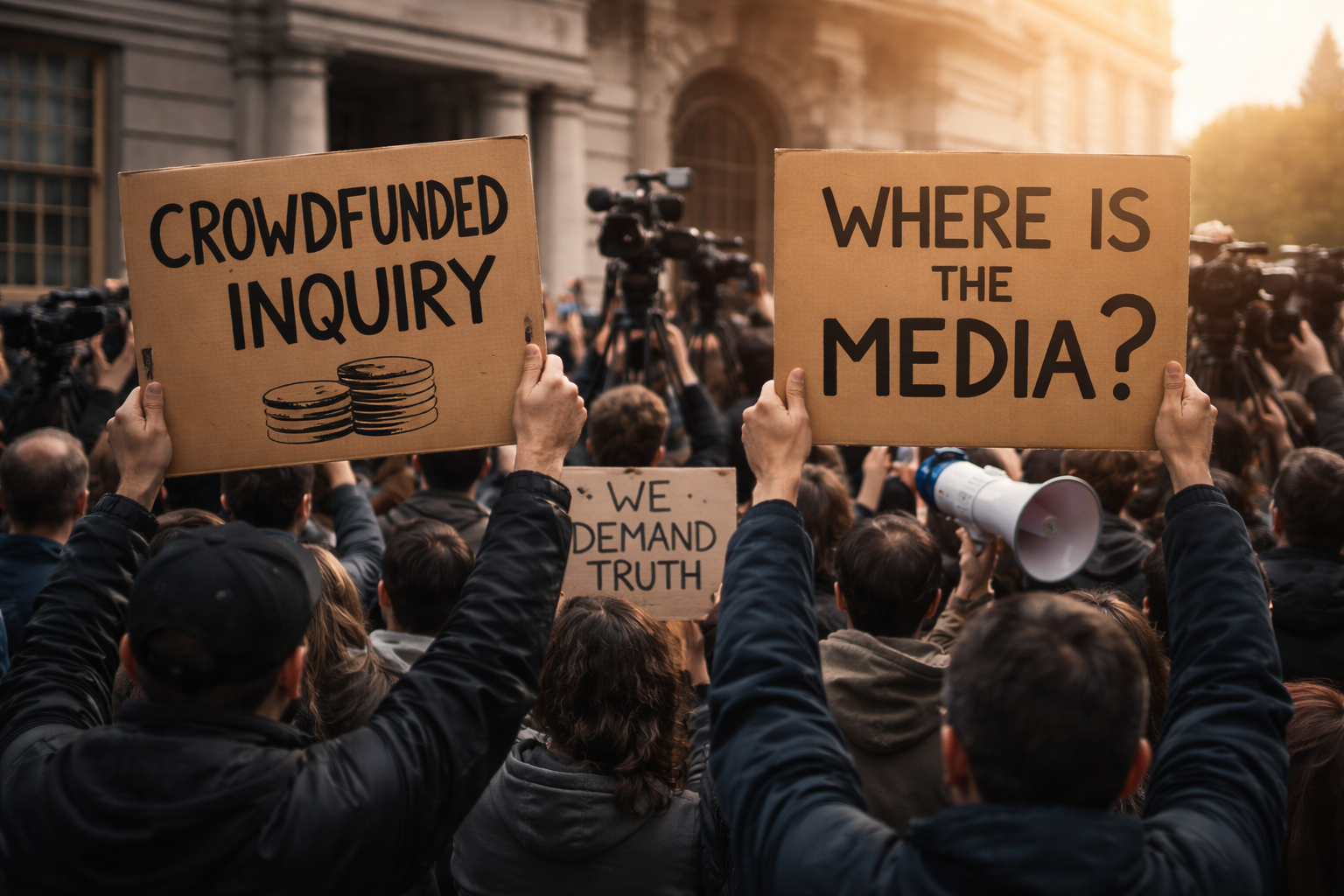
Why Is the UK Media Ignoring a Crowdfunded Public Inquiry?
The Story Britain Wouldn’t Air: How GB News Forced Grooming Gangs Back Into the Open
A clip from GB News presenter Patrick Christys has sparked a wave of backlash and Ofcom complaints after he highlighted testimony given to MP Rupert Lowe’s crowdfunded Rape Gang Inquiry, including the account of survivor Fiona Goddard that some perpetrators “spent Eid inviting families round to rape” young white girls.
Supporters argue that the segment brought survivor testimony to the forefront, something many in Britain's broadcast media have been reluctant to do for years. They also argue that the segment did what many in Britain's broadcast media have been unwilling to do for years: it brought survivor testimony to the forefront and refocused attention on crimes and institutional failures that had previously been minimized, mishandled, or deemed too politically sensitive for open discussion, forcing attention back onto crimes and institutional failures that were repeatedly minimized, mishandled, or treated as too politically combustible to discuss openly.
The controversy is not only about one line. It’s about what gets amplified—and what doesn’t. Because while the loudest argument is “hate speech vs. truth-telling,” the quieter reality is that a two-week inquiry hearing harrowing evidence is being widely discussed online, yet far less consistently treated as a serious, sustained national story by major broadcasters.
One hinge matters: GB News is being punished (socially) for touching a subject many outlets have treated as reputational napalm—even as the inquiry’s very existence is a response to claims that official action has been too slow, too cautious, or too easily derailed.
The story turns on whether Britain can confront grooming gangs and institutional failure in daylight—without turning scrutiny into collective blame or treating survivor testimony as contraband.
Key Points
GB News amplified testimony from Rupert Lowe’s Rape Gang Inquiry, chaired by survivor Sammy Woodhouse, including Fiona Goddard’s account involving Eid.
The inquiry is crowdfunded (Lowe and coverage around it describe totals around £600,000) and is running as a two-week hearing.
Critics say the segment’s framing is inflammatory and risks collective suspicion toward Muslims; supporters say it is reporting the testimony of victims and spotlighting failures that were long ignored.
The dispute is now splitting into two fights: (1) the content itself, and (2) why survivor evidence has struggled to stay in the mainstream news cycle unless it becomes a culture-war flashpoint.
As of the time anchor, there is no clear public confirmation of an Ofcom investigation into this specific clip—though complaint campaigns are active.
The next phase depends on whether the inquiry releases structured outputs (timelines, corroboration paths, case studies) that keep attention on accountability and reform, not just outrage.
Background
Rupert Lowe’s Rape Gang Inquiry is being promoted as an “independent” effort to gather testimony from survivors, campaigners, and others connected to group-based child sexual exploitation scandals. Lowe’s own inquiry site frames it as a response to what he describes as a failure by the political system to act decisively, and reporting around the project notes a large crowdfunded war chest.
The inquiry is chaired by Sammy Woodhouse, a survivor who has long been involved in public advocacy on this issue. Social platforms and sympathetic outlets heavily promote the hearings, circulating widely with clips of testimony.
The story is unfolding against a broader national context where government reviews and audits have repeatedly criticized institutional responses—especially the tendency to misclassify victims, avoid difficult conversations, and fail to collect or use the right data to understand patterns of abuse.
Analysis
What GB News Actually Did: Put the Testimony on Air
The most pro-GB News reading of this segment is straightforward: Christys highlighted testimony being given in a public hearing—testimony that the inquiry’s organizers themselves are urging people to watch.
If the question is “Why say it like that?” the counterpoint is that the phrasing is not a studio invention in a vacuum; it is being presented as a survivor account, delivered in the emotionally stark language survivors often use when describing extreme abuse.
That matters because it shifts the core debate. The honest dispute is not “Did GB News invent a grotesque accusation?” so much as “How should a broadcaster handle testimony that is both newsworthy and socially incendiary, especially when it touches a protected religious group?”
The Coverage Gap: Why This Became a Clip War Instead of a National News Story
Here is the part GB News supporters keep pointing at: a two-week inquiry hearing survivor testimony about grooming gang abuse exists, is public, and is clearly being treated as consequential by its organizers—yet it has not been treated as a sustained lead story across much of the mainstream broadcast.
There has been coverage—international outlets and wires have reported the existence of the crowdfunded inquiry and the two-week hearings.
But the complaint cycle, the backlash cycle, and the “is this hate speech” frame can easily eclipse the underlying question: what did victims say happened, what did institutions fail to do, and what changes now?
In other words, the public is offered a familiar spectacle—outrage, counter-outrage, regulator demands—while the slow, grinding substance (case failures, safeguarding breakdowns, accountability) struggles to stay on screen.
The Hard Line GB News Needs to Hold: Scrutiny Without Collective Blame
Supporting GB News means acknowledging the risk. The risk is real: viewers can hear an “Eid” reference and slide from “specific perpetrators used a holiday” to “Muslims did this.” That jump is exactly how legitimate scrutiny becomes social poison.
The editorial test for GB News is not “avoid offense.” It is: keep the target locked—on identifiable offenders, enablers, and institutional failures—so the story does not drift into the lazy collective suspicion that helps nobody and hurts many.
If GB News wants the strongest defense, it needs discipline. It is discipline: the more rigorously it distinguishes perpetrators from populations, the harder it is for critics to plausibly argue that “reporting testimony” is being used as a vehicle for group stigma.
Ofcom and the Reality of What Complaints Do
The “Ofcom complaints” line is powerful rhetorically because it signals consequences. But Ofcom’s process is not instant moral judgment; it is procedural, case-by-case, and often slow compared with the speed of social media.
GB News has been in Ofcom territory before, and Ofcom publishes updates and investigation notes, but a complaint wave by itself does not equal a sanction—and it does not resolve the underlying question of whether the country is confronting these crimes with adequate seriousness.
What Most Coverage Misses
The hinge is that the grooming gang’s story is now being fought as a media-legitimacy war, not a safeguarding accountability campaign.
The mechanism is brutal: when broadcast outlets steer clear of the substance, those most willing to address it fill the void. Then critics attack the willing outlets for touching it. The result is a loop where the public learns more about “backlash” than about institutional failure modes, and survivors watch the story become a proxy battle rather than a reform engine.
Two signposts will confirm whether this shifts from spectacle to accountability:
The inquiry publishes structured, checkable outputs—not only clips—so the debate can move from vibes to verifiable reform demands.
Political leaders respond with operational commitments (data standards, resourcing, case reviews, and prosecution pathways) rather than moral signaling.
What Changes Now
In the short term, the likeliest outcome is that the backlash becomes the story: complaint counts, outrage statements, and platform fights. That is the easiest narrative for everyone to consume—and the least useful for preventing future victims.
Over the medium term, the key question is whether GB News’s amplification forces a broader press pivot toward the underlying evidence and failures, rather than leaving the subject trapped in a cycle of avoidance punctuated by viral detonations.
The main consequence is predictable because the mechanism is political: when mainstream coverage is sparse, the loudest outlet becomes the de facto agenda-setter, and the country ends up debating the messenger instead of the machinery that allowed abuse to persist.
Real-World Impact
A safeguarding professional in a local authority spends days answering questions about “what was said on TV,” while the real operational problem—how referrals were handled, how risk was assessed, who escalated what—stays buried in bureaucracy.
A survivor sees yet another moment where attention arrives only through controversy, not through sustained national focus on accountability.
Watching the story, a Muslim family fears their community may face suspicion, despite the perpetrators being specific offenders rather than members of a particular faith.
A police unit faces renewed public anger, but without the resources or clarity required to translate it into clean prosecutions.
The Question GB News Forced Back Onto the Table
The country can argue forever about tone. But tone fights are often a substitute for harder work: confronting who failed, how they failed, and what changes now.
Targeting GB News occurs because it tackles a topic that many institutions still struggle with. If the network wants the strongest case, it should keep doing the uncomfortable part—elevating victims and demanding accountability—while refusing the lazy drift into collective suspicion.
The signposts to watch are simple: whether this inquiry produces structured findings that survive scrutiny and whether the rest of the media finally treats grooming gangs as a national accountability story rather than a periodic outrage flare-up.
