

Golders Green Attack Fallout Explodes: Terror Charge, Police Row And UK Security Shift Within Hours
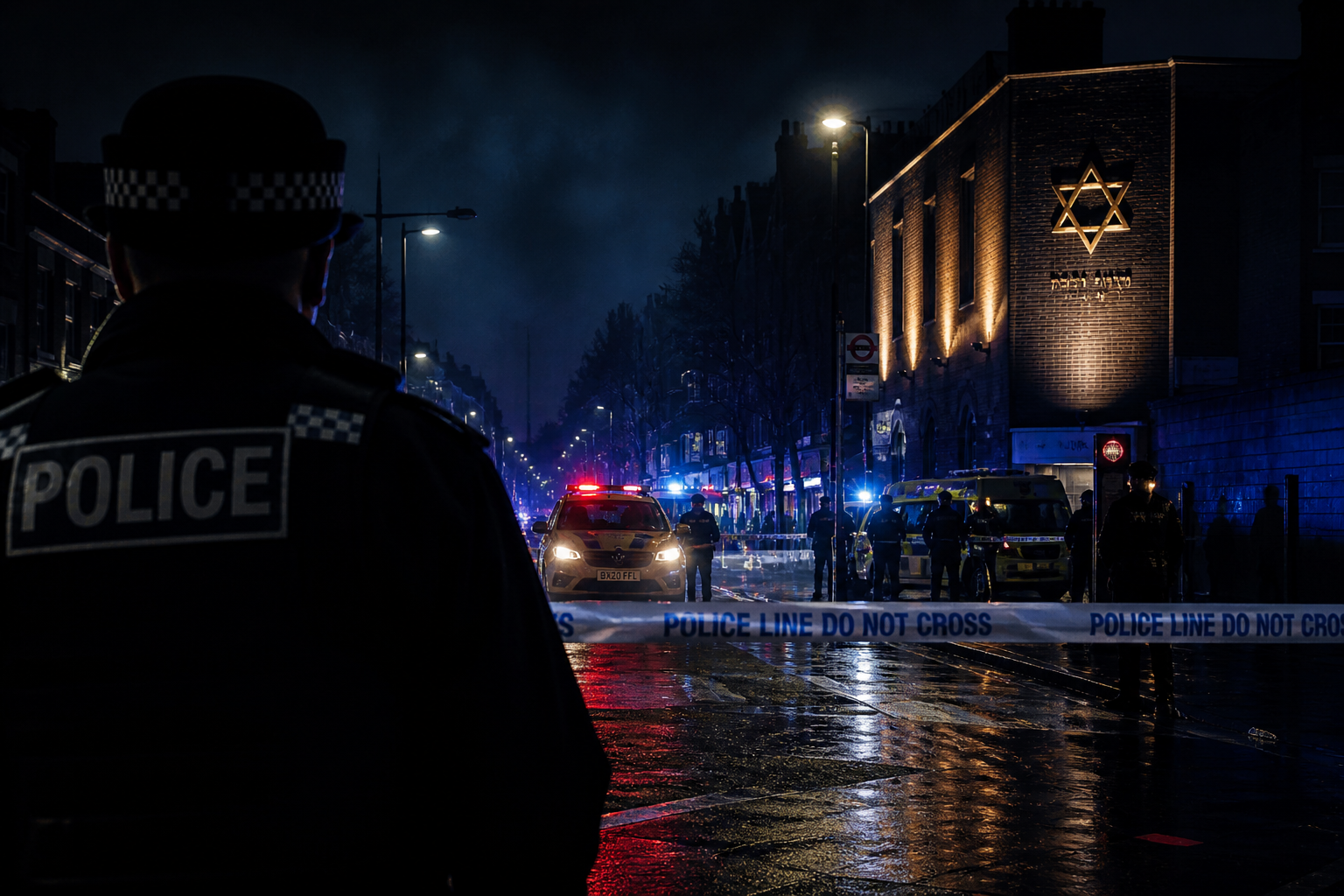
The Golders Green Attack Just Changed UK Security — Here’s What Happened Next
Charged, Condemned, And Escalating: Inside The Fast-Moving Fallout Of The Golders Green Terror Attack
What began as a violent street attack in north London has rapidly evolved into something far larger — a live test of Britain’s security posture, political judgment, and public trust.
Within hours, the incident in Golders Green moved from emergency response to counter-terror investigation. Within days, it triggered a national threat level increase, a criminal charge for attempted murder, and an escalating clash between senior police and political figures.
This is no longer just about what happened on one street. It is about what happens next.
What Happened — And What Is Confirmed
On 29 April 2026, two Jewish men aged 34 and 76 were stabbed in Golders Green, north London.
Both victims were hospitalized; one has since been discharged, the other remains stable.
The attacker was detained at the scene and arrested after being subdued by police.
The incident was formally declared a terrorist attack by counter-terrorism authorities the same day.
The suspect—identified as 45-year-old Essa Suleiman—has now been charged with:
Two counts of attempted murder
Possession of a bladed article
Police have confirmed the that counter-terror units are leading the investigationth intelligence agencies involved.
This case is the baseline reality: a targeted stabbing attack, treated as terrorism, now entering the criminal justice process.
Why The Situation Escalated So Fast
The speed of escalation is the key aspect of the story.
Within 24–48 hours:
The UK terrorism threat level was raised from “substantial” to “severe”” meaning an attack is now considered highly likely.
Government officials publicly described the attack as antisemitic terrorism.
Additional security funding and protection measures for Jewish communities were announced.
This was not a routine criminal incident that gradually evolved.
It was immediately treated as part of a wider threat environment—one already under pressure from:
Rising antisemitic incidents
Broader Islamist and extreme right-wing threats
Concerns about state-linked influence and radicalisation dynamics
The implication is clear: the attack was seen as a signal, not an anomaly.
The Political And Police Clash Now Unfolding
The situation has taken a sharper turn with a public dispute between senior police leadership and political figures.
Metropolitan Police Commissioner Mark Rowley has openly criticized a senior Green Party figure for amplifying claims that officers used excessive force during the suspect’s arrest.
Police position:
Officers believed the suspect could pose further danger, including potential explosive threat
The force used was necessary under high-risk conditions
Public criticism risks undermining officer confidence
Political response:
Calls for scrutiny of police tactics
Acknowledgement that context matters but demands for transparency
This is not a minor disagreement.
It exposes a deeper tension between the following elements:
Operational policing decisions made in seconds
Political and public scrutiny that unfolds over hours and days
And in a terrorism context, that tension becomes far more volatile.
What Most People Will Miss
The most important shift is not the charge.
It is not even the attack itself.
It is the convergence of three systems at once:
1. Security System Activation
Counter-terror police involvement
Intelligence agency coordination
National threat level increase
2. Political System Reaction
Immediate condemnation
Policy and funding responses
Public positioning ahead of scrutiny
3. Narrative And Trust System
Social media amplification of partial footage
Competing interpretations of police behaviour
Rapid formation of public opinion before full facts
These systems are now interacting in real time — and not always cleanly.
That is where instability emerges.
The Deeper Security Context
Authorities have been explicit: the threat level increase was not solely due to this attack but part of a broader trend.
Key context:
Rising targeting of Jewish communities across Europe
Individuals acting alone but influenced by wider ideological ecosystems
Claims of responsibility by external or extremist groups — some credible, some opportunistic
Such behaviour creates a difficult reality:
Even when an attacker may be acting independently, the strategic impact can still be systemic.
That is what elevates incidents like these beyond isolated violence.
What Happens Next
Several parallel processes are now underway:
Legal
Court proceedings against the suspect
Evidence testing under terrorism-related frameworks
Security
Increased patrols and visible policing
Monitoring of upcoming events and protests
Continued intelligence assessment
Political
Pressure on government to act decisively
Debate over policing, extremism, and public safety
Social
Heightened fear within targeted communities
Increased scrutiny of online narratives and misinformation
None of these processes resolve quickly.
The Risk Ahead
The most immediate risk is not just another incident.
It is a misalignment between the following:
Public perception
Political messaging
Operational reality
If those drift apart, three things happen:
Trust erodes
Decision-making becomes politicised
Security responses become harder to execute effectively
And that creates vulnerability — regardless of the original threat.
The Bottom Line
The Golders Green attack is no longer just an incident.
It is now a live stress test of Britain’s ability to
Respond to targeted violence
Protect vulnerable communities
Maintain public trust under pressure
Navigate the politics of security in real time
The charge marks a legal beginning.
But the fallout — political, social, and security — is still unfolding.
And it is moving fast.
