How Under Threat Is the UK? Could the UK Be Invaded? The Reality Behind the Fear
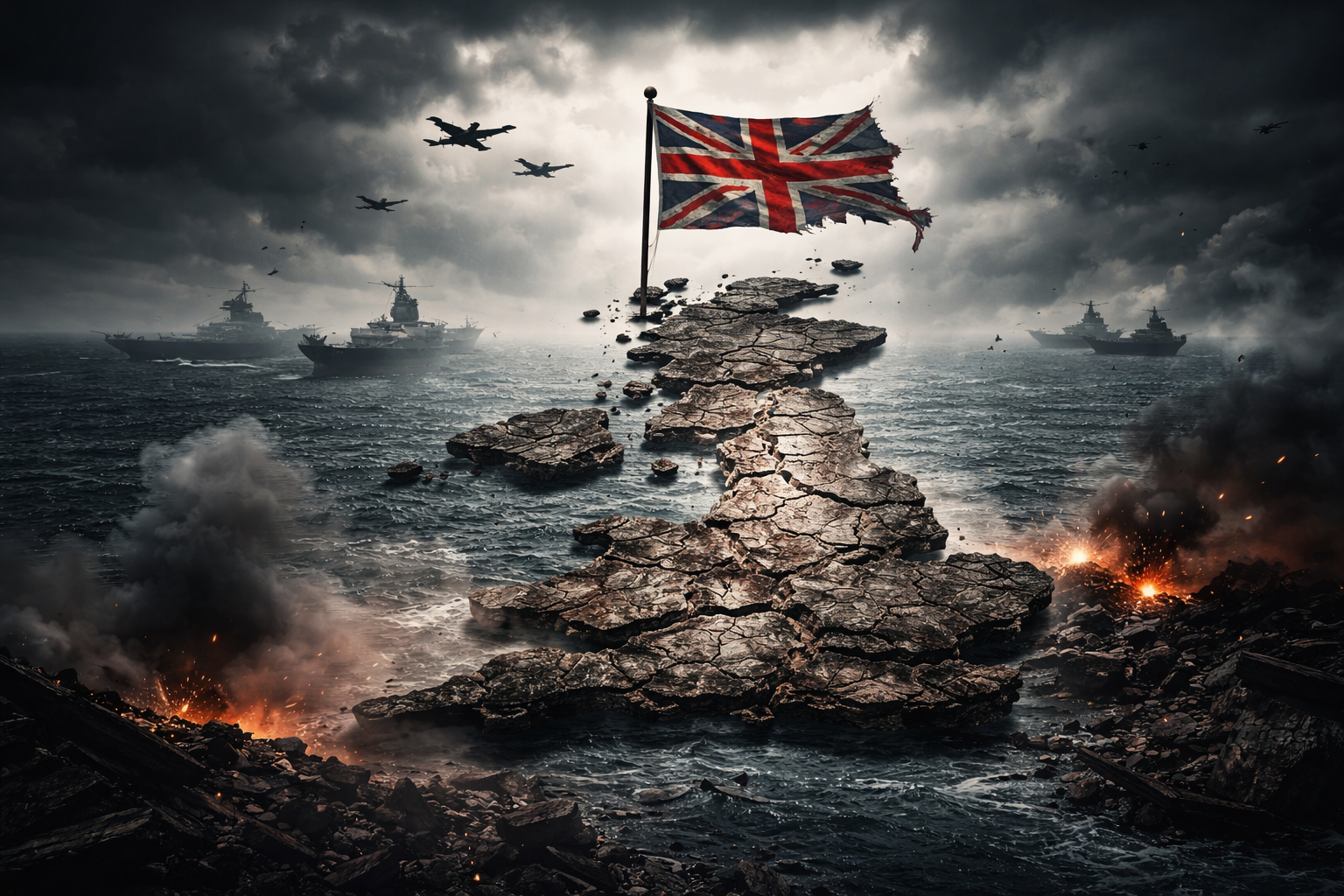
From Global Power to Fragile Force: Britain’s Defence Problem
The Illusion of Strength: How Britain’s Military Power Quietly Eroded
The UK remains a top-tier military power on paper — but shrinking forces, political hesitation, and rising global instability are exposing a dangerous gap between perception and reality.
The Threat Feels Bigger — Because It Is
There is a growing unease in Britain — not because the country is about to be invaded, but because for the first time in decades, the question no longer feels absurd.
That shift matters.
The United Kingdom is still ranked among the world’s top military powers, sitting roughly 8th globally by conventional strength. But that headline hides a more uncomfortable truth: the gap between Britain’s perceived strength and its actual readiness has widened significantly.
Recent events — from Middle East instability to renewed tension with Russia — have exposed something deeper than a temporary weakness.
They have exposed a structural one.
The Reality: Smaller, Thinner, Slower
The modern British military is not collapsing. But it is stretched — and crucially, it lacks mass.
The Army is now around 73,000–74,000 full-time troops—roughly half its Cold War size
The Royal Navy has a far smaller fleet than in the 1990s
The RAF operates around 150 combat aircraft, down from hundreds decades ago
This issue matters less in small wars and far more in large ones.
Modern defense thinking has prioritized precision, technology, and elite capability over sheer numbers. That works—until you face prolonged conflict, multiple theaters, or a peer adversary.
And that is precisely the world we are entering.
Even critics inside the defense establishment now openly warn the UK is “underprepared” and lacks sufficient scale to sustain major conflict.
Could the UK Be Invaded?
Short answer: almost certainly not in the traditional sense.
A full-scale invasion of the UK—beaches, landings, and occupation—is extremely unlikely for three reasons:
Geography: Britain is an island with natural defensive advantages
NATO: Any invasion would trigger collective defence from allies
Nuclear deterrent: The UK remains a nuclear-armed state
This combination makes a conventional invasion prohibitively risky for any adversary.
But that does not mean the UK is safe.
It means the nature of the threat has changed.
The Real Threat: Not Invasion, But Pressure
Modern conflict is no longer about tanks rolling through Dover.
It is about pressure — economic, cyber, strategic, and regional.
The UK’s vulnerabilities sit in three areas:
1. Limited Warfighting Depth
Britain can deploy high-quality forces, but only at a small scale and for short durations without strain.
2. Reliance on Allies
The UK is deeply dependent on NATO, particularly the United States, for large-scale operations.
If that support becomes uncertain — politically or strategically — the UK’s independent capability is limited.
3. Slow Mobilisation
Recent operational delays have highlighted issues in readiness, logistics, and deployment speed.
In modern warfare, speed is often the difference between deterrence and escalation.
Historical Comparison: The Quiet Decline
To understand the present, you need to understand the trajectory.
In the Cold War, Britain maintained the following:
A large standing army
A vast naval fleet
Significant global presence
Defense spending reached over 3% of GDP—and much higher in earlier decades.
Today:
Spending sits around 2.3%–2.5% of GDP
Forces are smaller
Capability is more specialised
This shift was not accidental.
It was the “peace "dividend"—decades of reduced military spending after the Cold War ended.
The problem is simple: the peace dividend assumed a stable world.
That assumption no longer holds.
Global Criticism — Including Trump
Criticism of Britain’s military posture is no longer confined to analysts.
It is now coming from allies.
Recent reporting highlights frustration among partners—including figures like Donald Trump—over European defense spending and readiness.
The underlying message is blunt:
Europe — including the UK — has relied too heavily on American military power.
And that reliance is increasingly questioned.
This is not just rhetoric.
It is a strategic pressure point.
Domestic Criticism: The Starmer Problem
Inside the UK, criticism has sharpened—and become increasingly personalized.
Prime Minister Keir Starmer faces accusations of the following:
“Complacency” on defence
Delayed investment plans
Lack of urgency in preparing for conflict
Even figures within his broader political ecosystem have warned the UK is
Underprepared
Underfunded
Strategically exposed
To be fair, much of the decline predates his leadership.
But perception matters.
And right now, the perception is that the response has been too slow.
What Media Misses
The biggest misunderstanding is this:
Britain is not weak in absolute terms.
It is weak relative to its ambitions.
The UK still has:
Advanced nuclear deterrence
Elite special forces
Cutting-edge intelligence capabilities
But it also maintains global commitments — from NATO leadership to international deployments — that require more capacity than it currently holds.
That mismatch is the real risk.
Not collapse.
Not invasion.
But overstretch.
What Happens Next
Three paths are emerging:
1. Increased Defence Spending
The government has committed to raising defense spending toward 2.5%–3% of GDP.
But there is a significant funding gap—estimated in the tens of billions.
2. Strategic Reprioritisation
The UK may be forced to choose the following:
Fewer global commitments
More focus on European security
Greater reliance on alliances
3. Slow Structural Rebuild
Rebuilding military capacity takes years — not months.
Even with funding, the lag between decision and capability is long.
How This Impacts UK Citizens
For most people, the effects will not be immediate or dramatic.
But they will be real.
Higher taxes or reduced public spending to fund defence
Greater political focus on national security
Increased public messaging around preparedness
Potential involvement in international conflicts
In more extreme scenarios:
Cyber attacks on infrastructure
Economic disruption linked to global instability
Increased military presence domestically
The risk is not sudden war at home.
It is a gradual shift toward a more insecure world.
The Bottom Line
Britain is not on the brink of invasion.
But it is also no longer comfortably secure.
The danger is not dramatic collapse.
It is slow erosion.
A military that is still powerful—but increasingly stretched.
A country that still projects strength but must now prove it.
And a world that is becoming less forgiving of those who cannot.
That is the real story.
And it is only just beginning. Defenseless—But
