

Is Keir Starmer Going To Resign? The Resignation Rumours Now Hanging Over No.10
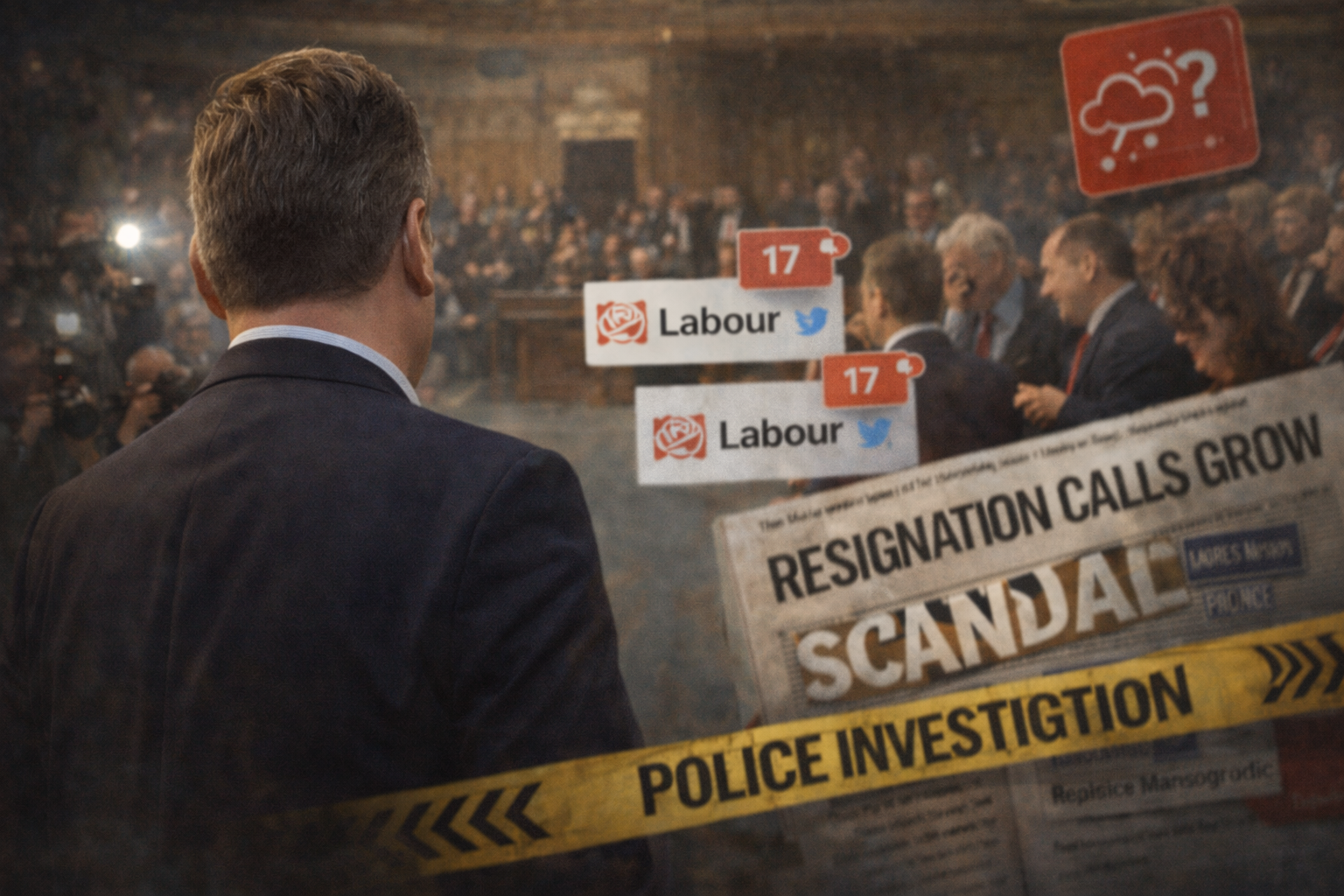
Will Keir Starmer Resign? Signs, Triggers, and What’s Next
Is This the Beginning of the End for Keir Starmer?
There is no confirmed indication that Keir Starmer is preparing to resign. What has changed sharply in the last 24–48 hours is the pressure environment around him: a fast-moving scandal tied to Peter Mandelson, a police investigation, and renewed scrutiny of Starmer’s judgment in appointing him. That combination creates the kind of political weather where resignation talk spreads quickly—but talk is not the same as a trigger.
One thing is clear: if Starmer goes, it will not be because headlines are loud. It will be because parliamentary mechanics and party discipline stop holding.
The story turns on whether Labour MPs conclude Starmer is now an electoral liability bigger than the risk of removing him.
Key Points
No resignation is confirmed or announced as of February 4, 2026; the question is being driven by the scale and speed of the Mandelson-related fallout.
Starmer has issued unusually forceful public language about Mandelson and has backed wider disclosure steps, which signals damage control, not necessarily exit planning.
A resignation is far more likely to be forced by internal Labour arithmetic (a leadership challenge threshold) than by opposition attacks.
Recent polling/favorability snapshots suggest Starmer is personally unpopular, which increases vulnerability if MPs fear local backlash.
The key near-term accelerants are credible procedural findings (police developments, parliamentary committee scrutiny) and MP defections in public, not anonymous briefings.
Background
Resignations at the top of UK politics usually come from one of three pathways: a catastrophic policy failure, a personal wrongdoing scandal, or a slow-motion collapse in party confidence that becomes impossible to deny. Right now, Starmer is caught in the third category’s early stages: a judgment scandal—not an allegation against him of criminal conduct, but a situation that invites voters to ask whether he is careful with power.
The immediate driver is the Peter Mandelson episode: new material in the public domain has intensified scrutiny of Mandelson’s relationship with Jeffrey Epstein and the handling of Mandelson’s appointment. Mandelson has resigned from roles and is under investigation, and Starmer has publicly expressed regret about appointing him and moved to strip him of certain formal positions.
This matters because it collapses the protective barrier leaders rely on: the assumption that controversial appointments were vetted cleanly and defended coherently. Once that barrier breaks, the question becomes less “What did the leader do?” and more “Can the leader still control events?”
Analysis
The Resignation Question Is Really Two Questions
When people ask, “Will he resign?”, they usually mean one of two things.
Firstly, will Starmer opt for a self-initiated resignation to halt the situation? That typically happens when a leader believes they can no longer govern effectively or when they think leaving prevents a worse outcome.
Second: Will Starmer be pushed—a forced exit after MPs decide the cost of keeping him exceeds the cost of replacing him?
As of today, the public signals look closer to containment than surrender: hard-edged condemnation of Mandelson, rapid distancing, and acceptance of further scrutiny. That is the posture of a leader trying to survive, not preparing a farewell.
What Would Count as “Signs” in Westminster Terms
In UK leadership crises, real signs are rarely emotional or rhetorical. They are structural.
The signs that matter tend to be
A visible shift in the parliamentary party: senior MPs who are normally disciplined begin to say, on the record, that the leader’s position is untenable.
A change in the leader’s operational footprint: major policy pledges are paused, reshuffles are delayed, and the government’s agenda shrinks to bare essentials because political capital is depleted.
A procedural trap: a committee process, legal development, or formal disclosure creates a moment where a leader must choose between incompatible options, and whichever option they pick alienates a crucial bloc.
On that standard, what we have now is an intensifying vulnerability, not a decisive sign.
The MPs’ Calculation: Fear of Chaos vs Fear of the Electorate
Labour MPs do not move against a sitting prime minister lightly. They have two competing fears:
Fear of chaos: a leadership contest is disruptive, risks factional warfare, and can look self-indulgent.
Fear of punishment: if MPs believe voters now associate the government with sleaze, incompetence, or weak judgment, they start thinking about their own seats first.
Recent measures of Starmer’s personal favorability provide ammunition to the “punishment” side of that equation. High unfavorables do not automatically topple a leader, but they raise the odds that MPs begin treating bad headlines as a direct threat to their survival.
The Rulebook Reality: How You Actually Remove a Labour Leader
This is where most public commentary gets sloppy.
Starmer does not resign because the opposition demands it. He resigns if his own party stops backing him—or if he anticipates that moment is inevitable.
Under Labour’s current rule environment, a leadership contest can be triggered if a threshold of Labour MPs backs a challenger (commonly discussed as 20% in recent reporting and explainers). The key point is not the exact number; it is the principle: Starmer’s fate is bottlenecked by an internal nomination threshold. If that threshold is not met, the drama stays in the media lane. If it is met, it moves into the institutional lane.
What Most Coverage Misses
The hinge is this: the Mandelson scandal only becomes a Starmer resignation story if it produces a formal, time-bound process that MPs cannot wait out.
The mechanism is procedural. A leader can usually survive “bad vibes” by outlasting the news cycle. What leaders struggle to survive are scheduled moments—committee reviews, mandated disclosures, legal steps—where fresh facts drop at predictable intervals and the story refuses to die. When a process keeps generating new hooks, MPs get no relief, and discipline erodes because every week becomes another vote of confidence by default.
Two signposts to watch in the coming days and weeks:
First, whether parliamentary scrutiny over the appointment and vetting process becomes expansive and adversarial, rather than narrow and technical.
Second, whether Labour MPs start framing this not as “Mandelson misled people” but as “the prime minister’s judgment is now a systemic risk.” The moment that language shifts, leadership talk stops being a hobby and becomes a plan.
What Happens Next
In the short term, the most likely outcome is not resignation but political trench warfare: Starmer keeps condemning Mandelson, supports controlled disclosure, and attempts to shift the government back onto delivery.
The 24–72 hour risk window is about new, confirmable developments that force a tighter narrative: a policing update, a parliamentary escalation, or an admission that contradicts prior government positioning. These are the moments that make MPs ring each other late at night.
The longer-term risk (weeks to months) is slower but more lethal: a steady drip of institutional scrutiny that keeps dragging Starmer into defensive postures. That matters because a governing leader needs forward momentum to look inevitable. They look fragile when they are always reacting.
The key “because” line is simple: a leader loses authority when they cannot control the tempo of events, because MPs start believing the government will spend the whole year answering questions instead of setting direction.
Real-World Impact
A retail investor watching UK markets sees uncertainty widen: when political leadership looks unstable, confidence can wobble, and business decisions get delayed.
A public sector manager planning budgets hesitates because ministerial priorities may change if the leadership picture shifts.
A hiring manager at a mid-sized firm pauses a recruitment plan because they do not know whether policy signals (tax, regulation, procurement) will remain consistent.
A voter trying to make sense of it all experiences the core trust problem: when elites look tangled up in scandal stories, the public starts treating every official explanation as a strategy, not an answer.
The Only Question That Matters Now: Can Starmer Reassert Control?
Starmer does not need to “win the headlines.” He needs to convince MPs that he can keep governing without the party bleeding out in public.
If the scandal arc becomes a contained story about Mandelson alone, resignation talk fades. If it becomes a rolling process that repeatedly re-implicates Starmer’s judgment and pulls more institutions into the drama, the pressure grows from annoying to existential.
Watch for the shift from outrage to arithmetic. When MPs start counting, leaders start leaving.
