

Keir Starmer’s Call for More Muslims in Government Sparks Backlash — And the Timing Is the Real Story
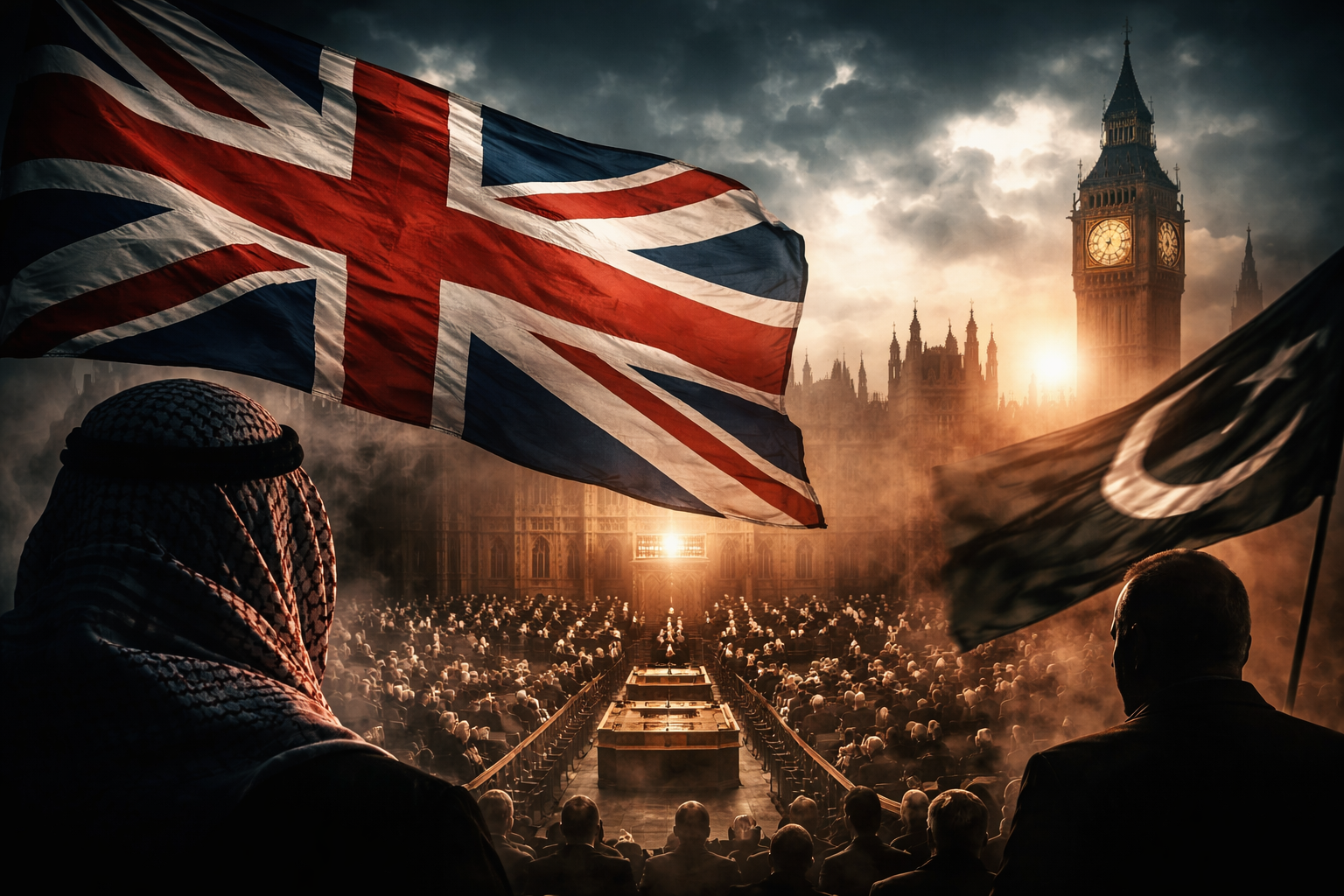
Why Starmer’s Diversity Comments Triggered Immediate Backlash
Is Starmer Misusing Identity Politics at an Inopportune Moment?
UK Prime Minister Keir Starmer has triggered backlash after calling for greater Muslim representation in senior government roles, with the reaction intensifying rapidly across political and online spaces.
On the surface, the argument is straightforward: representation should reflect modern Britain. But the backlash is not just about the statement itself—it is about when it was said and what else is happening politically at the same time.
In recent days, UK politics has already been inflamed by disputes over Muslim public prayer, accusations of Islamophobia, and broader debates about national identity and integration.
That context has turned what might normally be a routine diversity comment into a flashpoint.
The story turns on whether the move was seen as a principled stance or political positioning in a volatile moment.
Key Points
Starmer’s comments align with a long-standing push for diversity in public institutions, including government leadership.Labor
Backlash is driven less by the policy idea itself and more by perceived political timing and motive.
The UK is currently in an active political dispute over Islam, public space, and identity, amplifying reactions.
Critics argue the framing risks appearing selective or divisive rather than inclusive.
Supporters say it counters rising anti-Muslim rhetoric and reflects the UK’s demographics.
The issue could deepen political polarization and feed into culture-war narratives ahead of elections.
Why This Became Controversial So Fast
The UK is already in the middle of a live political argument about Muslims, identity, and public life.
Recent flashpoints include:
Politicians arguing over Muslim prayer events in public spaces
Claims that parties “have a problem with Muslims”
Counter-claims that politicians are “pandering” to specific groups
In that environment, Starmer’s statement didn’t land as a neutral diversity push—it landed as a move inside an ongoing political fight.
That’s why the reaction feels disproportionate. It’s not a standalone comment. It serves as a catalyst for an ongoing conflict.
The Core Criticism: Perception of Identity Politics
The main backlash arguments fall into three buckets:
1. “Why single out one group?”
Critics argue that calling specifically for more Muslim representation, rather than broader merit-based or diversity language, risks:
Appearing preferential
Reinforcing identity-based politics
Creating perceived division
This isn’t new — ’s a long-running tension in UK politics between universalism vs. targeted representation.
2. “This is political positioning””
Timing matters.
The comments come amid:
Rising debate over Islam in public life
Pressure from both left and right
Internal Labour tensions on identity and voter base
So critics interpret the statement as
Appealing to specific voter groups
Responding to recent controversies
Trying to control the narrative
Even if that’s not the intent, perception drives backlash.
3. “It clashes with other policies””
There’s also a credibility issue.
Starmer’s government has simultaneously:
Taken a tougher stance on immigration
Proposed stricter asylum policies
That creates a contradiction critics exploit:
Tough on migration, but emphasizing representation → looks inconsistent
The Supporter Argument: Why It’s Being Defended
Supporters frame it very differently.
They argue:
Muslims are underrepresented in senior leadership roles
Representation improves decision-making and trust
It counters rising anti-Muslim rhetoric in politics
Recent debates—including claims Muslims praying in public are “dominating” space—have heightened concern about discrimination.
From this view, Starmer is
Drawing a line against Islamophobia
Reinforcing inclusivity
Reflecting modern Britain
What Most Coverage Misses
The real issue isn’t the statement — ’s the interaction between three overlapping dynamics:
Active cultural conflict
The UK is currently debating identity, religion, and public space in real time.Electoral pressure
Labour is trying to hold together a coalition ofurban, diverse voters
traditional working-class voters
Those groups don’t always agree on identity politics.
Narrative vacuum on “British identity”
No party has clearly defined what modern British identity is—so every statement gets interpreted through competing lenses.
That combination means
Even a standard diversity comment becomes a symbolic political signal, not just policy.
What This Could Lead To
1. Short-term: Escalation of culture-war politics
Expect:
More rhetoric around religion and identity
Political attacks framing this as “division vs inclusion”
Increased traction for populist narratives
2. Medium-term: Electoral risk for Labour
This is the real strategic risk.
Labour could:
Gain support among minority communities
Lose support among voters sensitive to identity politics
That trade-off is already visible in UK political discourse.
3. Longer-term: Policy framing shift
These changes may push UK politics toward:
More explicit identity-based representation debates
Or a backlash toward “merit-first” framing
Either way, the Overton window (what’s politically acceptable to say) shifts.
The Bigger Question Now
This debate isn’t really about one comment.
It’s about whether UK politics is moving toward:
A model of explicit representation by identity,
orA return to strictly universal, non-group-based framing
Watch for three signals:
Whether Labour doubles down or reframes
How opposition parties weaponize the issue
Whether this becomes a recurring election theme
Because once identity becomes central to political messaging, it rarely disappears quickly.
