

Labour pushed into third: Is this by-election the beginning of the end for Starmer?
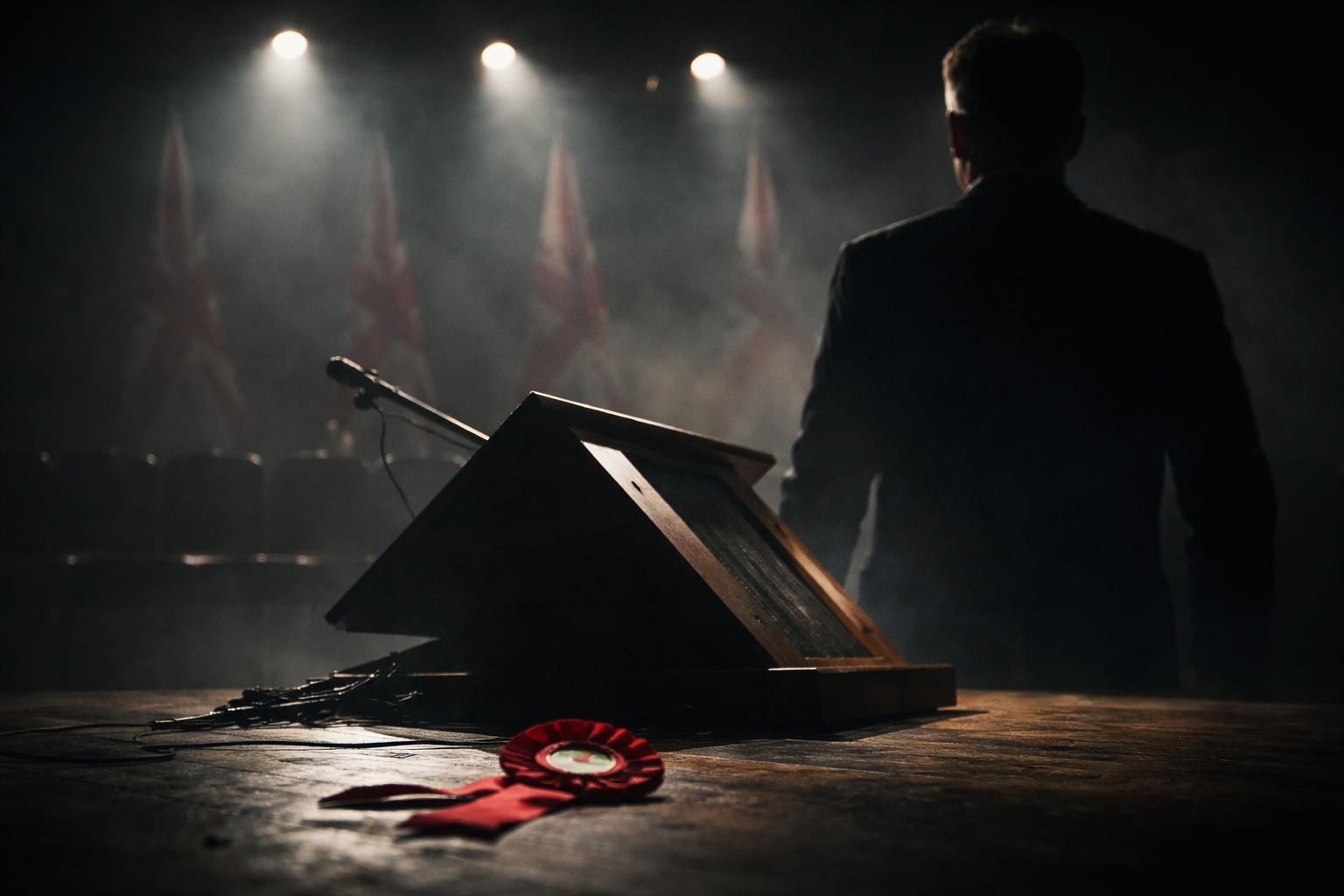
Labour finished third in the Gorton & Denton by-election, a first for a long-time safe seat
What MPs will watch before they move against Starmer
Labour just took a by-election hit that looks bigger than a single negative result because it lands in the one place leaders fear most: a seat that used to behave like home territory.
The Green Party won the Gorton and Denton by-election, with Reform UK second and Labour pushed into third.
That ordering matters. Third place suggests Labour isn’t just leaking votes. It’s being squeezed from both sides.
The story turns on whether Labour MPs conclude the situation is a repeatable pattern, not a one-off protest.
Key Points
The Green Party won the Gorton and Denton by-election, pushing Labour into third place behind Reform UK.
The seat had been a long-time Labour stronghold, so the result lands as a credibility shock for Starmer’s leadership.
The immediate risk is not “a leadership coup tomorrow” but a new internal counting exercise: how many seats become vulnerable if the vote splits this way again?
Betting markets are pricing a 2026 exit as the most likely window for Starmer’s departure, and they already have a clear set of “next leader” favourites.
The next proof point is whether this coalition fracture shows up again in upcoming contests, not just in one unusual by-election.
Gorton and Denton are in Greater Manchester and had been treated as safe Labour territory.
This is why the result should be interpreted as a warning sign, not as typical midterm instability.
The Greens won with 14,980 votes, Reform UK took 10,578, and Labour received 9,364, according to reported results.
The broader context is fragmentation. UK politics has been shifting toward multi-party contests where first-past-the-post can turn vote movement into sudden seat losses, especially when a party is attacked from both ideological directions at once.
Third place is a power problem, not a PR problem
A narrow second is survivable because it still suggests a two-party contest you can win back. Third place is different. It implies Labour was not the main alternative for a large share of voters, which raises doubts about how the party wins in a genuinely three-way race.
For a sitting leader, that creates a credibility hit inside the parliamentary party because MPs don’t just watch national headlines. They watch whether their own seats are becoming mathematically fragile.
The competing explanation fight: protest vote vs coalition fracture vs performance verdict
There are at least three live models for what happened:
One model is a classic by-election protest, in which the government faces punishment and the outcome diminishes.
Two, a coalition fracture on the progressive side, where voters who once held their nose for Labour now have a credible alternative in the Greens.
Three, a “two-front” pattern where Labour loses voters to Reform on one side and the Greens on the other, leaving it stranded in the middle.
The reported result itself does not prove which model is true. But third place makes models two and three harder to dismiss.
The constraint: Labour can’t outbid both left and right at once
The hard limit for Starmer is incentive design. If Labour moves left to compete with the Greens, it risks validating Reform’s attack line and alienating some centrist voters. If it doubles down at the centre, it risks further erosion among voters who want sharper moral positioning and more visible change.
In a two-party world, you can pick a lane and survive. In a fragmented world, choosing one lane can create a vacuum in another.
The hinge: the internal trigger that turns a loss into a leadership crisis
Most leadership endings don’t begin with voters. They begin with MPs concluding two things at the same time:
They might lose their seats, and the leader can’t fix it fast enough.
That’s the hinge here. This by-election becomes “the beginning of the end” only if it convinces enough Labour MPs that the squeeze is structural and spreading.
The measurable signal: the next elections and polling thresholds that matter
Watch for three concrete signals:
First, whether Labour continues to place behind both the Greens and Reform in other contests, not just behind one challenger.
Second, whether the party’s internal mood hardens into an open briefing and organised pressure rather than private anxiety.
Third, whether betting and exchange markets continue to compress toward a 2026 exit window rather than drifting back out.
The consequence: what a shortened Starmer timeline does to policy and party control
If MPs start pricing in an earlier leadership change, policy becomes more cautious, not more ambitious. Ministers avoid big fights. Factions hoard leverage. Potential successors cease their polite waiting and begin laying the foundation.
That shift can happen quietly, then suddenly. The visible symptom is not a resignation speech. It’s drift, hesitation, and an internal contest playing out alongside governing.
What Most Coverage Misses
The hinge is not whether this was an embarrassing night. It’s whether the result reveals a repeatable seat-loss mechanism: Labour being overtaken by a left challenger while also haemorrhaging votes to a right challenger.
That mechanism changes incentives because it makes tactical fixes less effective. You can’t win back one set of voters without potentially increasing losses to the other side, and first-past-the-post converts that two-front squeeze into abrupt seat flips.
Two signposts will confirm it soon: more races where Labour is third behind a left and right challenger, and leadership-market prices that keep tightening around a near-term exit rather than relaxing.
What Happens Next
Starmer's team will try to frame this as a local anomaly, because admitting a structural squeeze invites internal panic.
Over the next few weeks, the real contest is inside Labour, because MPs will decide whether this loss changes their survival odds.
In the coming months, the stakes rise if this pattern repeats, because leadership challenges don’t need unanimous outrage. They need a critical mass of fear.
The decisions to watch are not abstract. They are the next set of contests that will test whether Labour remains the default alternative and whether any visible movement from senior figures occurs only if they believe the timeline has changed.
Real-World Impact
A Labour MP in a marginal seat now has to plan for a three-way fight, which changes field strategy, message discipline, and local spending priorities.
Local activists and councillors can become less willing to defend unpopular compromises, because their personal reputations are on the line sooner than a national leader’s.
Voters who dislike the government but feel disappointed by Labour may see the Greens as a low-risk protest option, which can compound the squeeze.
The leadership timeline question that now defines 2026
Starmer can survive a bad by-election. Leaders do that all the time.
What leaders don’t survive is a new math problem that repeats. Third place is a warning that the contest might no longer be “Labour versus the main opponent” but “Labour versus two opponents with different draws.”
If the squeeze repeats, the internal argument becomes simple: keep the leader and risk losing parliamentary seats, or change the leader and try to reset the coalition government.
Watch the next wave of results and see whether the betting window remains pinned to 2026, as that is where political fear is currently being priced.
