

Nottingham Inquiry Hears Critical Mental Health Assessment Missed Hallucination Questions
Why One Missing Question Now Sits At The Heart Of The Nottingham Inquiry
The Question That Was Never Asked And The Lives That Were Lost
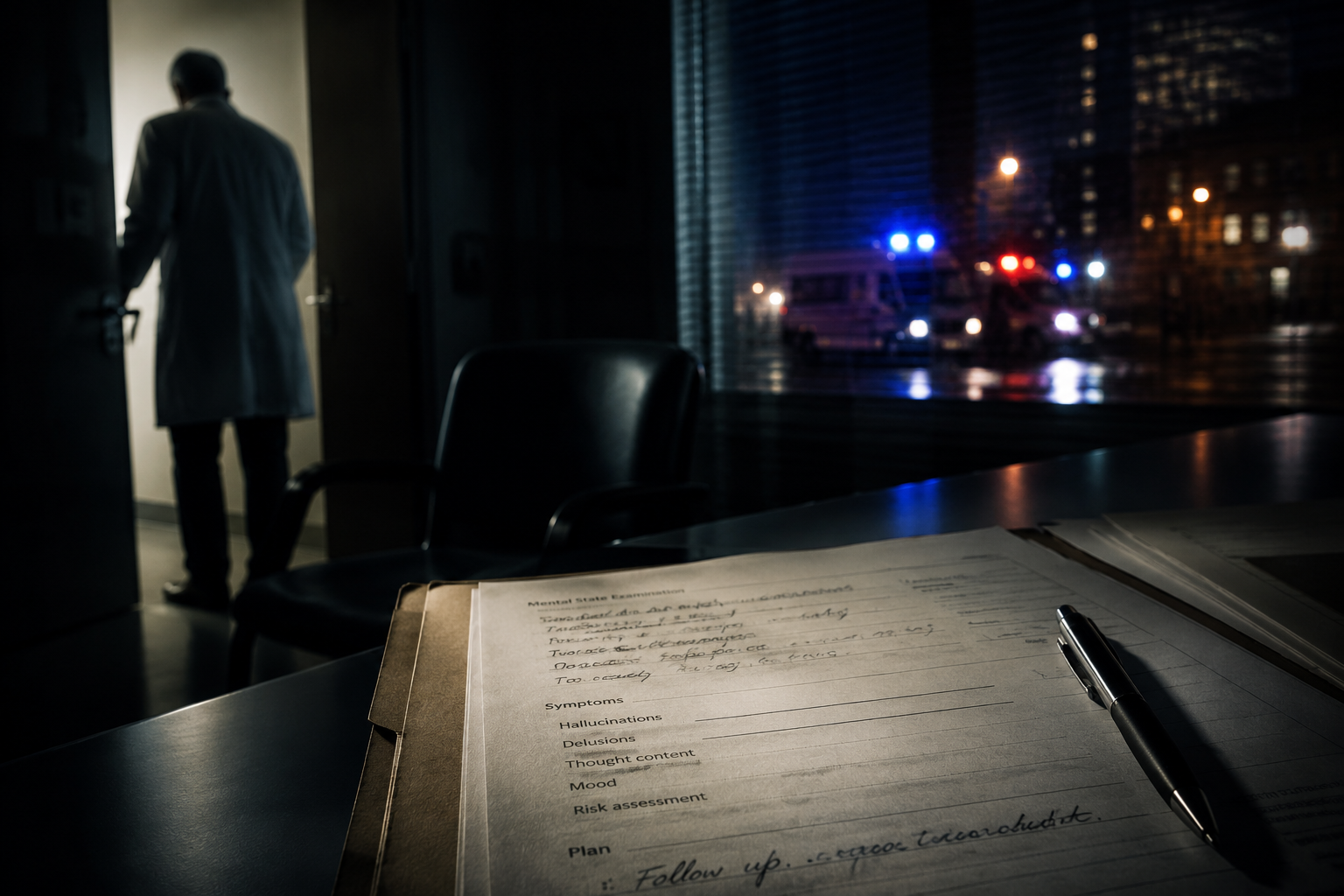
The Nottingham Inquiry has heard evidence that a doctor assessing Valdo Calocane did not directly ask about hallucinations during a mental health assessment. On its own, that may sound like a technical clinical detail. Inside the context of a case that ended with three people dead and three others seriously injured, it has become a question of enormous significance.
The inquiry is not suggesting that one unanswered question alone caused the tragedy. Instead, it is examining whether a wider pattern of missed opportunities, incomplete information, and disconnected decision-making allowed serious risks to go insufficiently understood before the attacks occurred.
Why Hallucinations Matter So Much
For patients experiencing severe psychosis, hallucinations can provide important insight into their mental state. Understanding whether someone is hearing voices, what those voices are saying, and how they are affecting behaviour can help clinicians assess risk and determine appropriate treatment.
That is why the evidence has attracted attention. The issue is not merely whether hallucinations existed. The issue is whether the assessment process obtained enough information to create a complete picture of the risks involved. The inquiry's task is to understand what information was available, what information was missing, and how those gaps may have influenced later decisions.
A Growing Picture Of Missed Opportunities
As evidence has accumulated over months of hearings, a broader picture has emerged. The inquiry has heard repeated concerns about communication failures, medication compliance, risk assessments, family involvement, and coordination between agencies.
Valdo Calocane had a documented history of paranoid schizophrenia and multiple interactions with mental health services. Evidence heard by the inquiry has explored previous hospital admissions, concerns about medication adherence, and warnings expressed by clinicians regarding future risks. The inquiry has also examined whether stronger interventions could have been considered at various points before the attacks.
The result is that the focus has steadily widened beyond individual decisions and towards the system itself.
The Bigger Question Behind The Inquiry
Public inquiries often begin by asking what happened.
Over time, the more difficult question becomes why.
The Nottingham Inquiry is increasingly focused on whether warning signs existed across multiple organisations but were never fully connected together. Evidence has examined interactions involving healthcare providers, police, family members, and other agencies. The challenge facing the inquiry is determining whether those separate pieces of information should have produced a different understanding of risk.
This is why the hallucinations evidence matters. It is not simply about one clinical interview. It sits within a larger examination of how risk is identified, recorded, communicated, and acted upon.
The Families Want More Than Answers
For the families of those killed, the inquiry is not only about accountability. It is about preventing future tragedies.
Evidence from relatives has repeatedly highlighted concerns that information was not shared effectively and that opportunities to intervene were missed. Some family members have argued that public safety considerations should sometimes outweigh strict interpretations of confidentiality when serious risks are present. Others have questioned whether known warning signs received sufficient attention from decision-makers.
These concerns have become central themes running throughout the hearings.
The emotional weight of the inquiry comes from a simple reality: every discussion about procedures, assessments, and policies ultimately leads back to lives that cannot be recovered.
What Happens Next
The inquiry's evidence hearings have now concluded, with closing submissions scheduled later in 2026. The final report is expected to examine what happened, what could have been done differently, and what reforms may be needed to reduce the risk of similar events in the future.
The question about hallucinations may ultimately be judged as one important detail among many. Or it may become symbolic of something larger.
Because the most uncomfortable possibility raised by the Nottingham Inquiry is not that one person failed. It is that multiple systems each possessed fragments of a warning, yet nobody ever assembled the complete picture before it was too late.
