Shamonda Found in Powys and Shropshire: The Risks Explained
How Dangerous Is Shamonda Virus? Britain's First Livestock Detections Explained
Detections in England and Wales raise questions about livestock health, while authorities assess the risk to the general public as very low.
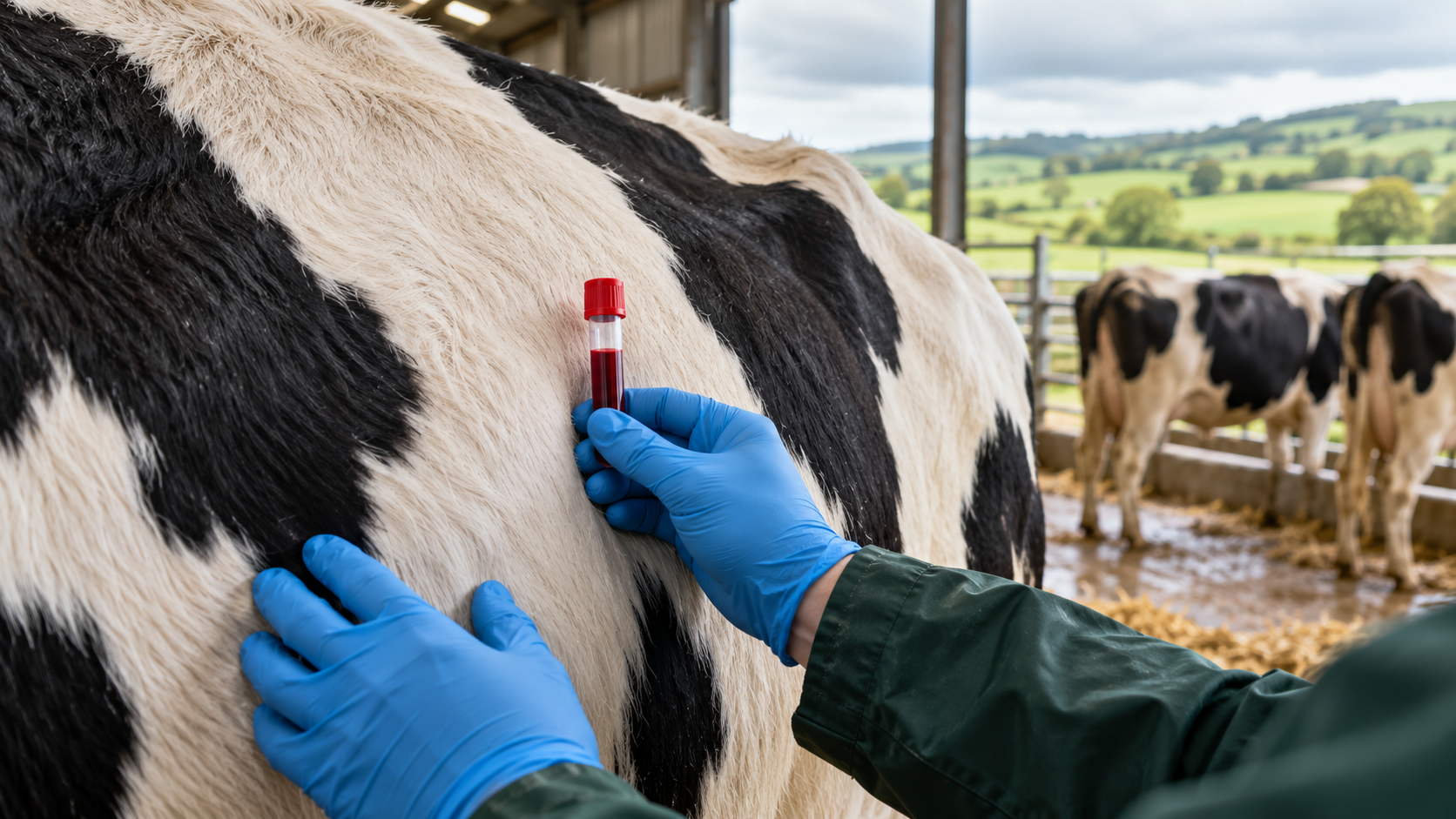
Shamonda virus has been detected in livestock in Great Britain for the first time, with cattle testing positive at dairy farms in Powys, Wales, and Shropshire, England. The Animal and Plant Health Agency announced the findings on 2 November 2026, following detections in October.
The immediate concern is animal health. The announcement does not establish a national livestock crisis, and the current assessment places the risk to the general population at very low. The Food Standards Agency says there is no evidence that Shamonda poses a food safety risk.
For farmers, the harder question is what infection could mean for herd performance and future births. Answering that requires more than counting the first positive farms: it requires understanding how many animals are affected, how severely, and what happens afterwards.
What Has Been Confirmed in Great Britain?
Samples from the two farms were tested at APHA laboratories in Weybridge. The announcement identifies the locations but does not provide a national estimate of infected animals, a transmission chain between the holdings or a quantified economic loss.
Those omissions set the boundary of the story. Two confirmed premises establish presence. They cannot, by themselves, tell us whether infection is tightly localised or has gone unrecognised elsewhere.
There is also an important geographical distinction. APHA had already detected Shamonda in cattle in Jersey in August, announcing that finding on 24 September. Jersey is in the British Isles but is not part of Great Britain. The October detections therefore represent a separate milestone rather than a contradiction of the earlier announcement.
What Is Shamonda Virus?
Shamonda belongs to a group of viruses that includes Schmallenberg. The World Health Organization traces its first isolation to cattle in Nigeria in 1965, with later reports in Africa and Japan. European detection began in June 2026, including cattle in southern Germany and Switzerland.
Its name is therefore older than the current European episode. Calling it a newly discovered virus without qualification would confuse a new geographical development with the discovery of the pathogen itself.
Scientists are still characterising the European variants. That matters because historical knowledge provides a starting point, while the behaviour of the viruses now circulating must be assessed using current observations.
How Does Shamonda Spread?
Transmission is thought to occur mainly through infected Culicoides biting midges. These small insects provide the route by which infection can move between animals. WHO says further research is needed to establish precisely which arthropod species are involved.
Direct transmission between animals is not known to occur, apart from transmission during pregnancy from an infected mother to her developing offspring.
That distinction changes the questions investigators ask. Evidence about insect exposure and infection during pregnancy has a different meaning from evidence of animals infecting each other through ordinary contact. The British announcement does not establish exactly how the two farms became infected, so a specific route into either holding should not be presented as settled.
What Symptoms Can Cattle Develop?
APHA's September veterinary alert described fever, diarrhoea, lethargy, falling milk production and mild respiratory signs in affected cattle. It also identified possible abortions and congenital defects, drawing a comparison with Schmallenberg.
These signs do not provide a diagnosis on their own. A drop in milk yield is a reason to investigate an animal's health, not proof that Shamonda is responsible. Laboratory evidence matters because different diseases can produce overlapping presentations.
The September alert also recorded detections in sheep, goats, an alpaca and horses with neurological disease. That wider species range helps explain why veterinary awareness extends beyond dairy cattle. It does not establish that every infected species experiences the same illness or level of harm.
APHA's earlier Jersey statement highlighted another diagnostic complication: some neurological signs in horses can resemble notifiable diseases, including West Nile fever. A possible Shamonda explanation must not displace investigation of other serious causes.
Why Pregnancy Outcomes Could Matter Later
The World Organisation for Animal Health reports reproductive disorders and foetal malformations associated with European infections, while stressing that the full effects on foetal development remain uncertain.
This creates a practical gap between recognising infection and understanding its consequences. An assessment focused only on how adult cattle appear today could miss outcomes that become apparent later in pregnancy or at birth.
The economic implication is conditional but straightforward. If infection reduces saleable milk or disrupts reproduction, a farm could face losses even without widespread adult deaths. The available British announcement does not quantify either outcome, so national cost estimates would be premature.
Useful follow-up would connect confirmed infections with subsequent outcomes and compare them with the farm's usual experience. An isolated abnormal birth cannot establish the cause of every reproductive problem in a herd.
What Does the Human Case Mean?
France reported the first documented human disease associated with Shamonda in October. WHO describes a patient who was already seriously ill and developed additional neurological symptoms considered linked to the virus.
The World Organisation for Animal Health says investigation is needed to understand how the severely immunocompromised patient became infected and whether the infection caused or contributed to their death.
That case changes what can responsibly be said about human infection. An absolute statement that Shamonda cannot affect people is no longer defensible. Equally, one exceptional case does not establish routine transmission to humans or sustained spread between people.
For readers, the useful distinction is between recognising a possible hazard and establishing how frequently it produces harm. The patient's circumstances matter; they cannot simply be extrapolated to everyone living near cattle.
What Should Farmers Do Now?
APHA advises livestock keepers with concerns to contact their private vet and seek early care based on clinical signs. Shamonda is not currently a notifiable or reportable disease, and the agency says the evidence does not warrant additional disease-control measures at present.
There is no commercially available Shamonda vaccine. The World Organisation for Animal Health identifies reducing exposure to biting midges, including suitable physical barriers, as a possible risk-reduction approach. Measures should be discussed with the farm's vet rather than treated as a guarantee against infection.
The absence of a compulsory response does not make observations unimportant. Recording when illness begins, which animals are affected and how production changes can make a veterinary investigation more informative.
The Evidence That Would Change the Picture
Three developments would substantially improve the assessment: a clearer distribution of confirmed infection, reliable measurements of illness and production loss, and follow-up of pregnancies in affected herds.
More positive tests alone would need careful interpretation. They could reflect wider transmission, more intensive investigation, or both. Conversely, limited reporting would not establish that every untested herd was unaffected.
The next meaningful update should therefore explain what additional detections reveal about disease, rather than simply add another location to a map. For farmers deciding how to respond, the severity and pattern of harm will matter as much as the virus's expanding list of addresses.
Sources
Animal and Plant Health Agency — Shamonda Virus Detected in Livestock in Great Britain for First Time — October detections, locations, current response and public-health and food-safety assessments, announced 2 November 2026.
World Organisation for Animal Health — Shamonda Virus — European variants, reproductive effects, uncertainties, vaccine availability and vector precautions.
World Health Organization — Shamonda Virus — Historical distribution, transmission and the reported human case.
Animal and Plant Health Agency — Emerging Shamonda Virus Detected in Jersey — Earlier regional detection and the importance of investigating overlapping clinical signs.
Animal and Plant Health Agency — 4 September 2026: Novel Shamonda-like Virus Identified in Livestock and Horses in Western Europe — Earlier veterinary warning and reported animal signs. Its statements about absence in Great Britain and human transmission predate the subsequent findings.
Next Reads
Prions Explained: How Misfolded Proteins Can Cause Disease — A different biological agent illustrates why animal disease, exposure routes and human risk require separate assessment.
Britain Calls Emergency Heatwave Meeting As Drought Pushes The Country Towards Its Limits — Broader reporting on pressures facing British farms and food production.
Could Scientists Accidentally Create an Organism They Cannot Contain? — A separate exploration of biological containment and surveillance; not evidence of a laboratory origin for Shamonda.
