

Shots Fired Into Crowd As London Police Launch Urgent Manhunt
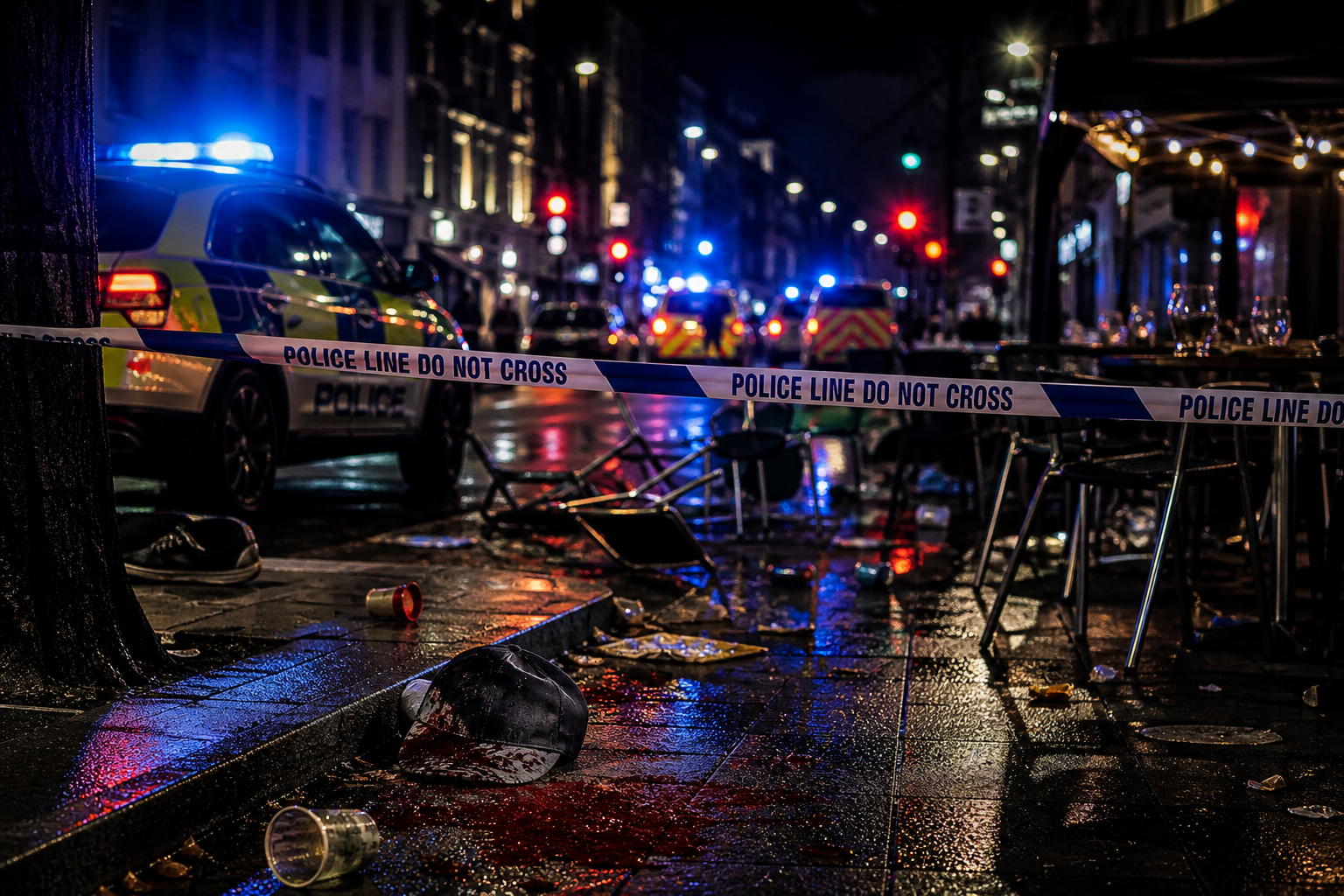
The Night London Erupted: Inside The Shooting That Left Four Hospitalised
Four Shot In London As Armed Attackers Flee—Police Probe Links To Second Brutal Incident
What began as a normal gathering in South London ended in panic, sirens, and a city once again confronting the reality of sudden, unpredictable violence.
In the early hours of the morning, an indiscriminate attack shot multiple people; according to police witnesses reported scenes of confusion as gunfire erupted, sending people running for cover. By the time emergency services arrived, four individuals had sustained wounds and rushed to the hospital—one in a life-threatening condition.
No arrests have been made.
And that is where the real tension begins. police,
What Happened — And What We Know So Far
The shooting took place in Brixton, South London, shortly after 1am, when shots were fired from a moving vehicle into a group of people who were gathered outdoors.
Authorities confirmed:
Four victims sustained gunshot wounds
One remains in critical condition
Others suffered less severe injuries
The attackers fled the scene immediately
Emergency services, including specialist trauma teams, responded rapidly. Armed police and forensic teams secured the area, while investigators began combing for evidence and CCTV footage.
Police have described the attack as “indiscriminate violence,” a phrase that carries weight. It suggests this was not necessarily a targeted, precise act—but something broader, more chaotic, and potentially more dangerous.
A Second Incident Raises The Stakes
What elevates the situation from a single violent episode to something more concerning is what happened next.
Within a short distance and timeframe, a separate stabbing left another man fighting for his life.
Police are now actively investigating whether the two incidents are linked.
At this stage, that link is not confirmed. But the possibility matters.
Because if these events are connected, the story shifts from isolated violence to coordinated or escalating activity — something that changes both the policing response and the public risk profile.
Why This Matters Now
London is not unfamiliar with violent incidents. But what stands out here is the combination of factors:
A drive-by shooting into a public gathering
Multiple victims of different ages
A potential second violent attack nearby
No suspects in custody
That combination creates a specific kind of unease—not just about crime, but about unpredictability.
This incident was not a dispute behind closed doors. It happened in a public space, in a social setting, where people would reasonably expect safety.
And that is what changes perception.
When violence appears random, it feels closer.
The Pattern Behind The Headlines
This incident does not exist in isolation. It fits into a broader pattern of urban violence that often follows similar characteristics:
Quick execution
Use of vehicles to approach and escape
Limited immediate identification of suspects
Heavy reliance on CCTV and public information
The method matters.
Drive-by shootings are not the most common form of violence in the UK, but when they occur, they signal a shift toward mobility, anonymity, and speed. The attacker controls the moment — and disappears before a response can form.
That creates a gap.
There is a gap between the act and accountability.
What Most People Miss
The instinct after incidents like these is to focus on the numbers: how many injured, how many arrested, how serious the wounds are.
But the deeper signal is behavioral.
This kind of attack shows a willingness to act in open environments, with multiple potential victims, and minimal concern for collateral harm.
That is what law enforcement will be analyzing behind the scenes.
Not just who did it, but what it says about how violence is being carried out.
The Police Response—And Its Limits
The Metropolitan Police have launched a full investigation and are appealing for witnesses, footage, and information. Authorities expect increased patrols in the area as they put reassurance measures in place.
But the early stage of any manhunt always remains the same:
Information gap.
Until suspects are identified, the situation remains unresolved—and public messaging becomes a balance between reassurance and realism.
The truth is simple: until arrests are made, the threat is not fully contained.
The Human Reality Behind The Story
It is easy to reduce incidents like this to headlines.
But behind the reporting are individuals who were simply in the wrong place at the wrong time—people who went out expecting a normal evening and ended up in the hospital.
Witnesses described fear, confusion, and people running for safety.
That moment—when normal life fractures—is what defines these events far more than the statistics that follow.
What Happens Next
In the coming days, several things will determine how this story develops:
Whether suspects are identified and arrested
Whether a connection to the stabbing is confirmed
Whether further incidents occur in the same area
What motive, if any, emerges
Each of those shifts the narrative.
For now, the situation remains active.
The Bottom Line
This was not just another isolated crime.
It was a public, fast-moving act of violence with multiple victims, unanswered questions, and a suspect or suspects still at large.
That combination matters — because it changes how safe people feel in spaces that are supposed to be ordinary.
And until there are answers, that feeling does not go away.—because
