

Starmer Calls Tariffs on Allies “Completely Wrong” as Greenland Dispute Turns Into a Trade Threat
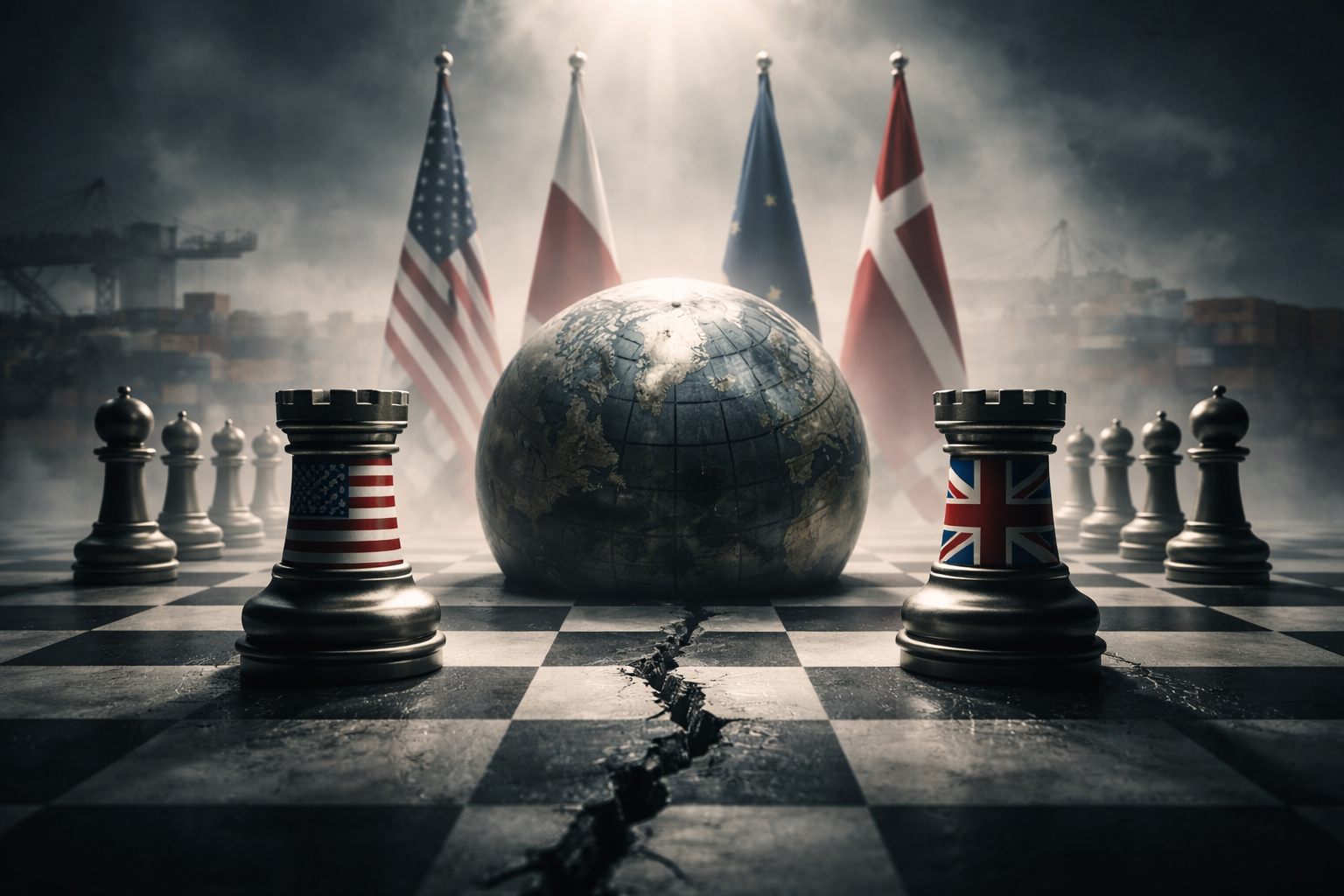
Starmer calls tariffs on allies “completely wrong” as Greenland tensions spill into trade threats. What happens next—and what to watch now.
UK Prime Minister Keir Starmer has sharpened Britain’s public line after U.S. tariff threats linked to Greenland, calling tariffs against allies “completely wrong” and warning that a trade war serves nobody.
This is not just a spicy soundbite. It is a deliberate reframing: the UK is treating tariff threats inside an alliance as a category error—a security disagreement being weaponized through commerce. That matters because it changes what “staying close to Washington” can look like in practice, and it sets expectations for how Europe might respond if escalation continues.
The immediate question is whether the response stays rhetorical—phone calls, statements, reassurance—or becomes procedural: tariff schedules, retaliation options, WTO-style legal posture, and sector-by-sector lobbying pressure.
The story turns on whether Washington uses tariffs as a negotiating prod that can be walked back or as a new baseline tool for alliance discipline.
Key Points
Starmer’s language is now explicit: he is not just urging calm; he is rejecting the premise of tariffs used against allies as a way to manage alliance disputes.
The Greenland angle heightens the sensitivity of this situation by linking sovereignty and security to trade penalties, thereby placing NATO cohesion at risk.
The UK is demonstrating its commitment to "relationship-first" tactics, prioritizing dialogue over retaliation, while maintaining a firm stance on principle.
Europe’s spillover is immediate: even the threat of tariffs can move markets, chill investment decisions, and trigger preemptive supply-chain adjustments.
If escalation continues, the next steps will be visible in the process: tariff notices, implementation dates, exemptions, and whether European capitals coordinate or splinter.
The practical risk is not just higher prices; it is a shift toward transactional alliances, where economic tools become routine leverage inside the bloc.
Background
Greenland is a self-governing territory within the Kingdom of Denmark, and it sits at the intersection of Arctic logistics, surveillance, basing access, and great-power competition. That geography makes it strategically valuable, which is why it periodically becomes a political magnet far beyond its population size.
People have publicly linked U.S. tariff threats to the Greenland dispute in recent days. The U.S. has floated broad tariffs on a set of European countries, with an implementation window discussed for February, creating an unusually tight countdown for diplomacy.
The significance of Starmer's intervention lies in Britain's attempt to balance two competing realities:
the UK’s security and intelligence relationship with the U.S. is foundational, and
London frames tariffs targeting allies as both economically self-defeating and strategically damaging.
Analysis
The UK’s Move: “Trade War” Framing as a Constraint, Not a Comment
Starmer’s “trade war is in no one’s interest” line does more than urge calm. It tries to bind the space of acceptable escalation. Once you publicly label a spiral as a trade war, you invite markets and businesses to behave as if friction is coming—often before policy is final.
That is why the UK is likely to keep emphasizing dialogue while quietly preparing options. This is not due to a desire for confrontation, but rather because effective diplomacy typically necessitates a strategic approach.
Watch for whether UK messaging starts to include operational phrases—“contingency planning,” “engagement with affected sectors,” “proportionate response”—because those are the bridge between talk and action.
Europe’s Problem: Coordination Is the Asset, Fragmentation Is the Vulnerability
If the U.S. targets multiple European countries, the strongest European response is unity—shared posture, aligned exemption strategy, and consistent public messaging.
But unity is also challenging. Different countries have different exposure to U.S. markets, and domestic politics can reward “standing firm” or “cutting a deal” depending on the government.
If Europe splinters, tariff threats become more effective. If Europe coordinates, tariff threats become costlier and harder to sustain.
The Greenland Link Changes the Incentives
Negotiations can become technical and compartmentalized when tariffs are associated with classic trade disputes. Tying tariffs to sovereignty and security makes compromise politically costly.
That matters for Denmark, but also for the UK and EU leaders who do not want a precedent where alliance disputes get resolved through economic punishment. Setting that precedent means a shadow tariff will accompany every future disagreement.
Markets and Sectors: Where the Sensitivity Will Show Up First
Even before any tariff takes effect, companies respond to the risk of friction. The sectors that tend to feel this earliest are those with tight margins, complex cross-border components, and short planning cycles.
Typical early pressure points include:
Autos and industrial components (multi-country supply chains)
Aerospace and advanced manufacturing (high compliance burden, long lead times)
Pharma and medical supplies (pricing, approvals, and procurement sensitivity)
Food and drink industries face challenges due to their perishable nature and the need for rapid logistics.
The supply of steel and aluminum is historically tariff-prone and politically symbolic.
The visible tell is not speeches. It is whether firms start pausing shipments, accelerating orders, or asking governments for exemptions.
What “Dialogue” vs “Action” Looks Like in Practice
Governments often say, “We want dialogue,” right up until the procedural clock forces a decision. Here is the practical ladder:
Dialogue looks like leader-to-leader calls, NATO consultations, joint statements about sovereignty, requests for clarity on scope and timing, and quiet technical talks on carve-outs.
Action looks like publishing tariff schedules, announcing countermeasures, launching formal legal steps, tightening procurement rules, and aligning export controls or investment screening as leverage.
Once paperwork starts moving, backing down becomes harder because domestic actors—industries, unions, political opponents—treat it as a credibility test.
What Most Coverage Misses
The hinge is not Greenland itself. The hinge is whether tariffs are being normalized as an internal alliance management tool—a way to discipline partners, not just pressure rivals.
The mechanism is simple: if tariff threats work inside an alliance, they become reusable because they are visible, fast, and politically legible. That shifts every future negotiation from “shared strategy” to “transactional bargaining,” and it encourages countries to build defensive redundancy—alternative suppliers, reshored production, and harder regulatory borders.
Two signposts to watch:
Firstly, we need to monitor if the tariff threat establishes a robust process, such as formal notices, defined start dates, and specific product categories.
Second, whether allies start publicly discussing collective responses rather than national ones.
What Happens Next
The key question is whether Washington clarifies the tariff pathway: scope, rate, timing, and exemptions. Clarity itself can calm markets—even if the policy is tough—because businesses can plan.
In the next weeks, the question becomes political: do European capitals converge around a shared stance, and does the UK position itself as a mediator or as a quiet aligner?
In the long term, the strategic consequence is the establishment of a precedent. If tariff threats become a routine tool for alliance disputes, the cost is a slow erosion of trust—because every partner starts to price in the risk of sudden economic punishment.
The main point is that trade threats within an alliance alter behavior even when they are not used, as businesses prepare for the possibility of tariffs, and governments formulate policies based on worst-case scenarios.
Real-World Impact
A UK importer of U.S.-linked components delays a hiring decision because margin forecasts now include “tariff risk,” not just demand risk.
A European manufacturer accelerates shipments and over-orders inputs to build a buffer, then passes storage and financing costs into pricing.
A procurement team at a mid-sized firm rewrites supplier contracts to include tariff-trigger clauses, making cross-border deals slower and more legalistic.
A pension fund's risk committee trims exposure to sectors likely to be hit by tariff headlines, not because fundamentals changed overnight, but because volatility did.
The Fork in the Alliance Road
Starmer’s line is an attempt to stop this from becoming a new normal: a dispute about Arctic security morphing into a generalized template for economic coercion among partners.
If the tariff threat is used and then withdrawn, it may still leave residue: businesses will remember the risk, and governments will quietly harden contingency plans. If it is implemented, even briefly, it signals a world where alliances remain real—but operate with sharper edges and faster penalties.
Watch for three concrete signposts: whether tariff paperwork becomes formal, whether Europe coordinates rather than fragments, and whether the UK stays purely diplomatic or begins naming practical countermeasures. This may end up being remembered less as a Greenland moment than as the day trade became an explicit tool of alliance politics.
